Kirjojen hintavertailu. Mukana 12 657 676 kirjaa ja 12 kauppaa.

Kirjailija

Lydia Denworth

Kirjat ja teokset yhdessä paikassa: 8 kirjaa, julkaisuja vuosilta 2009-2022, suosituimpien joukossa Friendship. Vertaile teosten hintoja ja tarkista saatavuus suomalaisista kirjakaupoista.

8 kirjaa

Kirjojen julkaisuhaarukka 2009-2022.

You & Me Are So Nice Together

You & Me Are So Nice Together

Marlena Agency; Lydia Denworth

WORKMAN PUBLISHING
2022
sidottu
Sixty international, prize-winning artists put a fresh visual spin on the many facets and values of friendship in this quirky, contemporary combination of pictures and words. Each artist has chosen and illustrated a quotation they find particularly inspiring and personally meaningful, resulting in a selection of lesser-known quotes and surprising sayings, from Chilean novelist Roberto Bolano to Senagalese feminist and writer Mariam Bâ, sports announcer Ed Cunningham, Mark Twain, Muriel Barbery, Ethel Barrymore, and many others. The art styles range from sweet to graphic, abstract, cartoon, graphic novel, representational, collage, and more. In a beautiful gift package, with a foreword by Lydia Denworth, author of the acclaimed book Friendship, the honest, heartfelt-with-attitude approach of You & Me Are So Nice Together is the perfect antidote to the overly sentimental odes to the enduring and never-more-important gift of friendship. Two pull-out postcards featuring art from the book are included as a bonus feature.

Parent Nation

Parent Nation

Dana Suskind; Lydia Denworth

Penguin Putnam Inc
2022
sidottu
World-class pediatric surgeon, social scientist, and best-selling author of Thirty Million Words Dr. Dana Suskind returns with a revelatory new look at the neuroscience of early childhood development--and how it can guide us toward a future in which every child has the opportunity to fulfill their potential. Her prescription for this more prosperous and equitable future, as clear as it is powerful, is more robust support for parents during the most critical years of their children's development. In her poignant new book, Parent Nation, written with award-winning science writer Lydia Denworth, Dr. Suskind helps parents recognize both their collective identity and their formidable power as custodians of our next generation. Weaving together the latest science on the developing brain with heart-breaking and relatable stories of families from all walks of life, Dr. Suskind shows that the status quo--scores of parents convinced they should be able to shoulder the enormous responsibility of early childhood care and education on their own--is not only unsustainable, but deeply detrimental to the wellbeing of children, families, and society. Anyone looking for a blueprint for how to build a brighter future for our children will find one in Parent Nation. Informed by the science of foundational brain development as well as history, political science, and the lived experiences of families around the country, this book clearly outlines how society can and should help families meet the developmental needs of their children. Only then can we ensure that all children are able to enjoy the promise of their potential.
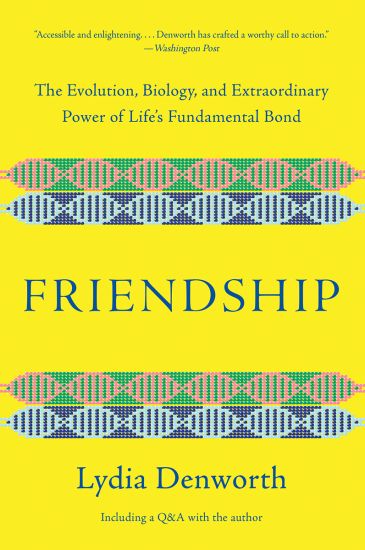
Friendship: The Evolution, Biology, and Extraordinary Power of Life's Fundamental Bond
In this revelatory investigation, science journalist Lydia Denworth takes us in search of friendship's biological, psychological, and evolutionary foundations. An "expert guide" (Kathryn Bowers, New York Times Book Review), Denworth weaves past and present, field biology and neuroscience, to show how our bodies and minds are designed for friendship across life stages, the processes by which healthy social bonds are developed and maintained, and how friendship is changing in the age of social media. Now including a Q&A between the author and her close friend to guide reflection and conversation, Friendship is a clarion call for putting positive relationships at the center of our lives.
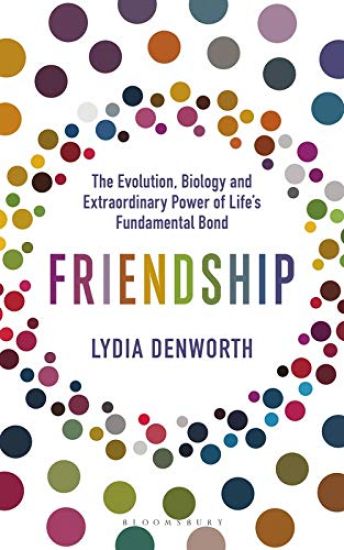
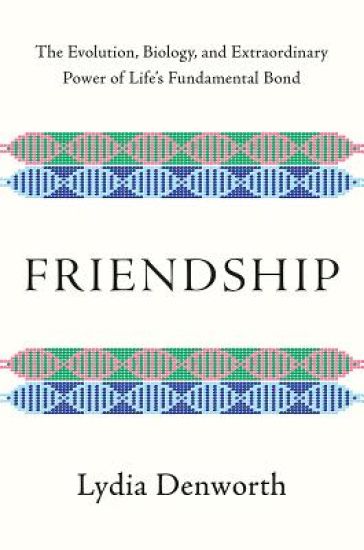
Friendship: The Evolution, Biology, and Extraordinary Power of Life's Fundamental Bond
The phenomenon of friendship is universal and elemental. Friends, after all, are the family we choose. But what makes these bonds not just pleasant but essential, and how do they affect our bodies and our minds?In Friendship, science journalist Lydia Denworth takes us in search of friendship's biological, psychological, and evolutionary foundations. She finds friendship to be as old as early life on the African savannas--when tribes of people grew large enough for individuals to seek fulfillment of their social needs outside their immediate families. Denworth sees this urge to connect reflected in primates, too, taking us to a monkey sanctuary in Puerto Rico and a baboon colony in Kenya to examine social bonds that offer insight into our own. She meets scientists at the frontiers of brain and genetics research and discovers that friendship is reflected in our brain waves, our genomes, and our cardiovascular and immune systems; its opposite, loneliness, can kill. At long last, social connection is recognized as critical to wellness and longevity.With insight and warmth, Denworth weaves past and present, field biology and neuroscience, to show how our bodies and minds are designed for friendship across life stages, the processes by which healthy social bonds are developed and maintained, and how friendship is changing in the age of social media. Blending compelling science, storytelling, and a grand evolutionary perspective, Denworth delineates the essential role that cooperation and companionship play in creating human (and nonhuman) societies. Friendship illuminates the vital aspects of friendship, both visible and invisible, and offers a refreshingly optimistic vision of human nature. It is a clarion call for putting positive relationships at the center of our lives.
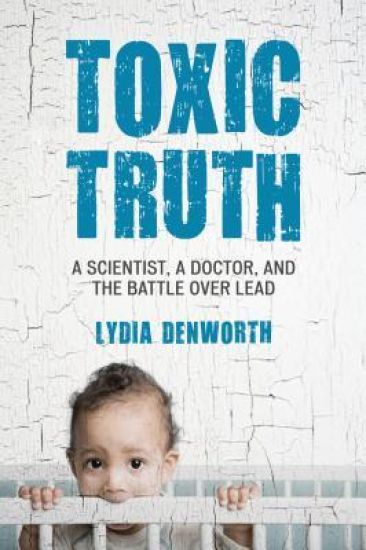
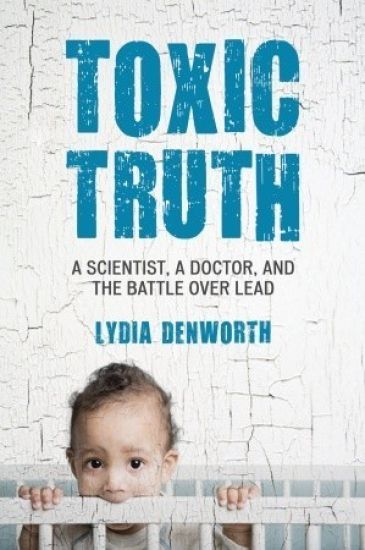
Toxic Truth

Toxic Truth

Lydia Denworth

Beacon Press
2018
nidottu
They didn't start out as environmental warriors. Clair Patterson was a geochemist focused on determining the age of the Earth. Herbert Needleman was a pediatrician treating inner-city children. But in the chemistry lab and the hospital ward, they met a common enemy: lead. It was literally everywhere-in gasoline and paint, of course, but also in water pipes and food cans, toothpaste tubes and toys, ceramics and cosmetics, jewelry and batteries. Though few people worried about it at the time, lead was also toxic. In Toxic Truth, journalist Lydia Denworth tells the little-known stories of these two men who were among the first to question the wisdom of filling the world with such a harmful metal. Denworth follows them from the ice and snow of Antarctica to the schoolyards of Philadelphia and Boston as they uncovered the enormity of the problem and demonstrated the irreparable harm lead was doing to children. In heated conferences and courtrooms, the halls of Congress and at the Environmental Protection Agency, the scientist and doctor were forced to defend their careers and reputations in the face of incredible industry opposition. It took courage, passion, and determination to prevail against entrenched corporate interests and politicized government bureaucracies. But Patterson, Needleman, and their allies did finally get the lead out - since it was removed from gasoline, paint, and food cans in the 1970s, the level of lead in Americans' bodies has dropped 90 percent. Their success offers a lesson in the dangers of putting economic priorities over public health, and a reminder of the way science-and individuals-can change the world. The fundamental questions raised by this battle-what constitutes disease, how to measure scientific independence, and how to quantify acceptable risk-echo in every environmental issue of today: from the plastic used to make water bottles to greenhouse gas emissions. And the most basic question-how much do we need to know about what we put in our environment-is perhaps more relevant today than it has ever been.
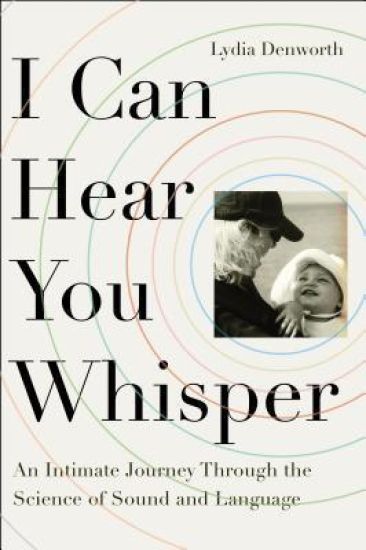
I Can Hear You Whisper: An Intimate Journey Through the Science of Sound and Language
"A skilled science translator, Denworth makes decibels, teslas and brain plasticity understandable to all."--Washington Post Lydia Denworth's third son, Alex, was nearly two when he was identified with significant hearing loss that was likely to get worse. Denworth knew the importance of enrichment to the developing brain but had never contemplated the opposite: deprivation. How would a child's brain grow outside the world of sound? How would he communicate? Would he learn to read and write? An acclaimed science journalist as well as a mother, Denworth made it her mission to find out, interviewing experts on language development, inventors of groundbreaking technology, Deaf leaders, and neuroscientists at the frontiers of brain plasticity research. I Can Hear You Whisper chronicles Denworth's search for answers--and her new understanding of Deaf culture and the exquisite relationship between sound, language, and learning.
Toxic Truth

Toxic Truth

Lydia Denworth

Beacon Press
2009
sidottu
They didn't start out as environmental warriors. Clair Patterson was a geochemist focused on determining the age of the Earth. Herbert Needleman was a pediatrician treating inner-city children. But in the chemistry lab and the hospital ward, they met a common enemy: lead. It was literally everywhere-in gasoline and paint, of course, but also in water pipes and food cans, toothpaste tubes and toys, ceramics and cosmetics, jewelry and batteries. Though few people worried about it at the time, lead was also toxic. In "Toxic Truth," journalist Lydia Denworth tells the little-known stories of these two men who were among the first to question the wisdom of filling the world with such a harmful metal. Denworth follows them from the ice and snow of Antarctica to the schoolyards of Philadelphia and Boston as they uncovered the enormity of the problem and demonstrated the irreparable harm lead was doing to children. In heated conferences and courtrooms, the halls of Congress and at the Environmental Protection Agency, the scientist and doctor were forced to defend their careers and reputations in the face of incredible industry opposition. It took courage, passion, and determination to prevail against entrenched corporate interests and politicized government bureaucracies. But Patterson, Needleman, and their allies did finally get the lead out - since it was removed from gasoline, paint, and food cans in the 1970s, the level of lead in Americans' bodies has dropped 90 percent. Their success offers a lesson in the dangers of putting economic priorities over public health, and a reminder of the way science-and individuals-can change the world. The fundamental questions raised by this battle-what constitutes disease, how to measure scientific independence, and how to quantify acceptable risk-echo in every environmental issue of today: from the plastic used to make water bottles to greenhouse gas emissions. And the most basic question-how much do we need to know about what we put in our environment-is perhaps more relevant today than it has ever been.