Kirjojen hintavertailu. Mukana 12 390 323 kirjaa ja 12 kauppaa.

Kirjailija

Lydia Schumacher

Kirjat ja teokset yhdessä paikassa: 7 kirjaa, julkaisuja vuosilta 2015-2025, suosituimpien joukossa From Eternal to Everlasting. Vertaile teosten hintoja ja tarkista saatavuus suomalaisista kirjakaupoista.

7 kirjaa

Kirjojen julkaisuhaarukka 2015-2025.

From Eternal to Everlasting

From Eternal to Everlasting

Lydia Schumacher

De Gruyter
2025
isokokoinen pokkari
The Middle Ages witnessed a shift in thinking about the way God is related to time. For most of the earlier Middle Ages, scholars had followed an earlier patristic tradition of describing God as eternal and thus as timeless or outside of time. In the early thirteenth century, however, members of the Franciscan order, who played a significant role in the development of the recently-founded universities, re-defined God’s relationship to time in terms of his everlastingness. On their account, God is infinite in temporal duration, rather than simply ’timeless’, since he has no beginning and no end. So construed, God encompasses and is able to relate to every moment in time in a way that the Franciscans believed was not possible on the eternalist account. This book will discuss some of the factors that contributed to their shift in thinking about God as everlasting instead of eternal. Among these, the book will identity a transition in defining the basic nature of God as either simple (for proponents of eternity) or infinite (for proponents of everlastingness) as well as the Franciscan adoption of the metaphysics of the eleventh-century Islamic philosopher, Avicenna.
Human Nature in Early Franciscan Thought

Human Nature in Early Franciscan Thought

Lydia Schumacher

Cambridge University Press
2023
sidottu
In this book, Lydia Schumacher challenges the common assumption that early Franciscan thought simply reiterates the longstanding tradition of Augustine. She demonstrates how scholars from this tradition incorporated the work of Islamic and Jewish philosophers, whose works had recently been translated from Arabic, with a view to developing a unique approach to questions of human nature. These questions pertain to perennial philosophical concerns about the relationship between the body and the soul, the work of human cognition and sensation, and the power of free will. By highlighting the Arabic sources of early Franciscan views on these matters, Schumacher illustrates how scholars working in the early thirteenth century anticipated later developments in Franciscan thought which have often been described as novel or unprecedented. Above all, her study demonstrates that the early Franciscan philosophy of human nature was formulated with a view to bolstering the order's specific theological and religious ideals.
Early Franciscan Theology

Early Franciscan Theology

Lydia Schumacher

Cambridge University Press
2019
sidottu
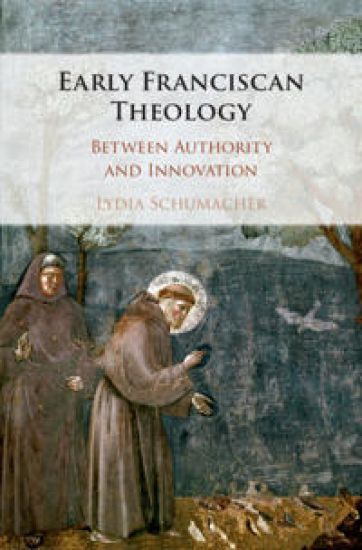
Franciscan theology before Bonaventure has long been regarded as a relatively unoriginal attempt to systematize the tradition of Augustine, which prevailed in the West for most of the earlier Middle Ages. In this book, Lydia Schumacher aims to demonstrate the innovative aspects of early Franciscan theology by examining the historical, philosophical, and religious contexts in which it was developed, and by highlighting how thinkers from this period deployed authoritative sources like Augustine as 'proof texts' for their own novel positions. She thereby exposes the continuity between the early and later Franciscan schools, which have normally been perceived as distinct from one another. Schumacher also emphasizes the ethos that inspired the development of medieval Franciscan thinking and distinguishes it from any modern intellectual trends with which it has been associated. Ultimately, Schumacher lays the foundation for future efforts to recover Franciscan theology in the contemporary context on its own terms.
Theological Philosophy

Theological Philosophy

Lydia Schumacher

Routledge
2018
nidottu
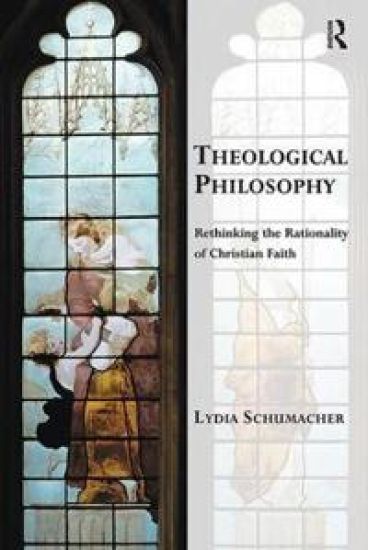
For much of the modern period, theologians and philosophers of religion have struggled with the problem of proving that it is rational to believe in God. Drawing on the thought of Thomas Aquinas, Theological Philosophy seeks to overturn the longstanding problem of proving faith's rationality and to establish instead that rationality requires to be explained by appeals to faith. Building on a constructive argument developed in a companion book, Rationality as Virtue, Lydia Schumacher advances the conclusion that belief in the God of Christian faith provides an exceptionally robust rationale for rationality and is as such intrinsically rational. At the same time, Schumacher overcomes a common tendency to separate spiritual from ordinary life, and construes the latter as the locus of proof for the rationality of Christian faith.
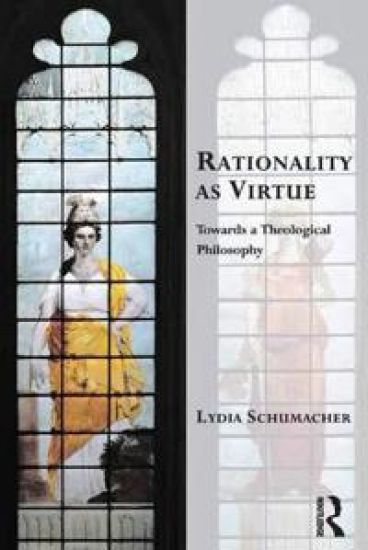
Rationality as Virtue

Rationality as Virtue

Lydia Schumacher

Routledge
2017
nidottu
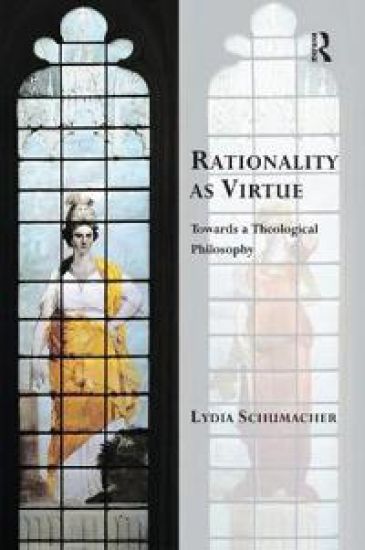
For much of the modern period, theologians and philosophers of religion have struggled with the problem of proving that it is rational to believe in God. Drawing on the thought of Thomas Aquinas, this book lays the foundation for an innovative effort to overturn the longstanding problem of proving faith's rationality, and to establish instead that rationality requires to be explained by appeals to faith. To this end, Schumacher advances the constructive argument that rationality is not only an epistemological question concerning the soundness of human thoughts, which she defines in terms of ’intellectual virtue’. Ultimately, it is an ethical question whether knowledge is used in ways that promote an individual's own flourishing and that of others. That is to say, rationality in its paradigmatic form is a matter of moral virtue, which should nonetheless entail intellectual virtue. This conclusion sets the stage for Schumacher's argument in a companion book, Theological Philosophy, which explains how Christian faith provides an exceptionally robust rationale for rationality, so construed, and is intrinsically rational in that sense.
Theological Philosophy

Theological Philosophy

Lydia Schumacher

Routledge
2015
sidottu
For much of the modern period, theologians and philosophers of religion have struggled with the problem of proving that it is rational to believe in God. Drawing on the thought of Thomas Aquinas, Theological Philosophy seeks to overturn the longstanding problem of proving faith's rationality and to establish instead that rationality requires to be explained by appeals to faith. Building on a constructive argument developed in a companion book, Rationality as Virtue, Lydia Schumacher advances the conclusion that belief in the God of Christian faith provides an exceptionally robust rationale for rationality and is as such intrinsically rational. At the same time, Schumacher overcomes a common tendency to separate spiritual from ordinary life, and construes the latter as the locus of proof for the rationality of Christian faith.
Rationality as Virtue

Rationality as Virtue

Lydia Schumacher

Routledge
2015
sidottu
For much of the modern period, theologians and philosophers of religion have struggled with the problem of proving that it is rational to believe in God. Drawing on the thought of Thomas Aquinas, this book lays the foundation for an innovative effort to overturn the longstanding problem of proving faith's rationality, and to establish instead that rationality requires to be explained by appeals to faith. To this end, Schumacher advances the constructive argument that rationality is not only an epistemological question concerning the soundness of human thoughts, which she defines in terms of ’intellectual virtue’. Ultimately, it is an ethical question whether knowledge is used in ways that promote an individual's own flourishing and that of others. That is to say, rationality in its paradigmatic form is a matter of moral virtue, which should nonetheless entail intellectual virtue. This conclusion sets the stage for Schumacher's argument in a companion book, Theological Philosophy, which explains how Christian faith provides an exceptionally robust rationale for rationality, so construed, and is intrinsically rational in that sense.