Kirjojen hintavertailu. Mukana 12 390 323 kirjaa ja 12 kauppaa.
Kirjailija
Lyman L. Johnson
Kirjat ja teokset yhdessä paikassa: 4 kirjaa, julkaisuja vuosilta 2011-2018, suosituimpien joukossa Workshop of Revolution. Vertaile teosten hintoja ja tarkista saatavuus suomalaisista kirjakaupoista.
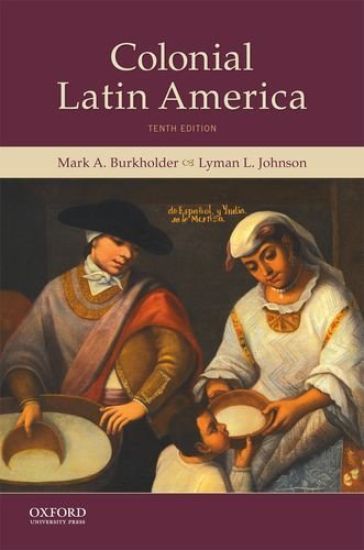
The tenth edition of Colonial Latin America provides a concise study of the history of the Iberian colonies in the New World and their preconquest background to the wars of independence in the early nineteenth century. Colonial Latin America is indispensable for students who wish to gain a deeper understanding of the fascinating and often colorful history of the cultures, the people, and the struggles that have played a part in shaping Latin America.
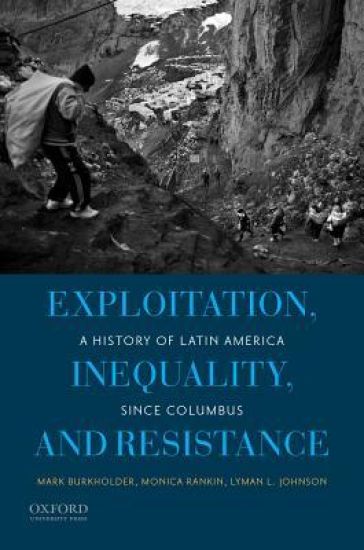
The words "exploitation," "inequality," and "resistance" bind together attitudes and actions that encapsulate much of Latin America's economic, social, and political history for more than half a millennium. In this compelling text, authors Mark A. Burkholder, Lyman L. Johnson, and Monica A. Rankin tell the story of more than 500 years of Latin American history through the themes of exploitation, inequality, and resistance. Some examples of exploitation and inequality include slavery and other labor systems, sexual and gender exploitation, an inequitable economic relationship with foreign countries, repressive political systems through dictatorship and military regimes, and an unequal diplomatic relationship with the United States and other powerful nations. Despite deeply entrenched systems of injustice, Latin Americans remain notable for their resilience. Active and passive resistance to oppression and discrimination still persist in the twenty-first century, with native revolts and slave flights, unionization, the emergence of the Latin American women's movement, black-market economies, the emergence of populism, and various forms of revolt and revolution. Exploitation, Inequality, and Resistance: A History of Latin America since Columbus emphasizes these themes and analyzes the ways in which earlier events continue to resonate today.
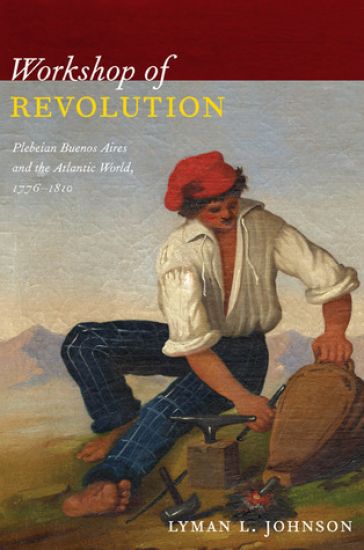
The plebeians of Buenos Aires were crucial to the success of the revolutionary junta of May 1810, widely considered the start of the Argentine war of independence. Workshop of Revolution is a historical account of the economic and political forces that propelled the artisans, free laborers, and slaves of Buenos Aires into the struggle for independence. Drawing on extensive archival research in Argentina and Spain, Lyman L. Johnson portrays the daily lives of Buenos Aires plebeians in unprecedented detail. In so doing, he demonstrates that the world of Spanish colonial plebeians can be recovered in reliable and illuminating ways. Johnson analyzes the demographic and social contexts of plebeian political formation and action, considering race, ethnicity, and urban population growth, as well as the realms of work and leisure. During the two decades prior to 1810, Buenos Aires came to be thoroughly integrated into Atlantic commerce. Increased flows of immigrants from Spain and slaves from Africa and Brazil led to a decline in real wages and the collapse of traditional guilds. Laborers and artisans joined militias that defended the city against British invasions in 1806 and 1807, and they defeated a Spanish loyalist coup attempt in 1809. A gravely weakened Spanish colonial administration and a militarized urban population led inexorably to the events of 1810 and a political transformation of unforeseen scale and consequence.
The plebeians of Buenos Aires were crucial to the success of the revolutionary junta of May 1810, widely considered the start of the Argentine war of independence. Workshop of Revolution is a historical account of the economic and political forces that propelled the artisans, free laborers, and slaves of Buenos Aires into the struggle for independence. Drawing on extensive archival research in Argentina and Spain, Lyman L. Johnson portrays the daily lives of Buenos Aires plebeians in unprecedented detail. In so doing, he demonstrates that the world of Spanish colonial plebeians can be recovered in reliable and illuminating ways. Johnson analyzes the demographic and social contexts of plebeian political formation and action, considering race, ethnicity, and urban population growth, as well as the realms of work and leisure. During the two decades prior to 1810, Buenos Aires came to be thoroughly integrated into Atlantic commerce. Increased flows of immigrants from Spain and slaves from Africa and Brazil led to a decline in real wages and the collapse of traditional guilds. Laborers and artisans joined militias that defended the city against British invasions in 1806 and 1807, and they defeated a Spanish loyalist coup attempt in 1809. A gravely weakened Spanish colonial administration and a militarized urban population led inexorably to the events of 1810 and a political transformation of unforeseen scale and consequence.