Kirjojen hintavertailu. Mukana 12 512 530 kirjaa ja 12 kauppaa.

Kirjailija

Lyn Parker

Kirjat ja teokset yhdessä paikassa: 6 kirjaa, julkaisuja vuosilta 2013-2021, suosituimpien joukossa Environmental Education in Indonesia. Vertaile teosten hintoja ja tarkista saatavuus suomalaisista kirjakaupoista.

6 kirjaa

Kirjojen julkaisuhaarukka 2013-2021.

Environmental Education in Indonesia

Environmental Education in Indonesia

Lyn Parker; Kelsie Prabawa-Sear

Routledge
2021
nidottu
Indonesia’s wealth of natural resources is being exploited at breakneck speed, and environmental awareness and knowledge among the populace is limited. This book examines how young people learn about the environment to see how education can help to develop environmental awareness and avert vast environmental destruction, not only in Indonesia, but also in the Global South more generally. Based on in-depth studies conducted in the cities of Yogyakarta and Surabaya, complemented with surveys of students in secondary schools, Environmental Education in Indonesia examines educational curricula, pedagogy and "green" activities to reveal what is currently being done in schools to educate children about the environment. The book investigates the shortcomings in environment education, including underqualified teachers, the civil service mentality, the still-pervasive chalk-and-talk pedagogy and the effect of the examination system. It also analyses the role of local government in supporting (or not) environmental education, and the contribution of environmental NGOs. The book establishes that young people are not currently being exposed to effective environmental education, and the authors propose that the best and most culturally appropriate way forward in Indonesia is to frame pro-environment behaviour and responsibility as a form of citizenship, and specifically that environmental education should be taught as a separate subject.This book will be of great interest to students and scholars of contemporary Indonesia and Southeast Asia, education for sustainability and environmental education, as well as sustainability and sustainable development more generally.The Open Access version of this book, available at http://www.tandfebooks.com/doi/view/10.4324/9780429397981, has been made available under a Creative Commons Attribution-Non Commercial-No Derivatives 4.0 license.
Environmental Education in Indonesia

Environmental Education in Indonesia

Lyn Parker; Kelsie Prabawa-Sear

Routledge
2019
sidottu
Indonesia’s wealth of natural resources is being exploited at breakneck speed, and environmental awareness and knowledge among the populace is limited. This book examines how young people learn about the environment to see how education can help to develop environmental awareness and avert vast environmental destruction, not only in Indonesia, but also in the Global South more generally. Based on in-depth studies conducted in the cities of Yogyakarta and Surabaya, complemented with surveys of students in secondary schools, Environmental Education in Indonesia examines educational curricula, pedagogy and "green" activities to reveal what is currently being done in schools to educate children about the environment. The book investigates the shortcomings in environment education, including underqualified teachers, the civil service mentality, the still-pervasive chalk-and-talk pedagogy and the effect of the examination system. It also analyses the role of local government in supporting (or not) environmental education, and the contribution of environmental NGOs. The book establishes that young people are not currently being exposed to effective environmental education, and the authors propose that the best and most culturally appropriate way forward in Indonesia is to frame pro-environment behaviour and responsibility as a form of citizenship, and specifically that environmental education should be taught as a separate subject.This book will be of great interest to students and scholars of contemporary Indonesia and Southeast Asia, education for sustainability and environmental education, as well as sustainability and sustainable development more generally.The Open Access version of this book, available at http://www.tandfebooks.com/doi/view/10.4324/9780429397981, has been made available under a Creative Commons Attribution-Non Commercial-No Derivatives 4.0 license.
Adolescents in Contemporary Indonesia

Adolescents in Contemporary Indonesia

Lyn Parker; Pam Nilan

Routledge
2017
nidottu
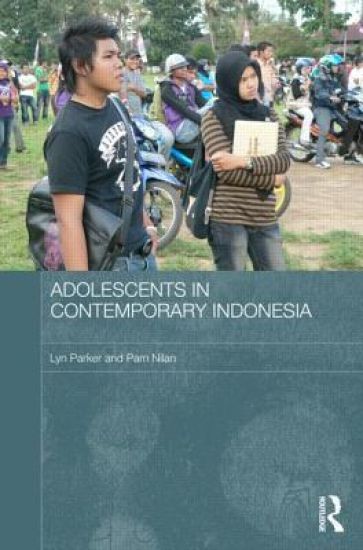
The youth demographic is a large and growing cohort in Indonesia, and adolescents embody the currents of social change. Throughout the twentieth century they were significant agents of social protest leading to social and political transformation. This book looks at the importance of adolescents in contemporary Indonesia, and how they are spearheading not just globalisation and a growing consumer youth culture, but also the Islamisation movement.The book explores both the inner worlds and social selves of Indonesian adolescents. It presents an in-depth knowledge of Indonesian society and culture in various parts of Indonesia, and discusses national patterns and trends. Grounded in two field sites, the book enables an analysis of young people’s local ethnic and religious identities and their commitment to the Indonesian nation-state. It goes on to look at the physical age bracket of youth, the definitions used by the Indonesian state and other agencies, and the perceptions of youth themselves about adolescence and adulthood.Providing a comprehensive study of young people in contemporary Indonesia, the book addresses gender relations, the importance of education for youth and youth engagement with popular culture, and the moral issue concerning the sexual propriety of young people. It is a useful contribution for students and academics of Asian Studies, Sociology and Cultural Studies.
Adolescents in Contemporary Indonesia

Adolescents in Contemporary Indonesia

Lyn Parker; Pam Nilan

Routledge
2013
sidottu
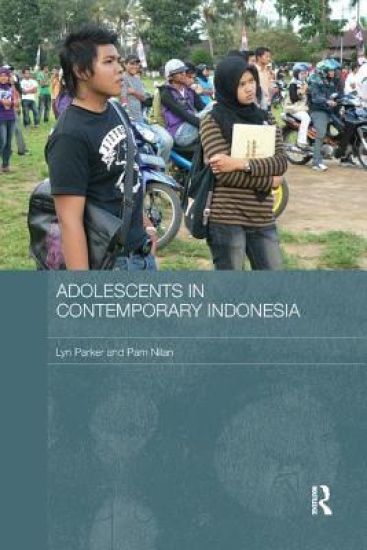
The youth demographic is a large and growing cohort in Indonesia, and adolescents embody the currents of social change. Throughout the twentieth century they were significant agents of social protest leading to social and political transformation. This book looks at the importance of adolescents in contemporary Indonesia, and how they are spearheading not just globalisation and a growing consumer youth culture, but also the Islamisation movement.The book explores both the inner worlds and social selves of Indonesian adolescents. It presents an in-depth knowledge of Indonesian society and culture in various parts of Indonesia, and discusses national patterns and trends. Grounded in two field sites, the book enables an analysis of young people’s local ethnic and religious identities and their commitment to the Indonesian nation-state. It goes on to look at the physical age bracket of youth, the definitions used by the Indonesian state and other agencies, and the perceptions of youth themselves about adolescence and adulthood.Providing a comprehensive study of young people in contemporary Indonesia, the book addresses gender relations, the importance of education for youth and youth engagement with popular culture, and the moral issue concerning the sexual propriety of young people. It is a useful contribution for students and academics of Asian Studies, Sociology and Cultural Studies.