Kirjojen hintavertailu. Mukana 12 595 353 kirjaa ja 12 kauppaa.

Kirjailija

Lynn E. Davis

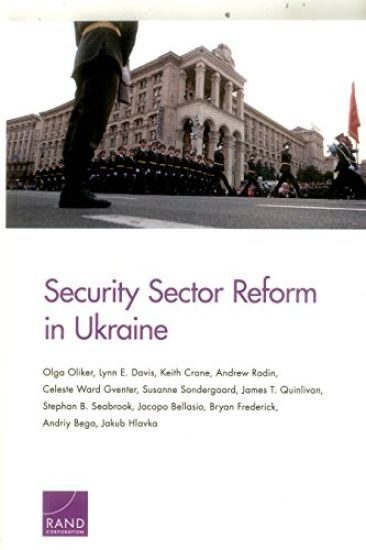
Kirjat ja teokset yhdessä paikassa: 11 kirjaa, julkaisuja vuosilta 1990-2021, suosituimpien joukossa Security Sector Reform in Ukraine. Vertaile teosten hintoja ja tarkista saatavuus suomalaisista kirjakaupoista.

Mukana myös kirjoitusasut: Lynn E Davis

11 kirjaa

Kirjojen julkaisuhaarukka 1990-2021.

Drivers of Institutional Trust and Distrust

Drivers of Institutional Trust and Distrust

Jennifer Kavanagh; Katherine Grace Carman; Maria Deyoreo; Nathan Chandler; Lynn E Davis

RAND
2021
nidottu
Trust in government and media has declined in the past two decades. Assessing individual characteristics and institutional attributes associated with trust offers insight into this decline and is a first step toward rebuilding institutional trust. Researchers developed a new method to assess these concepts, using a survey of 1,008 respondents and a response scale that distinguishes among trust, lack of trust or distrust, and active distrust.
The Future of the Russian Military

The Future of the Russian Military

Andrew Radin; Lynn E Davis; Edward Geist

RAND
2019
nidottu
Since 2008 Russia's military forces have improved, enabling Russian military operations in Crimea, eastern Ukraine, and Syria. Researchers analyze the societal, political, economic, and demographic factors that undergird Russian military power. Based on these factors, they analyze how Russian ground combat capabilities will evolve. The challenge for the U.S. military will be to compete in different regions without provoking escalation.
Iran's Nuclear Future: Critical U.S. Policy Choices

Iran's Nuclear Future: Critical U.S. Policy Choices

Lynn E. Davis; Jeffrey Martini; Alireza Nader; Dalia Dassa Kaye; James T. Quinlivan; Paul Steinberg

RAND
2011
pokkari
As Iran's nuclear program evolves, U.S. decisionmakers will confront a series of critical policy choices involving complex considerations and policy trade-offs. These policy choices could involve dissuading Iran from developing nuclear weapons; deterring Iran from using its nuclear weapons, if it were to acquire them; and, reassuring U.S. regional partners. The U.S. Air Force will need to prepare to carry out whatever policies are chosen.
Developing a Defense Sector Assessment Rating Tool

Developing a Defense Sector Assessment Rating Tool

Agnes Gereben Schaefer; Lynn E. Davis; Ely Ratner; Molly Dunigan; Jeremiah Goulka

RAND
2010
pokkari
In response to the lack of a comprehensive tool to assess a country's defense sector and its ability to counter a range of security threats, a RAND team developed the Defense Sector Assessment Rating Tool (DSART). The tool consists of six assessments to quantitatively and qualitatively determine a country's defense sector capabilities and potential areas for reform, and it is designed so that it can be adapted to a changing security environment.
A Strategic Planning Approach

A Strategic Planning Approach

Lynn E Davis; Melanie W Sisson

RAND
2009
pokkari
While the United States government has historically undertaken strategic reviews and produced numerous strategy documents, these have provided only very general directions for U.S. policymakers. This paper defines an approach to strategic planning and illustrates its application using the example of the critical national security topic of counterterrorism.
Hurricane Katrina

Hurricane Katrina

Lynn E. Davis

RAND
2007
pokkari
The efforts undertaken by civilian and military organizations in response to Hurricane Katrina were historically unprecedented, but a number of changes would enhance future Army and National Guard disaster-response efforts, including preparing governors to call up Guard units for out-of-state emergencies and the creation of regional standing homeland security task forces.
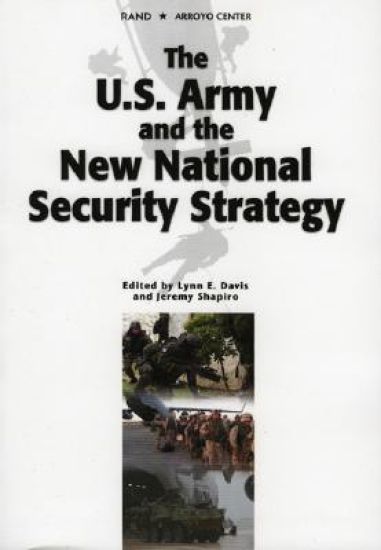
The U.S. Army and the New National Security Strategy
This book examines the Army's role in the war on terrorism; the Army's homeland security needs; the implications of increased emphasis on Asia; the Army's role in coalition operations; the unfinished business of jointness-the lessons learned from operations and how to prepare for the future; the Army's deployability, logistical, and personnel challenges; and whether the Army can afford its Transformation. These examinations are bracketed by an introduction, a description of the Army's place in the new national security strategy, and a summary of the authors' conclusions.