Kirjojen hintavertailu. Mukana 12 498 839 kirjaa ja 12 kauppaa.

Kirjailija

Lynn Hunt

Kirjat ja teokset yhdessä paikassa: 25 kirjaa, julkaisuja vuosilta 1991-2025, suosituimpien joukossa The Book That Changed Europe. Vertaile teosten hintoja ja tarkista saatavuus suomalaisista kirjakaupoista.

25 kirjaa

Kirjojen julkaisuhaarukka 1991-2025.

Liberty, Equality, Fraternity

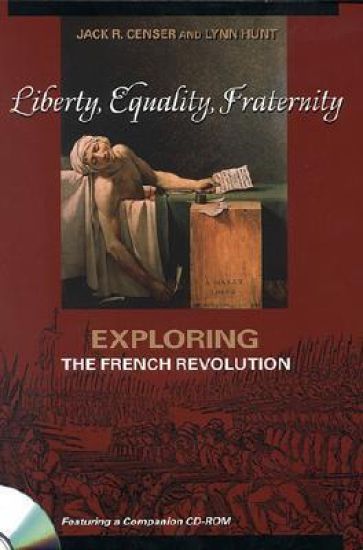
Liberty, Equality, Fraternity

Jack R. Mason; Lynn Hunt

Pennsylvania State University Press
2002
muu
Liberty, Equality, Fraternity offers readers an accessible and lively introduction to the French Revolution that is also grounded in the latest and most sophisticated historical scholarship. It does so through two paths—a book and a companion CD-ROM. The book gives a brief but comprehensive narrative of the Revolution. The CD-ROM offers readers an unprecedented multimedia overview of the Revolution through images, primary documents, and song. Together they introduce readers to the fascinating story of the world’s first great revolution. The book, written by Lynn Hunt and Jack Censer, preeminent authorities on the French Revolution, includes selected images and documents from the accompanying CD-ROM, prepared by the authors with the support of the Center for History and New Media at George Mason University and the American Social History Project at City University of New York. Features of the CD-ROM include primary documents (carefully chosen, translated, and placed in their proper historical contexts by a team of historians), songs, maps, and more than 300 images (caricatures, portraits, sculptures, and photographs of artifacts of material culture)—many previously available only to specialists in the field. These hard-to-find images, gathered from repositories in France and the United States, comprise an unparalleled and powerful visual record of the Revolution. Given the centrality of visual artifacts (imagery, symbolism, and print culture) to the history of the Revolution, and the inability of print reproduction to present such images with clarity and detail, the companion CD-ROM will provide an entry into the Revolution unavailable in any other form.
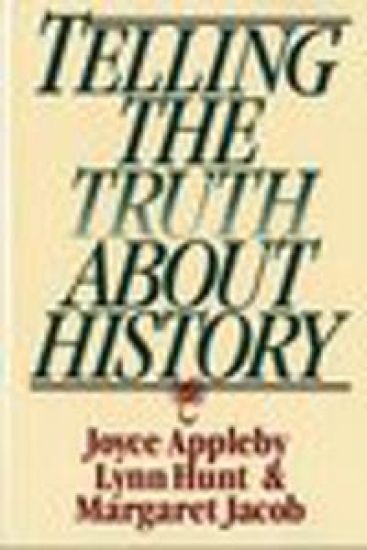
Telling the Truth about History

Telling the Truth about History

Joyce Appleby; Lynn Hunt; Margaret Jacob

WW Norton Co
1995
nidottu
This text examines the problem of historical truth. Seeking the roots of contemporary historical study in the Enlightenment, the authors argue that a model of historical research, based on neutrality and objectivity, served historians well until World War II. After that post-modernism suggested history could not reveal the truth about the past and the rise of social history produced a great amount of statistics which effectively swamped the search for historical truth. Accepting that much of history teaching has been flawed, the authors nevertheless argue for an affirmation of historical knowledge against the doubts of the sceptics and the relativists, guiding the reader through the complex areas of political correctness and multiculturalism.
The Family Romance of the French Revolution

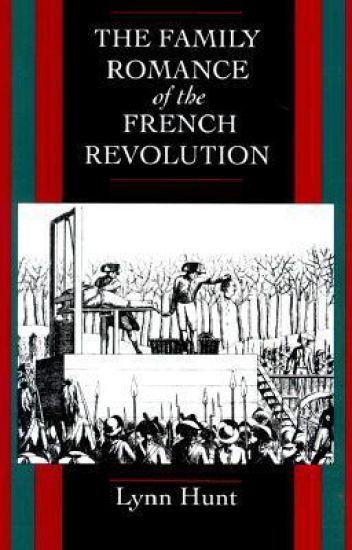
The Family Romance of the French Revolution

Lynn Hunt

University of California Press
1993
pokkari
This latest work from an author known for her contributions to the new cultural history is a multidisciplinary investigation of the foundations of modern politics. "Family Romance" was coined by Freud to describe the fantasy of being freed from one's family and joining one of higher social standing. Lynn Hunt uses the term broadly to describe the images of the familial order underlying revolutionary politics. In a wide-ranging account using novels, engravings, paintings, speeches, newspaper editorials, pornographic writing, and revolutionary legislation about the family, Hunt shows that politics were experienced through the grid of the family romance.
Family Romance of the French Revolution
This latest work from an author known for her contributions to the new cultural history is a daring, multidisciplinary investigation of the imaginative foundations of modern politics. Hunt uses the term `Family Romance', (coined by Freud to describe the fantasy of being freed from one's family and belonging to one of higher social standing), in a broader sense, to describe the images of the familial order that structured the collective political unconscious. In a wide-ranging account that uses novels, engravings, paintings, speeches, newspaper editorials, pornographic writing, and revolutionary legislation about the family, Hunt shows that the politics of the French Revolution were experienced through the network of the family romance.
Festivals and the French Revolution

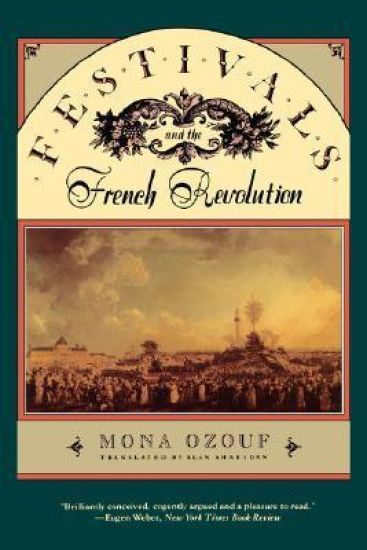
Festivals and the French Revolution

Mona Ozouf; Lynn Hunt

Harvard University Press
1991
nidottu
Festivals and the French Revolution—the subject conjures up visions of goddesses of Liberty, strange celebrations of Reason, and the oddly pretentious cult of the Supreme Being. Every history of the period includes some mention of festivals, although most historians have been content either to ridicule them as ineffectual or to bemoan them as repugnant examples of a sterile, official culture. Mona Ozouf shows us that they were much more than bizarre marginalia to the revolutionary process. Festivals offer critical insights into the meaning of the French Revolution; they show a society in the process of creating itself anew.Historians have recognized the importance of the revolutionary festival as a symbol of the Revolution. But they have differed widely in their interpretations of what that symbol meant and have considered the festivals as diverse as the rival political groups that conceived and organized them. Against this older vision, Ozouf argues for the fundamental coherence and profound unity of the festival as both event and register of reference and attitude. By comparing the most ideologically opposed festivals (those of Reason and the Supreme Being, for instance), she shows that they clearly share a common aim, which finds expression in a mutual ceremonial and symbolic vocabulary. Through a brilliant discussion of the construction, ordering, and conduct of the festival Ozouf demonstrates how the continuity of the images, allegories, ceremonials, and explicit functions can be seen as the Revolution’s own commentary on itself.A second and important aim of this book is to show that this system of festivals, often seen as destructive, was an immensely creative force. The festival was the mirror in which the Revolution chose to see itself and the pedagogical tool by which it hoped to educate future generations, Far from being a failure, it embodied, socialized, and made sacred a new set of values based on the family, the nation, and mankind—the values of a modern, secular, liberal world.