Kirjojen hintavertailu. Mukana 12 595 353 kirjaa ja 12 kauppaa.

Kirjailija

Lynn Keller

Kirjat ja teokset yhdessä paikassa: 11 kirjaa, julkaisuja vuosilta 1988-2021, suosituimpien joukossa God Is a Verb!. Vertaile teosten hintoja ja tarkista saatavuus suomalaisista kirjakaupoista.

11 kirjaa

Kirjojen julkaisuhaarukka 1988-2021.

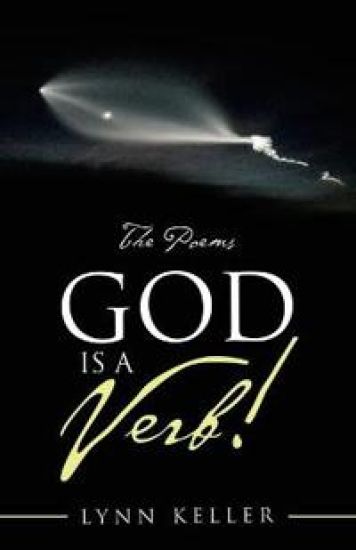
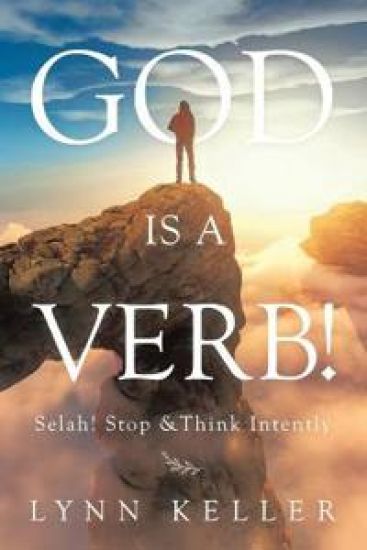
God Is a Verb!

God Is a Verb!

Lynn Keller

Iuniverse
2021
pokkari
God Is a Verb creates a radical paradigm shift. It is no longer possible to think of God as a big magician in the sky. Instead, we rethink everything as God being action and doing and making. God is not an "it," but rather the process itself. God is unbounded action and thought. Selah Stop and think about it This insightful book takes a new look at the Age of Taurus when God purposefully established Adam and Eve in the Garden of Eden with a specific purpose. They had to make a free-will choice to leave in order to choose to live according to the Golden Rule, by doing kindness to others and being grateful to God. He gave them the Book of Knowledge, of all things. Centuries later he completed the set by giving Noah the Jubilee calendar we still use today. Noah had exhibited the purpose God had wanted: relatedness. Noah missed his friends and asked God never to destroy peoples again. God cannot establish human free-will choices and relationships. Nor can he demand humans reflect back to him. These first covenants created our current paradigm for relatedness. The salient point is that our egos are not connected to God. They are our free will. Our body is a noun, the house for our soul, which is created in the image of God. Our soul is a verb. Once we begin to recognize God as a Verb, we must shift our thoughts accordingly. It is just a matter of breaking a habit. Psalms are all written by humans in dedication of the awe and appreciation of God. The first step is to give God a name that signifies our consciousness of a different thought process. Selah uniquely fills that objective since it contains the primary Hebrew word for G-d, "EL." Selah is used in Psalms without a clear definition 72 times. Selah, then, signifies an active process of higher consciousness creating. Selah, the Creating.
God Is a Verb!

God Is a Verb!

Lynn Keller

Iuniverse
2021
sidottu
God Is a Verb creates a radical paradigm shift. It is no longer possible to think of God as a big magician in the sky. Instead, we rethink everything as God being action and doing and making. God is not an "it," but rather the process itself. God is unbounded action and thought. Selah Stop and think about it This insightful book takes a new look at the Age of Taurus when God purposefully established Adam and Eve in the Garden of Eden with a specific purpose. They had to make a free-will choice to leave in order to choose to live according to the Golden Rule, by doing kindness to others and being grateful to God. He gave them the Book of Knowledge, of all things. Centuries later he completed the set by giving Noah the Jubilee calendar we still use today. Noah had exhibited the purpose God had wanted: relatedness. Noah missed his friends and asked God never to destroy peoples again. God cannot establish human free-will choices and relationships. Nor can he demand humans reflect back to him. These first covenants created our current paradigm for relatedness. The salient point is that our egos are not connected to God. They are our free will. Our body is a noun, the house for our soul, which is created in the image of God. Our soul is a verb. Once we begin to recognize God as a Verb, we must shift our thoughts accordingly. It is just a matter of breaking a habit. Psalms are all written by humans in dedication of the awe and appreciation of God. The first step is to give God a name that signifies our consciousness of a different thought process. Selah uniquely fills that objective since it contains the primary Hebrew word for G-d, "EL." Selah is used in Psalms without a clear definition 72 times. Selah, then, signifies an active process of higher consciousness creating. Selah, the Creating.
God Is a Verb!

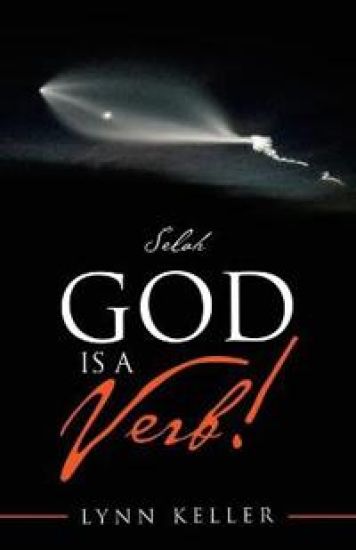
God Is a Verb!

Lynn Keller

iUniverse
2020
pokkari
The purpose of life is not to fix broken paradigms. It is to create a new, vital ones God is not a Noun. Aquarius is not the Brotherhood of Man God is a Verb The Age of Aquarius: Humankind - Humans Being Kind The Original Sin was clearly not a sin. God wanted humans to declare their free will choice to Reflect back to God with acts of kindness to others. Noah missed his neighbors after a century of jeering and begged God not to destroy peoples again. Once you start with a positive, kind perspective on God and our purpose, there is an entirely fascinating outlook on history, our present and our future. What if there is one question? Is it nice? SELAH Stop and Think
God Is a Verb!

God Is a Verb!

Lynn Keller

iUniverse
2020
pokkari
This is the companion book to Keller's groundbreaking new book: "God is a Verb Selah." As she wrote the prose book, verses kept coming to mind. Poetry is well suited to illustrating the concepts when the traditional concept for God is a noun. Music considered as a verb may will be a wonderful process to communicate God and Godly thoughts. Her poems "First Decision" and "Second Decision" are insightful insights into Adam, Eve and Noah from the perspective of God as a Verb. God is always seen as positive and purposeful. This lends itself well to a judgmental thing. These poems lead the way into making God as a Verb a mental habit. It becomes more and more difficult to think of God as a big thing in the sky.
God Is a Verb!

God Is a Verb!

Lynn Keller

Authorhouse
2019
pokkari
God Is a Verb creates a radical paradigm shift. It is no longer possible to think of God as a big magician in the sky. Instead, we rethink everything as God being action and doing and making. God is not an "it," but rather the process itself. God is unbounded action and thought. Selah Stop and think about it This insightful book takes a new look at the Age of Taurus when God purposefully established Adam and Eve in the Garden of Eden with a specific purpose. They had to make a free-will choice to leave in order to choose to live according to the Golden Rule, by doing kindness to others and being grateful to God. He gave them the Book of Knowledge, of all things.Centuries later He completed the set by giving Noah the Jubilee calendar we still use today. Noah had exhibited the purpose God had wanted: relatedness. Noah missed his friends and asked God never to destroy peoples again. God cannot establish human free-will choices and relationships. Nor can he demand humans reflect back to him. These first covenants created our current paradigm for relatedness. The salient point is that our egos are not connected to God. They are our free will. Our body is a noun, the house for our soul, which is created in the image of God. Our soul is a verb.Lynn Keller, a graduate of Cornell University, was vice president of a transformative project based on the tree of life for three decades. She left in 2011 to pursue development of her original concepts. As a preschooler, Lynn proudly listened to Pap-her grandfather, P. H. Smith-talking to their minister about his sermon every week. This book is written for Pap's descendants, in honor of his kindness, brilliance, and wisdom.
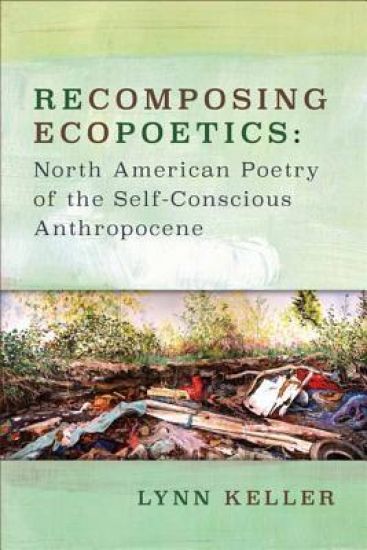
Recomposing Ecopoetics

Recomposing Ecopoetics

Lynn Keller

University of Virginia Press
2018
sidottu
In the first book devoted exclusively to the ecopoetics of the twenty-first century, Lynn Keller examines poetry of what she terms the ""self-conscious Anthropocene,"" a period in which there is widespread awareness of the scale and severity of human effects on the planet. Recomposing Ecopoetics analyzes work written since the year 2000 by thirteen North American poets-including Evelyn Reilly, Juliana Spahr, Ed Roberson, and Jena Osman-all of whom push the bounds of literary convention as they seek forms and language adequate to complex environmental problems. Drawing as often on linguistic experimentalism as on traditional literary resources, these poets respond to environments transformed by people and take ""nature"" to be a far more inclusive and culturally imbricated category than conventional nature poetry does. This interdisciplinary study not only brings cutting-edge work in ecocriticism to bear on a diverse archive of contemporary environmental poetry; it also offers the environmental humanities new ways to understand the cultural and affective dimensions of the Anthropocene.
Recomposing Ecopoetics

Recomposing Ecopoetics

Lynn Keller

University of Virginia Press
2018
nidottu
In the first book devoted exclusively to the ecopoetics of the twenty-first century, Lynn Keller examines poetry of what she terms the ""self-conscious Anthropocene,"" a period in which there is widespread awareness of the scale and severity of human effects on the planet. Recomposing Ecopoetics analyzes work written since the year 2000 by thirteen North American poets-including Evelyn Reilly, Juliana Spahr, Ed Roberson, and Jena Osman-all of whom push the bounds of literary convention as they seek forms and language adequate to complex environmental problems. Drawing as often on linguistic experimentalism as on traditional literary resources, these poets respond to environments transformed by people and take ""nature"" to be a far more inclusive and culturally imbricated category than conventional nature poetry does. This interdisciplinary study not only brings cutting-edge work in ecocriticism to bear on a diverse archive of contemporary environmental poetry; it also offers the environmental humanities new ways to understand the cultural and affective dimensions of the Anthropocene.
Re-making it New

Re-making it New

Lynn Keller

Cambridge University Press
2009
pokkari
As a tradition modernism has fostered particularly polarised impulses - though the great modernist poems offer impressive models, modernist principles, epitomised in Ezra Pound's exhortation to 'make it new', encourage poets to reject the methods of their immediate predecessors. Re-making it New explores the impact of this polarised tradition on contemporary American poets by examining the careers of John Ashbery, Elizabeth Bishop, Robert Creeley and James Merrill. To demonstrate how these four have extended modernist attitudes to create a distinctive post-modern art, each one's poetry is compared with that of a modernist who has been an important influence: Ashbery is discussed in conjunction with Wallace Stevens, Bishop with Marianne Moore, Creeley with William Carlos Williams and Merrill with W. H. Auden. Lynn Keller's book shows that contemporary poets have chosen not to reach for order as their modernist predecessors did; instead, they attempt to dissolve hierarchical distinction and polarising categories in a modest spirit of accommodation and acceptance.
Forms of Expansion

Forms of Expansion

Lynn Keller

University of Chicago Press
1997
sidottu
Contemporary American women are writing long poems in a variety of styles which repossess history, reconceive female subjectivity, and seek to revitalize poetry itself. This book explores this evolving body of work, offering revealing discussions of its diverse traditions and feminist concerns. The poets discussed include Rita Dove, Brenda Marie Osbey, Sharon Doubiago, Judy Grahn, Marilyn Hacker, Beverly Dahlen, Rachel Blau Du Plessis and Susan Howe. Arguing that women poets no longer feel intimidated by the traditional associations of long poems with the heroic, public realm or with great artistic ambition, Keller shows how the long poem's openness to sociological, anthropological and historical material makes it an ideal mode for exploring women's roles in history and culture. In addition, the varied forms of long poems - from sprawling free-verse epics and regular sonnet sequences to highly disjunctive experimental collages - make this hybrid genre easily adaptable to diverse visions of feminism and of contemporary poetry.
Forms of Expansion

Forms of Expansion

Lynn Keller

University of Chicago Press
1997
nidottu
Contemporary American women are writing long poems in a variety of styles which repossess history, reconceive female subjectivity, and seek to revitalize poetry itself. This book explores this evolving body of work, offering revealing discussions of its diverse traditions and feminist concerns. The poets discussed include Rita Dove, Brenda Marie Osbey, Sharon Doubiago, Judy Grahn, Marilyn Hacker, Beverly Dahlen, Rachel Blau Du Plessis and Susan Howe. Arguing that women poets no longer feel intimidated by the traditional associations of long poems with the heroic, public realm or with great artistic ambition, Keller shows how the long poem's openness to sociological, anthropological and historical material makes it an ideal mode for exploring women's roles in history and culture. In addition, the varied forms of long poems - from sprawling free-verse epics and regular sonnet sequences to highly disjunctive experimental collages - make this hybrid genre easily adaptable to diverse visions of feminism and of contemporary poetry.
Re-making it New

Re-making it New

Lynn Keller

Cambridge University Press
1988
sidottu
As a tradition modernism has fostered particularly polarised impulses - though the great modernist poems offer impressive models, modernist principles, epitomised in Ezra Pound's exhortation to 'make it new', encourage poets to reject the methods of their immediate predecessors. Re-making it New explores the impact of this polarised tradition on contemporary American poets by examining the careers of John Ashbery, Elizabeth Bishop, Robert Creeley and James Merrill. To demonstrate how these four have extended modernist attitudes to create a distinctive post-modern art, each one's poetry is compared with that of a modernist who has been an important influence: Ashbery is discussed in conjunction with Wallace Stevens, Bishop with Marianne Moore, Creeley with William Carlos Williams and Merrill with W. H. Auden. Lynn Keller's book shows that contemporary poets have chosen not to reach for order as their modernist predecessors did; instead, they attempt to dissolve hierarchical distinction and polarising categories in a modest spirit of accommodation and acceptance.