Kirjojen hintavertailu. Mukana 12 595 353 kirjaa ja 12 kauppaa.

Kirjailija

Lynn T. White

Kirjat ja teokset yhdessä paikassa: 6 kirjaa, julkaisuja vuosilta 2009-2021, suosituimpien joukossa Political Booms: Local Money And Power In Taiwan, East China, Thailand, And The Philippines. Vertaile teosten hintoja ja tarkista saatavuus suomalaisista kirjakaupoista.

Mukana myös kirjoitusasut: Lynn T White

6 kirjaa

Kirjojen julkaisuhaarukka 2009-2021.

Careers in Shanghai

Careers in Shanghai

Lynn T. White

University of California Press
2021
pokkari
Careers in Shanghai: The Social Guidance of Personal Energies in a Developing Chinese City, 1949-1966 offers a penetrating exploration of how modernization influenced individual lives in post-revolutionary Shanghai, China’s largest metropolis. This in-depth study focuses on the intricate career guidance system employed by state authorities to align personal ambitions with collective goals. Through mechanisms such as education policies, youth rustication programs, job allocations, and household registration systems, the book reveals how the government channeled citizens' aspirations to meet the demands of social and economic development. Each chapter examines a distinct stage of the career journey, shedding light on the interplay between state-imposed incentives and individual agency in a rapidly evolving urban environment. Drawing from extensive primary sources, including local newspapers, official documents, and interviews, Careers in Shanghai offers a nuanced perspective on the policies shaping urban life during this transformative period. The book situates Shanghai’s experience within the broader context of modernization in rapidly developing cities, exploring the effectiveness and implications of state-controlled career systems. With its comparative insights and detailed local analysis, this volume is an essential resource for scholars of urban studies, political science, and Chinese history, offering valuable lessons on the relationship between governance and individual trajectories in a modernizing society. This title is part of UC Press's Voices Revived program, which commemorates University of California Press’s mission to seek out and cultivate the brightest minds and give them voice, reach, and impact. Drawing on a backlist dating to 1893, Voices Revived makes high-quality, peer-reviewed scholarship accessible once again using print-on-demand technology. This title was originally published in 1978.
Careers in Shanghai

Careers in Shanghai

Lynn T. White

University of California Press
2021
sidottu
Careers in Shanghai: The Social Guidance of Personal Energies in a Developing Chinese City, 1949-1966 offers a penetrating exploration of how modernization influenced individual lives in post-revolutionary Shanghai, China’s largest metropolis. This in-depth study focuses on the intricate career guidance system employed by state authorities to align personal ambitions with collective goals. Through mechanisms such as education policies, youth rustication programs, job allocations, and household registration systems, the book reveals how the government channeled citizens' aspirations to meet the demands of social and economic development. Each chapter examines a distinct stage of the career journey, shedding light on the interplay between state-imposed incentives and individual agency in a rapidly evolving urban environment. Drawing from extensive primary sources, including local newspapers, official documents, and interviews, Careers in Shanghai offers a nuanced perspective on the policies shaping urban life during this transformative period. The book situates Shanghai’s experience within the broader context of modernization in rapidly developing cities, exploring the effectiveness and implications of state-controlled career systems. With its comparative insights and detailed local analysis, this volume is an essential resource for scholars of urban studies, political science, and Chinese history, offering valuable lessons on the relationship between governance and individual trajectories in a modernizing society. This title is part of UC Press's Voices Revived program, which commemorates University of California Press’s mission to seek out and cultivate the brightest minds and give them voice, reach, and impact. Drawing on a backlist dating to 1893, Voices Revived makes high-quality, peer-reviewed scholarship accessible once again using print-on-demand technology. This title was originally published in 1978.
Policies of Chaos

Policies of Chaos

Lynn T. White

PRINCETON UNIVERSITY PRESS
2016
sidottu
The tumult of the Cultural Revolution after 1966 is often blamed on a few leaders in Beijing, or on long-term egalitarian ideals, or on communist or Chinese political cultures. Lynn White shows, however, that the chaos resulted mainly from reactions by masses of individuals and small groups to three specific policies of administrative manipulation: labeling groups, designating bosses, and legitimating violence in political campaigns. These habits of local organization were common after 1949 and gave the state success in short-term revolutionary aims, despite scarce resources and staff--but they also drove millions to attack each other later. First, measures accumulated before 1966 to give people bad or good names (such as "rightist" or "worker"); these set a family's access to employment, education, residence, and rations--so they gave interests to potential conflict groups. Second, policies for bossism went far beyond Confucian patronage patterns, making work units tightly dependent on Party monitors--so rational individuals either pandered to local bosses or (when they could) deposed them. Third, the institutionalized violence of political campaigns both mobilized activists and scared others into compliance. These organizational measures were often effective in the short run before 1966 but accumulated social costs that China paid later. The book ends with comparisons to past cases of mass urban ostracism in other countries, and it suggests how such tragedies may be forecast or prevented in the future. Originally published in 1989. The Princeton Legacy Library uses the latest print-on-demand technology to again make available previously out-of-print books from the distinguished backlist of Princeton University Press. These editions preserve the original texts of these important books while presenting them in durable paperback and hardcover editions. The goal of the Princeton Legacy Library is to vastly increase access to the rich scholarly heritage found in the thousands of books published by Princeton University Press since its founding in 1905.
Policies of Chaos

Policies of Chaos

Lynn T. White

Princeton University Press
2014
pokkari
The tumult of the Cultural Revolution after 1966 is often blamed on a few leaders in Beijing, or on long-term egalitarian ideals, or on communist or Chinese political cultures. Lynn White shows, however, that the chaos resulted mainly from reactions by masses of individuals and small groups to three specific policies of administrative manipulation: labeling groups, designating bosses, and legitimating violence in political campaigns. These habits of local organization were common after 1949 and gave the state success in short-term revolutionary aims, despite scarce resources and staff--but they also drove millions to attack each other later. First, measures accumulated before 1966 to give people bad or good names (such as "rightist" or "worker"); these set a family's access to employment, education, residence, and rations--so they gave interests to potential conflict groups. Second, policies for bossism went far beyond Confucian patronage patterns, making work units tightly dependent on Party monitors--so rational individuals either pandered to local bosses or (when they could) deposed them. Third, the institutionalized violence of political campaigns both mobilized activists and scared others into compliance. These organizational measures were often effective in the short run before 1966 but accumulated social costs that China paid later. The book ends with comparisons to past cases of mass urban ostracism in other countries, and it suggests how such tragedies may be forecast or prevented in the future. Originally published in 1989. The Princeton Legacy Library uses the latest print-on-demand technology to again make available previously out-of-print books from the distinguished backlist of Princeton University Press. These editions preserve the original texts of these important books while presenting them in durable paperback and hardcover editions. The goal of the Princeton Legacy Library is to vastly increase access to the rich scholarly heritage found in the thousands of books published by Princeton University Press since its founding in 1905.
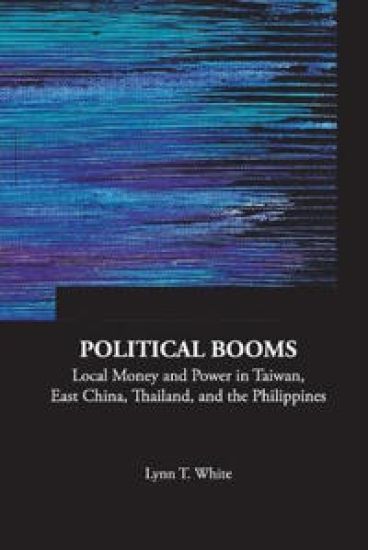
Political Booms: Local Money And Power In Taiwan, East China, Thailand, And The Philippines
Why have Taiwan, rich parts of China, and Thailand boomed famously, while the Philippines has long remained stagnant both economically and politically? Do booms abet democracy? Does the rise of middle “classes” promise future liberalization? Why has Philippine democracy brought no boom and barely served the Filipino people?This book, unlike most previous studies, shows that both the roots and results of growth are largely political rather than economic. Specifically, it pays attention to local, not just national, power networks that caused or prevented growth in the four places under consideration. Violence has been common in these polities, along with money. Elections have contributed to socio-political problems that are also obvious in Leninist or junta regimes, because elections are surprisingly easy to buy with corrupt money from government contracts. Liberals should pay more serious theoretical attention to the effects of money on justice, and Western political science should focus more clearly on the ways non-state local power affects elections. By considering the effects on fair justice of local money and power (largely from small- and medium-sized firms that emerge after agrarian reforms), this book asks democrats to face squarely the extent to which electoral procedures fail to help ordinary citizens. Students and scholars of Asia will all need this book — as will students of the West whose methods have become parochial.
Political Booms: Local Money And Power In Taiwan, East China, Thailand, And The Philippines
Why have Taiwan, rich parts of China, and Thailand boomed famously, while the Philippines has long remained stagnant both economically and politically? Do booms abet democracy? Does the rise of middle “classes” promise future liberalization? Why has Philippine democracy brought no boom and barely served the Filipino people?This book, unlike most previous studies, shows that both the roots and results of growth are largely political rather than economic. Specifically, it pays attention to local, not just national, power networks that caused or prevented growth in the four places under consideration. Violence has been common in these polities, along with money. Elections have contributed to socio-political problems that are also obvious in Leninist or junta regimes, because elections are surprisingly easy to buy with corrupt money from government contracts. Liberals should pay more serious theoretical attention to the effects of money on justice, and Western political science should focus more clearly on the ways non-state local power affects elections. By considering the effects on fair justice of local money and power (largely from small- and medium-sized firms that emerge after agrarian reforms), this book asks democrats to face squarely the extent to which electoral procedures fail to help ordinary citizens. Students and scholars of Asia will all need this book — as will students of the West whose methods have become parochial.