Kirjojen hintavertailu. Mukana 12 595 353 kirjaa ja 12 kauppaa.

Kirjailija

Lynne Tatlock

Kirjat ja teokset yhdessä paikassa: 4 kirjaa, julkaisuja vuosilta 2020-2024, suosituimpien joukossa Inspiration and Transcendence in the Fiction of Kate Chopin. Vertaile teosten hintoja ja tarkista saatavuus suomalaisista kirjakaupoista.

4 kirjaa

Kirjojen julkaisuhaarukka 2020-2024.

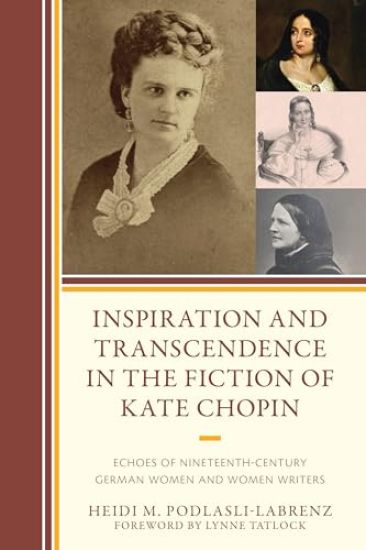
Inspiration and Transcendence in the Fiction of Kate Chopin

Inspiration and Transcendence in the Fiction of Kate Chopin

Heidi M. Podlasli-Labrenz; Lynne Tatlock

BLOOMSBURY PUBLISHING PLC
2024
sidottu
Inspiration and Transcendence in the Fiction of Kate Chopin: Echoes of Nineteenth Century German Women and Women Writers marks the first comprehensive study which explicitly links Kate Chopin’s work to nineteenth-century German women writers Fanny Lewald, Ida Hahn-Hahn, Malwida von Meysenburg and German women, Antoinette Fehringer and Eleonore Grunow, who served as role models for her fiction. This book (re)-establishes connections to Chopin’s contemporaries Nietzsche, Hegel, and Schopenhauer and introduces her indebtedness to the writers of the German Romantic period, Friedrich Schlegel and Novalis, the theologian Friedrich Schleiermacher and the politician Carl Schurz. The modernity of her fiction and the radical-progressive tenets established through her transatlantic influences place Kate Chopin’s work into the context of major historical, socio-political and philosophical movements of nineteenth-century Europe.

Jane Eyre in German Lands

Jane Eyre in German Lands

Lynne Tatlock

BLOOMSBURY PUBLISHING PLC
2023
nidottu
Lynne Tatlock examines the transmission, diffusion, and literary survival of Jane Eyre in the German-speaking territories and the significance and effects thereof, 1848-1918. Engaging with scholarship on the romance novel, she presents an historical case study of the generative power and protean nature of Brontë’s new romance narrative in German translation, adaptation, and imitation as it involved multiple agents, from writers and playwrights to readers, publishers, illustrators, reviewers, editors, adaptors, and translators. Jane Eyre in German Lands traces the ramifications in the paths of transfer that testify to widespread creative investment in romance as new ideas of women’s freedom and equality topped the horizon and sought a home, especially in the middle classes. As Tatlock outlines, the multiple German instantiations of Brontë’s novel—four translations, three abridgments, three adaptations for general readers, nine adaptations for younger readers, plays, farces, and particularly the fiction of the popular German writer E. Marlitt and its many adaptations—evince a struggle over its meaning and promise. Yet precisely this multiplicity (repetition, redundancy, and proliferation) combined with the romance narrative’s intrinsic appeal in the decades between the March Revolutions and women’s franchise enabled the cultural diffusion, impact, and long-term survival of Jane Eyre as German reading. Though its focus on the circulation of texts across linguistic boundaries and intertwined literary markets and reading cultures, Jane Eyre in German Lands unsettles the national paradigm of literary history and makes a case for a fuller and inclusive account of the German literary field.
Jane Eyre in German Lands

Jane Eyre in German Lands

Lynne Tatlock

Bloomsbury Academic USA
2022
sidottu
Lynne Tatlock examines the transmission, diffusion, and literary survival of Jane Eyre in the German-speaking territories and the significance and effects thereof, 1848-1918. Engaging with scholarship on the romance novel, she presents an historical case study of the generative power and protean nature of Brontë’s new romance narrative in German translation, adaptation, and imitation as it involved multiple agents, from writers and playwrights to readers, publishers, illustrators, reviewers, editors, adaptors, and translators. Jane Eyre in German Lands traces the ramifications in the paths of transfer that testify to widespread creative investment in romance as new ideas of women’s freedom and equality topped the horizon and sought a home, especially in the middle classes. As Tatlock outlines, the multiple German instantiations of Brontë’s novel—four translations, three abridgments, three adaptations for general readers, nine adaptations for younger readers, plays, farces, and particularly the fiction of the popular German writer E. Marlitt and its many adaptations—evince a struggle over its meaning and promise. Yet precisely this multiplicity (repetition, redundancy, and proliferation) combined with the romance narrative’s intrinsic appeal in the decades between the March Revolutions and women’s franchise enabled the cultural diffusion, impact, and long-term survival of Jane Eyre as German reading. Though its focus on the circulation of texts across linguistic boundaries and intertwined literary markets and reading cultures, Jane Eyre in German Lands unsettles the national paradigm of literary history and makes a case for a fuller and inclusive account of the German literary field.
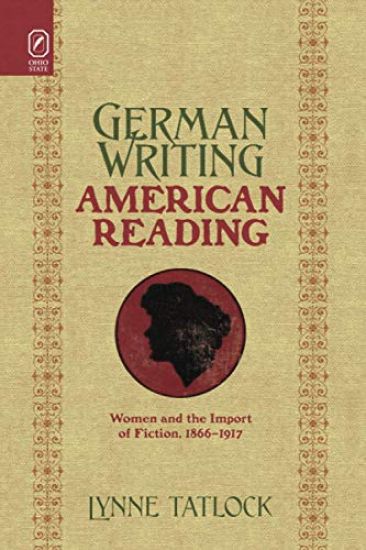
German Writing, American Reading

German Writing, American Reading

Lynne Tatlock

Ohio State University Press
2020
pokkari
In postbellum America, publishers vigorously reprinted books that were foreign in origin, and Americans thus read internationally even at a moment of national consolidation. A subset of Americans' international reading-nearly 100 original texts, approximately 180 American translations, more than 1,000 editions and reprint editions, and hundreds of thousands of books strong-comprised popular fiction written by German women and translated by American women. German Writing, American Reading: Women and the Import of Fiction, 1866-1917 by Lynne Tatlock examines the genesis and circulation in America of this hybrid product over four decades and beyond. These entertaining novels came to the consumer altered by processes of creative adaptation and acculturation that occurred in the United States as a result of translation, marketing, publication, and widespread reading over forty years. These processes in turn de-centered and disrupted the national while still transferring certain elements of German national culture. Most of all, this mass translation of German fiction by American women trafficked in happy endings that promised American readers that their fondest wishes for adventure, drama, and bliss within domesticity and their hope for the real power of love, virtue, and sentiment could be pleasurably realized in an imagined and quaintly old-fashioned Germany-even if only in the time it took to read a novel.