Kirjojen hintavertailu. Mukana 12 390 323 kirjaa ja 12 kauppaa.

Kirjailija

M. Balakrishnan

Kirjat ja teokset yhdessä paikassa: 48 kirjaa, julkaisuja vuosilta 2015-2024, suosituimpien joukossa Use of Geospatial Technology to Model Salt Affected Areas. Vertaile teosten hintoja ja tarkista saatavuus suomalaisista kirjakaupoista.

Mukana myös kirjoitusasut: M Balakrishnan

48 kirjaa

Kirjojen julkaisuhaarukka 2015-2024.

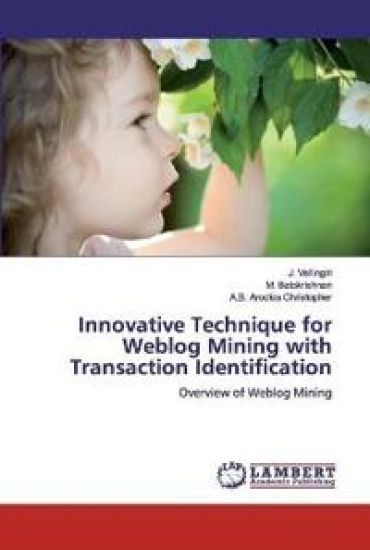
Innovative Technique for Weblog Mining with Transaction Identification

Innovative Technique for Weblog Mining with Transaction Identification

J Vellingiri; M Balakrishnan; A B Arockia Christopher

LAP Lambert Academic Publishing
2019
pokkari
With the enormous amount of data stored in files, databases and other repositories, it is progressively more important, if not essential, to develop powerful means for analysis and perhaps interpretation of such data for the extraction of interesting knowledge that could help in decision making.Data Mining, also commonly recognized as Knowledge Discovery in Databases (KDD), refers to the nontrivial extraction of implicit, previously unidentified and potentially useful information from data in databases Data mining and KDD are often treated as synonyms but data mining is in fact part of the KDD process.

Architecture Exploration of FPGA Based Accelerators for BioInformatics Applications

Architecture Exploration of FPGA Based Accelerators for BioInformatics Applications

B. Sharat Chandra Varma; Kolin Paul; M. Balakrishnan

Springer Verlag, Singapore
2018
nidottu
This book presents an evaluation methodology to design future FPGA fabrics incorporating hard embedded blocks (HEBs) to accelerate applications. This methodology will be useful for selection of blocks to be embedded into the fabric and for evaluating the performance gain that can be achieved by such an embedding. The authors illustrate the use of their methodology by studying the impact of HEBs on two important bioinformatics applications: protein docking and genome assembly. The book also explains how the respective HEBs are designed and how hardware implementation of the application is done using these HEBs. It shows that significant speedups can be achieved over pure software implementations by using such FPGA-based accelerators. The methodology presented in this book may also be used for designing HEBs for accelerating software implementations in other domains besides bioinformatics. This book will prove useful to students, researchers, and practicing engineers alike.
Architecture Exploration of FPGA Based Accelerators for BioInformatics Applications

Architecture Exploration of FPGA Based Accelerators for BioInformatics Applications

B. Sharat Chandra Varma; Kolin Paul; M. Balakrishnan

Springer Verlag, Singapore
2016
sidottu
This book presents an evaluation methodology to design future FPGA fabrics incorporating hard embedded blocks (HEBs) to accelerate applications. This methodology will be useful for selection of blocks to be embedded into the fabric and for evaluating the performance gain that can be achieved by such an embedding. The authors illustrate the use of their methodology by studying the impact of HEBs on two important bioinformatics applications: protein docking and genome assembly. The book also explains how the respective HEBs are designed and how hardware implementation of the application is done using these HEBs. It shows that significant speedups can be achieved over pure software implementations by using such FPGA-based accelerators. The methodology presented in this book may also be used for designing HEBs for accelerating software implementations in other domains besides bioinformatics. This book will prove useful to students, researchers, and practicing engineers alike.
Agrobiodiversity and Sustainable Rural Development

Agrobiodiversity and Sustainable Rural Development

S.K. Soam; M. Balakrishnan

New India Publishing Agency
2015
sidottu
Biodiversity management has become a major focus for researchers and development professionals in the current global environment. This area encompasses information on the current status of plant and animal biodiversity, indigenous practices, landraces, traditional knowledge, and gene bank conservation. The text provides a comprehensive account of major agricultural crops, such as wheat, rice, maize, sorghum, organic pigeon pea, millets, niger, and cotton, and discusses how underutilized bioresources can be commercialized.To ensure sustainability, the text also includes information on cattle, Indian livestock, poultry, native chickens, camelids, and pollinator faunas, with a focus on monitoring methods for the presence of adventitious transgenes and xenobiotic monitoring.Community involvement is key to sustainable agrobiodiversity management, and the text highlights the importance of awareness, community strategies, social equity, conservation of local practices, and community participation. It covers indigenous practices for seed storage, conservation of traditional water tanks, tribal farmers knowledge and practices, the role of women in conservation, organic practices, community seed networks, community pastures, and public-private partnerships.
Agrobiodiversity and Sustainable Rural Development

Agrobiodiversity and Sustainable Rural Development

S.K. Soam; M. Balakrishnan

New India Publishing Agency
2015
nidottu
In the current global climate, biodiversity management is a subject of great interest to both researchers and development professionals. This includes information on the current status of plant and animal biodiversity, as well as indigenous practices, landraces, traditional knowledge, and gene bank conservation. The text also provides a detailed account of how underutilized bioresources can be brought under commercial use for major agricultural crops such as wheat, rice, maize, sorghum, organic pigeon pea, millets, niger, and cotton.Sustainability cannot be achieved without the use of animal bioresources, and therefore information on cattle, Indian livestock, poultry, native chickens, camelids, and pollinator faunas are included. Additionally, the text covers monitoring methods for the presence of adventitious transgenes and xenobiotic monitoring.Community involvement is a crucial component of sustainable agrobiodiversity management. The text emphasizes the importance of awareness, community strategies, social equity, conservation of local practices, and community participation. Indigenous practices for seed storage, conservation of traditional water tanks, tribal farmers knowledge and practices, the role of women in conservation, organic practices, community seed networks, community pastures, and public-private partnerships are all discussed.