Kirjojen hintavertailu. Mukana 12 595 353 kirjaa ja 12 kauppaa.

Kirjailija

M. Cecilia Gaposchkin

Kirjat ja teokset yhdessä paikassa: 14 kirjaa, julkaisuja vuosilta 2008-2026, suosituimpien joukossa Invisible Weapons. Vertaile teosten hintoja ja tarkista saatavuus suomalaisista kirjakaupoista.

14 kirjaa

Kirjojen julkaisuhaarukka 2008-2026.

Shrines, Relics, and Saints

Shrines, Relics, and Saints

André Vauchez; M. Cecilia Gaposchkin; Anne E. Lester

CORNELL UNIVERSITY PRESS
2026
sidottu
In Shrines, Relics, and Saints,the eminent medievalist André Vauchez explores the evolution of spaces in Christianity—chapels, monasteries, holy wells, grottos, and other holy places—that are considered sacred because they house the relics of a saint or because they preserve the memory of an appearance by a saint, angel, or the Virgin Mary. From famous sanctuaries that still attract multitudes of pilgrims—in Jerusalem, Rome, Tours, Assisi, and Compostela—to local shrines in villages, towns and wild places across the continent, these sanctuaries were frequented by pilgrims in search of miraculous healings of body and soul. Together, they formed a network comprising new forms of sacredness and spiritual practice. A masterwork in the history of Christianity, Shrines, Relics, and Saints traces pilgrimage routes to major sanctuaries, follows saints' relics as they were transferred from East to West, and examines the Church's ambiguous and sometimes antagonistic relationship to sites of popular worship.

Shrines, Relics, and Saints

Shrines, Relics, and Saints

André Vauchez; M. Cecilia Gaposchkin; Anne E. Lester

CORNELL UNIVERSITY PRESS
2026
pokkari
In Shrines, Relics, and Saints,the eminent medievalist André Vauchez explores the evolution of spaces in Christianity—chapels, monasteries, holy wells, grottos, and other holy places—that are considered sacred because they house the relics of a saint or because they preserve the memory of an appearance by a saint, angel, or the Virgin Mary. From famous sanctuaries that still attract multitudes of pilgrims—in Jerusalem, Rome, Tours, Assisi, and Compostela—to local shrines in villages, towns and wild places across the continent, these sanctuaries were frequented by pilgrims in search of miraculous healings of body and soul. Together, they formed a network comprising new forms of sacredness and spiritual practice. A masterwork in the history of Christianity, Shrines, Relics, and Saints traces pilgrimage routes to major sanctuaries, follows saints' relics as they were transferred from East to West, and examines the Church's ambiguous and sometimes antagonistic relationship to sites of popular worship.
Microliteratures

Microliteratures

Jesús R. Velasco; M. Cecilia Gaposchkin; Anne E. Lester

CORNELL UNIVERSITY PRESS
2025
pokkari
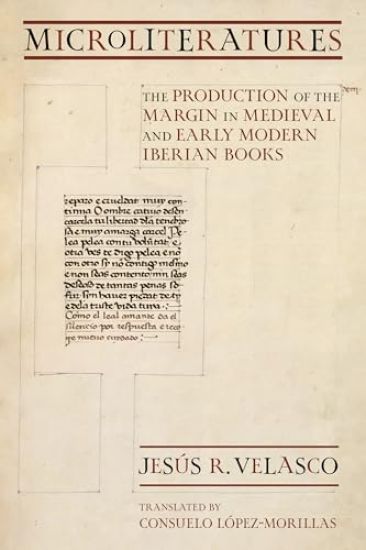
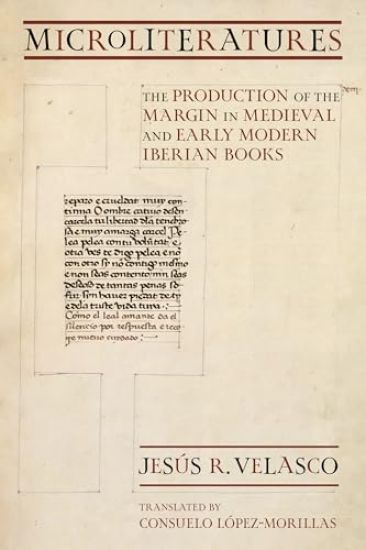
Microliteratures is an innovative examination of writings done in the margins of medieval manuscripts and early modern books. Not always as formal as glosses, sometimes feverish and abbreviated, these marginal writings or, "microliteratures," are the product of readers thinking with the text at the center of the page. Jesús R. Velasco argues that microliteratures are not private annotations but, rather, a humanistic activity performed in the public sphere. These marginal engagements with texts are made public to future readers of the same book. Surveying the microliteratures of a wide range of medieval and early modern Iberian genres—legal, religious, chivalric, and political texts—Velasco finds that in the shared space and time of reading, microliterary actions and artifacts are also models of public humanities work that connects texts to contemporary issues. Microliteratures emerge from this ambitious book as a way of understanding the self as a reflective and politically engaged reader in conversation with past, present, and future readers as contemporaries.
Microliteratures

Microliteratures

Jesús R. Velasco; M. Cecilia Gaposchkin; Anne E. Lester

CORNELL UNIVERSITY PRESS
2025
sidottu
Microliteratures is an innovative examination of writings done in the margins of medieval manuscripts and early modern books. Not always as formal as glosses, sometimes feverish and abbreviated, these marginal writings or, "microliteratures," are the product of readers thinking with the text at the center of the page. Jesús R. Velasco argues that microliteratures are not private annotations but, rather, a humanistic activity performed in the public sphere. These marginal engagements with texts are made public to future readers of the same book. Surveying the microliteratures of a wide range of medieval and early modern Iberian genres—legal, religious, chivalric, and political texts—Velasco finds that in the shared space and time of reading, microliterary actions and artifacts are also models of public humanities work that connects texts to contemporary issues. Microliteratures emerge from this ambitious book as a way of understanding the self as a reflective and politically engaged reader in conversation with past, present, and future readers as contemporaries.
Radiances

Radiances

Ernst Kantorowicz; M. Cecilia Gaposchkin; Anne E. Lester

CORNELL UNIVERSITY PRESS
2025
pokkari
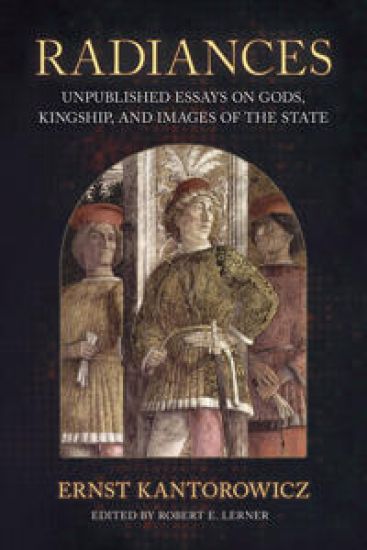
Radiances gathers previously unpublished essays by one of the greatest historians of the twentieth century. Although best known for The King's Two Bodies (1957), Ernst Kantorowicz's scholarly expertise ranged from classical antiquity to early modernity and from political pageantry to numismatics. These essays traverse the breadth of his expertise, exploring "radiations" of the themes that were central to his published work: sovereignty, theology, law, and iconography. The radiations in these engaging essays include the imagery of throne-sharing from the Hellenistic era and Pharaonic Egypt to early Christianity, coronation ceremonies in Byzantium and the West, the Carolingian and Burgundian Renaissances, the relationship between Rome and Christianity, the importance of history as a humanistic pursuit, and the significance of postage stamps in political myth-building. Robert E. Lerner discusses each essay's composition, themes, and place in Kantorowicz's oeuvre. Combining vast knowledge with intellectual delight, Radiances teems with the profound historical insights that distinguished Kantorowicz's scholarship.
Radiances

Radiances

Ernst Kantorowicz; M. Cecilia Gaposchkin; Anne E. Lester

CORNELL UNIVERSITY PRESS
2025
sidottu
Radiances gathers previously unpublished essays by one of the greatest historians of the twentieth century. Although best known for The King's Two Bodies (1957), Ernst Kantorowicz's scholarly expertise ranged from classical antiquity to early modernity and from political pageantry to numismatics. These essays traverse the breadth of his expertise, exploring "radiations" of the themes that were central to his published work: sovereignty, theology, law, and iconography. The radiations in these engaging essays include the imagery of throne-sharing from the Hellenistic era and Pharaonic Egypt to early Christianity, coronation ceremonies in Byzantium and the West, the Carolingian and Burgundian Renaissances, the relationship between Rome and Christianity, the importance of history as a humanistic pursuit, and the significance of postage stamps in political myth-building. Robert E. Lerner discusses each essay's composition, themes, and place in Kantorowicz's oeuvre. Combining vast knowledge with intellectual delight, Radiances teems with the profound historical insights that distinguished Kantorowicz's scholarship.
To Govern Is to Serve

To Govern Is to Serve

Jacques Dalarun; M. Cecilia Gaposchkin; Anne E. Lester

CORNELL UNIVERSITY PRESS
2023
sidottu
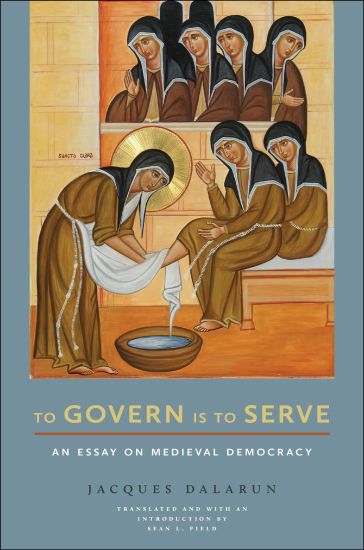
To Govern Is to Serve explores the practices of collective governance in medieval religious orders that turned the precepts of the Gospels—most notably that "the first will be last, the last will be first"—into practices of communal deliberation and the election of superiors. Jacques Dalarun argues that these democratic forms have profoundly influenced modern experiences of democracy, in particular the idea of government not as domination but as service. Dalarun undertakes meticulous textual analysis and historical research into twelfth and thirteenth-century religious movements—from Fontevraud and the Paraclete of Abelard and Heloise through St. Dominic and St. Francis—that sought their superiors from among the less exalted members of their communities to chart how these experiments prefigured certain aspects of modern democracies, those allowing individuals to find their way forward as part of a collective. Wide ranging and deeply original,To Govern Is to Serve highlights the history of the reciprocal bonds of service and humility that underpin increasingly fragile democracies in the twenty-first century.
To Govern Is to Serve

To Govern Is to Serve

Jacques Dalarun; M. Cecilia Gaposchkin; Anne E. Lester

CORNELL UNIVERSITY PRESS
2023
pokkari
To Govern Is to Serve explores the practices of collective governance in medieval religious orders that turned the precepts of the Gospels—most notably that "the first will be last, the last will be first"—into practices of communal deliberation and the election of superiors. Jacques Dalarun argues that these democratic forms have profoundly influenced modern experiences of democracy, in particular the idea of government not as domination but as service. Dalarun undertakes meticulous textual analysis and historical research into twelfth and thirteenth-century religious movements—from Fontevraud and the Paraclete of Abelard and Heloise through St. Dominic and St. Francis—that sought their superiors from among the less exalted members of their communities to chart how these experiments prefigured certain aspects of modern democracies, those allowing individuals to find their way forward as part of a collective. Wide ranging and deeply original,To Govern Is to Serve highlights the history of the reciprocal bonds of service and humility that underpin increasingly fragile democracies in the twenty-first century.
Blessed Louis, the Most Glorious of Kings

Blessed Louis, the Most Glorious of Kings

M. Cecilia Gaposchkin

UNIVERSITY OF NOTRE DAME PRESS
2022
sidottu
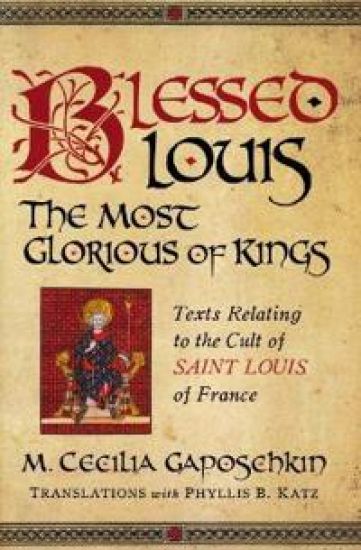
Louis IX, king of France from 1226 to 1270 and twice crusader, was canonized in 1297. He was the last king canonized during the medieval period, and was both one of the most important saints and one of the most important kings of the later Middle Ages. In Blessed Louis, the Most Glorious of Kings: Texts Relating to the Cult of Saint Louis of France, M. Cecilia Gaposchkin presents six previously untranslated texts that informed medieval views of St. Louis IX: two little-known but early and important vitae of Saint Louis; two unedited sermons by the Parisian preacher Jacob of Lausanne (d. 1322); and a liturgical office and proper mass in his honor—the most commonly used liturgical texts composed for Louis' feast day—which were widely copied, read, and disseminated in the Middle Ages. Gaposchkin's aim is to present to a diverse readership the Louis as he was known and experienced in the Middle Ages: a saint celebrated by the faithful for his virtue and his deeds. She offers for the first time to English readers a typical hagiographical view of Saint Louis, one in counterbalance to that set forth in Jean of Joinville's Life of Saint Louis. Although Joinville's Life has dominated our views of Louis, Joinville's famous account was virtually unknown beyond the French royal court in the Middle Ages and was not printed until the sixteenth century. His portrayal of Louis as an individual and deeply charismatic personality is remarkable, but it is fundamentally unrepresentative of the medieval understanding of Louis. The texts that Gaposchkin translates give immediate access to the reasons why medieval Christians took Louis to be a saint; the texts, and the image of Saint Louis presented in them, she argues, must be understood within the context of the developing history of sanctity and sainthood at the end of the Middle Ages.
Invisible Weapons

Invisible Weapons

M. Cecilia Gaposchkin

Cornell University Press
2021
pokkari
Throughout the history of the Crusades, liturgical prayer, masses, and alms were all marshaled in the fight against Muslim armies. In Invisible Weapons, M. Cecilia Gaposchkin focuses on the ways in which Latin Christians communicated their ideas and aspirations for crusade to God through liturgy, how public worship was deployed, and how prayers and masses absorbed the ideals and priorities of crusading. Placing religious texts and practices within the larger narrative of crusading, Gaposchkin offers a new understanding of a crucial facet in the culture of holy war. Open Access edition funded by the National Endowment for the Humanities
Blessed Louis, the Most Glorious of Kings

Blessed Louis, the Most Glorious of Kings

M. Cecilia Gaposchkin

University of Notre Dame Press
2012
nidottu
Louis IX, king of France from 1226 to 1270 and twice crusader, was canonized in 1297. He was the last king canonized during the medieval period, and was both one of the most important saints and one of the most important kings of the later Middle Ages. In Blessed Louis, the Most Glorious of Kings: Texts Relating to the Cult of Saint Louis of France, M. Cecilia Gaposchkin presents six previously untranslated texts that informed medieval views of St. Louis IX: two little-known but early and important vitae of Saint Louis; two unedited sermons by the Parisian preacher Jacob of Lausanne (d. 1322); and a liturgical office and proper mass in his honor—the most commonly used liturgical texts composed for Louis' feast day—which were widely copied, read, and disseminated in the Middle Ages. Gaposchkin's aim is to present to a diverse readership the Louis as he was known and experienced in the Middle Ages: a saint celebrated by the faithful for his virtue and his deeds. She offers for the first time to English readers a typical hagiographical view of Saint Louis, one in counterbalance to that set forth in Jean of Joinville's Life of Saint Louis. Although Joinville's Life has dominated our views of Louis, Joinville's famous account was virtually unknown beyond the French royal court in the Middle Ages and was not printed until the sixteenth century. His portrayal of Louis as an individual and deeply charismatic personality is remarkable, but it is fundamentally unrepresentative of the medieval understanding of Louis. The texts that Gaposchkin translates give immediate access to the reasons why medieval Christians took Louis to be a saint; the texts, and the image of Saint Louis presented in them, she argues, must be understood within the context of the developing history of sanctity and sainthood at the end of the Middle Ages.
The Making of Saint Louis

The Making of Saint Louis

M. Cecilia Gaposchkin

Cornell University Press
2010
pokkari
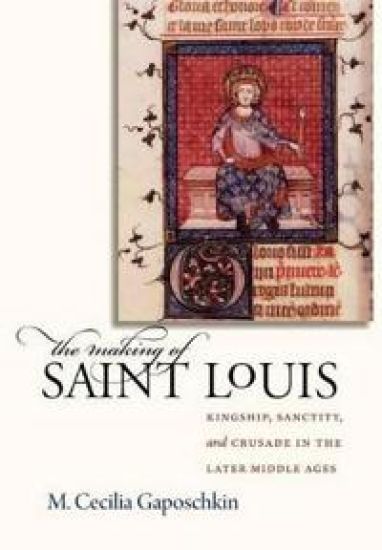
Canonized in 1297 as Saint Louis, King Louis IX of France (r. 1226–1270) was one of the most important kings of medieval history and also one of the foremost saints of the later Middle Ages. As a saint, Louis became the centerpiece of an ideological program that buttressed the ongoing political consolidation of France and underscored Capetian claims of sacred kingship. M. Cecilia Gaposchkin reconstructs and analyzes the process that led to the monarch's canonization and the consolidation and spread of his cult. Differing political and religious ideals produced competing images of the sanctity of Louis in late-thirteenth and early fourteenth-century France. Drawing on hagiography, sermons, and liturgical evidence—the latter a rich but little-explored historical source—Gaposchkin shows how various groups (including Dominicans, Cistercians, and Franciscans) and individuals (such as Philip the Fair and Joinville) used commemoration of the saint-king to sanctify their own politics and notions of identity and religious virtue. Louis' cult was disseminated to a wider, nonelite public through sermons in the fourteenth and fifteenth centuries and then revived by the Bourbon kings in the seventeenth century. In deepening our knowledge of this royal saint, this elegantly written book opens the curtain on the religious sensibilities and secular politics of a transitional period in European history.
The Making of Saint Louis

The Making of Saint Louis

M. Cecilia Gaposchkin

Cornell University Press
2008
sidottu
Canonized in 1297 as Saint Louis, King Louis IX of France (r. 1226–1270) was one of the most important kings of medieval history and also one of the foremost saints of the later Middle Ages. As a saint, Louis became the centerpiece of an ideological program that buttressed the ongoing political consolidation of France and underscored Capetian claims of sacred kingship. M. Cecilia Gaposchkin reconstructs and analyzes the process that led to the monarch's canonization and the consolidation and spread of his cult. Differing political and religious ideals produced competing images of the sanctity of Louis in late-thirteenth and early fourteenth-century France. Drawing on hagiography, sermons, and liturgical evidence—the latter a rich but little-explored historical source—Gaposchkin shows how various groups (including Dominicans, Cistercians, and Franciscans) and individuals (such as Philip the Fair and Joinville) used commemoration of the saint-king to sanctify their own politics and notions of identity and religious virtue. Louis' cult was disseminated to a wider, nonelite public through sermons in the fourteenth and fifteenth centuries and then revived by the Bourbon kings in the seventeenth century. In deepening our knowledge of this royal saint, this elegantly written book opens the curtain on the religious sensibilities and secular politics of a transitional period in European history.