

Kirjailija
M. David Rudd
Kirjat ja teokset yhdessä paikassa: 6 kirjaa, julkaisuja vuosilta 2001-2025, suosituimpien joukossa Treating Suicidal Behavior. Vertaile teosten hintoja ja tarkista saatavuus suomalaisista kirjakaupoista.
6 kirjaa
Kirjojen julkaisuhaarukka 2001-2025.
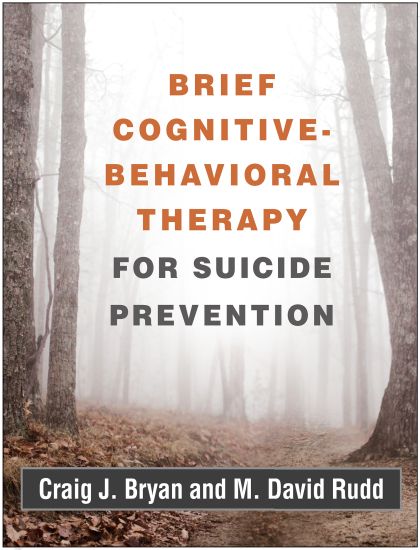
Brief Cognitive-Behavioral Therapy for Suicide Prevention
Craig J. Bryan; M. David Rudd
Guilford Press
2018
nidottu
An innovative treatment approach with a strong empirical evidence base, brief cognitive-behavioral therapy for suicide prevention (BCBT) is presented in step-by-step detail in this authoritative manual. Leading treatment developers show how to establish a strong collaborative relationship with a suicidal patient, assess risk, and immediately work to establish safety. Proven interventions are described for building emotion regulation and crisis management skills and dismantling the patient's suicidal belief system. The book includes case examples, sample dialogues, and 17 reproducible handouts, forms, scripts, and other clinical tools. The large-size format facilitates photocopying; purchasers also get access to a webpage where they can download and print the reproducible materials.
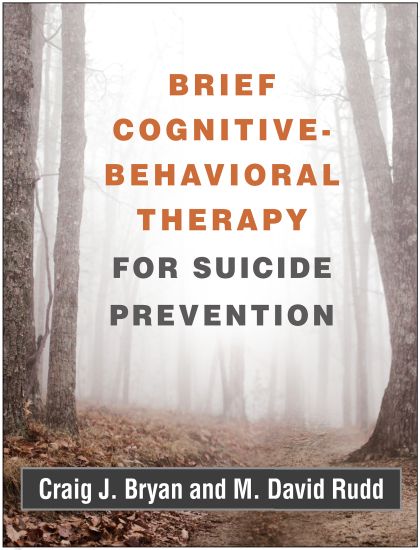
Brief Cognitive-Behavioral Therapy for Suicide Prevention
Craig J. Bryan; M. David Rudd
Guilford Press
2018
sidottu
An innovative treatment approach with a strong empirical evidence base, brief cognitive-behavioral therapy for suicide prevention (BCBT) is presented in step-by-step detail in this authoritative manual. Leading treatment developers show how to establish a strong collaborative relationship with a suicidal patient, assess risk, and immediately work to establish safety. Proven interventions are described for building emotion regulation and crisis management skills and dismantling the patient's suicidal belief system. The book includes case examples, sample dialogues, and 17 reproducible handouts, forms, scripts, and other clinical tools. The large-size format facilitates photocopying; purchasers also get access to a webpage where they can download and print the reproducible materials.
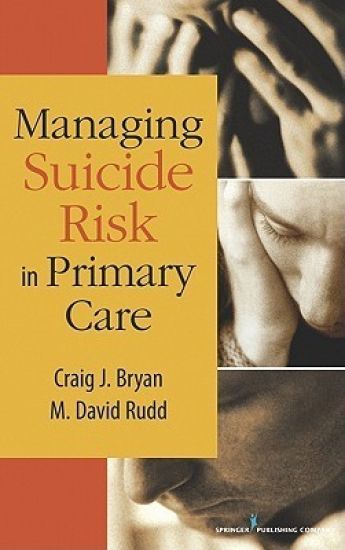
Managing Suicide Risk in Primary Care
Craig J. Bryan; M. David Rudd
Springer Publishing Co Inc
2010
nidottu
Primary care is the new frontier for preventing suicide and Bryan and Rudd are its pioneers, offering wisdom and guidance based on their experience in bridging behavioral health care to the primary health care setting. This is a truly significant reference. Lanny Berman, PhD, ABPP Executive Director, American Association of Suicidology President, International Association for Suicide Prevention In their pragmatic and useful book titled Managing Suicide Risk in Primary Care, Bryan and Rudd provide an essential reference guide for health care professionals working in primary care settings."--PsycCRITIQUES This book offers a comprehensive approach that can help the physician become competent to assess and intervene with suicidal risk as well as lessen his or her anxiety when dealing with patients at suicide risk. Needless to say, this can be a life and death matter for some patients... One of the great strengths of this book is how they have adapted insights and interventions from traditional mental health care for the uniqueness of primary care... I highly recommend this book for any professional working in primary care. It will be taken off the shelf for reference and reviewed many times in the course of a career.--Family Medicine Journal Roughly forty-five percent of individuals who commit suicide make contact with a primary medical provider in the month prior to their death; nearly twenty percent make contact within one day of their death. This practical guide demonstrates how the primary care setting-an increasingly important provider of mental health treatment-can be an effective place for preventing suicide and providing ameliorative care. Firmly grounded in the clinical realities of primary care, Bryan and Rudd address the key issues that often plague behavioral health consultants (BHCs) in such settings where appointments are brief, patient contact is limited, and decision making and treatment are collaborative. They offer effective strategies for BHCs to manage patients across a suicidal crisis beginning with the development of procedures prior to crisis, steps to take during a crisis, planning for post-crisis care, transition to specialty mental health facilities, and legal issues. Key Features: Targets techniques for suicide assessment and prevention in primary care settings Addresses the clinical realities of working in a primary care setting and how to adapt them to the needs of suicidal patients Covers clinical protocols, legal issues, and risk management Discusses the formation of collaborative relationships with patients and staff Provides brief interventions with suicidal patients and post-crisis strategies Written by leading specialists in behavioral health, primary care, and suicidology
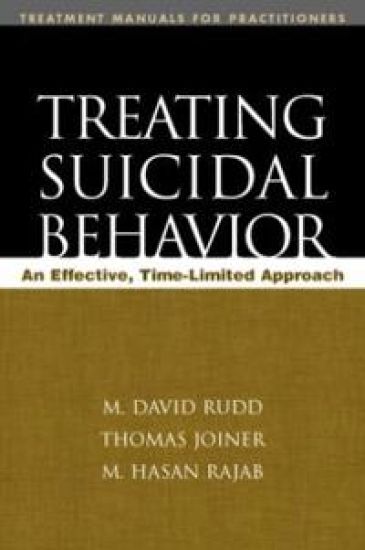
Treating Suicidal Behavior
M. David Rudd; Thomas E. Joiner; M. Hasan Rajab
Guilford Publications
2004
nidottu
Grounded in a comprehensive model of suicidality, this volume describes an empirically supported cognitive-behavioral treatment approach. The clinician is guided to assess suicidal behavior and implement interventions tailored to the severity, chronicity, and diagnostic complexity of the patient's symptoms. Provided are session-by-session guidelines and clear-cut strategies for defusing the initial crisis; reducing suicidal behavior; restructuring suicide-related beliefs; and building interpersonal assertiveness, distress tolerance, problem solving, and other key skills. A special chapter covers risk assessment. Enhancing the book's utility are tables, figures, and sample handouts and forms, some of which may be reproduced for professional use.
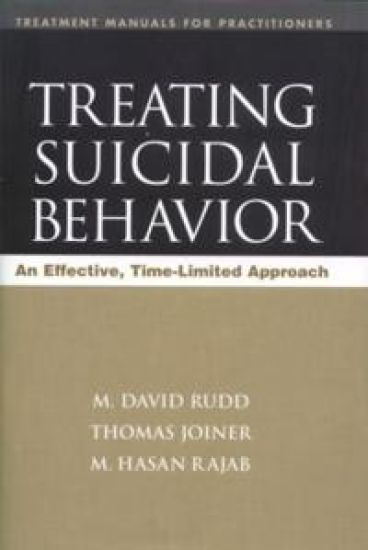
Treating Suicidal Behavior
M. David Rudd; Thomas E. Joiner; M. Hasan Rajab
Guilford Publications
2001
sidottu
Grounded in a comprehensive model of suicidality, this volume describes an empirically supported cognitive-behavioral treatment approach. The clinician is guided to assess suicidal behavior and implement interventions tailored to the severity, chronicity, and diagnostic complexity of the patient's symptoms. Provided are session-by-session guidelines and clear-cut strategies for defusing the initial crisis; reducing suicidal behavior; restructuring suicide-related beliefs; and building interpersonal assertiveness, distress tolerance, problem solving, and other key skills. A special chapter covers risk assessment. Enhancing the book's utility are tables, figures, and sample handouts and forms, some of which may be reproduced for professional use.