Kirjojen hintavertailu. Mukana 12 480 766 kirjaa ja 12 kauppaa.

Kirjailija

M.Ed. Lerchenfeldt

Kirjat ja teokset yhdessä paikassa: 12 kirjaa, julkaisuja vuosilta 2025-2026, suosituimpien joukossa Lean Principles for Process Optimization in the Energy Sector. Vertaile teosten hintoja ja tarkista saatavuus suomalaisista kirjakaupoista.

12 kirjaa

Kirjojen julkaisuhaarukka 2025-2026.

Challenging the Status Quo in Education

Challenging the Status Quo in Education

PhD Flumerfelt; M.Ed. Lerchenfeldt

TAYLOR FRANCIS LTD
2026
sidottu
Lean methodologies, when applied to education, can address issues like resource waste, inefficient processes, and lack of student engagement by focusing on streamlining workflows, identifying and eliminating non-value-added activities, and fostering a culture of continuous improvement. Through interviews with the superintendent of a school district, this book relates the journey of learning and growth as shared through storytelling, reflecting, and releasing tested wisdom. By fostering a culture of continuous improvement, this Great Lean Leader unfolds the truths for how he got to sustainable success—and continues the relentless pursuit of value creation. As part of the Great Lean Leaders series, this book is designed to provide several reference points for reading and learning about the what’s, why’s and how’s of Lean Leadership. The chapters are realistic and represent stories shared with authenticity and transparency based on two interviews of the Lean Leader. Each chapter has four sections: an overview of the interview, a referenced section of three Lean Leadership strategies and tactics and three benefits, a summary of observed Lean Leadership competencies, and links to the interviews and transcripts of the interviews. A final summary chapter is based on a group panel session and contains a detailed summary of intensive interviews, along with a set of detailed teaching lessons. A description of lean and lean tools is scattered throughout the book to add relevance and expand the readers knowledge of lean methodologies.
Challenging the Status Quo in Education

Challenging the Status Quo in Education

PhD Flumerfelt; M.Ed. Lerchenfeldt

TAYLOR FRANCIS LTD
2026
nidottu
Lean methodologies, when applied to education, can address issues like resource waste, inefficient processes, and lack of student engagement by focusing on streamlining workflows, identifying and eliminating non-value-added activities, and fostering a culture of continuous improvement. Through interviews with the superintendent of a school district, this book relates the journey of learning and growth as shared through storytelling, reflecting, and releasing tested wisdom. By fostering a culture of continuous improvement, this Great Lean Leader unfolds the truths for how he got to sustainable success—and continues the relentless pursuit of value creation. As part of the Great Lean Leaders series, this book is designed to provide several reference points for reading and learning about the what’s, why’s and how’s of Lean Leadership. The chapters are realistic and represent stories shared with authenticity and transparency based on two interviews of the Lean Leader. Each chapter has four sections: an overview of the interview, a referenced section of three Lean Leadership strategies and tactics and three benefits, a summary of observed Lean Leadership competencies, and links to the interviews and transcripts of the interviews. A final summary chapter is based on a group panel session and contains a detailed summary of intensive interviews, along with a set of detailed teaching lessons. A description of lean and lean tools is scattered throughout the book to add relevance and expand the readers knowledge of lean methodologies.
Lean and Industrial Connectivity

Lean and Industrial Connectivity

PhD Flumerfelt; M.Ed. Lerchenfeldt

TAYLOR FRANCIS LTD
2026
sidottu
Industrial connectivity refers to the integration and networking of various industrial devices, machines, and systems to enable communication, data exchange, control, and automation, ultimately facilitating smart manufacturing, connected products, and digital thread initiatives. Lean principles, focused on waste reduction and efficiency, can be significantly enhanced and complemented by industrial connectivity technologies, leading to greater flexibility, speed, and productivity in manufacturing. Through interviews with the director of EHS & Sustainability for a large global company, this book relates the journey of learning and growth as shared through storytelling, reflecting, and releasing tested wisdom. By fostering a culture of continuous improvement, this Great Lean Leader unfolds the truths for how her organization got to sustainable success—and continues the relentless pursuit of value creation. As part of the Great Lean Leaders series, this book is designed to provide several reference points for reading and learning about the what’s, why’s and how’s of Lean Leadership. The chapters are realistic and represent stories shared with authenticity and transparency based on two interviews of the Lean Leader. Each chapter has four sections: an overview of the interview, a referenced section of three Lean Leadership strategies and tactics and three benefits, a summary of observed Lean Leadership competencies, and links to the interviews and transcripts of the interviews. A final summary chapter is based on a group panel session and contains a detailed summary of intensive interviews, along with a set of detailed teaching lessons. A description of lean and lean tools is scattered throughout the book to add relevance and expand the readers knowledge of lean methodologies.
Lean and Industrial Connectivity

Lean and Industrial Connectivity

PhD Flumerfelt; M.Ed. Lerchenfeldt

TAYLOR FRANCIS LTD
2026
nidottu
Industrial connectivity refers to the integration and networking of various industrial devices, machines, and systems to enable communication, data exchange, control, and automation, ultimately facilitating smart manufacturing, connected products, and digital thread initiatives. Lean principles, focused on waste reduction and efficiency, can be significantly enhanced and complemented by industrial connectivity technologies, leading to greater flexibility, speed, and productivity in manufacturing. Through interviews with the director of EHS & Sustainability for a large global company, this book relates the journey of learning and growth as shared through storytelling, reflecting, and releasing tested wisdom. By fostering a culture of continuous improvement, this Great Lean Leader unfolds the truths for how her organization got to sustainable success—and continues the relentless pursuit of value creation. As part of the Great Lean Leaders series, this book is designed to provide several reference points for reading and learning about the what’s, why’s and how’s of Lean Leadership. The chapters are realistic and represent stories shared with authenticity and transparency based on two interviews of the Lean Leader. Each chapter has four sections: an overview of the interview, a referenced section of three Lean Leadership strategies and tactics and three benefits, a summary of observed Lean Leadership competencies, and links to the interviews and transcripts of the interviews. A final summary chapter is based on a group panel session and contains a detailed summary of intensive interviews, along with a set of detailed teaching lessons. A description of lean and lean tools is scattered throughout the book to add relevance and expand the readers knowledge of lean methodologies.
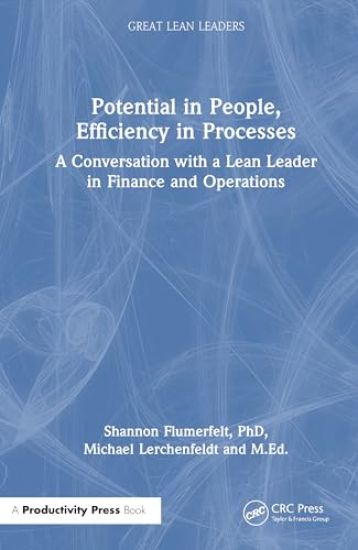
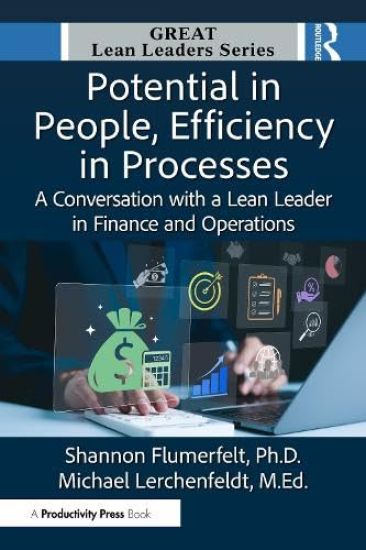
Potential in People, Efficiency in Processes

Potential in People, Efficiency in Processes

PhD Flumerfelt; M.Ed. Lerchenfeldt

TAYLOR FRANCIS LTD
2026
sidottu
School districts face financial and operational challenges, including funding disparities, rising costs, declining enrollment, labor shortages, and the need to adapt to changing student needs and technological advancements. Lean Principles can significantly benefit school district finance and operations by optimizing processes, reducing waste, and improving efficiency, ultimately enhancing resource allocation and service delivery. Through interviews with the superintendent of finance and operations of a public school district, this book relates the journey of learning and growth as shared through storytelling, reflecting, and releasing tested wisdom. By fostering a culture of continuous improvement, this Great Lean Leader unfolds the truths for how her office got to sustainable success— and continues the relentless pursuit of value creation. As part of the Great Lean Leaders series, this book is designed to provide several reference points for reading and learning about the what’s, why’s, and how’s of Lean Leadership. The chapters are realistic and represent stories shared with authenticity and transparency based on two interviews with this Lean Leader. Each book has five sections: an overview of the interview, a referenced section of six Lean Leadership strategies and tactics and nine benefits, a summary of observed Lean Leadership competencies, and links to the interviews and transcripts of the interviews. A final summary chapter is based on a group panel session and contains a detailed summary of intensive interviews, along with a set of detailed teaching lessons. A description of Lean and Lean tools is scattered throughout the book to add relevance and expand the reader’s knowledge of Lean methodologies. The need for Great Lean Leaders is more pressing today than ever. Often the barriers to taking on the charge of a Great Lean Leader are complex and they rest in the human system of any organization. There is a business case, a true return on investment reason, to remain committed to the pathway of becoming a Great Lean Leader. This book is designed to help you clarify and accelerate your Great Lean Leader success.
Potential in People, Efficiency in Processes

Potential in People, Efficiency in Processes

PhD Flumerfelt; M.Ed. Lerchenfeldt

TAYLOR FRANCIS LTD
2026
nidottu
School districts face financial and operational challenges, including funding disparities, rising costs, declining enrollment, labor shortages, and the need to adapt to changing student needs and technological advancements. Lean Principles can significantly benefit school district finance and operations by optimizing processes, reducing waste, and improving efficiency, ultimately enhancing resource allocation and service delivery. Through interviews with the superintendent of finance and operations of a public school district, this book relates the journey of learning and growth as shared through storytelling, reflecting, and releasing tested wisdom. By fostering a culture of continuous improvement, this Great Lean Leader unfolds the truths for how her office got to sustainable success— and continues the relentless pursuit of value creation. As part of the Great Lean Leaders series, this book is designed to provide several reference points for reading and learning about the what’s, why’s, and how’s of Lean Leadership. The chapters are realistic and represent stories shared with authenticity and transparency based on two interviews with this Lean Leader. Each book has five sections: an overview of the interview, a referenced section of six Lean Leadership strategies and tactics and nine benefits, a summary of observed Lean Leadership competencies, and links to the interviews and transcripts of the interviews. A final summary chapter is based on a group panel session and contains a detailed summary of intensive interviews, along with a set of detailed teaching lessons. A description of Lean and Lean tools is scattered throughout the book to add relevance and expand the reader’s knowledge of Lean methodologies. The need for Great Lean Leaders is more pressing today than ever. Often the barriers to taking on the charge of a Great Lean Leader are complex and they rest in the human system of any organization. There is a business case, a true return on investment reason, to remain committed to the pathway of becoming a Great Lean Leader. This book is designed to help you clarify and accelerate your Great Lean Leader success.
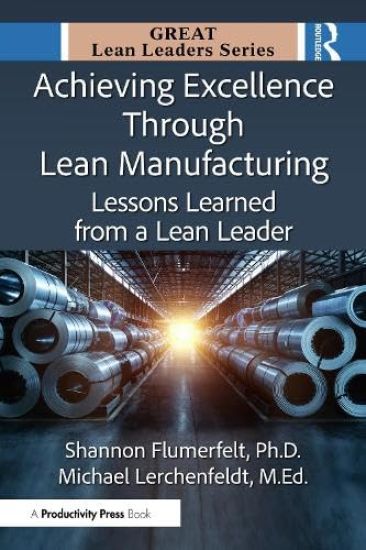
Achieving Excellence Through Lean Manufacturing

Achieving Excellence Through Lean Manufacturing

PhD Flumerfelt; M.Ed. Lerchenfeldt

TAYLOR FRANCIS LTD
2026
sidottu
Lean manufacturing is a production process based on an ideology of maximizing productivity while simultaneously minimizing waste within a manufacturing operation. Lean Principles see waste as anything that doesn’t add value that the customers are willing to pay for. Lean manufacturing maximizes productivity, minimizes waste, improves quality, and enhances customer satisfaction, ultimately leading to cost savings and competitive advantage. Through interviews with the president of a manufacturing company, this book relates the journey of learning and growth as shared through storytelling, reflecting, and releasing tested wisdom. By fostering a culture of continuous improvement, this Great Lean Leader unfolds the truths for how his organization got to sustainable success— and continues the relentless pursuit of value creation. As part of the Great Lean Leaders series, this book is designed to provide several reference points for reading and learning about the what’s, why’s and how’s of Lean Leadership. The chapters are realistic and represent stories shared with authenticity and transparency based on two interviews of the Great Lean Leader. The book has five sections: an overview of the interview, a referenced section of six Lean Leadership strategies and tactics with nine benefits, a summary of observed Lean Leadership competencies, transcripts and links to the interviews and a final summary chapter from a Great Lean Leaders group panel session. Descriptions of Lean thinking and Lean tools are placed throughout the book to add relevance and expand the reader’s knowledge of Lean methodologies.
Achieving Excellence Through Lean Manufacturing

Achieving Excellence Through Lean Manufacturing

PhD Flumerfelt; M.Ed. Lerchenfeldt

TAYLOR FRANCIS LTD
2026
nidottu
Lean manufacturing is a production process based on an ideology of maximizing productivity while simultaneously minimizing waste within a manufacturing operation. Lean Principles see waste as anything that doesn’t add value that the customers are willing to pay for. Lean manufacturing maximizes productivity, minimizes waste, improves quality, and enhances customer satisfaction, ultimately leading to cost savings and competitive advantage. Through interviews with the president of a manufacturing company, this book relates the journey of learning and growth as shared through storytelling, reflecting, and releasing tested wisdom. By fostering a culture of continuous improvement, this Great Lean Leader unfolds the truths for how his organization got to sustainable success— and continues the relentless pursuit of value creation. As part of the Great Lean Leaders series, this book is designed to provide several reference points for reading and learning about the what’s, why’s and how’s of Lean Leadership. The chapters are realistic and represent stories shared with authenticity and transparency based on two interviews of the Great Lean Leader. The book has five sections: an overview of the interview, a referenced section of six Lean Leadership strategies and tactics with nine benefits, a summary of observed Lean Leadership competencies, transcripts and links to the interviews and a final summary chapter from a Great Lean Leaders group panel session. Descriptions of Lean thinking and Lean tools are placed throughout the book to add relevance and expand the reader’s knowledge of Lean methodologies.
Transforming Healthcare Through Inspired and Enabled Lean Leadership

Transforming Healthcare Through Inspired and Enabled Lean Leadership

Ph.D. Flumerfelt; M.Ed. Lerchenfeldt

TAYLOR FRANCIS LTD
2025
sidottu
In today’s healthcare landscape, Lean principles are crucial for addressing issues such as patient safety, wait times, medical errors, cost reduction, and staff efficiency, aiming to improve patient outcomes and create a more efficient and patient-centered system. The methodologies are crucial because they help improve efficiency, reduce waste, enhance patient safety and quality of care, and ultimately lower costs by focusing on continuous improvement and streamlining processes. Through interviews with a leading healthcare executive, this book relates the journey of learning and growth as shared through storytelling, reflecting, and releasing tested wisdom. She describes how her organization grew and mastered respect for people and process/system improvement to critically and substantially impact the business case of her organization. By fostering a culture of continuous improvement, this Great Lean Leader unfolds her truths for how her organization got to sustainable success and continues the relentless pursuit of value creation. She also outlines the lessons learned on how to unlock a multitude of benefits, propelling organizations toward excellence. The book is designed to provide several reference points for reading and learning about the whats, whys, and hows of Lean Leadership. The chapters are based on the workplace and represent stories shared with authenticity and transparency based on two interviews with the Great Lean Leader. The book has five sections: an overview of two interviews, a referenced section of three Lean Leadership strategies and tactics and three benefits, a summary of observed Great Lean Leader competencies, and links and transcripts of the interviews. A final summary chapter is based on a group panel session and contains a review of intensive interviews, along with a set of detailed teaching lessons. Descriptions of Lean principles and Lean tools are scattered throughout the book to add relevance and expand the reader’s knowledge of Lean methodologies.
Transforming Healthcare Through Inspired and Enabled Lean Leadership

Transforming Healthcare Through Inspired and Enabled Lean Leadership

Ph.D. Flumerfelt; M.Ed. Lerchenfeldt

TAYLOR FRANCIS LTD
2025
nidottu
In today’s healthcare landscape, Lean principles are crucial for addressing issues such as patient safety, wait times, medical errors, cost reduction, and staff efficiency, aiming to improve patient outcomes and create a more efficient and patient-centered system. The methodologies are crucial because they help improve efficiency, reduce waste, enhance patient safety and quality of care, and ultimately lower costs by focusing on continuous improvement and streamlining processes. Through interviews with a leading healthcare executive, this book relates the journey of learning and growth as shared through storytelling, reflecting, and releasing tested wisdom. She describes how her organization grew and mastered respect for people and process/system improvement to critically and substantially impact the business case of her organization. By fostering a culture of continuous improvement, this Great Lean Leader unfolds her truths for how her organization got to sustainable success and continues the relentless pursuit of value creation. She also outlines the lessons learned on how to unlock a multitude of benefits, propelling organizations toward excellence. The book is designed to provide several reference points for reading and learning about the whats, whys, and hows of Lean Leadership. The chapters are based on the workplace and represent stories shared with authenticity and transparency based on two interviews with the Great Lean Leader. The book has five sections: an overview of two interviews, a referenced section of three Lean Leadership strategies and tactics and three benefits, a summary of observed Great Lean Leader competencies, and links and transcripts of the interviews. A final summary chapter is based on a group panel session and contains a review of intensive interviews, along with a set of detailed teaching lessons. Descriptions of Lean principles and Lean tools are scattered throughout the book to add relevance and expand the reader’s knowledge of Lean methodologies.
Lean Principles for Process Optimization in the Energy Sector

Lean Principles for Process Optimization in the Energy Sector

PhD Flumerfelt; M.Ed. Lerchenfeldt

TAYLOR FRANCIS LTD
2025
sidottu
The energy sector faces significant issues, including climate change and energy security, renewable energy integration, and infrastructure challenges. These issues demand innovative solutions and policy changes to ensure a sustainable and reliable energy future. Lean Principles can significantly benefit the energy sector by reducing waste, improving efficiency, and lowering costs, ultimately contributing to a more sustainable and competitive industry. Through interviews with the director of continuous improvement for a large metropolitan energy company, this book relates the journey of learning and growth as shared through storytelling, reflecting, and releasing tested wisdom. By fostering a culture of continuous improvement, this Great Lean Leader unfolds the truths for how his organization got to sustainable success—and continues the relentless pursuit of value creation. As part of the Great Lean Leaders series, this book is designed to provide several reference points for reading and learning about the what’s, why’s and how’s of Lean Leadership. The chapters are realistic and represent stories shared with authenticity and transparency based on two interviews of the Lean Leader. The book has five chapters. The first chapter is an overview of the interviews with Great Lean Leader. The second chapter is a referenced section of six Great Lean Leaders strategies and their benefits. The third chapter is an analysis of the applications of the three key Great Lean Leaders competencies: Communication, Critical Thinking and Change Leadership. The fourth chapter is the actual interview transcripts and link to the interview videos. The final chapter is a summary of a group interview of several Great Lean Leaders from various sectors. A description of Lean and Lean tools is scattered throughout the book to add relevance and expand the reader’s knowledge and reflection of the work of Great Lean Leaders.
Lean Principles for Process Optimization in the Energy Sector

Lean Principles for Process Optimization in the Energy Sector

PhD Flumerfelt; M.Ed. Lerchenfeldt

TAYLOR FRANCIS LTD
2025
nidottu
The energy sector faces significant issues, including climate change and energy security, renewable energy integration, and infrastructure challenges. These issues demand innovative solutions and policy changes to ensure a sustainable and reliable energy future. Lean Principles can significantly benefit the energy sector by reducing waste, improving efficiency, and lowering costs, ultimately contributing to a more sustainable and competitive industry. Through interviews with the director of continuous improvement for a large metropolitan energy company, this book relates the journey of learning and growth as shared through storytelling, reflecting, and releasing tested wisdom. By fostering a culture of continuous improvement, this Great Lean Leader unfolds the truths for how his organization got to sustainable success—and continues the relentless pursuit of value creation. As part of the Great Lean Leaders series, this book is designed to provide several reference points for reading and learning about the what’s, why’s and how’s of Lean Leadership. The chapters are realistic and represent stories shared with authenticity and transparency based on two interviews of the Lean Leader. The book has five chapters. The first chapter is an overview of the interviews with Great Lean Leader. The second chapter is a referenced section of six Great Lean Leaders strategies and their benefits. The third chapter is an analysis of the applications of the three key Great Lean Leaders competencies: Communication, Critical Thinking and Change Leadership. The fourth chapter is the actual interview transcripts and link to the interview videos. The final chapter is a summary of a group interview of several Great Lean Leaders from various sectors. A description of Lean and Lean tools is scattered throughout the book to add relevance and expand the reader’s knowledge and reflection of the work of Great Lean Leaders.