Kirjojen hintavertailu. Mukana 12 595 353 kirjaa ja 12 kauppaa.

Kirjailija

M. Ishaq Bhatti

Kirjat ja teokset yhdessä paikassa: 8 kirjaa, julkaisuja vuosilta 2006-2025, suosituimpien joukossa Investment in Islamic Mutual Funds. Vertaile teosten hintoja ja tarkista saatavuus suomalaisista kirjakaupoista.

8 kirjaa

Kirjojen julkaisuhaarukka 2006-2025.

Investment in Islamic Mutual Funds

Investment in Islamic Mutual Funds

Manal Dhafer Al-Qahtani; M. Ishaq Bhatti

TAYLOR FRANCIS LTD
2025
sidottu
This book is an authoritative study of the various performance measures and characteristics of Islamic mutual funds (IMFs). It also enables general investors to gain knowledge about mutual fund investment particularly related to IMFs. The performance evaluations of IMFs are presented from the point of view of academics with the application of fundamental and technical analyses. It offers a balance between theory and application by providing chapters that combine clear summaries of existing research in the field with practical guidelines for the analysis of IMFs in general. The chapters cover a broad range of topics including understanding of Islamic investments, the advantages and disadvantages of IMFs, the comparison features between IMFs and CMFs, long and short-term investing, measuring fund risk and returns, and analyzing from various competitive models and finally, it provides tips for fund investment decision-making. This book delivers step-by-step, decision-making tips to stimulate the readers in the analysis and selection of various IMF fund allocations based on their characteristics. This is a comprehensive text in the field of Islamic investment for students, academicians and also general investors, alike.
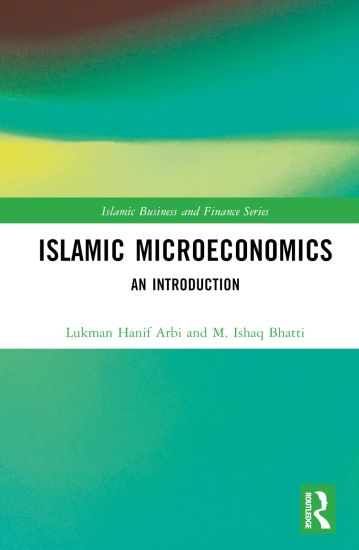
Islamic Microeconomics

Islamic Microeconomics

Lukman Hanif Arbi; M. Ishaq Bhatti

TAYLOR FRANCIS LTD
2025
nidottu
This book bridges the gap between Islamic and conventional (micro)economics by demonstrating how modern tools and theories of microeconomics can be applied to Islamic assumptions regarding economics and finance. In contrast to the tendency for Islamic economics and finance proponents to use qualitative and normative approaches based on idealistic assumptions, this book demonstrates how one can instead construct analytical models of Islamic economics and finance and simply compare the implications with those predominant in today’s world. This book also offers extensive literature reviews demonstrating that for a long time, the gap between Islamic and conventional economics and finance is not as wide as previously thought, allowing those with an interest in both fields to participate more effectively and meaningfully in the ongoing discourse between the two fields.The authors conceptualize a general approach and apply it to basic consumer theory. More advanced microeconomic ideas are then discussed, culminating in demonstrations of how contract theory can facilitate a deeper analysis and appreciation of Islamic financial securities. A wide spectrum of academic literature on both Islamic and conventional economics and finance is drawn upon to facilitate a better appreciation for both fields and to inspire future works comparing the two in a more objective manner.
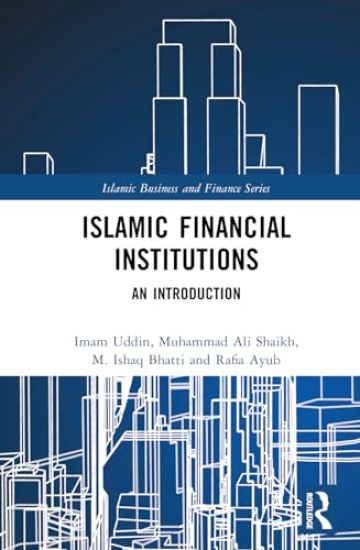
Islamic Financial Institutions

Islamic Financial Institutions

Imam Uddin; Muhammad Ali Shaikh; M. Ishaq Bhatti; Rafia Ayub

TAYLOR FRANCIS LTD
2024
sidottu
This book provides a comprehensive overview of Islamic Financial Institutions, exploring current issues, including governance, Shariah compliance frameworks and regulatory aspects, as well as the principles involved in product structuring.It offers a basic understanding of Islamic financial instruments and their implementation in different regions. The book begins by introducing the Islamic financial system, its objectives, the financial intermediation process, the philosophy and methods of mobilization and utilization of funds followed by an overall comparison with the conventional financial system. It offers a definition and explanation of types of riba, sources of prohibition, the difference between riba and profit, types of transactions which involve interest and the adverse effects of interest on the economy. It covers a detailed study of Islamic financial contracts and discusses trade-based financing products, illustrating the structural and legal differences between conventional and trade-based financing products. Further, the book outlines the criteria for the determination of Shariah compliant status of equity securities, and the role and functions of capital markets in an Islamic framework. Finally, it goes on to present an overall model of an Islamic bank in comparison with a conventional bank, examining its methodology and procedures for ensuring shariah compliance, governance and regulation, keeping in view the operating strategies, risk management issues, liquidity requirements and so on.The book will be used by researchers, students and scholars of Islamic Banking and Finance and will also serve as a practical guide for bankers and finance professionals who wish to enhance their knowledge in the field, as well as those embarking on professional training or certification programs.
Islamic Microeconomics

Islamic Microeconomics

Lukman Hanif Arbi; M. Ishaq Bhatti

TAYLOR FRANCIS LTD
2023
sidottu
This book bridges the gap between Islamic and conventional (micro)economics by demonstrating how modern tools and theories of microeconomics can be applied to Islamic assumptions regarding economics and finance. In contrast to the tendency for Islamic economics and finance proponents to use qualitative and normative approaches based on idealistic assumptions, this book demonstrates how one can instead construct analytical models of Islamic economics and finance and simply compare the implications with those predominant in today’s world. This book also offers extensive literature reviews demonstrating that for a long time, the gap between Islamic and conventional economics and finance is not as wide as previously thought, allowing those with an interest in both fields to participate more effectively and meaningfully in the ongoing discourse between the two fields.The authors conceptualize a general approach and apply it to basic consumer theory. More advanced microeconomic ideas are then discussed, culminating in demonstrations of how contract theory can facilitate a deeper analysis and appreciation of Islamic financial securities. A wide spectrum of academic literature on both Islamic and conventional economics and finance is drawn upon to facilitate a better appreciation for both fields and to inspire future works comparing the two in a more objective manner.
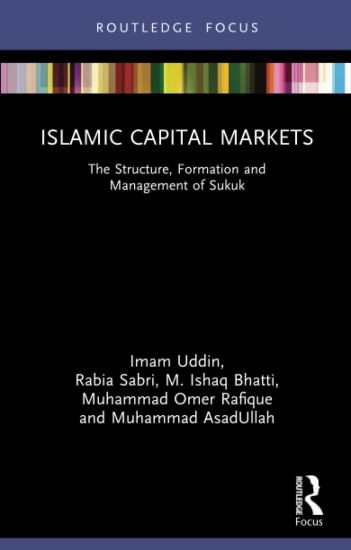
Islamic Capital Markets

Islamic Capital Markets

Imam Uddin; Rabia Sabri; M. Ishaq Bhatti; Muhammad Omer Rafique; Muhammad AsadUllah

TAYLOR FRANCIS LTD
2023
nidottu
This book offers a unique, in-depth, and up-to-date overview of Islamic banking and finance, capital markets, and sukuks at the grassroots level. It deals with one of the most potent and increasingly popular financial instruments. It defines and explores the differences between conventional and Sukuk bonds and also examines the integration of Sukuk in various country contexts and both Muslim and non-Muslim economies.The book consists of five core topics. First, it describes the evolution of the Islamic finance industry and capital markets; second, it discusses the basic features and instruments of Islamic banking; and third, it illustrates the current state of capital markets and Islamic finance. The book then examines the development of Sukuk in Islamic capital markets and Shariah perspectives and, finally, briefly discusses the structure of Sukuks and its development in the context of Pakistan.In a nutshell, this book provides a basic understanding of Islamic financial instruments, their implementation in different regions, and their points of differentiation from conventional modes of finance; therefore, it will be a useful addition to the literature for scholars, researchers, and students of Islamic banking and finance.
Islamic Capital Markets

Islamic Capital Markets

Imam Uddin; Rabia Sabri; M. Ishaq Bhatti; Muhammad Omer Rafique; Muhammad AsadUllah

TAYLOR FRANCIS LTD
2022
sidottu
This book offers a unique, in-depth, and up-to-date overview of Islamic banking and finance, capital markets, and sukuks at the grassroots level. It deals with one of the most potent and increasingly popular financial instruments. It defines and explores the differences between conventional and Sukuk bonds and also examines the integration of Sukuk in various country contexts and both Muslim and non-Muslim economies.The book consists of five core topics. First, it describes the evolution of the Islamic finance industry and capital markets; second, it discusses the basic features and instruments of Islamic banking; and third, it illustrates the current state of capital markets and Islamic finance. The book then examines the development of Sukuk in Islamic capital markets and Shariah perspectives and, finally, briefly discusses the structure of Sukuks and its development in the context of Pakistan.In a nutshell, this book provides a basic understanding of Islamic financial instruments, their implementation in different regions, and their points of differentiation from conventional modes of finance; therefore, it will be a useful addition to the literature for scholars, researchers, and students of Islamic banking and finance.
Islamic Finance in the Light of Modern Economic Theory

Islamic Finance in the Light of Modern Economic Theory

Suren Basov; M. Ishaq Bhatti

Palgrave Macmillan
2016
sidottu
This book provides researchers and students with an understanding of the basic legal tenets of the Islamic finance industry, studying the real economic effects of those tenets using the tools of the modern economic theory. Split into four parts, the book begins with an introduction to the history and a legal framework for Islamic banking, covering typical Islamic financial products such as Sukuk and Takaful and examining the structure of Islamic financial institutions. It then analyzes and discusses the Miller-Modigliani Theorem, which is of direct relevance to Islamic banks which are prohibited to charge interest and often have to rely of profit-loss sharing agreements. Part III of the book introduces the reader to modern mechanism design theory, paying particular attention to optimal contracting under hidden action and hidden information, and final part of the book applies the tools of economic theory to understand performance of Islamic financial institutions such as Islamic banks and Takaful operators. Islamic Finance in Light of Modern Economic Theory brings together all the necessary technical tools for analyzing the economic effects of Islamic frameworks and can be used as an advanced textbook for graduate students who wish to specialize in the area, as a reference for researchers and as a tool to help economists improve the design of Islamic financial institutions.
Econometric Analysis of Model Selection and Model Testing

Econometric Analysis of Model Selection and Model Testing

M. Ishaq Bhatti; Hatem Al-Shanfari

Ashgate Publishing Limited
2006
sidottu
In recent years econometricians have examined the problems of diagnostic testing, specification testing, semiparametric estimation and model selection. In addition researchers have considered whether to use model testing and model selection procedures to decide the models that best fit a particular dataset. This book explores both issues with application to various regression models, including the arbitrage pricing theory models. It is ideal as a reference for statistical sciences postgraduate students, academic researchers and policy makers in understanding the current status of model building and testing techniques.