Kirjojen hintavertailu. Mukana 12 390 323 kirjaa ja 12 kauppaa.

Kirjailija

M. J. Peterson

Kirjat ja teokset yhdessä paikassa: 5 kirjaa, julkaisuja vuosilta 2005-2021, suosituimpien joukossa International Regimes for the Final Frontier. Vertaile teosten hintoja ja tarkista saatavuus suomalaisista kirjakaupoista.

Mukana myös kirjoitusasut: M.J. Peterson

5 kirjaa

Kirjojen julkaisuhaarukka 2005-2021.

Managing the Frozen South

Managing the Frozen South

M. J. Peterson

University of California Press
2021
pokkari
This title is part of UC Press's Voices Revived program, which commemorates University of California Press’s mission to seek out and cultivate the brightest minds and give them voice, reach, and impact. Drawing on a backlist dating to 1893, Voices Revived makes high-quality, peer-reviewed scholarship accessible once again using print-on-demand technology. This title was originally published in 1988.
Managing the Frozen South

Managing the Frozen South

M. J. Peterson

University of California Press
2021
sidottu
This title is part of UC Press's Voices Revived program, which commemorates University of California Press’s mission to seek out and cultivate the brightest minds and give them voice, reach, and impact. Drawing on a backlist dating to 1893, Voices Revived makes high-quality, peer-reviewed scholarship accessible once again using print-on-demand technology. This title was originally published in 1988.
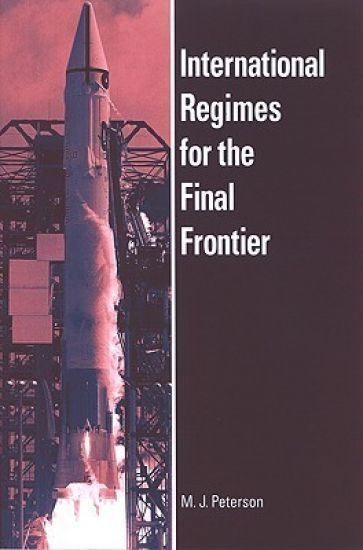
International Regimes for the Final Frontier

International Regimes for the Final Frontier

M. J. Peterson

State University of New York Press
2006
pokkari
Examines the negotiations between nations that lead to international agreements regulating human activity in outer space. Neither rational choice theory, with its emphasis on interest calculation, nor sociological institutionalist theory, with its emphasis on identity-defined rule following, indicates how governments determine which of their multiple interests or identities are at stake in a particular situation or how they develop mutual comprehension of each other's goals. International Regimes for the Final Frontier addresses these gaps by tracing how governments approach an unfamiliar issue-in this case, international agreements regulating human activity in outer space between 1958 and 1988-and examines three ways situation definitions channel governments' approaches to issues or problems.
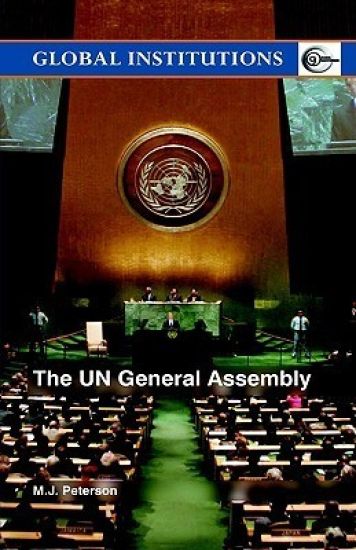
The UN General Assembly

The UN General Assembly

M.J. Peterson

Routledge
2005
sidottu
The United Nations General Assembly is arguably the most important discussion forum in global politics. This is a concise and accessible introduction to its history, organization and politics. Examining the development of the Assembly as a forum for improving international cooperation, this study details its development of shared norms and goals in the political context of the immediate post-World War II era. The Assembly has had to adapt quickly to the Cold War, the South-North contentions over development, the dissolution of the Soviet bloc and the rise in concern about terrorism. This study also presents a fascinating look ahead to three potential futures: a world of states, a world government, and a world of network governance. To flourish in any of these contexts it shows how the practices of the institution will require considerable change. The common criticisms of the Assembly are also covered in depth, such as that it is just a talking shop; that it is hamstrung by the Security Council and that it benefits the rich at the expense of the poor. This is an ideal book for students of the United Nations, international organizations and global governance.
The UN General Assembly

The UN General Assembly

M.J. Peterson

Routledge
2005
nidottu
The United Nations General Assembly is arguably the most important discussion forum in global politics. This is a concise and accessible introduction to its history, organization and politics. Examining the development of the Assembly as a forum for improving international cooperation, this study details its development of shared norms and goals in the political context of the immediate post-World War II era. The Assembly has had to adapt quickly to the Cold War, the South-North contentions over development, the dissolution of the Soviet bloc and the rise in concern about terrorism. This study also presents a fascinating look ahead to three potential futures: a world of states, a world government, and a world of network governance. To flourish in any of these contexts it shows how the practices of the institution will require considerable change. The common criticisms of the Assembly are also covered in depth, such as that it is just a talking shop; that it is hamstrung by the Security Council and that it benefits the rich at the expense of the poor. This is an ideal book for students of the United Nations, international organizations and global governance.