Kirjojen hintavertailu. Mukana 12 376 471 kirjaa ja 12 kauppaa.

Kirjailija

M.J. Trow

Kirjat ja teokset yhdessä paikassa: 88 kirjaa, julkaisuja vuosilta 2003-2026, suosituimpien joukossa The Wigwam Murder. Vertaile teosten hintoja ja tarkista saatavuus suomalaisista kirjakaupoista.

Mukana myös kirjoitusasut: M J Trow, M. J. Trow, M J TROW

88 kirjaa

Kirjojen julkaisuhaarukka 2003-2026.

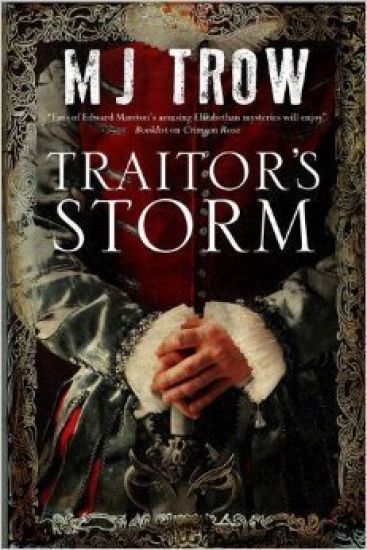
Traitor's Storm

Traitor's Storm

M.J. Trow

Severn House
2014
sidottu
May, 1588. With Elizabeth I's court rocked by stories of an imminent invasion and one of his key undercover agents missing, Sir Francis Walsingham despatches Kit Marlowe to the Isle of Wight off the south coast: the first line of defence against the approaching Spanish Armada. Lodging at Carisbrooke Castle with the Isle of Wight's Governor, Sir George Carey, Marlowe finds the Islanders a strange and suspicious lot, with their own peculiar customs and dialect. But is there reason to doubt their loyalty to the Crown? And is the Island really haunted, as some believe? Of one thing Marlowe is certain: it's no ghost behind the series of violent and inexplicable deaths which plague the region. But will he have time to uncover the truth and expose the killer before the might of the Armada descends?
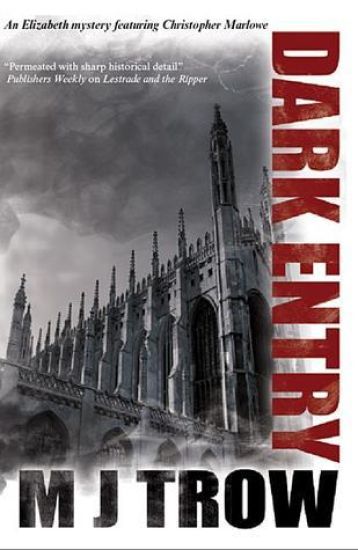
Dark Entry

Dark Entry

M.J. Trow

Creme de la Crime
2012
pokkari
'Trow's mystery offers an eye-opening and seemingly authentic look at sixteenth-century university life in England. Recommend this novel to fans of Phillip Gooden's Nick Revill series, starring a performer in Shakespeare's acting company' - BooklistFirst in the thrilling new Kit Marlowe historical mystery seriesCambridge, 1583. About to graduate from Corpus Christi, the young Christopher Marlowe spends his days studying and his nights carousing with old friends. But when one of them is discovered lying dead in his King's College room, mouth open in a silent scream, Marlowe refuses to accept the official verdict of suicide. Calling on the help of his mentor, Sir Roger Manwood, Justice of the Peace, and the queen's magus, Dr John Dee, a poison expert, Marlowe sets out to prove that his friend was murdered.
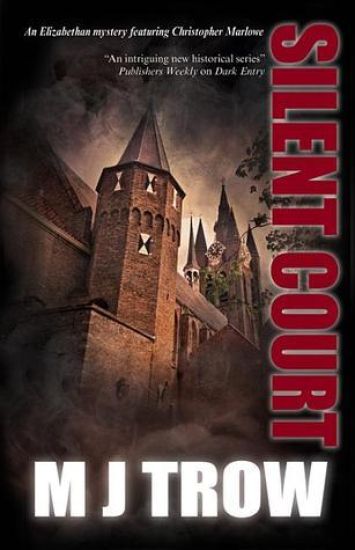
Silent Court

Silent Court

M.J. Trow

Severn House
2011
sidottu
Second in the thrilling new Kit Marlowe historical mystery seriesNovember, 1583. Desperate not to let the Netherlands fall into the hands of Catholic Spain, the Queen's spymaster orders Cambridge scholar and novice spy Christopher Marlowe to go there to assist its beleaguered leader, William the Silent. However, travelling in disguise as part of a troupe of Egyptian players, Marlowe encounters trouble even before he leaves England. When the players make a detour to perform at the home of Dr John Dee, one of their tricks ends in tragedy - and an arrest for murder . . .
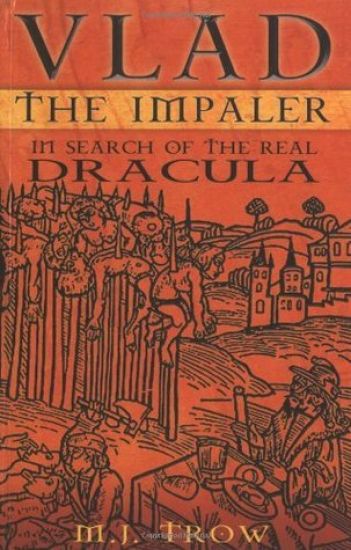
Vlad the Impaler

Vlad the Impaler

M. J. Trow

Sutton Publishing Ltd
2007
pokkari
For many, Vlad the Impaler is the bloodsucking torturer recreated in Hollywood's Interview with the Vampire and the real character so vitally realised in Bram Stoker's Dracula, the man recreated on screen by screen legends Bela Lugosi, Christopher Lee or Gary Oldman, or the vampire stalking through the pages of Ann Rice's novels. Later interpretations see him as a potent symbol of Nazi aggression in WWII, fired partly by Murnau's Nosferatu of the 1920s and the blood rites of the Aryans. But who was the real man who inspired the Dracula legend? Was he as gruesome as legend depicts, or, as some Romanians, refuting the popular image, suggest, an heroic 15th century warrior and freedom fighter? Or is his reputation as a bloodthirsty mass-murderer, who sadistically impaled his victims, justified? In this new book, by acclaimed true crime historian Mei Trow, the author peels back the layers of myth and history to unravel to reveal the 15th century figure who was the real Vlad the Impaler.
Spartacus

Spartacus

M. J. Trow

Sutton Publishing Ltd
2006
sidottu
Today, the Western world's knowledge of the gladiator-slave Spartacus comes from the Kirk Douglas epic released in 1960. But did Spartacus really come close to changing the structure of the Roman world? Why and how did he come to be claimed as a proletariat hero by Marxists? Who was the real Spartacus? This vivid and exciting book traces the story of Spartacus through his slave hood in Rome and training as a gladiator, to the breakout which began when gladiators hacked at their guards with choppers and took to the hills. Initially the affair was regarded as a minor breakout but by the time the Roman praetor found them, Spartacus's rising had grown into an army of 3,000 men. With nothing to lose but their freedom, they slaughtered several of the Roman forces sent to capture them. It was not until the Senate sent Pompey, the 'young butcher' that Spartacus and his army were defeated, the survivors either crucified or returned to slavery. Pompey celebrated with days of festivities in Rome. And Spartacus? He has inspired films and a ballet, has been claimed as a political freedom fighter, and revolutionary hero, and has become a gay icon.
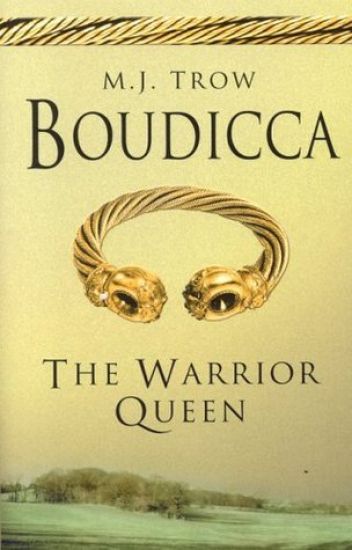
Boudicca

Boudicca

M. J. Trow

Sutton Publishing Ltd
2005
nidottu
'She was tall and terrible, with a great mass of red hair to her hips. She wore a twisted torc and a tunic of many colours ...She carried a spear to instil terror in all who saw her.' Dio Cassius In AD 61 Roman governor Suetonius Paullinus, a veteran of mountain warfare in Africa, led a crushing defeat by the 14th and 20th legions of Boudicca's revolt. The defeat of Boudicca in effect made the Roman occupation of Britain possible - a victory would at the very least have seriously delayed it and possibly altered the whole course of the country's history. Among the British, women could inherit land, rule whole areas, lead armies. Boudicca did all three. And what made her revolt in AD 61 so terrifying was that she united other tribes under her and all but destroyed Rome's power base in the country. Boudicca herself left a twofold legacy. Surviving Paullinus' crushing defeat of her troops, she is traditionally alleged to have taken poison, along with her daughters. She had taken on the might of the greatest power of the ancient world and nearly driven it out of part of its empire; the Britons mourned her deeply and gave her a costly burial. Speeches attributed to her by the Romans on the eve of battle illustrate that they went in awe of her. Not for nothing does her bronze effigy, sculpted by Thomas Thorneycroft, stare out from its pedestal on Westminster Bridge, her back to the city she once burned to the ground.
Canute

Canute

M. J. Trow

Sutton Publishing Ltd
2005
sidottu
Canute is famous today as the bad king arrogant enough to believe he could stem the tide. This book peals back the layers of legend and mythmaking to reveal the true history of King Canute and the kingdom he ruled. England in Canute's time was made up of seven Saxon kingdoms which had been ravaged by raids for decades. Already king of Denmark by 1014, Canute was one of three claimants for the English throne and on the face of it, the least likely to succeed. The others were the occupant, Ethelred and Edmund - known as Ironside - Ethelred's eldest son. Two years of in-fighting among the three combatants followed, with the timely and suspicious deaths of both his rivals ensuring Canute was the undisputed first Danish king of England. Canute had achieved power but he had yet to win the hearts and minds of Englishmen so he married their queen, Emma, widow of Ethelred and perhaps 20 years older than him. By this, Canute assured an Anglo-Danish succession, burying the hatchet after a century of war and violence. Safe in the knowledge that England was loyal, Canute embarked on an ambitious, bloody and successful foreign policy. When he died he was the most powerful king in Europe except the Holy Roman Emperor and England was a united nation.
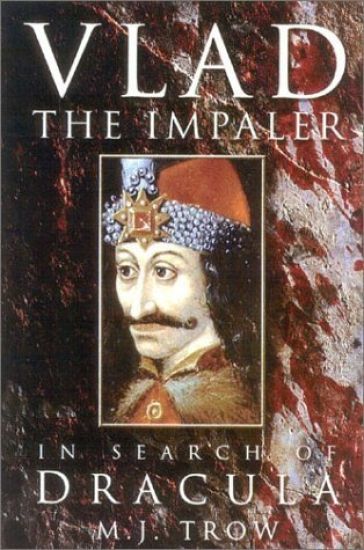
Vlad the Impaler

Vlad the Impaler

M. J. Trow

Sutton Publishing Ltd
2003
sidottu
For many, Vlad the Impaler is the bloodsucking torturer recreated in Hollywood's "Interview with the Vampire" and the real character so vitally realized in Bram Stoker's "Dracula", the man recreated on screen by screen legends Bela Lugosi, Christopher Lee or Gary Oldman, or the vampire stalking through the pages of Ann Rice's novels. Later interpretations see him as a potent symbol of Nazi aggression in World War II, fired partly by Murnau's "Nosferatu" of the 1920s and the blood rites of the Aryans. But who was the real man who inspired the Dracula legend? Was he as gruesome as legend depicts, or, as some Romanians, refuting the popular image, suggest, an heroic 15th-century warrior and freedom fighter? Or is his reputation as a bloodthirsty mass-murderer, who sadistically impaled his victims, justified? In this title, the author peels back the layers of myth and history to reveal the 15th-century figure who was the real Vlad the Impaler.