Kirjojen hintavertailu. Mukana 12 120 725 kirjaa ja 12 kauppaa.

Kirjailija

M. Keith Booker

Kirjat ja teokset yhdessä paikassa: 42 kirjaa, julkaisuja vuosilta 1991-2026, suosituimpien joukossa The Post-Utopian Imagination. Vertaile teosten hintoja ja tarkista saatavuus suomalaisista kirjakaupoista.

Mukana myös kirjoitusasut: M.Keith Booker, M Keith Booker

42 kirjaa

Kirjojen julkaisuhaarukka 1991-2026.

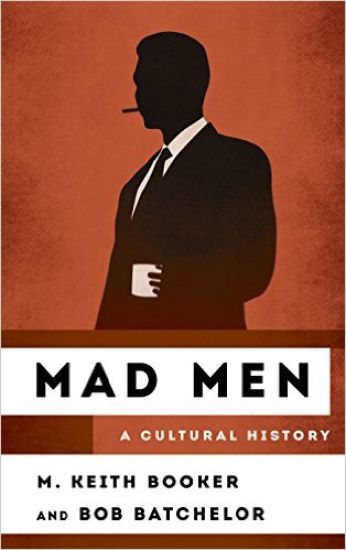
Mad Men

Mad Men

M. Keith Booker; Bob Batchelor

Rowman Littlefield
2016
sidottu
From the opening credits that feature a silhouette falling among skyscrapers, Mad Men transcended its role as a series about the Madison Avenue advertising industry to become a modern classic. For seven seasons, Mad Men asked viewers to contemplate the 1960s anew, reassessing the tumultuous era’s stance on women’s rights, race, war, politics, and family relationships that comprise the American Dream. Set in the heart of the twentieth century, the show brought to light how deeply we still are connected to that age. The result is a show that continually asks us to rethink our own families, lives, work, and ethical beliefs as we strive for a better world. In Mad Men: A Cultural History, M. Keith Booker and Bob Batchelor offer an engaging analysis of the series, providing in-depth examinations of its many themes and nostalgic portrayals of the years from Camelot to Vietnam and beyond. Highly regarded cultural scholars and critics, Booker and Batchelor examine the show in its entirety, presenting readers with a deep but accessible exploration of the series, as well as look at its larger meanings and implications. This cultural history perspective reveals Mad Men’s critical importance as a TV series, as well as its role as a tool for helping viewers understand how they are shaped by history and culture. As a showcase in America’s new “golden age of television,” Mad Men reveals the deep hold history and nostalgia have on viewers, particularly when combined with stunning visuals and intricate writing and storylines. With this volume as their guide, readers will enjoy contemplating the show’s place among the most lauded popular culture touchstones of the twenty-first century. As it engages with ideas central to the American experience—from the evolution of gender roles to family dynamics and workplace relationships—Mad Men: A Cultural History brings to life the significance of this profound yet entertaining series.
Strange TV

Strange TV

M. Keith Booker

Praeger Publishers Inc
2002
sidottu
In the years since World War II, commercial television has become the most powerful force in American culture. It is also the quintessential example of postmodernist culture. This book studies how The Twilight Zone, The Prisoner, Twin Peaks, and The X-Files display many of the central characteristics that critics and theorists have associated with postmodernism, including fragmentation of narratives and characters, multiplicity in style and genre, and the collapse of traditional categorical boundaries of all kinds. The author labels these series strange TV since they challenge the conventions of television programming, thus producing a form of cognitive estrangement that potentially encourages audiences to question received ideas.Despite their challenges to the conventions of commercial television, however, these series pose no real threat to the capitalist order. In fact, the very characteristics that identify these series as postmodern are also central characteristics of capitalism itself, especially in its late consumerist phase. An examination of these series within the context of postmodernism thus confirms Fredric Jameson's thesis that postmodernism is a reflection of the cultural logic of late capitalism. At the same time, these series do point toward the potential of television as a genuinely innovative medium that promises to produce genuinely new forms of cultural expression in the future.
The Post-Utopian Imagination

The Post-Utopian Imagination

M. Keith Booker

Praeger Publishers Inc
2002
sidottu
In America, the long 1950s were marked by an intense skepticism toward utopian alternatives to the existing capitalist order. This skepticism was closely related to the climate of the Cold War, in which the demonization of socialism contributed to a dismissal of all alternatives to capitalism. This book studies how American novels and films of the long 1950s reflect the loss of the utopian imagination and mirror the growing concern that capitalism brought routinization, alienation, and other dehumanizing consequences. The volume relates the decline of the utopian vision to the rise of late capitalism, with its expanding globalization and consumerism, and to the beginnings of postmodernism.In addition to well-known literary novels, such as Nabokov's Lolita, Booker explores a large body of leftist fiction, popular novels, and the films of Alfred Hitchcock and Walt Disney. The book argues that while the canonical novels of the period employ a utopian aesthetic, that aesthetic tends to be very weak and is not reinforced by content. The leftist novels, on the other hand, employ a realist aesthetic but are utopian in their exploration of alternatives to capitalism. The study concludes that the utopian energies in cultural productions of the long 1950s are very weak, and that these works tend to dismiss utopian thinking as na^Dive or even sinister. The weak utopianism in these works tends to be reflected in characteristics associated with postmodernism.
Flann O'Brien, Bakhtin, and Menippean Satire

Flann O'Brien, Bakhtin, and Menippean Satire

M. Keith Booker

Syracuse University Press
1995
sidottu
This work applies Mikhail Bakhtin's theory of literary discourse and the concept of ""carnivalisation"" to the work of Flann O'Brien. The author emphasises the political and social implications of the writings, arguing that O'Brien maintained a reflexive focus on language throughout his career.
Bakhtin, Stalin, and Modern Russian Fiction

Bakhtin, Stalin, and Modern Russian Fiction

M. Keith Booker; Dubravka Juraga

Praeger Publishers Inc
1995
sidottu
Bakhtin, Stalin, and Modern Russian Fiction presents an advanced introduction to the work of the Russian theorist Mikhail Bakhtin, focusing on the concepts of carnival, dialogism, and historicism. The discussion of Bakhtin pays particular attention to the impact of his historical context in the Soviet Union and to the importance of his own dialogic mode of discourse. Bakhtin's ideas are then placed in dialogic relation to the works of several important writers of modern Russian fiction, including Vassily Aksyonov, Ilf and Petrov, Mikhail Zoshchenko, Yuz Aleshkovsky, Andrei Bitov, and Sasha Sokolov.
Vargas Llosa Among the Postmodernists

Vargas Llosa Among the Postmodernists

M.Keith Booker

University Press of Florida
1994
sidottu
Mario Vargas Llosa's work is marked by technical sophistication and by its alliance with a variety of trends in modern culture. To date, little criticism of his work has made use of the important developments in literary theory in the past two decades. This book aims to do that, analysing Vargas Llosa's place in modern and postmodern criticism. Booker begins with an analysis of ""The Green House"" within the context of modernism, using this early work to develop several hypotheses concerning the differences between modernism and postmodernism in literature. He tests these hypotheses in the remainder of the book through detailed readings of Vargas Llosa's later novels (from ""Captain Pantoja and the Special Service"" onward) and within the context of theoretical discussions of postmodernism by such critics as Fredric Jameson, Terry Eagleton, Linda Hutcheon and Andreas Huyssen. Booker's specific readings of Vargas Llosa's work are also informed by the insights of a number of critics, including Mikhail Bakhtin, Michel Foucault and Theodor Adorno. The readings focus on the formal characteristics of Vargas Llosa's writing and on the intense political engagement - characterised in later works by scepticism toward the claims of various political programmes - that marks his career. As a result, this study yields insights into both the aesthetics and the politics of postmodernism, and it should be useful to those interested in Latin-American literature and in the social and cultural landscapes of Vargas Llosa's works. The book ends with a description of published theories of modernism and postmodernism.
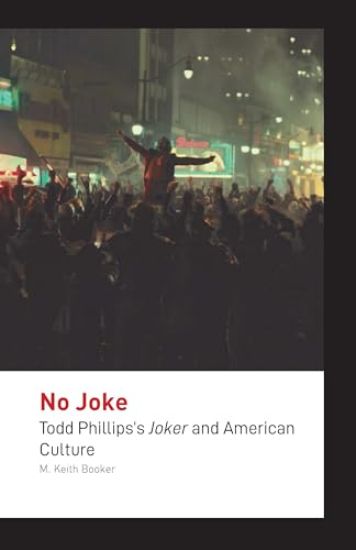
No Joke

No Joke

M. Keith Booker

LIVERPOOL UNIVERSITY PRESS
2026
nidottu
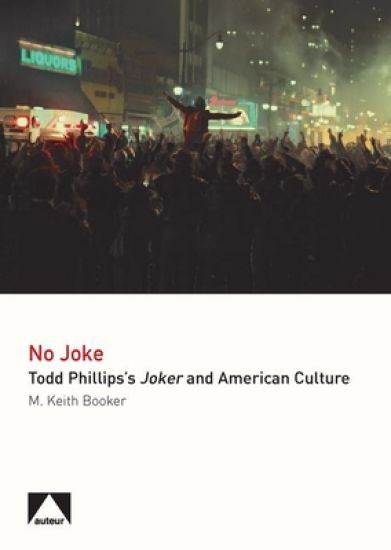
No Joke is a detailed examination of Todd Phillips’s Joker, one of the biggest global box-office hits of 2019. While his success was no doubt partly because of the association of its title character with the Batman superhero franchise, Joker is anything but a flashy superhero romp. It does explore the pathologies of its central character and suggest ways in which his life experiences might have driven him to become a supervillain, the arch-enemy of Batman. At the same time, the film leaves open the possibility that its “Joker” is not, in fact, the same as the one conventionally associated with Batman. In fact, the film leaves open many interpretive possibilities, in keeping with the complex work of postmodern art that it turns out to be. Joker also engages in extensive dialogues with a range of works from modern American culture, especially the films of the 1970s and 1980s, the period in which the action of Joker is set. Moreover, Joker is a highly political film that comments in important ways on American political history from roughly the beginning of the presidency of Richard Nixon through the end of the Trump presidency, with a special focus on the Reagan years. It also comments in more general and fundamental ways on the very nature of American society and American capitalism. All this, and more, is covered in M. Keith Booker’s analysis of one of the most talked-about films of recent years.
American Noir Film

American Noir Film

M. Keith Booker

BLOOMSBURY PUBLISHING PLC
2024
sidottu
A deep dive into classic noir films and how filmmakers today are refreshing and updating the genre for new generations.In American Film Noir, M. Keith Booker introduces readers to the cult-favorite genre of film noir and discusses the ongoing power and popularity of the genre’s key elements and themes in modern films, often considered neo-noir, well into the twenty-first century. Booker covers a wide range of noir favorites, from the early classics The Maltese Falcon and The Big Sleep, to late 20th-century neo-noir such as Chinatown,and ultimately newer iterations of the genre as seen in films like Inherent Vice, Promising Young Woman, and Uncut Gems. American Film Noir contains three separate parts, each exploring crucial categories of noir: the detective film, the lost man film, and femme fatale films. Within each section, Booker discusses the essential classic noir films that embody these themes as well as neo-noir films that invite viewers to analyze how the traditional components of noir have evolved with filmmaking. Finally, each section concludes with twenty-first-century films that evoke noir elements while refreshing the genre and enhancing viewers’ appreciation of the originals that inspired them—what Booker terms “revisionary noir”. Whether new to noir films, students of the genre, or long-time fans, readers will be sure to learn what makes this genre so special, discover why filmmakers keep coming back to it, and find a new favorite movie to add to their shelves.
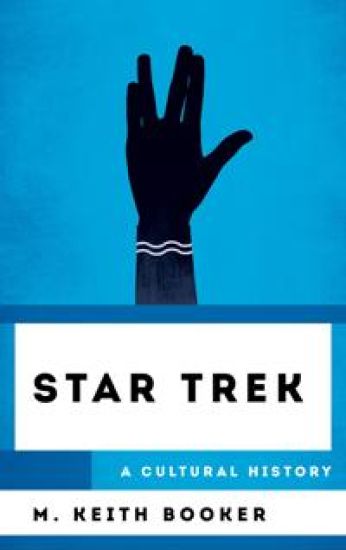
Star Trek

Star Trek

M. Keith Booker

BLOOMSBURY PUBLISHING PLC
2023
nidottu
First airing in 1966, with a promise to “boldly go where no man has gone before,” Star Trek would eventually become a bona fide phenomenon. Week after week, viewers of the series tuned in to watch Captain Kirk, Spock, and the rest of the crew of the USS Enterprise as they conducted their five-year mission in space. Their mission was cut short by a corporate monolith that demanded higher ratings, but Star Trek lived on in syndication, ultimately becoming a multibillion-dollar media franchise. With merchandise spin-offs, feature films, and several television iterations—from The Next Generation to Discovery—Star Trek is a firmly established part of the American cultural landscape.In Star Trek: A Cultural History, M. Keith Booker offers an intriguing account of the series from its original run to its far-reaching impact on society. By placing the Star Trek franchise within the context of American history and popular culture, the author explores how the series engaged with political and social issues such as the Vietnam War, race, gender, and the advancement of technology. While this book emphasizes the original series, it also addresses the significance of subsequent programs, as well as the numerous films and extensive array of novels, comic books, and merchandise that have been produced in the decades since.A show that originally resonated with science fiction fans, Star Trek has also intrigued the general public due to its engaging characters, exciting plotlines, and vision of a better future. It is those exact elements that allowed Star Trek to go from simply a good show to the massive media franchise it is today. Star Trek: A Cultural History will appeal to scholars of media, television, and popular culture, as well as to fans of the show.
No Joke

No Joke

M. Keith Booker

LIVERPOOL UNIVERSITY PRESS
2023
sidottu
No Joke is a detailed examination of Todd Phillips’s Joker, one of the biggest global box-office hits of 2019. While his success was no doubt partly because of the association of its title character with the Batman superhero franchise, Joker is anything but a flashy superhero romp. It does explore the pathologies of its central character and suggest ways in which his life experiences might have driven him to become a supervillain, the arch-enemy of Batman. At the same time, the film leaves open the possibility that its “Joker” is not, in fact, the same as the one conventionally associated with Batman. In fact, the film leaves open many interpretive possibilities, in keeping with the complex work of postmodern art that it turns out to be. Joker also engages in extensive dialogues with a range of works from modern American culture, especially the films of the 1970s and 1980s, the period in which the action of Joker is set. Moreover, Joker is a highly political film that comments in important ways on American political history from roughly the beginning of the presidency of Richard Nixon through the end of the Trump presidency, with a special focus on the Reagan years. It also comments in more general and fundamental ways on the very nature of American society and American capitalism. All this, and more, is covered in M. Keith Booker’s analysis of one of the most talked-about films of recent years.
Consumerist Orientalism

Consumerist Orientalism

M. Keith Booker; Isra Daraiseh

I.B. Tauris
2021
nidottu
In a postmodern world of globalised capital, how does the concept of Orientalism inform understandings of cultural exchange? In this detailed and wide-ranging examination, Arab popular culture is explored in its relation to American culture and capitalism. Offering new insights on Edward Said’s longstanding theoretical lens, Consumerist Orientalism presents an updated conceptual framework through which to understand the intercultural relationship between East and West, exploring a wide range of cultural production; from an Oscar-nominated Jordanian film to Turkish-Arab soap operas and Arab-diaspora rap. Drawing on key contemporary critical thinkers and in-depth cultural analysis, the relationship between capitalism, postmodernism and Orientalism is explored with fresh insights, making this essential reading for students of Middle Eastern culture, globalisation and postcolonial studies.
Historical Dictionary of American Cinema

Historical Dictionary of American Cinema

M. Keith Booker

Rowman Littlefield
2021
sidottu
One of the most powerful forces in world culture, American cinema has a long and complex history that stretches through more than a century. This history not only includes a legacy of hundreds of important films but also the evolution of the film industry itself, which is in many ways a microcosm of the history of American society. Historical Dictionary of American Cinema, Second Edition contains a chronology, an introduction, and an extensive bibliography. The dictionary section has more than 600 cross-referenced entries covering people, films, companies, techniques, themes, and subgenres that have made American cinema such a vital part of world culture.
Historical Dictionary of Science Fiction Cinema

Historical Dictionary of Science Fiction Cinema

M. Keith Booker

Rowman Littlefield
2020
sidottu
The history of science fiction film now spans more than 100 years, during which time more than 1000 science fiction films of various kinds have been made, thanks to the contributions of filmmakers from around the world. The versatility of science fiction film has allowed it to expand into a variety of different markets, appealing to age groups from small children to adults and to filmgoers of a variety of tastes, and the filmmaking technology is leading the way in technical advances that have enabled a new sophistication in visual effects. This second edition of Historical Dictionary of Science Fiction Cinema contains a chronology, an introduction, and an extensive bibliography. The dictionary section has over 400 cross-referenced entries on important personalities, films, companies, techniques, themes, and subgenres. This book is an excellent resource for students, researchers, and anyone wanting to know more about science fiction cinema.
Consumerist Orientalism

Consumerist Orientalism

M. Keith Booker; Isra Daraiseh

Bloomsbury Publishing PLC
2019
sidottu
In a postmodern world of globalised capital, how does the concept of Orientalism inform understandings of cultural exchange? In this detailed and wide-ranging examination, Arab popular culture is explored in its relation to American culture and capitalism. Offering new insights on Edward Said’s longstanding theoretical lens, Consumerist Orientalism presents an updated conceptual framework through which to understand the intercultural relationship between East and West, exploring a wide range of cultural production; from an Oscar-nominated Jordanian film to Turkish-Arab soap operas and Arab-diaspora rap. Drawing on key contemporary critical thinkers and in-depth cultural analysis, the relationship between capitalism, postmodernism and Orientalism is explored with fresh insights, making this essential reading for students of Middle Eastern culture, globalisation and postcolonial studies.
The Coen Brothers' America

The Coen Brothers' America

M. Keith Booker

Rowman Littlefield
2019
sidottu
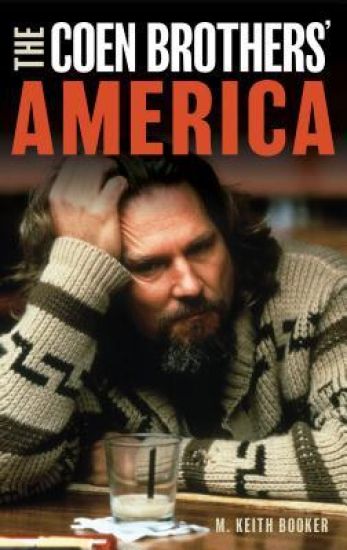
For more than three decades, Joel and Ethan Coen have produced some of the most unique and thought-provoking works in modern cinema. In broad comedies such as Raising Arizona, violent thrillers like No Country for Old Men, and black comedies such as Fargo, the filmmakers have offered brilliant takes on a variety of film genres. One of the most distinctive features of their movies is their skewed view of America itself. In The Coen Brothers’ America, M. Keith Booker discusses feature films produced by the pair since their 1984 debut Blood Simple. The author focuses on how the Coen brothers’ films engage with American cultural history and are embedded in specific geographical settings. From New York to Los Angeles, from Texas to Minnesota, the Coens capture the essence of real locations from unusual angles, which often make the films appear as if they are taking place in an alternate reality. In addition, many of the brothers’ films are steeped in America’s cultural past, from the deep south of the 1930s in O Brother, Where Art Thou to the Greenwich Village of the 1960s in Inside Llewyn Davis. The Coens make particularly effective use of films from Hollywood’s Golden Age, producing their own updated versions of such genres as film noir (The Man Who Wasn’t There), the Western (True Grit), and screwball comedy (The Hudsucker Proxy)—not to mention their idiosyncratic depictions of Hollywood itself in Barton Fink and Hail Caesar! This book also explores how the Coens draw upon cultural phenomena outside of film, including literature, music, and television. Approaching each film within the framework of Ethan and Joel’s overall vision. The Coen Brothers’ America provides an entertaining look at the pair’s work that will appeal to scholars and fans alike.
Star Trek

Star Trek

M. Keith Booker

Rowman Littlefield
2018
sidottu
First airing in 1966, with a promise to “boldly go where no man has gone before,” Star Trek would eventually become a bona fide phenomenon. Week after week, viewers of the series tuned in to watch Captain Kirk, Spock, and the rest of the crew of the USS Enterprise as they conducted their five-year mission in space. Their mission was cut short by a corporate monolith that demanded higher ratings, but Star Trek lived on in syndication, ultimately becoming a multibillion-dollar media franchise. With merchandise spin-offs, feature films, and several television iterations—from The Next Generation to Discovery—Star Trek is a firmly established part of the American cultural landscape. In Star Trek: A Cultural History, M. Keith Booker offers an intriguing account of the series from its original run to its far-reaching impact on society. By placing the Star Trek franchise within the context of American history and popular culture, the author explores how the series engaged with political and social issues such as the Vietnam War, race, gender, and the advancement of technology. While this book emphasizes the original series, it also addresses the significance of subsequent programs, as well as the numerous films and extensive array of novels, comic books, and merchandise that have been produced in the decades since. A show that originally resonated with science fiction fans, Star Trek has also intrigued the general public due to its engaging characters, exciting plotlines, and vision of a better future. It is those exact elements that allowed Star Trek to go from simply a good show to the massive media franchise it is today. Star Trek: A Cultural History will appeal to scholars of media, television, and popular culture, as well as to fans of the show.

Tony Soprano's America

Tony Soprano's America

M. Keith Booker; Isra Daraiseh

Rowman Littlefield
2017
sidottu
Widely regarded as one of the greatest television series of all time, The Sopranos is also considered one of the most significant achievements in contemporary American culture. IThe series spearheaded the launch of a new wave of quality programming that has transformed the way people watch, experience, and talk about television. By chronicling the life and crimes of a New Jersey mobster, his family, and his cronies, The Sopranos examines deep themes at the heart of American life, particularly the country’s seedy underbelly. In Tony Soprano’s America: Gangsters, Guns, and Money, M. Keith Booker and Isra Daraiseh explore the central role of the series in American cultural history. While examining the elements that account for the show’s popularity and critical acclaim, the authors also contend that The Sopranos revolutionized the way audiences viewed television in general and cable programming as well. This book demonstrates how a show focused on an ethnic antihero somehow reflected common themes of contemporary American life, including ethnicity, class, capitalism, therapy, and family dynamics. Providing a sophisticated yet accessible account of the groundbreaking series—a show that rivals film and literature for its beauty and stunning characterization of modern life—this book engages the reader with ideas central to the American experience. Tony Soprano’s America brings to life this profound television program in ways that will entertain, engage, and perhaps even challenge longtime viewers and critics.
Historical Dictionary of Science Fiction in Literature

Historical Dictionary of Science Fiction in Literature

M. Keith Booker

Rowman Littlefield Publishers
2014
sidottu
The Historical Dictionary of Science Fiction in Literature is a useful reference to the broad and burgeoning field of science fiction literature. Science fiction literature has gained immensely in critical respect and attention, while maintaining a broad readership. However, despite the fact that it is a rapidly changing field, contemporary science fiction literature also maintains a strong sense of its connections to science fiction of the past, which makes a historical reference of this sort particularly valuable as a tool for understanding science fiction literature as it now exists and as it has evolved over the years. The Historical Dictionary of Science Fiction in Literature covers the history of science fiction in literature through a chronology, an introductory essay, and an extensive bibliography. The dictionary section has over 300 cross-referenced entries including ·significant people; ·themes; ·critical issues; and ·the most significant genres that have formed science fiction literature. This book is an excellent access point for students, researchers, and anyone wanting to know more about this subject.
Superpower

Superpower

M. Keith Booker

Bison Books
2010
pokkari
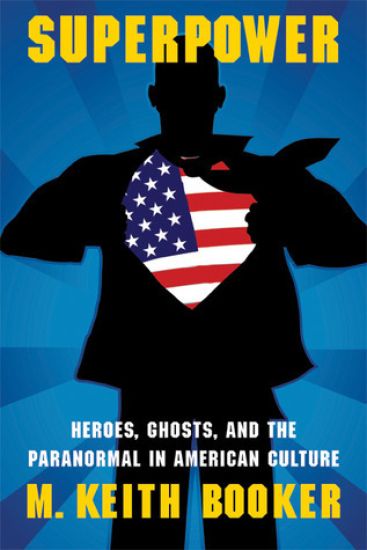
Supernatural and superhuman elements have been prominent in American culture from the time of the New England Puritans' intense emphasis on religion. Superpower surveys the appearance of supernatural and superhuman elements in American culture, focusing on the American fascination with narratives involving supernatural adventure, superhuman heroes, and vast conspiracies driven by supernatural evil. In particular, M. Keith Booker suggests that the popularity of such themes indicates a deep-seated dissatisfaction with the rationalized world of contemporary American society. Booker details the development of the national myths underlying the characters of Superman, Batman, and Spiderman; television hits from Star Trek to Lost; and the franchises of Pirates of the Caribbean and The Lord of the Rings. This culture-spanning investigation begins with a historical survey of supernatural and superhuman themes in American culture and concludes with the recent upsurge that began in the 1990s. It then turns to various works of recent popular culture with supernatural and superhuman themes such as Twin Peaks, The X-Files, and Buffy the Vampire Slayer, organized according to the desires to which these works respond. What do these fantasies reveal about what it means to be American today—and what we want it to mean?