Kirjojen hintavertailu. Mukana 12 152 606 kirjaa ja 12 kauppaa.

Kirjailija

M. Pollak

Kirjat ja teokset yhdessä paikassa: 3 kirjaa, julkaisuja vuodelta 2012, suosituimpien joukossa Nine Years Old. Vertaile teosten hintoja ja tarkista saatavuus suomalaisista kirjakaupoista.

3 kirjaa

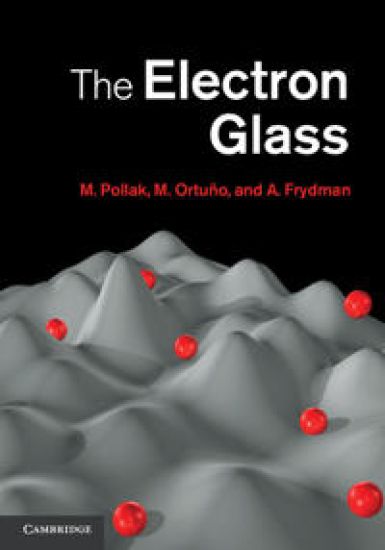
The Electron Glass

The Electron Glass

M. Pollak; M. Ortuño; A. Frydman

Cambridge University Press
2012
sidottu
Presenting an up-to-date report on electronic glasses, this book examines experiments and theories for a variety of disordered materials where electrons exhibit glassy properties. Some interesting mathematical models of idealized systems are also discussed. The authors examine problems in this field, highlighting which issues are currently understood and which require further research. Where appropriate, the authors focus on physical arguments over elaborate derivations. The book provides introductory background material on glassy systems, properties of disordered systems and transport properties so it can be understood by researchers in condensed matter physics who are new to this field.
Nine Years Old

Nine Years Old

M. Pollak

Springer
2012
nidottu
In 1972, Dr Margaret Pollak published her book Today's Three-Year­ Oids in London. This was a sensitive study of family life and the social environment of a large number of London children, together with an account of their developmental assessment by various test methods. She showed that variations of developmental performances were more closely related to the quality of family life than to social and economic factors. Dr Pollak has now re-investigated the same children at nine years of age and this book is a record of her findings. The differences in development which were noted at three years of age remain in the older children. Those children who, at three years of age, were underachievers, particularly in verbal and adaptive abilities, are the children who, at nine years, can still be identified by lower achieve­ ment at school. These results must be of important relevance to educationalists, and all concerned with the psychologists as well as to paediatricians welfare of children. We must all be disturbed by the failure of any children in our urban city centres to benefit from education and our anxieties must be heightened if, amongst the underachievers, there are particular groups who can be identified by their ethnic identities. In Britain, education in school occupies a relatively small part of a child's life. Dr Pollak has identified some of the factors in a child's wider experience and, especially, in the total home environment which are associated with the persistence of inferior performance.
Commonsense Paediatrics

Commonsense Paediatrics

M. Pollak; John Fry

Springer
2012
nidottu
As 'seasoned campaigners' we offer our readers more than 60 joint practice years of commonsense experience on children and their prob­ lems. Child care is a large and fascinating part of general family practice. More than any other discipline it is a mix of understanding the wide range of normal and abnormal development, of skilful diagnosis and treatment of treatable conditions, of long-term care for handicapped children, and of organizing and carrying out prevention. F or all this and more the physician has to rely on sound knowledge and understanding of the child, parents, family, social and community conditions, available services and the likely natural history of the condition - and to dispense all this with humanity, sense and sensi­ bility. We have divided the book logically into 6 sections: (I) Factual background. (2) Universal problems of behaviour and development. (3) Common clinical disorders, so frequent and yet often so dif­ ficult to manage. (4) Social,family and community factors that create and influ­ ence many problems of childhood. (5) How to use available services and resources with discrimina­ tion and sensitivity. (6) The importance of understanding and managing the whole child. We have no single group of readers in mind. We hope that our views will be appreciated, for example, by parents, nurses, health visitors, general practitioners, community physicians and paedia­ tricians - in fact all who care for children.