Kirjojen hintavertailu. Mukana 12 595 353 kirjaa ja 12 kauppaa.

Kirjailija

M R D Foot

Kirjat ja teokset yhdessä paikassa: 12 kirjaa, julkaisuja vuosilta 1990-2021, suosituimpien joukossa S.O.E.. Vertaile teosten hintoja ja tarkista saatavuus suomalaisista kirjakaupoista.

Mukana myös kirjoitusasut: M. R. D. Foot, M.R.D. Foot

12 kirjaa

Kirjojen julkaisuhaarukka 1990-2021.

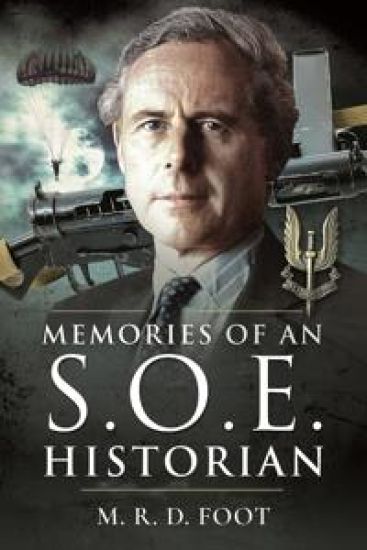
Memories of an SOE Historian

Memories of an SOE Historian

M R D Foot

PEN SWORD BOOKS LTD
2021
nidottu
Michael (MRD) Foot enjoys the rare distinction of being the only person referred to by his real name in a John Le Carre novel. A highly significant tribute to the man entrusted with writing the official record of the Special Operations Executive. He authored first (1966) the History of SOE in France and twenty years later the highly sensitive accounts of SOE operations in Belgium and Holland (which the Germans infiltrated with disastrous results). With his own war service background and academic reputation MRD was an inspired choice for these historic tasks. He was fearless in pursuit of the truth and in thwarting bureaucratic attempts to muzzle him. His war exploits make thrilling reading. His behind-the-lines mission to track down a notorious SD interrogator went badly wrong and he only just escaped with his life. His career has brought him into close contact with an astonishing cast of characters and his tongue-in-cheek account of academic life makes lively reading.
MI9

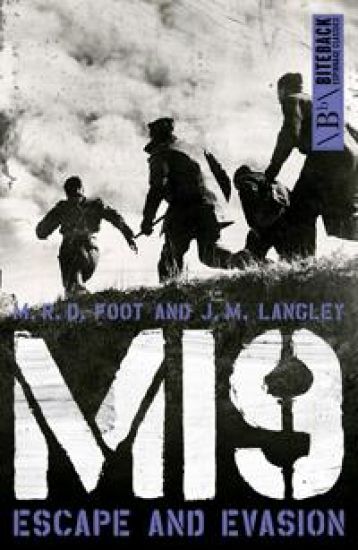
MI9

M.R.D. Foot; J.M. Langley

Biteback Publishing
2020
nidottu
Many of the most famous escapes in history took place during the Second World War. These daring flights from Nazi-occupied Europe would never have been possible but for the assistance of a hitherto secret British service: MI9. This small, dedicated and endlessly inventive team gave hope to the men who had fallen into enemy hands, and aid to resistance fighters in occupied territory. It sent money, maps, clothes, compasses, even hacksaws - and in return coded letters from the prisoner-of-war camps and provided invaluable news of what was happening in the enemy's homeland. Understaffed and under-resourced, MI9 nonetheless made a terrific contribution to the Allied war effort. First published in 1979, this book tells the full, inside story of an extraordinary organisation.
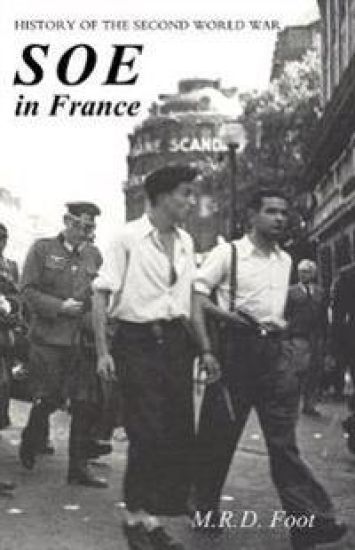
Soe in France

Soe in France

M R D Foot

Naval Military Press
2019
nidottu
This book, based on a mass of official and hitherto unavailable material, presented for the first time an account and analysis of SOE's work in France. He concentrates on the work of the 'independent French' section, though he also covers SOE's five other sections operating mainly in France.
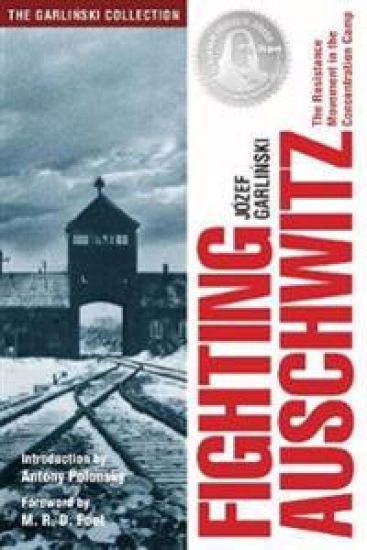
Fighting Auschwitz

Fighting Auschwitz

Jozef Garlinski; M R D Foot

Aquila Polonica Publishing
2018
sidottu
"The definitive study of the topic." --Prof. Antony Polonsky, Emeritus Professor of Holocaust Studies, Brandeis University, and Chief Historian, POLIN Museum of the History of Polish Jews. The incredible story of underground resistance among the prisoners at the infamous Auschwitz concentration camp. When the Germans opened Auschwitz in June 1940, it was a concentration camp for political prisoners, who were told on arrival that they would live no longer than three months--expanding two years later to also become a death camp for Jews. Underground resistance appeared at Auschwitz very quickly, spearheaded in 1940 by one of the bravest men ever to live, Polish army officer Captain Witold Pilecki. Jozef Garlinski traces the evolution and operations of the principal resistance organizations among the prisoners (including communist as well as non-communist groups). He delves into the relationships among these groups, as well as their relationships with the various political and multinational factions in the prisoner population, including both male and female, and with the underground outside the camp. He describes their efforts against the brutal SS men and informers. In parallel, he documents the growth and evolution of Auschwitz itself, and the horrors of the industrialized death factory for Jews created by the Germans. First published in English in 1975, but out of print for decades, this seminal book is now being released in a new 2nd edition with more than 200 photos and maps, and a new introduction by Prof. Antony Polonsky. Garlinski, a member of the Polish underground during WWII, was himself a prisoner at Auschwitz.With more than 200 photos and maps, five Appendices, extensive Bibliography and detailed Indexes.
Fighting Auschwitz

Fighting Auschwitz

Jozef Garlinski; M R D Foot

Aquila Polonica Publishing
2018
nidottu
"The definitive study of the topic." --Prof. Antony Polonsky, Emeritus Professor of Holocaust Studies, Brandeis University, and Chief Historian, POLIN Museum of the History of Polish Jews. The incredible story of underground resistance among the prisoners at the infamous Auschwitz concentration camp. When the Germans opened Auschwitz in June 1940, it was a concentration camp for political prisoners, who were told on arrival that they would live no longer than three months--expanding two years later to also become a death camp for Jews. Underground resistance appeared at Auschwitz very quickly, spearheaded in 1940 by one of the bravest men ever to live, Polish army officer Captain Witold Pilecki. Jozef Garlinski traces the evolution and operations of the principal resistance organizations among the prisoners (including communist as well as non-communist groups). He delves into the relationships among these groups, as well as their relationships with the various political and multinational factions in the prisoner population, including both male and female, and with the underground outside the camp. He describes their efforts against the brutal SS men and informers. In parallel, he documents the growth and evolution of Auschwitz itself, and the horrors of the industrialized death factory for Jews created by the Germans. First published in English in 1975, but out of print for decades, this seminal book is now being released in a new 2nd edition with more than 200 photos and maps, and a new introduction by Prof. Antony Polonsky, Emeritus Professor of Holocaust Studies, Brandeis University, and Chief Historian, POLIN Museum of the History of Polish Jews. . Garlinski, a member of the Polish underground during WWII, was himself a prisoner at Auschwitz.With more than 200 photos and maps, five Appendices, extensive Bibliography and detailed Indexes.
SOE in the Low Countries

SOE in the Low Countries

M. R. D. Foot

Amberley Publishing
2017
nidottu
SOE’s Belgian and Dutch operations in the Second World War have always been considered highly controversial because of the notorious Englandspiel (‘the English game’) run by the Germans, which effectively took control of the entire resistance organisation in Holland. Skilfully manipulated by Colonel Hermann Giskes, the occupying force arrested dozens of Dutch agents and operated their wireless sets with sufficient finesse to persuade SOE’s headquarters in London that their networks were operating without interference. In reality, each consignment of agents and equipment fell directly into the hands of the Nazis. Was there a traitor in London? Was it incompetence in the field or hopelessly inadequate security procedures? The Belgian experience, equally complicated, was for a time almost as disastrous as the Dutch. Opinions have differed, but here the official records are opened for independent scrutiny by an acknowledged specialist in SOE’s operations. The story that emerges is a harrowing catalogue of Whitehall jealousies and infighting, blunders and ineptitude, combined with breathtaking bravery on the part of the agents who were captured.
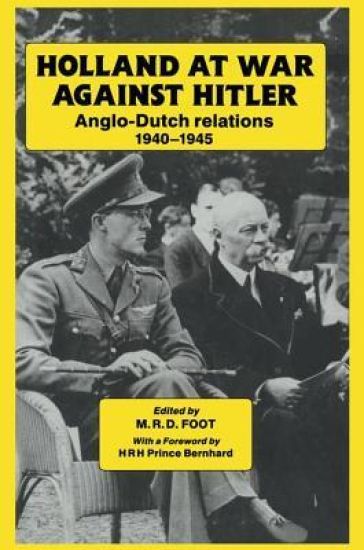
Holland at War Against Hitler

Holland at War Against Hitler

M. R. D. Foot

Routledge
2017
sidottu
First Published in 1990. The conference on Anglo-Dutch relations from 1940 to 1945, held at University College London on 3, 4 and 5 April 1989, covered a part - not the least interesting nor the simplest part - of the diplomatic and military history of the world war against Nazi Germany and imperial Japan. The historical context of Anglo-Dutch relations, close since the fall of the Roman Empire, bears setting out at the start. The papers that follow are printed almost as they were delivered, at a conference attended by a mixture of scholars, teachers, diplomats, journalists, students and retired warriors; of ages as diverse as their experiences; many of whom already knew each other.
S.O.E.

S.O.E.

M R D Foot

Vintage
2014
pokkari
SOE, the Special Operations Executive, was a small, tough British secret service, a dirty tricks department established in July 1940 and encouraged by Churchill to ââ?¬Ë?set Europe ablazeââ?¬â?¢. Their job ââ?¬â?? as saboteurs, informers, partisans, couriers or secret agents ââ?¬â?? was to support and stimulate resistance behind enemy lines;
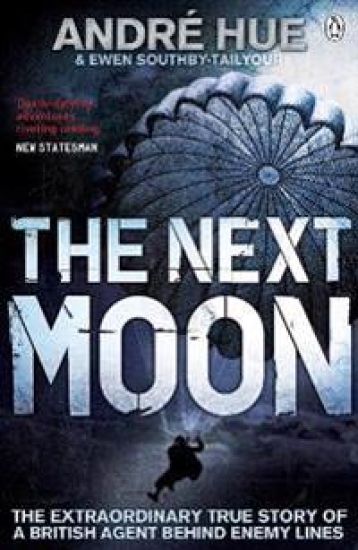
The Next Moon

The Next Moon

Andre Hue; Ewen Southby-Tailyour; M. R. D. Foot

Penguin Books Ltd
2009
pokkari
Andre Hue was a daredevil. By the age of twenty the Anglo-Frenchman had survived shipwreck and years undercover in France, sabotaging German supply lines. Returning to Britain, he was recruited by SOE to parachute behind enemy lines on 5 June 1944, to unite resistance forces in Brittany and paralyse local German troops during the Allied invasion. Though Hue's mission was fraught with difficulty - he missed his landing site, his secret base camp became the site of a pitch battle and a band of Cossacks tried to hunt him down - he knew that thousands of lives depended on his success or failure . . .
SOE in France

SOE in France

M.R.D. Foot

Routledge
2006
nidottu
SOE in France was first published in 1966, followed by a second impression with amendments in 1968. Since these editions were published, other material on SOE has become available. It was, therefore, agreed in 2000 that Professor Foot should produce a revised version. In so doing, in addition to the material in the first edition, the author has had access to previously closed government records, as well as drawing upon his own invaluable wartime experiences and the recollections of those involved.SOE in France begins by explaining what SOE was, where it fitted into the Allied war machine, and how it worked in France. The narrative then recounts the adventures of its agents who worked on French soil. This intricate tale concentrates on the work of the 400 hand-picked men and women of the 'independent French' section, although it also covers SOE's five other sections that operated mainly in France. All told, the six sections despatched over 1,800 clandestine agents, who between them changed the course of the war. This updated new edition will be essential reading for scholars and for all those with an informed general interest in the activities of the SOE.
SOE in France

SOE in France

M.R.D. Foot

Routledge
2004
sidottu
SOE in France was first published in 1966, followed by a second impression with amendments in 1968. Since these editions were published, other material on SOE has become available. It was, therefore, agreed in 2000 that Professor Foot should produce a revised version. In so doing, in addition to the material in the first edition, the author has had access to previously closed government records, as well as drawing upon his own invaluable wartime experiences and the recollections of those involved.SOE in France begins by explaining what SOE was, where it fitted into the Allied war machine, and how it worked in France. The narrative then recounts the adventures of its agents who worked on French soil. This intricate tale concentrates on the work of the 400 hand-picked men and women of the 'independent French' section, although it also covers SOE's five other sections that operated mainly in France. All told, the six sections despatched over 1,800 clandestine agents, who between them changed the course of the war. This updated new edition will be essential reading for scholars and for all those with an informed general interest in the activities of the SOE.
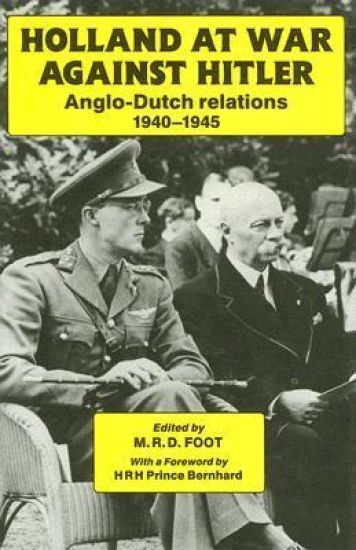
Holland at War Against Hitler

Holland at War Against Hitler

M. R. D. Foot

Routledge
1990
nidottu
First Published in 1990. The conference on Anglo-Dutch relations from 1940 to 1945, held at University College London on 3, 4 and 5 April 1989, covered a part - not the least interesting nor the simplest part - of the diplomatic and military history of the world war against Nazi Germany and imperial Japan. The historical context of Anglo-Dutch relations, close since the fall of the Roman Empire, bears setting out at the start. The papers that follow are printed almost as they were delivered, at a conference attended by a mixture of scholars, teachers, diplomats, journalists, students and retired warriors; of ages as diverse as their experiences; many of whom already knew each other.