Kirjojen hintavertailu. Mukana 12 595 353 kirjaa ja 12 kauppaa.

Kirjailija

M. Zenzen

Kirjat ja teokset yhdessä paikassa: 4 kirjaa, julkaisuja vuosilta 1985-2011, suosituimpien joukossa Superminds. Vertaile teosten hintoja ja tarkista saatavuus suomalaisista kirjakaupoista.

4 kirjaa

Kirjojen julkaisuhaarukka 1985-2011.

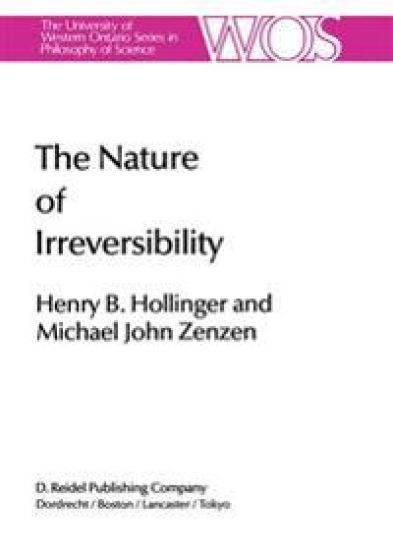
The Nature of Irreversibility

The Nature of Irreversibility

H.B. Hollinger; M. Zenzen

Springer
2011
nidottu
A dominant feature of our ordinary experience of the world is a sense of irreversible change: things lose form, people grow old, energy dissipates. On the other hand, a major conceptual scheme we use to describe the natural world, molecular dynamics, has reversibility at its core. The need to harmonize conceptual schemes and experience leads to several questions, one of which is the focus of this book. How does irreversibility at the macroscopic level emerge from the reversibility that prevails at the molecular level? Attempts to explain the emergence have emphasized probability, and assigned different probabilities to the forward and reversed directions of processes so that one direction is far more probable than the other. The conclu­ sion is promising, but the reasons for it have been obscure. In many cases the aim has been to find an explana­ tion in the nature of probability itself. Reactions to that have been divided: some think the aim is justified while others think it is absurd.

Superminds

Superminds

Selmer Bringsjord; M. Zenzen

Springer-Verlag New York Inc.
2003
nidottu
This is the first book-length presentation and defense of a new theory of human and machine cognition, according to which human persons are superminds. Superminds are capable of processing information not only at and below the level of Turing machines (standard computers), but above that level (the "Turing Limit"), as information processing devices that have not yet been (and perhaps can never be) built, but have been mathematically specified; these devices are known as super-Turing machines or hypercomputers. Superminds, as explained herein, also have properties no machine, whether above or below the Turing Limit, can have. The present book is the third and pivotal volume in Bringsjord's supermind quartet; the first two books were What Robots Can and Can't Be (Kluwer) and AI and Literary Creativity (Lawrence Erlbaum). The final chapter of this book offers eight prescriptions for the concrete practice of AI and cognitive science in light of the fact that we are superminds.
Superminds

Superminds

Selmer Bringsjord; M. Zenzen

Springer-Verlag New York Inc.
2003
sidottu
This is the first book-length presentation and defense of a new theory of human and machine cognition, according to which human persons are superminds. Superminds are capable of processing information not only at and below the level of Turing machines (standard computers), but above that level (the "Turing Limit"), as information processing devices that have not yet been (and perhaps can never be) built, but have been mathematically specified; these devices are known as super-Turing machines or hypercomputers. Superminds, as explained herein, also have properties no machine, whether above or below the Turing Limit, can have. The present book is the third and pivotal volume in Bringsjord's supermind quartet; the first two books were What Robots Can and Can't Be (Kluwer) and AI and Literary Creativity (Lawrence Erlbaum). The final chapter of this book offers eight prescriptions for the concrete practice of AI and cognitive science in light of the fact that we are superminds.
The Nature of Irreversibility

The Nature of Irreversibility

H.B. Hollinger; M. Zenzen

Kluwer Academic Publishers
1985
sidottu
A dominant feature of our ordinary experience of the world is a sense of irreversible change: things lose form, people grow old, energy dissipates. On the other hand, a major conceptual scheme we use to describe the natural world, molecular dynamics, has reversibility at its core. The need to harmonize conceptual schemes and experience leads to several questions, one of which is the focus of this book. How does irreversibility at the macroscopic level emerge from the reversibility that prevails at the molecular level? Attempts to explain the emergence have emphasized probability, and assigned different probabilities to the forward and reversed directions of processes so that one direction is far more probable than the other. The conclu­ sion is promising, but the reasons for it have been obscure. In many cases the aim has been to find an explana­ tion in the nature of probability itself. Reactions to that have been divided: some think the aim is justified while others think it is absurd.