Kirjojen hintavertailu. Mukana 12 595 353 kirjaa ja 12 kauppaa.

Kirjailija

Machiko Nissanke

Kirjat ja teokset yhdessä paikassa: 3 kirjaa, julkaisuja vuosilta 1998-2010, suosituimpien joukossa Economic Reforms in Ghana. Vertaile teosten hintoja ja tarkista saatavuus suomalaisista kirjakaupoista.

3 kirjaa

Kirjojen julkaisuhaarukka 1998-2010.

Economic Reforms in Ghana

Economic Reforms in Ghana

Jane Harrigan; Machiko Nissanke

James Currey
2000
pokkari
This work discusses the economic reforms that have taken place in Ghana since independence in 1957. It includes sections on: structure and growth; fiscal, savings and investment policies; the external sector; factor markets; sectoral performance; socio-economic development; and the future. Since independence in 1957, Ghana has tried a number of approaches to achieving acceptable rates of growth and development. A period of rapid industrialization in the 1960s, then control measures and further state interventions inthe 1970s, was followedby a comprehensive programme from the mid-1980s based on a policy of economic liberalization. However, initial growth and macroeconomic stability has not been sustained beyond the short term. This work discusses the economic reforms that have taken placein Ghana since independence in 1957. It includes sections on: structure and growth; fiscal, savings and investment policies; the external sector; factor markets; sectoral performance; socio-economic development; and the future. North America: Africa World Press; Ghana: Woeli Publishing Services
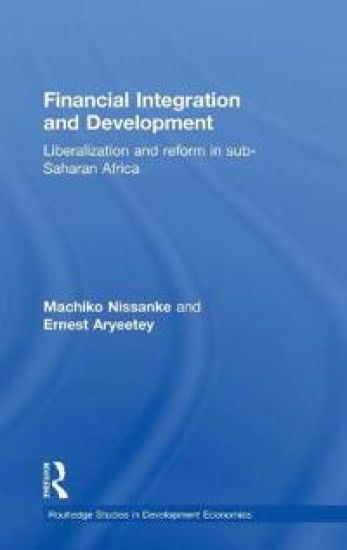
Financial Integration and Development

Financial Integration and Development

Ernest Aryeetey; Machiko Nissanke

Routledge
1998
sidottu
Financial Integration and Development examines the effects of financial liberalization on development, with particular focus on Sub-Saharan Africa. Looking at the relationship between formal and informal institutions, it focuses on structural features that separate formal and informal segments of the financial system. The findings are based on field work conducted in Ghana, Malawi, Nigeria and Tanzania, and lead the way to a reassessment of the design of financial reform programmes and some proposals for effective institution-building policies.