Kirjojen hintavertailu. Mukana 12 390 323 kirjaa ja 12 kauppaa.

Kirjailija

Mackey Nathaniel

Kirjat ja teokset yhdessä paikassa: 3 kirjaa, julkaisuja vuodelta 2001, suosituimpien joukossa School of Udhra. Vertaile teosten hintoja ja tarkista saatavuus suomalaisista kirjakaupoista.

3 kirjaa

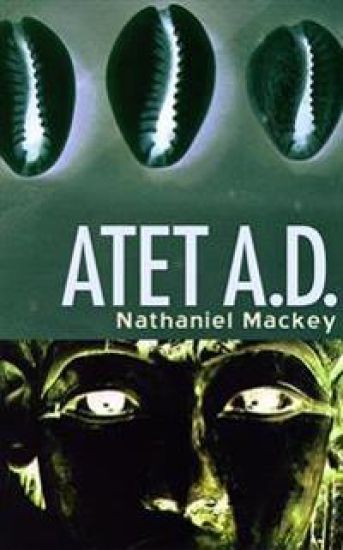
Atet, A.D.

Atet, A.D.

Mackey Nathaniel

CITY LIGHTS BOOKS
2001
pokkari
Atet A.D. is the third volume of Nathaniel Mackey's ongoing epistolary fiction, From a Broken Bottle Traces of Perfume Still Emanate. Like the first two volumes, Bedouin Hornbook and Djbot Baghostus's Run, this work is written by the composer/multi-instrumentalist N., a founding member of a band formerly known as the Mystic Horn Society. The letters in Atet A.D. span a seven-month period beginning shortly after Thelonious Monk's death and culminating in the band recording their first album on John Coltrane's birthday. Rendered in N.'s distinctive mix of discursive registers, they chronicle and meditate upon, among other events, Penguin's return from seclusion, N.'s recurring cowrie shell attacks, the band's adoption of a new name, and their being beset, beginning with a gig in Seattle, by a new, perplexing twist in their expressive powers. "As with all of Mackey's prose fiction, his hermeneutic speculations are advanced as much by the power of puns as by syllogistic reasoning. For all the wordplay, Mackey manages to cover a lot of ground in this neo-novel, which is not so much about "characters" as it is about ideas and themes like gender equality, the survival of African customs and spiritual values in America, and the play of dreams within our waking realities. Most idiosyncratically, Mackey, with his nuanced knowledge of jazz, convinces the reader that music operates like a language, with all the power to convey, say, a specific feminist critique of male-centered jazz culture, or to acquire levels of symbolism that would make Dante wonder if he should have taken up sax." -Publishers Weekly "Atet A.D. is a fascinating work of poetic/musical fiction-storytelling that plays with, and is inspired by, language and the mystical concepts and connections that arise unbidden from the manipulation of metaphor and meaning, while simultaneously fueled by the sounds and energy of American jazz which Mackey views as a source of spiritual and sexual discipline and discovery" -Art Lange, Pulse Nathaniel Mackey, recipient of a 1993 Whiting Writers' Award, is the author of School of Udhra and Whatsaid Serif, both also published by City Lights Publishers. He won the National Book Award for Poetry in 2006, was awarded the Ruth Lilly Poetry Prize in 2014, and won Yale's Bollingen Prize for American Poetry in 2015. He teaches a poetry workshop at Duke University.
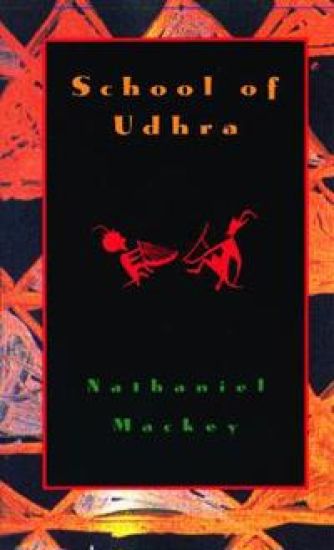
School of Udhra

School of Udhra

Mackey Nathaniel

CITY LIGHTS BOOKS
2001
pokkari
School of Udhra takes its title from the Bedouin poetic tradition associated with the seventh-century Arab poet Djamil, the Udhrite school of poets who, "when loving die." Bedouin tradition, however, is only one of the strands of world revery these poems have recourse to. They obey a "bedouin" impulse of their own--fugitive, moving on, nomadic. Ogo the fox, the Dogon avatar of singleness and unrest, runs throughout, crossing and recrossing divided ground, primal isolate, insistent within the book's cross-cultural weave. The poems track variances of union and disunion- social, sexual, mystic, mythic- both formally and in their content. They return rhapsody to its root sense: stitching together. Threads ranging through ancient Egypt, shamanic Siberia, Rastafarian Jamaica, and elsewhere figure in, inflected by conjunctive and disjunctive cadences inspired by jazz, Gnaoua trance-chant, cante jando, and other musics. "'Purgatorial stealth' (as School of Udhra puts it), within a startling progression, I find, of imageries, becomes the poem's enigmatic seductive, sometimes wavering, sliding traverse of a spiritual wilderness. I have no doubt that the book is a remarkable and daring testament that needs to be read and re-read for the unpredictable measure of involved enchantment it unfolds ...A book of haunted pleasure." --Wilson Harris, Palace of the Peacock "Nathaniel Mackey has said that in language we inherit the voices of the dead. In School of Udhra he transcribes immeasurable spaces of the dispossessed who call him runaway. This writing increasingly unleashes each skittish letter into the risk of syllabic stutter 'vatic scat' stagger. How else ever re-trace or re-member the speaker of a ghost in sentences we step across. Words or segments of lines, stab, cut, rift, rend, relate, blaspheme, and bless." --Susan Howe, My Emily Dickinson Nathaniel Mackey, recipient of a 1993 Whiting Writers' Award, is the author of Eroding Witness (1985), Whatsaid Serif (City Lights, 1998), Atet A.D. (City Lights, 2001), Bedouin Hornbook (1986), and Djbot Baghosus's Run (1993), as well as Discrepant Engagement: Dissonance Cross-Culturality, and Experimental Writing (1993). He has taught at the University of California, Santa Cruz and Duke University.
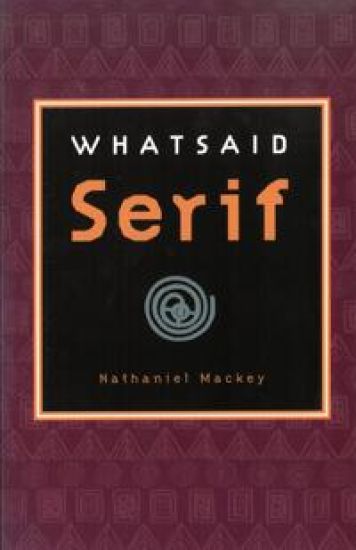
Whatsaid Serif

Whatsaid Serif

Mackey Nathaniel

CITY LIGHTS BOOKS
2001
pokkari
Whatsaid Serif, Nathaniel Mackey's third book of poems, is comprised of installments sixteen through thirty-five of Song of the Andoumboulou, an ongoing serial work whose first fifteen installments appear in Eroding Witness and School of Udhra, his two previous books. Named after a Dogon funeral song whose raspy tonalities prelude rebirth, Song of the Andoumboulou has from its inception tracked interweavings of lore and livid apprehension, advancing this weave as its own sort of rasp. These twenty new installments evoke the what-sayer of Kakapalo storying practice as a figure for the rough texture of such interweaving. Mackey has suggested that the Andoumboulou, a failed, earlier form of human being in Dogon cosmology, are "a rough draft of human being," that "the Andoumboulou are in fact us; we're the rough draft." The song is of possibility, yet to be fulfilled, aspiration's putative angel itself. "Nathaniel Mackey's poem is a brilliant renewal of and experiment with the language of our spiritual condition and a measure of what poetry gives in trust - 'heat's/mean' and the rush of language to bear it." --Robin Blaser "Mackey's raspy rebus-like cultural resurfacings are both beautiful to read and worthy of repeated efforts at comprehension." --Publishers Weekly Nathaniel Mackey, recipient of a 1993 Whiting Writers' Award, is the author of School of Udhra and Atet A.D., both also published by City Lights Publishers. He won the National Book Award for Poetry in 2006, was awarded the Ruth Lilly Poetry Prize in 2014, and won Yale's Bollingen Prize for American Poetry in 2015. He teaches a poetry workshop at Duke University.