Kirjailija
Madeline Leslie
Kirjat ja teokset yhdessä paikassa: 187 kirjaa, julkaisuja vuosilta 2007-2026, suosituimpien joukossa Juliette. Vertaile teosten hintoja ja tarkista saatavuus suomalaisista kirjakaupoista.
187 kirjaa
Kirjojen julkaisuhaarukka 2007-2026.




Reprint of the original, first published in 1869.
This book has been considered by academicians and scholars of great significance and value to literature. This forms a part of the knowledge base for future generations. We havent used any OCR or photocopy to produce this book. The whole book has been typeset again to produce it without any errors or poor pictures and errant marks.

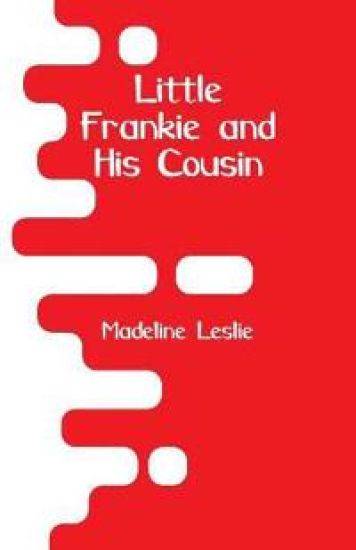
This book has been considered by academicians and scholars of great significance and value to literature. This forms a part of the knowledge base for future generations. We havent used any OCR or photocopy to produce this book. The whole book has been typeset again to produce it without any errors or poor pictures and errant marks.
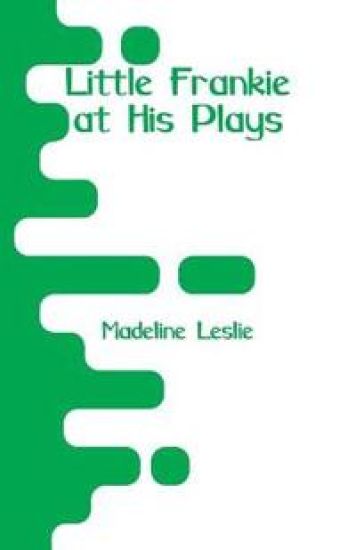

The object of these little books is not so much to give full, scientific information with regard to the animals of which they treat, as to bring before the child such facts concerning them as shall interest him in their history, awaken a desire to know more of the particular traits of each, and especially lead him to be kind to them as a part of God's creation. Natural history we deem, according to the opinion of an eminent writer, as "not only the most captivating of the sciences, but the most humanizing. It is impossible to study the character and habits of the lower animals without imbibing an interest in their wants and feelings." Dr. Chalmers, who was famous for his interest in the brute creation, says, "To obtain the regards of man's heart in behalf of the lower animals, we should strive to draw his mind toward them. The poor brutes look, tremble, and give the signs of suffering, as we do. A threatened blow strikes them with terror, and they have the same distortions of agony on the infliction of it. Their blood circulates as ours does. They sicken, and grow feeble with age, and finally die, as we do. They possess also instincts which expose them to suffering in another quarter. The lioness, robbed of her whelps, makes the wilderness ring with her cries; and the little bird, whose tender household has been stolen, fills and saddens all the grove with her pathetic melody."

In another book, about Minnie's pet pony, I have already given you some account of Nannie, her pet lamb. This had all the peculiarities of the South Down, to which breed of sheep it belonged. It had full, bright, black eyes, a small head, and a brownish-gray face and legs. Its back was straight and wide, and covered with fine, short wool, which protected it from the cold. When Mr. Lee first brought the lamb home, it cried, or bleated, continually. It was placed in a pen close by the stall where Star, the Shetland pony, was kept, and, the next day after it came, managed to get over the light railing which separated them, and creep up close to the animal.
This work has been selected by scholars as being culturally important, and is part of the knowledge base of civilization as we know it. This work was reproduced from the original artifact, and remains as true to the original work as possible. Therefore, you will see the original copyright references, library stamps (as most of these works have been housed in our most important libraries around the world), and other notations in the work.This work is in the public domain in the United States of America, and possibly other nations. Within the United States, you may freely copy and distribute this work, as no entity (individual or corporate) has a copyright on the body of the work.As a reproduction of a historical artifact, this work may contain missing or blurred pages, poor pictures, errant marks, etc. Scholars believe, and we concur, that this work is important enough to be preserved, reproduced, and made generally available to the public. We appreciate your support of the preservation process, and thank you for being an important part of keeping this knowledge alive and relevant.
This work has been selected by scholars as being culturally important, and is part of the knowledge base of civilization as we know it. This work was reproduced from the original artifact, and remains as true to the original work as possible. Therefore, you will see the original copyright references, library stamps (as most of these works have been housed in our most important libraries around the world), and other notations in the work.This work is in the public domain in the United States of America, and possibly other nations. Within the United States, you may freely copy and distribute this work, as no entity (individual or corporate) has a copyright on the body of the work.As a reproduction of a historical artifact, this work may contain missing or blurred pages, poor pictures, errant marks, etc. Scholars believe, and we concur, that this work is important enough to be preserved, reproduced, and made generally available to the public. We appreciate your support of the preservation process, and thank you for being an important part of keeping this knowledge alive and relevant.