Kirjojen hintavertailu. Mukana 12 545 061 kirjaa ja 12 kauppaa.

Kirjailija

Maggie Struck

Kirjat ja teokset yhdessä paikassa: 2 kirjaa, julkaisuja vuodelta 2016, suosituimpien joukossa Inclusive Literacy Teaching. Vertaile teosten hintoja ja tarkista saatavuus suomalaisista kirjakaupoista.

2 kirjaa

Inclusive Literacy Teaching

Inclusive Literacy Teaching

Lori A. Helman; Carrie Rogers; Amy Frederick; Maggie Struck

Teachers' College Press
2016
sidottu
Responding to the need to prepare elementary teachers for the increasinglinguistic diversity in schools, this book presents key foundational principles in language and literacy development for linguistically diverse students. Readers see these ideas enacted through the journeys of real students as they progress from 1st through 6th grade. What emerges is both a “big picture” and an “up close and personal” look at the successes, obstacles, and developmental nuances for students learning to read and write in a new language in inclusive classrooms. Throughout, the authors provide crucial guidance to educators that will support them in taking conscious steps toward creating educational equity for linguistically diverse students. Book Features: Illuminates the variation among students who have been categorized as English language learners. Provides access to a broad range of research-based approaches in teacher-friendly language. Examines key dilemmas that teachers are likely to encounter in today’s classrooms. Avoids recipes or “cookie-cutter” approaches to complex scenarios. Addresses academic vocabulary and language development, a key barrier to accessing content for students learning English as a new language.
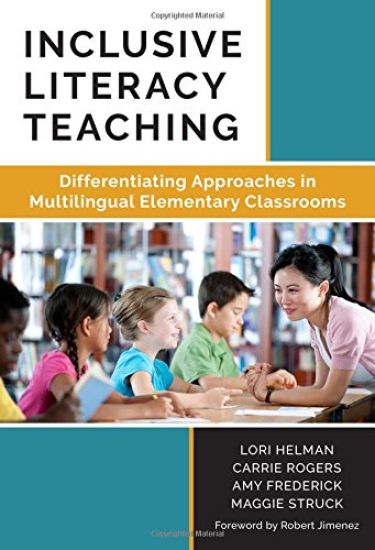
Inclusive Literacy Teaching

Inclusive Literacy Teaching

Lori A. Helman; Carrie Rogers; Amy Frederick; Maggie Struck

Teachers' College Press
2016
nidottu
Responding to the need to prepare elementary teachers for the increasinglinguistic diversity in schools, this book presents key foundational principles in language and literacy development for linguistically diverse students. Readers see these ideas enacted through the journeys of real students as they progress from 1st through 6th grade. What emerges is both a “big picture” and an “up close and personal” look at the successes, obstacles, and developmental nuances for students learning to read and write in a new language in inclusive classrooms. Throughout, the authors provide crucial guidance to educators that will support them in taking conscious steps toward creating educational equity for linguistically diverse students. Book Features: Illuminates the variation among students who have been categorized as English language learners. Provides access to a broad range of research-based approaches in teacher-friendly language. Examines key dilemmas that teachers are likely to encounter in today’s classrooms. Avoids recipes or “cookie-cutter” approaches to complex scenarios. Addresses academic vocabulary and language development, a key barrier to accessing content for students learning English as a new language.