Kirjojen hintavertailu. Mukana 12 595 353 kirjaa ja 12 kauppaa.

Kirjailija

Maggie Wykes

Kirjat ja teokset yhdessä paikassa: 6 kirjaa, julkaisuja vuosilta 2003-2008, suosituimpien joukossa Violence, Gender and Justice. Vertaile teosten hintoja ja tarkista saatavuus suomalaisista kirjakaupoista.

6 kirjaa

Kirjojen julkaisuhaarukka 2003-2008.

Violence, Gender and Justice

Violence, Gender and Justice

Maggie Wykes; Kirsty Welsh

SAGE Publications Inc
2008
sidottu
`This is a very impressive piece of thorough scholarship. It is an important book that highlights the need to consider gender when developing policies to respond to interpersonal violence. It is written in a clear and accessible style and should be required reading for all criminal justice students.' - Dr Malcolm Cowburn, Sheffield Hallam University This comprehensive text provides an overview of the relationship between violence, gender, crime and justice. It brings together theory with contemporary cases to enable the reader to understand the key concepts, issues and connections involved. Enlightening and accessible, the book examines the experiences and treatment of men and women as victims and criminals. It explores whether and how offending patterns differ according to gender, and investigates the connections between gender, offending and victimisation. The book covers different types of inter-personal violence including sexual violence, 'domestic' violence, 'domestic' murder, male-on-male violence and child abuse. It explores how sexual and 'domestic' violence have been represented in the media, in the law and in criminal justice processes. Not only does the book present a comprehensive introduction to the field, it also offers reflective questions at the end of each chapter to enable the reader to integrate and interrogate the material covered. Chapter summaries and annotated bibliographies enhance the learning process by helping students to consolidate and further investigate key points. This book is essential for students and academics in criminology, criminal justice, sociology and gender studies.
Violence, Gender and Justice

Violence, Gender and Justice

Maggie Wykes; Kirsty Welsh

SAGE Publications Inc
2008
nidottu
`This is a very impressive piece of thorough scholarship. It is an important book that highlights the need to consider gender when developing policies to respond to interpersonal violence. It is written in a clear and accessible style and should be required reading for all criminal justice students.' - Dr Malcolm Cowburn, Sheffield Hallam University This comprehensive text provides an overview of the relationship between violence, gender, crime and justice. It brings together theory with contemporary cases to enable the reader to understand the key concepts, issues and connections involved. Enlightening and accessible, the book examines the experiences and treatment of men and women as victims and criminals. It explores whether and how offending patterns differ according to gender, and investigates the connections between gender, offending and victimisation. The book covers different types of inter-personal violence including sexual violence, 'domestic' violence, 'domestic' murder, male-on-male violence and child abuse. It explores how sexual and 'domestic' violence have been represented in the media, in the law and in criminal justice processes. Not only does the book present a comprehensive introduction to the field, it also offers reflective questions at the end of each chapter to enable the reader to integrate and interrogate the material covered. Chapter summaries and annotated bibliographies enhance the learning process by helping students to consolidate and further investigate key points. This book is essential for students and academics in criminology, criminal justice, sociology and gender studies.

The Media and Body Image

The Media and Body Image

Maggie Wykes; Barrie Gunter

SAGE PUBLICATIONS INC
2004
nidottu
Blaming the media for reproducing and extolling unrealistic female bodies has almost become a popular truism. Even medical opinion notes that the media can influence young women to starve themselves and therefore act as a possible causal factor of disordered eating. Yet surprisingly, little work has addressed either the nature of media representations of the body, or the ways in which audiences interpret and use such images in our contemporary cultural context. The Media and Body Image addresses this lack and: - Draws together literature from sociology, gender studies and psychology - Brings together new empirical work on both media representations and audience responses - Offers a broad discussion of this topic in the context of socio-cultural change, gender politics, and self-identity.
The Media and Body Image

The Media and Body Image

Maggie Wykes; Barrie Gunter

SAGE Publications Inc
2004
sidottu
Blaming the media for reproducing and extolling unrealistic female bodies has almost become a popular truism. Even medical opinion notes that the media can influence young women to starve themselves and therefore act as a possible causal factor of disordered eating. Yet surprisingly, little work has addressed either the nature of media representations of the body, or the ways in which audiences interpret and use such images in our contemporary cultural context. The Media and Body Image addresses this lack and: - Draws together literature from sociology, gender studies and psychology - Brings together new empirical work on both media representations and audience responses - Offers a broad discussion of this topic in the context of socio-cultural change, gender politics, and self-identity.
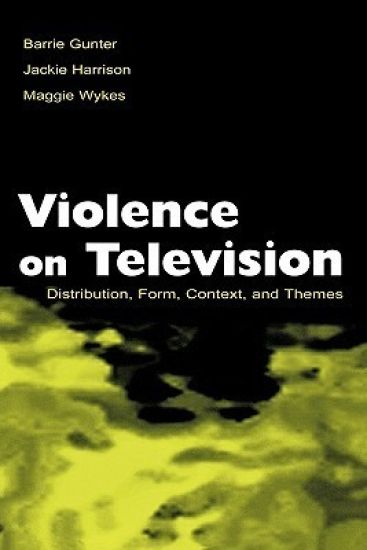
Violence on Television

Violence on Television

Barrie Gunter; Jackie Harrison; Maggie Wykes

Routledge Member of the Taylor and Francis Group
2003
nidottu
Concern about violence on television has been publicly debated for the past 50 years. TV violence has repeatedly been identified as a significant causal agent in relation to the prevalence of crime and violence in society. Critics have accused the medium of presenting excessive quantities of violence, to the point where it is virtually impossible for viewers to avoid it. This book presents the findings of the largest British study of violence on TV ever undertaken, funded by the broadcasting industry. The study was carried out at the same time as similar industry-sponsored research was being conducted in the United States, and one chapter compares findings from Britain and the U.S.A. The book concludes that it is misleading to accuse all broadcasters of presenting excessive quantities of violence in their schedules. This does not deny that problematic portrayals were found. But the most gory, horrific and graphic scenes of violence were generally contained within broadcasts available on a subscription basis or in programs shown at times when few children were expected to be watching. This factual analysis proves that broadcasters were meeting their obligations under their national regulatory codes of practice.
Violence on Television

Violence on Television

Barrie Gunter; Jackie Harrison; Maggie Wykes

Routledge Member of the Taylor and Francis Group
2003
sidottu
Concern about violence on television has been publicly debated for the past 50 years. TV violence has repeatedly been identified as a significant causal agent in relation to the prevalence of crime and violence in society. Critics have accused the medium of presenting excessive quantities of violence, to the point where it is virtually impossible for viewers to avoid it. This book presents the findings of the largest British study of violence on TV ever undertaken, funded by the broadcasting industry. The study was carried out at the same time as similar industry-sponsored research was being conducted in the United States, and one chapter compares findings from Britain and the U.S.A. The book concludes that it is misleading to accuse all broadcasters of presenting excessive quantities of violence in their schedules. This does not deny that problematic portrayals were found. But the most gory, horrific and graphic scenes of violence were generally contained within broadcasts available on a subscription basis or in programs shown at times when few children were expected to be watching. This factual analysis proves that broadcasters were meeting their obligations under their national regulatory codes of practice.