Kirjojen hintavertailu. Mukana 12 595 353 kirjaa ja 12 kauppaa.

Kirjailija

Malcolm D. Evans

Kirjat ja teokset yhdessä paikassa: 7 kirjaa, julkaisuja vuosilta 1997-2023, suosituimpien joukossa Tackling Torture. Vertaile teosten hintoja ja tarkista saatavuus suomalaisista kirjakaupoista.

7 kirjaa

Kirjojen julkaisuhaarukka 1997-2023.

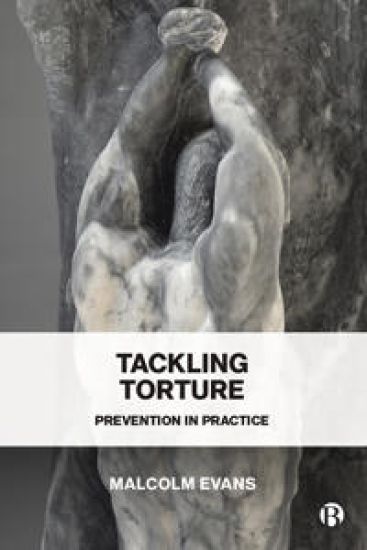
Tackling Torture

Tackling Torture

Malcolm D. Evans

Bristol University Press
2023
nidottu
How big a problem is torture? Are the right things being done to prevent it? Why does the UN appear at times to be so impotent in the face of it? In this vitally important work, Malcolm D. Evans tells the story of torture prevention under international law, setting out what is really happening around the world. Challenging assumptions about torture’s root causes, he calls for what is needed to enable us to bring about change. The author draws on over ten years’ experience as Chair of the UN Subcommittee on Prevention of Torture to give a frank account of the remarkable capacities of this system, what it has achieved in practice, or not been able to achieve – and most importantly, why.
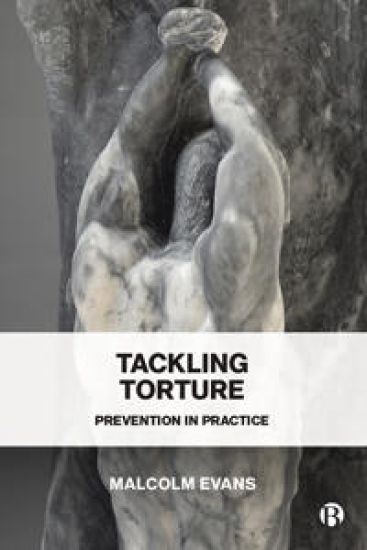
Tackling Torture

Tackling Torture

Malcolm D. Evans

Bristol University Press
2023
sidottu
How big a problem is torture? Are the right things being done to prevent it? Why does the UN appear at times to be so impotent in the face of it? In this vitally important work, Malcolm D. Evans tells the story of torture prevention under international law, setting out what is really happening around the world. Challenging assumptions about torture’s root causes, he calls for what is needed to enable us to bring about change. The author draws on over ten years’ experience as Chair of the UN Subcommittee on Prevention of Torture to give a frank account of the remarkable capacities of this system, what it has achieved in practice, or not been able to achieve – and most importantly, why.
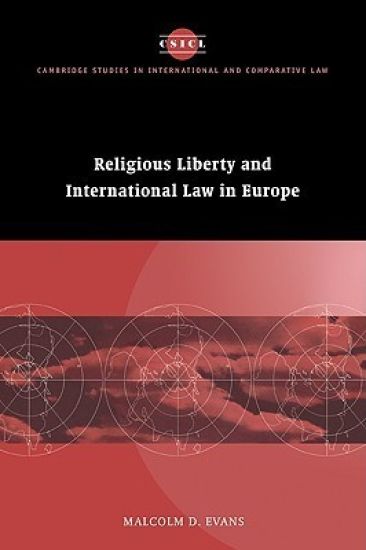
Religious Liberty and International Law in Europe

Religious Liberty and International Law in Europe

Malcolm D. Evans

Cambridge University Press
2008
pokkari
The freedom of religion is one of the oldest and most controversial of the claims that are recognized as forming part of the corpus of human rights. In this important and fascinating book Malcolm Evans provides a detailed account of the ways in which the freedom of religious belief came to be incorporated into the legislation of the countries of Europe. He goes on to examine the mechanisms by which this freedom is guaranteed, and a number of problematic cases which have recently been discussed in the Council of Europe. In a concluding section he outlines a number of developments which will influence the direction that the search for the protection of religious liberty under international law may take.
Protecting Prisoners

Protecting Prisoners

Rod Morgan; Malcolm D. Evans

Oxford University Press
1999
sidottu
Prisoners are a uniquely vulnerable social group and protecting them from oppressive states has given rise to a complex web of standards generated by a variety of international mechanisms and processes. Protecting Prisoners examines the most detailed and far-reaching set of custodial standards yet devised--those of the European Committee for the Prevention of Torture (CPT)---and relates them to those of other European and United Nations bodies. The book also examines the reaction of selected Council of Europe member states---Belgium, France, Hungary, the Netherlands, Turkey, and the United Kingdom---to the application of those standards in CPT reports. This dual perspective provides a critical insight into the degree to which the development of international human rights law is having a practical impact on the situation of prisoners.
Preventing Torture

Preventing Torture

Malcolm D. Evans; Rod Morgan

Clarendon Press
1998
sidottu
In the 19th century the prohibition of judicial torture was celebrated as a triumph of civilisation. But in the aftermath of the 2nd World War it was necessary for the International community to re-emphasise, in the Universal Declaration of Human Rights, its abhorrence of torture: the proscription of torture became part of international customary law. But torture by agents of contemporary states persists, not least in the heart of Europe where reliance on the use of custody is growing once again. This pathbreaking documentary and empirical study - of a kind rarely undertaken in the field of international human rights law - considers in detail the work of the latest actor on the international stage attempting to prevent torture. The European Committee for the Prevention of Torture and Inhuman and Degrading Treatment or Punishment (the CPT), established in 1989, represents a new phase in international human rights intervention. The Council of Europe member states have given a Strasbourg-based Committee of experts an almost unfettered hand to examine their places of custody and report on what they find. The authors, an international lawyer and a criminologist, bring their different analytical perspectives to bear on this innovative human rights mechanism. The authors consider the nature of torture in the late 20th century and, given the pervasive culture of denial, the difficulties in combating it. They argue that utilitarian justifications for torture lurk just beneath the surface of modern liberal democratic state practice. They describe the background to the European Convention for the Prevention of Torture, examine the text and the modus operandi of the Committee, set the CPT's standards against those of other international bodies and discuss how the work of the Committee should best be carried forward in an enlarged and increasingly diverse European community of nations.
Religious Liberty and International Law in Europe

Religious Liberty and International Law in Europe

Malcolm D. Evans

Cambridge University Press
1997
sidottu
The freedom of religion is one of the oldest and most controversial of the claims that are now recognized as forming part of the corpus of human rights. In this important and fascinating book Malcolm Evans provides a detailed account of the ways in which the freedom of religious belief came to be incorporated into the legislation of the countries of Europe. He goes on to examine the mechanisms by which this freedom is guaranteed, and a number of problematic cases which have recently been discussed in the Council of Europe. In a concluding section he outlines a number of developments which will influence the direction that the search for the protection of religious liberty under international law may take.