Kirjojen hintavertailu. Mukana 12 595 353 kirjaa ja 12 kauppaa.

Kirjailija

Malcolm Johnson

Kirjat ja teokset yhdessä paikassa: 6 kirjaa, julkaisuja vuosilta 1997-2019, suosituimpien joukossa A Practical Guide to Claims arising out of Injuries Sustained in Prison. Vertaile teosten hintoja ja tarkista saatavuus suomalaisista kirjakaupoista.

6 kirjaa

Kirjojen julkaisuhaarukka 1997-2019.

A Practical Guide to Claims arising out of Injuries Sustained in Prison
This book is intended to give practitioners an idea as to how the prison system works, and how to build a personal injury claim in circumstances that can be very challenging indeed. It is concerned mainly with injury claims brought by both prisoners and the people who work in prisons.Claims by prisoners frequently rely on different causes of action, such as negligence, trespass to the person, misfeasance in public office and human rights.As a number of reports and court judgments on the prison system have shown, prisons can be highly secretive places, cut off from the outside world, where abuse and corruption can flourish unchecked. It is generally accepted by the courts that prisoners are highly vulnerable people, who require a high degree of protection. ABOUT THE AUTHORMalcolm Johnson qualified as a solicitor in 1994. He works for Hudgell Solicitors as a Senior Solicitor. He is a solicitor advocate, who has represented his clients at trial, inquests, in the Upper Tier Tribunal and the Court of Appeal.Malcolm is a Fellow of the Association of Personal Injury Lawyers and a member of the Law Society's Personal Injury Panel. He is also the co-ordinator of APIL's Child Injury Special Interest Group. He is the author of "Child Abuse Compensation Claims" published by Jordans. He has written numerous articles in the legal press. Malcolm also advises Coram Voice, a London based charity who support children in care. He is one of the authors of "Complaints for Advocates" published by Pavilion.
Crypts of London

Crypts of London

Malcolm Johnson; Richard Londin

Phillimore Co Ltd
2013
nidottu
After the devastation of 1666, the Church of England in the City of London was given fifty-one new buildings in addition to the twenty-four that had survived the Great Fire. During the next hundred years others were built in the two cities of London and Westminster, most with a crypt as spacious as the church above. This book relates the amazing stories of these spaces, revealing an often surprising side to life – and death – inside the churches of historic London. The story of these crypts really began when, against the wishes of architects such as Wren and Vanbrugh, the clergy, churchwardens and vestries decided to earn some money by interring wealthy parishioners in their crypts. By 1800 there were seventy-nine church crypts in London, filled with the last remains of Londoners both illustrious and ordinary. Interments in inner London ended in the 1850s; since then, fifty-two crypts have been cleared, and five partially cleared – in each case resulting in the gruesome business of moving human remains. Today, many crypts have a new life as chapels, restaurants, medical centres and museums. With rare illustrations throughout, this fascinating study reveals the incredible history hidden beneath the churches of our capital. Malcolm Johnson is a retired priest, and has a PhD from King’s College, London. His well-received St Martin-in- the-Fields was published by Phillimore in 2005.
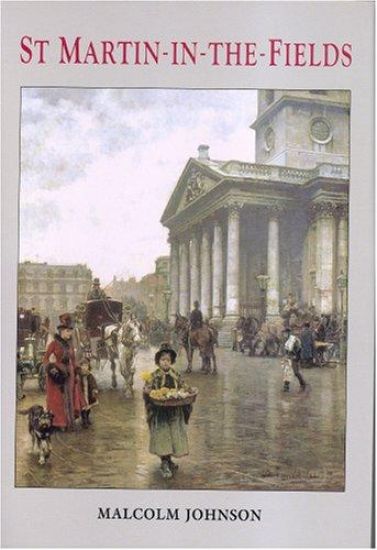
St Martin-in-the-Fields

St Martin-in-the-Fields

Malcolm Johnson

Phillimore Co Ltd
2008
sidottu
St Martin's has a long history stretching back more than eight hundred years – during which its life has rarely been dull. A place of prayer and of action, which Simon Jenkins recently described as … ‘England’s most loved, most photographed and most imitated church’. Its clergy and congregation have always been interesting and often eccentric (two vicars became archbishops and two went to prison) and the author describes them with humour, and, as the Bishop of London says in his Foreword, ‘relish and reasonable discretion’. In the first World War, Dick Sheppard, the vicar, opened the crypt so that troops returning from the trenches might find a place to eat and rest. This tradition of hospitality continues as the Connection at St Martin’s welcomes 250 homeless people of all ages every weekday. Since the days when Handel played the Sunday voluntaries on the organ, there has always been a fine musical tradition and six concerts are now held each week. The world famous Academy of St Martin in the Fields, founded in 1958 by Sir Neville Marriner and the church organist, John Churchill, has gone from strength to strength as the author describes in detail in his very readable narrative. St Martin’s is the parish church of London and, after 80 years of broadcasting, has also become the parish church of the Commonwealth, visited by thousands of tourists every year. Gibbs’ historic building, consecrated in 1726, has survived with remarkably little alteration; but in 2005 the most exciting and ambitious development in St Martin’s long history will begin when, without altering the exterior, today’s unique mix of church, care and commerce will be given rooms and spaces fit for the 21st century. This well-researched and well-written full history of the church – the first to appear since 1916 – will be warmly welcomed well beyond London and, indeed, beyond.
Managing with Asperger Syndrome

Managing with Asperger Syndrome

Malcolm Johnson

Jessica Kingsley Publishers
2004
pokkari
This insider account provides much-needed information about a subject of increasing interest: people with Asperger Syndrome (AS) working in management positions. Johnson draws on his personal experiences to explain how elements such as the working environment, managing staff, group dynamics and office politics can have a profound influence on work performance. He provides useful examples and guidance on adapting to the workplace and coping with the pressures and demands of professional roles.Full of practical advice, this book will be essential reading for anyone with AS in employment as well as their managers, colleagues, family and friends, as well as supporting professionals.
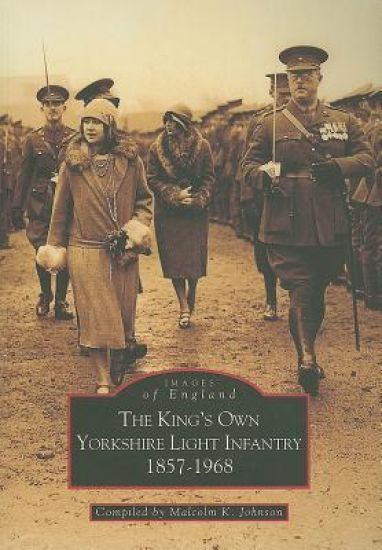
The King's Own Yorkshire Light Infantry 1857-1968

The King's Own Yorkshire Light Infantry 1857-1968

Malcolm Johnson

The History Press Ltd
1997
nidottu
This fascinating illustrated regimental history contains photographs taken over a period of 11 years. During this time the Regiment served in most parts of the Empire including areas as diverse as India and Burma, South Africa and Norway, Kenya and Brunei. The Regiment, the 51st Foot, was raised in Leeds in 1755 and is one of the six Minden Regiments where, at the Battle of Minden (1759), British infantry beat off and drove back three waves of attacking French cavalry. In 1881 the 51st King's Own Light Infantry was coupled with the 105th Madras European Light Infantry to form the 1st and 2nd Battalions, respectively, of the King's Own Yorkshire Light Infantry. In 1927, Her Majesty Queen Elizabeth, The Queen Mother, was appointed Colonel-in-Chief. The recruiting area was mainly the industrial West Riding, South and North Yorkshire. The Regiment has a distinguished record and was involved in most of the great conflicts of the past 250 years. With 226 photographs from the Regiment's own archive at the Regimental Museum (housed within the Doncaster Metropolitan Borough Museum), as well as images from the Imperial War Museum, the National Archive of Canada, newspapers, the regimental journal, The Bugle, and former officers and men of the Regiment, this volume provides an interesting pictorial insight into the history of the Regiment.