
Kirjailija
Malcolm Ross
Kirjat ja teokset yhdessä paikassa: 11 kirjaa, julkaisuja vuosilta 1989-2025, suosituimpien joukossa Betty Wales on the campus (Edition1). Vertaile teosten hintoja ja tarkista saatavuus suomalaisista kirjakaupoista.
11 kirjaa
Kirjojen julkaisuhaarukka 1989-2025.
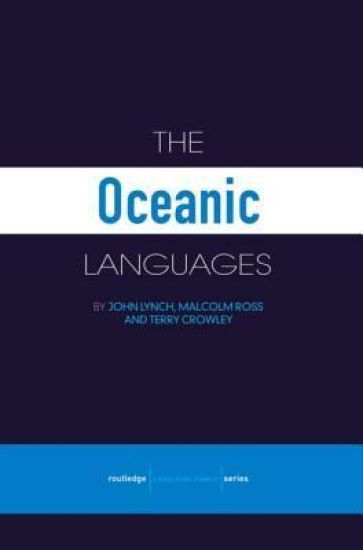
The Oceanic Languages form a closed subgroup within one of the world’s largest language families, Austronesian. There are between 1000 and 1500 Austronesian languages (estimates vary), with so much structural diversity that they are best handled in two volumes, one on the Oceanic and one on the non-Oceanic Austronesian languages. This division is clear and the grammar sketches in this volume provide a cross-section through the structural diversity of the Oceanic languages which is not available elsewhere. Much of the material is drawn from data collected by the authors and has not been previously published.The volume contains five background chapters: The Oceanic Languages, Sociolinguistic Background, Typological Overview, Proto-Oceanic and Internal Subgrouping. In addition, the volume presents forty-three grammar sketches, selected from the five hundred Oceanic languages spread across a region embracing eastern Indonesia, Melanesia, Polynesia, and Micronesia.
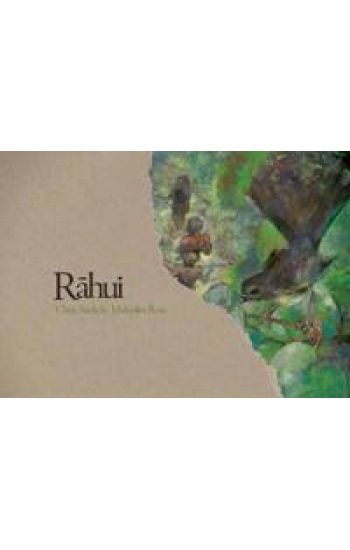
A child’s death leads to a r?hui (restriction) being placed on a rural beach. After a year, the r?hui is lifted, and two children return to the beach full of life and with their cousin in their hearts.
The constituency for education and therapy in the arts is rapidly expanding beyond the conventional school and clinical settings to include the wider community. In Cultivating the Arts in Education and Therapy, Malcolm Ross integrates traditional Chinese Five Element Theory, also known as The Five Phases of Change, with contemporary Western psychological and cultural studies, to form a new Syncretic Model of creative artistic practice.The Syncretic Model is explored and validated through an analysis of interviews with practising, successful artists, and in a comprehensive review of the latest neuro-scientific research into human consciousness and emotion. The book addresses the well-documented difficulties experienced by arts teachers and therapists intervening in, supporting and evaluating the creative development of individual students and clients. This groundbreaking text repositions the arts as central to the effective initiation and management of change in contemporary society. Besides being of wide general interest, it will have particular relevance for practising and trainee arts teachers, arts therapists and community artists. With the demand for their services growing and pressure to demonstrate effectiveness mounting, the arts community is looking to build bridges between the different arts, and between arts education and therapy across national boundaries. This book offers a fresh, coherent, and challenging framework for a revitalized reflective practice from an experienced authority in the field.
The constituency for education and therapy in the arts is rapidly expanding beyond the conventional school and clinical settings to include the wider community. In Cultivating the Arts in Education and Therapy, Malcolm Ross integrates traditional Chinese Five Element Theory, also known as The Five Phases of Change, with contemporary Western psychological and cultural studies, to form a new Syncretic Model of creative artistic practice.The Syncretic Model is explored and validated through an analysis of interviews with practising, successful artists, and in a comprehensive review of the latest neuro-scientific research into human consciousness and emotion. The book addresses the well-documented difficulties experienced by arts teachers and therapists intervening in, supporting and evaluating the creative development of individual students and clients. This groundbreaking text repositions the arts as central to the effective initiation and management of change in contemporary society. Besides being of wide general interest, it will have particular relevance for practising and trainee arts teachers, arts therapists and community artists. With the demand for their services growing and pressure to demonstrate effectiveness mounting, the arts community is looking to build bridges between the different arts, and between arts education and therapy across national boundaries. This book offers a fresh, coherent, and challenging framework for a revitalized reflective practice from an experienced authority in the field.
Title: The Earl of Ross: a tragedy in five acts and in verse].Publisher: British Library, Historical Print EditionsThe British Library is the national library of the United Kingdom. It is one of the world's largest research libraries holding over 150 million items in all known languages and formats: books, journals, newspapers, sound recordings, patents, maps, stamps, prints and much more. Its collections include around 14 million books, along with substantial additional collections of manuscripts and historical items dating back as far as 300 BC.The POETRY & DRAMA collection includes books from the British Library digitised by Microsoft. The books reflect the complex and changing role of literature in society, ranging from Bardic poetry to Victorian verse. Containing many classic works from important dramatists and poets, this collection has something for every lover of the stage and verse. ++++The below data was compiled from various identification fields in the bibliographic record of this title. This data is provided as an additional tool in helping to insure edition identification: ++++ British Library Ross, Malcolm; 1823. vii. 60 p.; 8 . 643.f.25.(4.)
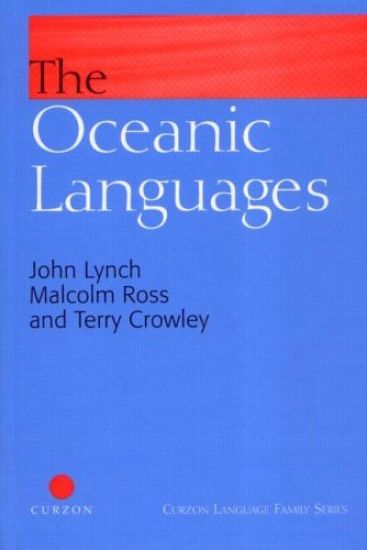
This new volume of the Language Family Series presents an overview of the Oceanic subgroup of the Austronesian languages, spread across a region embracing eastern Indonesia, Melanesia, Polynesia, and Micronesia. It provides sufficient phonological and grammatical data to give typologists and comparativists a good idea of the nature of these languages, and of how much typological variety there is in this single subgroup. The references will allow those interested in particular topics, geographical areas or specific languages to delve further. Divided into two major parts, the first five chapters of the book place the Oceanic languages in their geographic, demographic and social context. Both the place of the Oceanic subgroup within the wider Austronesian family, and the internal subgrouping of Oceanic itself are dealt with. A typological overview of Oceanic languages is provided, as well as an outline of the reconstructed phonology and morphosyntax of Proto Oceanic. The second part of the book consists of grammar sketches of 43 Oceanic languages that are not at all well known in the linguistic literature. For many of these languages, the sketch in this volume is the first grammatical treatment to appear in print.
Asbestos and Other Fibrous Materials
H.Catherine W. Skinner; Malcolm Ross; Clifford Frondel
Oxford University Press Inc
1989
sidottu
The public has become acutely aware that there is a large quantity of asbestos in the environment - it is used to insulate homes, schools and other public buildings, in car brakes, hair-dryers, and in many other applications. Asbestos and other fibrous inorganic materials are used so extensively because of their unique physical and chemical properties, which partly result from their fibrous form. This form also accounts for the hazards they pose to health. This comprehensive sourcebook introduces inorganic fibrous materials, both synthetic and naturally occurring. It provides an accessible general description of the fibrous state, the range of compounds that can adopt this form, and their unique characteristics. The author also assesses their use in industry and evaluates their safety.