Kirjojen hintavertailu. Mukana 12 165 998 kirjaa ja 12 kauppaa.

Kirjailija

Malcolm Turvey

Kirjat ja teokset yhdessä paikassa: 5 kirjaa, julkaisuja vuosilta 2008-2025, suosituimpien joukossa Film, Art, and the Limits of Science. Vertaile teosten hintoja ja tarkista saatavuus suomalaisista kirjakaupoista.

5 kirjaa

Kirjojen julkaisuhaarukka 2008-2025.

Film, Art, and the Limits of Science

Film, Art, and the Limits of Science

Malcolm Turvey

Springer International Publishing AG
2025
sidottu
There is currently a vigorous debate in film studies and related disciplines about the extent to which scientific paradigms like evolutionary psychology and neuroscience can explain the cinema and other artforms. This debate tends to devolve into extreme positions, with many film scholars and other humanists insisting that science has little or no role to play in the study of the arts, while a minority contends that it is always needed to fully account for cultural phenomena like film. Malcolm Turvey advocates for a more moderate position. He argues that, while the sciences can explain much about film and the other arts, there is much about these phenomena that only humanistic methods can account for. He thereby mounts a trenchant defence of the purpose and value of humanistic explanation, one that nevertheless acknowledges and welcomes the legitimate contribution of the sciences to the study of the arts.
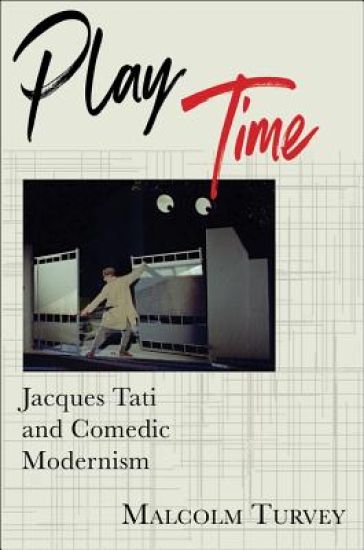
Play Time

Play Time

Malcolm Turvey

Columbia University Press
2019
pokkari
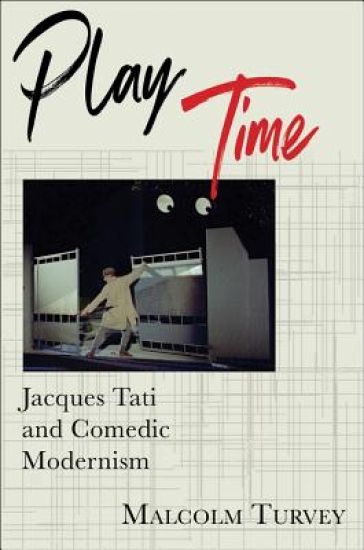
Jacques Tati is widely regarded as one of the greatest postwar European filmmakers. He made innovative and challenging comedies while achieving international box office success and attaining a devoted following. In Play Time, Malcolm Turvey examines Tati’s unique comedic style and evaluates its significance for the history of film and modernism.Turvey argues that Tati captured elite and general audiences alike by combining a modernist aesthetic with slapstick routines, gag structures, and other established traditions of mainstream film comedy. Considering films such as Monsieur Hulot’s Holiday (1953), Mon Oncle (1958), Play Time (1967), and Trafic (1971), Turvey shows how Tati drew on the rich legacy of comic silent film while modernizing its conventions in order to encourage his viewers to adopt a playful attitude toward the modern world. Turvey also analyzes Tati’s sardonic view of the bourgeoisie and his complex and multifaceted satire of modern life. Tati's singular and enduring achievement, Turvey concludes, was to translate the democratic ideals of the postwar avant-garde into mainstream film comedy, crafting a genuinely popular modernism. Richly illustrated with images from the director’s films, Play Time offers an illuminating and original understanding of Tati’s work.
Play Time

Play Time

Malcolm Turvey

Columbia University Press
2019
sidottu
Jacques Tati is widely regarded as one of the greatest postwar European filmmakers. He made innovative and challenging comedies while achieving international box office success and attaining a devoted following. In Play Time, Malcolm Turvey examines Tati’s unique comedic style and evaluates its significance for the history of film and modernism.Turvey argues that Tati captured elite and general audiences alike by combining a modernist aesthetic with slapstick routines, gag structures, and other established traditions of mainstream film comedy. Considering films such as Monsieur Hulot’s Holiday (1953), Mon Oncle (1958), Play Time (1967), and Trafic (1971), Turvey shows how Tati drew on the rich legacy of comic silent film while modernizing its conventions in order to encourage his viewers to adopt a playful attitude toward the modern world. Turvey also analyzes Tati’s sardonic view of the bourgeoisie and his complex and multifaceted satire of modern life. Tati's singular and enduring achievement, Turvey concludes, was to translate the democratic ideals of the postwar avant-garde into mainstream film comedy, crafting a genuinely popular modernism. Richly illustrated with images from the director’s films, Play Time offers an illuminating and original understanding of Tati’s work.
Doubting Vision

Doubting Vision

Malcolm Turvey

Oxford University Press Inc
2008
sidottu
The film theories of Jean Epstein, Dziga Vertov, Bela Balazs, and Siegfried Kracauer have long been studied separately from each other. In Doubting Vision, film scholar Malcolm Turvey argues that their work constitutes a distinct, hitherto neglected tradition, which he calls revelationism, and which differs in important ways from modernism and realism. For these four theorists and filmmakers, the cinema is an art of mass enlightenment because it escapes the limits of human sight and reveals the true nature of reality. Turvey provides a detailed exegesis of this tradition, pointing to its sources in Romanticism, the philosophy of Henri Bergson, modern science, and other intellectual currents. He also shows how profoundly it has influenced contemporary film theory by examining the work of psychoanalytical-semiotic theorists of the 1970s, Stanley Cavell, the modern-day followers of Kracauer and Walter Benjamin, and Gilles Deleuze. Throughout, Turvey offers a trenchant critique of revelationism and its descendants. Combining the close analysis of theoretical texts with the philosophical method of conceptual clarification pioneered by the later Wittgenstein, he shows how the arguments theorists and filmmakers have made about human vision and the cinema's revelatory powers often traffic in conceptual confusion. Having identified and extricated these confusions, Turvey builds on the work of Epstein, Vertov, Balazs, and Kracauer as well as contemporary philosophers of film to clarify some legitimate senses in which the cinema is a revelatory art using examples from the films of filmmakers such as Alfred Hitchcock and Jacques Tati.
Doubting Vision

Doubting Vision

Malcolm Turvey

Oxford University Press Inc
2008
nidottu
The film theories of Jean Epstein, Dziga Vertov, Bela Balazs, and Siegfried Kracauer have long been studied separately from each other. In Doubting Vision, film scholar Malcolm Turvey argues that their work constitutes a distinct, hitherto neglected tradition, which he calls revelationism, and which differs in important ways from modernism and realism. For these four theorists and filmmakers, the cinema is an art of mass enlightenment because it escapes the limits of human sight and reveals the true nature of reality. Turvey provides a detailed exegesis of this tradition, pointing to its sources in Romanticism, the philosophy of Henri Bergson, modern science, and other intellectual currents. He also shows how profoundly it has influenced contemporary film theory by examining the work of psychoanalytical-semiotic theorists of the 1970s, Stanley Cavell, the modern-day followers of Kracauer and Walter Benjamin, and Gilles Deleuze. Throughout, Turvey offers a trenchant critique of revelationism and its descendants. Combining the close analysis of theoretical texts with the philosophical method of conceptual clarification pioneered by the later Wittgenstein, he shows how the arguments theorists and filmmakers have made about human vision and the cinema's revelatory powers often traffic in conceptual confusion. Having identified and extricated these confusions, Turvey builds on the work of Epstein, Vertov, Balazs, and Kracauer as well as contemporary philosophers of film to clarify some legitimate senses in which the cinema is a revelatory art using examples from the films of filmmakers such as Alfred Hitchcock and Jacques Tati.