Kirjojen hintavertailu. Mukana 12 109 208 kirjaa ja 12 kauppaa.
Kirjailija
Manfred B. Steger
Kirjat ja teokset yhdessä paikassa: 22 kirjaa, julkaisuja vuosilta 1997-2025, suosituimpien joukossa En meget kort introduktion til neoliberalisme. Vertaile teosten hintoja ja tarkista saatavuus suomalaisista kirjakaupoista.
Since the explosion of the buzzword “globalization” in academic and public discourse more than thirty years ago, theoretical explorations of worldwide interconnectivities and mobilities have proliferated across major academic disciplines. Introducing Globalization Theories is a short yet comprehensive primer to major globalization theories from the 1990s to the present. This accessible volume explains how globalization frameworks have been assembled by influential thinkers who employ different modes of inquiry. Short summaries, illustrations, and a supplemental guide to further reading equip students with tools to assess the strengths and weaknesses of each theory. Intersecting with relevant contemporary themes such as inequality and ecology, the book also highlights and features postcolonial and Indigenous globalization theories that challenge Western-centric views and point to a more equitable world.
Since the explosion of the buzzword “globalization” in academic and public discourse more than thirty years ago, theoretical explorations of worldwide interconnectivities and mobilities have proliferated across major academic disciplines. Introducing Globalization Theories is a short yet comprehensive primer to major globalization theories from the 1990s to the present. This accessible volume explains how globalization frameworks have been assembled by influential thinkers who employ different modes of inquiry. Short summaries, illustrations, and a supplemental guide to further reading equip students with tools to assess the strengths and weaknesses of each theory. Intersecting with relevant contemporary themes such as inequality and ecology, the book also highlights and features postcolonial and Indigenous globalization theories that challenge Western-centric views and point to a more equitable world.
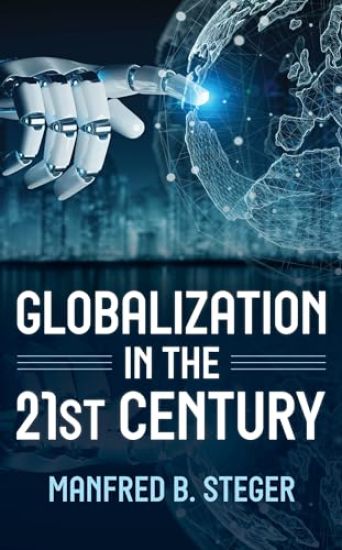
The fate of globalization in the 21st century hangs in the balance. Although recent data show that most global integration has been on the rebound after the 2008-9 global financial meltdown and the COVID-19 pandemic, public sentiments about globalization have soured. The neoliberal glorification of globalization as beneficial market integration is running out of steam, while national-populist visions of “deglobalization” exert significant mass appeal. Today’s ostensible globalization backlash scenario seems to be confirmed by soaring inflation rates, global supply chain disruptions, accelerating climate change and ecological deterioration, lagging transitions to greener forms of energy, escalating economic inequality, and rising geopolitical competition among the Great Powers, especially the United States-China rivalry and the protracted Russian-Ukrainian war. On the flipside, however, such grim scenarios reinforce the fact that most of today’s problems are global in nature. This book provides an accessible assessment of 21st-century globalization that draws on global theory and history to engage pressing issues such as digitization, ideological polarization, higher education, demographics, human development, and the environment. Assembling such a big picture of globalization in this young century supports the practical efforts of setting the globe on a more equitable and sustainable path.
The fate of globalization in the 21st century hangs in the balance. Although recent data show that most global integration has been on the rebound after the 2008-9 global financial meltdown and the COVID-19 pandemic, public sentiments about globalization have soured. The neoliberal glorification of globalization as beneficial market integration is running out of steam, while national-populist visions of “deglobalization” exert significant mass appeal. Today’s ostensible globalization backlash scenario seems to be confirmed by soaring inflation rates, global supply chain disruptions, accelerating climate change and ecological deterioration, lagging transitions to greener forms of energy, escalating economic inequality, and rising geopolitical competition among the Great Powers, especially the United States-China rivalry and the protracted Russian-Ukrainian war. On the flipside, however, such grim scenarios reinforce the fact that most of today’s problems are global in nature. This book provides an accessible assessment of 21st-century globalization that draws on global theory and history to engage pressing issues such as digitization, ideological polarization, higher education, demographics, human development, and the environment. Assembling such a big picture of globalization in this young century supports the practical efforts of setting the globe on a more equitable and sustainable path.
Very Short Introductions: Brilliant, Sharp, Inspiring We live today in an interconnected world in which ordinary people can became instant online celebrities to millions of fans thousands of miles away, in which religious leaders can influence billions globally, in which humans are altering the climate and environment, in which new infectious diseases spread across continents at lightning speed, and in which complex social forces are increasingly impacted by digital technology. This is globalization. In the sixth edition of his bestselling Very Short Introduction, Manfred B. Steger offers concise definitions of pertinent key terms and concepts. He provides an accessible overview of the long history of globalization followed by an examination of its major dimensions: economic, political, cultural, ideological, and ecological. He also engages the hotly contested question of whether it is, ultimately, a good or a bad thing. From climate change to the COVID-19 pandemic, resurgent nationalism to global social media, trade wars to China's growing global profile, Russia's expansionism to renewed fears of nuclear conflicts, he explores today's unprecedented levels of planetary integration and disruption. ABOUT THE SERIES: The Very Short Introductions series from Oxford University Press contains hundreds of titles in almost every subject area. These pocket-sized books are the perfect way to get ahead in a new subject quickly. Our expert authors combine facts, analysis, perspective, new ideas, and enthusiasm to make interesting and challenging topics highly readable.
I 1990’erne blev neoliberalisme det dominerende økonomiske paradigme, og statsledere som Bill Clinton og Tony Blair tog økonomien til sig. Grundlaget for den neoliberalistiske tankegang blev dog allerede lagt i årtierne inden med Ronald Reagan og Margaret Thatchers økonomiske politik, men også udviklingen af en neoliberal økonomi i diktatoren Augusto Pinochets Chile. Først i 2000’erne blev neoliberalismen for alvor udfordret – og truet – af den globale finanskrise, hvis lige ikke havde været set siden depressionen i 1930’erne.En meget kort introduktion til neoliberalisme undersøger og analyserer neoliberalismens fødsel og udvikling, dens krav og forskellige former. Bogens kapitler handler om:Hvad er det nye ved denne form for liberalisme?Første bølge i 1980’erneAnden bølge i 1990’erneNeoliberalisme og asiatisk udviklingNeoliberalisme i Latinamerika og AfrikaKriser, 2000’erne og hinsidesManfred B. Steger er professor i sociologi ved University of Hawaii, USA. Ravi K. Roy er forsker ved The W. Edwards Deming Institute og Claremont Graduate University i USA og ved Royal Melbourne Institute of Technology i Australien.
Very Short Introductions: Brilliant, Sharp, Inspiring Anchored in the principles of free-market economics, neoliberalism emerged in the 1990s as the world's most dominant economic paradigm. It has been associated with various political leaders from Ronald Reagan, Margaret Thatcher, and Bill Clinton, to Tony Blair, Barack Obama, and Manmohan Singh. Neoliberalism even penetrated deeply into communist China's powerful economic system. However, the 2008 Global Financial Crisis and the related European Sovereign Debt Crisis triggered a decade of economic volatility and insecurity that boosted the fortunes of the 1 per cent while saddling the 99 per cent with stagnant wages and precarious work. As a result of this Great Recession, neoliberalism fortunes have waned considerably. This downward trend further accelerated with the recent surge of national populism around the world that brought to power outspoken critics of neoliberalism like Donald Trump, Boris Johnson, Jair Bolsonaro, and Narendra Modi. Is neoliberalism doomed or will it regain its former glory? And what are the major types of neoliberalism, and how did they evolve over the decades? Responding to these crucial questions, this Very Short introduction explores the considerable variations of neoliberalism around the world, and discusses the origins, evolution, and core ideas of neoliberalism. This new edition brings the story of neoliberalism up to date, and asks whether new versions of neoliberalism might succeed in drowning out the rising tide of national populism and its nostalgic longing for a return to territorial sovereignty and national greatness. ABOUT THE SERIES: The Very Short Introductions series from Oxford University Press contains hundreds of titles in almost every subject area. These pocket-sized books are the perfect way to get ahead in a new subject quickly. Our expert authors combine facts, analysis, perspective, new ideas, and enthusiasm to make interesting and challenging topics highly readable.
Rather than reaching the “end of ideology” predicted only three decades ago, we find ourselves in the throes of an intensifying ideological struggle over the meaning and direction of globalization. Noted scholar Manfred B. Steger introduces readers to the clashing political belief systems of our time: market globalism, justice globalism, and religious globalism. He shows how these “globalisms” have developed and how their competing ideas articulate and legitimize particular political agendas. He focuses especially on the ways this battle of ideas has been extended through the unexpectedly powerful surge of antiglobalist populism, an ideological contender that stands in tension to pluralist values of liberal democracy. Explaining the origins, impacts, and consequences of the recent populist challenge, Steger considers the future prospects for the established globalisms in what promises to be a tumultuous decade—as global problems such as climate change, pandemics, transnational terrorism, financial crises, and cyber-warfare threaten humanity’s collective future.
Rather than reaching the “end of ideology” predicted only three decades ago, we find ourselves in the throes of an intensifying ideological struggle over the meaning and direction of globalization. Noted scholar Manfred B. Steger introduces readers to the clashing political belief systems of our time: market globalism, justice globalism, and religious globalism. He shows how these “globalisms” have developed and how their competing ideas articulate and legitimize particular political agendas. He focuses especially on the ways this battle of ideas has been extended through the unexpectedly powerful surge of antiglobalist populism, an ideological contender that stands in tension to pluralist values of liberal democracy. Explaining the origins, impacts, and consequences of the recent populist challenge, Steger considers the future prospects for the established globalisms in what promises to be a tumultuous decade—as global problems such as climate change, pandemics, transnational terrorism, financial crises, and cyber-warfare threaten humanity’s collective future.
At the turn of the twenty-first century, globalization - both the process and the idea - bestrode the world. Widely acclaimed by political and economic pundits as the most important phenomenon of our time, it took the world by storm. Two decades later, it has come under sustained attack by the re-invigorated forces of the extreme right and radical left. Does globalization still matter in our unsettled world? Responding in the affirmative, this study develops and applies a new framework of an 'engaged theory of globalization' to analyze some of today's most pressing global challenges: the rise of national populism, ecological degradation, rapid urbanization, new sources of insecurity, and the changing landscape of higher education. Offering a comprehensive appraisal of globalization in our unsettled times, the authors explain why and how transplanetary interrelations continue to matter in a world that is wavering between globalist expansion and nationalist retrenchment.
At the turn of the twenty-first century, globalization - both the process and the idea - bestrode the world. Widely acclaimed by political and economic pundits as the most important phenomenon of our time, it took the world by storm. Two decades later, it has come under sustained attack by the re-invigorated forces of the extreme right and radical left. Does globalization still matter in our unsettled world? Responding in the affirmative, this study develops and applies a new framework of an 'engaged theory of globalization' to analyze some of today's most pressing global challenges: the rise of national populism, ecological degradation, rapid urbanization, new sources of insecurity, and the changing landscape of higher education. Offering a comprehensive appraisal of globalization in our unsettled times, the authors explain why and how transplanetary interrelations continue to matter in a world that is wavering between globalist expansion and nationalist retrenchment.
This text provides the reader with a transdisciplinary, global studies perspective of the political significance of globalization as articulated in today's three main globalisms: market globalism; justice globalism; and religious globalism. Globalization and Ideology: A Global Studies Perspective brings together subjective and objective aspects of globalization that are usually treated separately from each other. Focusing on the transformation of the contemporary ideological landscape, the book is divided into three parts containing an original preface and nine chapters. Collectively, the chapters respond to a broad range of questions, including:* How are political ideologies and social imaginaries being transformed in the global age?* What sorts of ideological claims are being generated by the three main globalisms?* How do these political ideas play out in concrete social, political, and cultural contexts? * How do globalisms shape urban spaces and popular images, and how, in turn, are they shaped by global ideologies?* How are traditional academic disciplines like political theory responding to global flows of ideas and theories that cut across conventional scholarly boundaries? * What does the fledgling field of global studies contribute to new forms of knowledge on these subjects?* What is the relationship between globalizing ideologies and post-9/11 `American Empire'?* Why has there been a surge of religious globalisms such as jihadist Islamism, Christian global fundamentalism, Falun Gong syncretism, and Buddhism? * Is the World Social Forum an effective site of ideological counter-production, capable of generating appealing political visions of `another world' opposed to market globalisms?* Has the lingering Great Recession halted the worldwide ascent of neoliberalism or will it regain its former glory? * Rather than reaching the `end of ideology', are we entering a new era of (global) ideological struggle?
This text provides the reader with a transdisciplinary, global studies perspective of the political significance of globalization as articulated in today's three main globalisms: market globalism; justice globalism; and religious globalism. Globalization and Ideology: A Global Studies Perspective brings together subjective and objective aspects of globalization that are usually treated separately from each other. Focusing on the transformation of the contemporary ideological landscape, the book is divided into three parts containing an original preface and nine chapters. Collectively, the chapters respond to a broad range of questions, including:* How are political ideologies and social imaginaries being transformed in the global age?* What sorts of ideological claims are being generated by the three main globalisms?* How do these political ideas play out in concrete social, political, and cultural contexts? * How do globalisms shape urban spaces and popular images, and how, in turn, are they shaped by global ideologies?* How are traditional academic disciplines like political theory responding to global flows of ideas and theories that cut across conventional scholarly boundaries? * What does the fledgling field of global studies contribute to new forms of knowledge on these subjects?* What is the relationship between globalizing ideologies and post-9/11 `American Empire'?* Why has there been a surge of religious globalisms such as jihadist Islamism, Christian global fundamentalism, Falun Gong syncretism, and Buddhism? * Is the World Social Forum an effective site of ideological counter-production, capable of generating appealing political visions of `another world' opposed to market globalisms?* Has the lingering Great Recession halted the worldwide ascent of neoliberalism or will it regain its former glory? * Rather than reaching the `end of ideology', are we entering a new era of (global) ideological struggle?
The Global Studies Reader, Second Edition, offers an accessible introduction to globalization that will provide students with a better understanding of what constitutes Global Studies-the transdisciplinary field dedicated to the study of globalization. Thus, the book has been carefully designed to provide a representative selection of transdisciplinary writings appropriate for undergraduate students in Global Studies. This book brings together in a single volume some of the best pieces on the subject written by recognized scholars. These twenty seminal contributions have been kept to an easily digestible length while at the same time covering the major dimensions of globalization: politics and societies; economies and technologies; cultures and histories; and spaces and environments. Although The Global Studies Reader purposely contains no additional sectional introductions that might interrupt the conceptual flow of the writings, it offers at the end of each of its four parts five discussion points designed to help clarify the authors' arguments and to stimulate further conversation. You will also find suggestions for additional readings and recommended websites to guide students' further research.
Are political activists connected to the global justice movement simplistically opposed to neoliberal globalization? Is their political vision 'incoherent' and their policy proposals 'naïve' and 'superficial' as is often claimed by the mainstream media? Drawing on dozens of interviews and rich textual analyses involving nearly fifty global justice organizations linked to the World Social Forum, the authors of this pioneering study challenge this prevailing view. They present a compelling case that the global justice movement has actually fashioned a new political ideology with global reach: 'justice globalism'. Far from being incoherent, justice globalism possesses a rich and nuanced set of core concepts and powerful ideological claims. The book investigates how justice globalists respond to global financial crises, to escalating climate change, and to the global food crisis. It finds justice globalism generating new political agendas and campaigns to address these pressing problems. Justice globalism, the book concludes, has much to contribute to solving the serious global challenges of the 21st century. Justice Globalism will prove a stimulating read for undergraduate and graduate students in the social sciences and humanities who are taking courses on globalization, global studies and global justice.
Are political activists connected to the global justice movement simplistically opposed to neoliberal globalization? Is their political vision 'incoherent' and their policy proposals 'naïve' and 'superficial' as is often claimed by the mainstream media? Drawing on dozens of interviews and rich textual analyses involving nearly fifty global justice organizations linked to the World Social Forum, the authors of this pioneering study challenge this prevailing view. They present a compelling case that the global justice movement has actually fashioned a new political ideology with global reach: 'justice globalism'. Far from being incoherent, justice globalism possesses a rich and nuanced set of core concepts and powerful ideological claims. The book investigates how justice globalists respond to global financial crises, to escalating climate change, and to the global food crisis. It finds justice globalism generating new political agendas and campaigns to address these pressing problems. Justice globalism, the book concludes, has much to contribute to solving the serious global challenges of the 21st century. Justice Globalism will prove a stimulating read for undergraduate and graduate students in the social sciences and humanities who are taking courses on globalization, global studies and global justice.
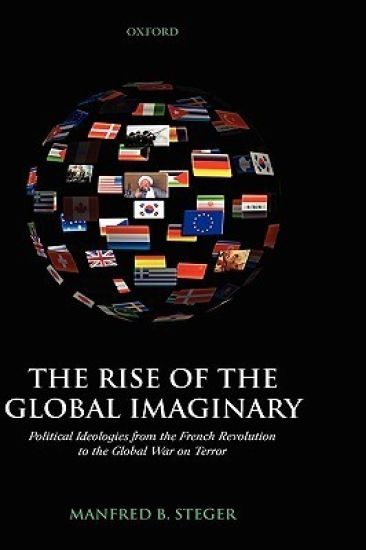
Neoliberalism. Neoconservatism. Postmarxism. Postmodernism. Is there really something genuinely new about today's isms? Have we moved past our traditional ideological landscape? Combining political history, philosophical interpretation, and good old-fashioned story-telling, Manfred Steger traces ideology's remarkable journey from Count Destutt de Tracy's Enlightenment "science of ideas" to President George W. Bush's "imperial globalism." Rejecting futile attempts to "update" modern political belief systems by adorning them with prefixes, the author offers instead a highly original explanation for their novelty-their increasing ability to articulate deep-seated understandings of community in global rather than national terms. This growing awareness of globality fuels the visions of social elites who reside in the privileged spaces of our global cities. It erupts in the hopes and demands of migrants who traverse national boundaries in search of their piece of the global promise. Stoked by cross-cultural encounters, technological change, and scientific innovation, the rising global imaginary has destabilized the grand political ideologies codified during the national age. The national is slowly losing its grip on people's minds, but the global has not yet ascended to the commanding heights once occupied by its predecessor. Still, the first rays of the rising global imaginary have provided enough light to capture the contours of a profoundly altered ideological landscape. Pointing in this direction, the book ends with a timely interpretation of the apparent convergence of ideology and religion in the dawning global age-a broad phenomenon that extends beyond the obvious cases of Christian fundamentalism and Islamic jihadism.
Neoliberalism. Neoconservatism. Postmarxism. Postmodernism. Is there really something genuinely new about today's isms? Have we moved past our traditional ideological landscape? Combining political history, philosophical interpretation, and good old-fashioned story-telling, Manfred Steger traces ideology's remarkable journey from Count Destutt de Tracy's Enlightenment "science of ideas" to President George W. Bush's "imperial globalism." Rejecting futile attempts to "update" modern political belief systems by adorning them with prefixes, the author offers instead a highly original explanation for their novelty-their increasing ability to articulate deep-seated understandings of community in global rather than national terms. This growing awareness of globality fuels the visions of social elites who reside in the privileged spaces of our global cities. It erupts in the hopes and demands of migrants who traverse national boundaries in search of their piece of the global promise. Stoked by cross-cultural encounters, technological change, and scientific innovation, the rising global imaginary has destabilized the grand political ideologies codified during the national age. The national is slowly losing its grip on people's minds, but the global has not yet ascended to the commanding heights once occupied by its predecessor. Still, the first rays of the rising global imaginary have provided enough light to capture the contours of a profoundly altered ideological landscape. Pointing in this direction, the book ends with a timely interpretation of the apparent convergence of ideology and religion in the dawning global age-a broad phenomenon that extends beyond the obvious cases of Christian fundamentalism and Islamic jihadism.
The Quest for Evolutionary Socialism uses Eduard Bernstein's life and works as the basis for an examination of the interactions between European social democratic politics and socialist political ideas. It is thus a timely response to the need for a new, comprehensive biography of Bernstein, the German 'Father of Marxist Revisionism'. Professor Steger incorporates recent academic developments and addresses current debates on the 'End of Socialism' resulting from the collapse of Marxism-Leninism and the chronic ailments of European social democracy. This study is set within the historical context of the European labour movement and thus Steger interprets Bernstein's 'Evolutionary Socialism' as an ethically motivated quest for liberty, solidarity and distributive justice. Steger stresses that the future of social democracy depends on its ability to heed Bernstein's call for critical self-reflection and to reorientate towards more liberal ideals.
This text is an innovative and accessible work that introduces readers to the main arguments for and against the use of violence in politics. Indeed, the problem of political violence has acquired new salience in the wake of the September 11th terrorist attacks. Written by an experienced teacher and scholar of the subject, the book has been specially designed to engage readers by encouraging them to assume the role of impartial jurors in a simulated trial against nonviolence. This exciting participatory format allows readers to critical explore the main assumptions and myths that underpin various realist and idealist approaches to nonviolence. Key features of this text include: Coverage of the main idealist theories, traditions, methods and movements that favor non-violent political action Coverage of the main realist arguments against nonviolent strategies Examples of major nonviolent social and political movements from the early twentieth century to today