Kirjojen hintavertailu. Mukana 12 595 353 kirjaa ja 12 kauppaa.

Kirjailija

Manfred Kuehn

Kirjat ja teokset yhdessä paikassa: 3 kirjaa, julkaisuja vuosilta 1987-2002, suosituimpien joukossa Kant: A Biography. Vertaile teosten hintoja ja tarkista saatavuus suomalaisista kirjakaupoista.

3 kirjaa

Kirjojen julkaisuhaarukka 1987-2002.

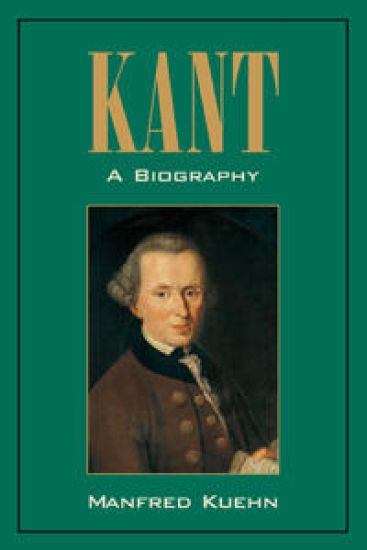
Kant: A Biography

Kant: A Biography

Manfred Kuehn

Cambridge University Press
2002
pokkari
This is the first full-length biography in more than fifty years of Immanuel Kant, one of the giants amongst the pantheon of Western philosophers as well as the one with the most powerful and broad influence on contemporary philosophy. It is well known that Kant spent his entire life in an isolated part of Prussia living the life of a typical university professor. This has given rise to the view that Kant was a pure thinker with no life of his own, or at least none worth considering seriously. In this biography, Manfred Kuehn debunks that myth once and for all. Taking account of the most recent scholarship Professor Kuehn allows the reader (whether interested in philosophy, history, politics, German culture, or religion) to follow the same journey that Kant himself took in emerging as a central figure in modern philosophy.
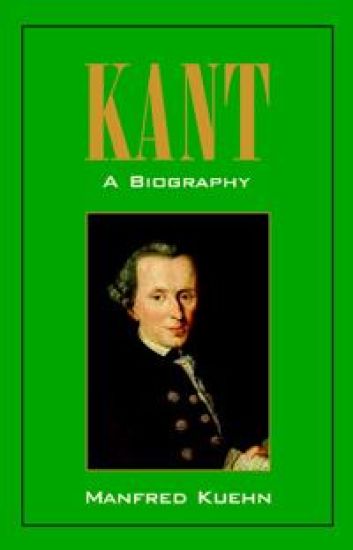
Kant: A Biography

Kant: A Biography

Manfred Kuehn

Cambridge University Press
2001
sidottu
This is the first full-length biography in more than fifty years of Immanuel Kant, one of the giants amongst the pantheon of Western philosophers as well as the one with the most powerful and broad influence on contemporary philosophy. It is well known that Kant spent his entire life in an isolated part of Prussia living the life of a typical university professor. This has given rise to the view that Kant was a pure thinker with no life of his own, or at least none worth considering seriously. In this biography, Manfred Kuehn debunks that myth once and for all. Taking account of the most recent scholarship Professor Kuehn allows the reader (whether interested in philosophy, history, politics, German culture, or religion) to follow the same journey that Kant himself took in emerging as a central figure in modern philosophy.
Scottish Common Sense in Germany, 1768-1800

Scottish Common Sense in Germany, 1768-1800

Manfred Kuehn

McGill-Queen's University Press
1987
sidottu
He finds that the work of these philosophers was widely discussed in German philosophical journals and translated into German soon after its publication in Britain. Important German philosophers, such as Mendelssohn, Lossius, Feder, Hamann, and Jacobi, representing the full range of philosophical positions, read the Scots and found valuable philosophical insights in their thought. Kuehn suggests that the most important aspect of their reading was the perception of Scottish common-sense philosophers as opposing Hume's scepticism while complementing his positive teaching. Their views gave considerable impetus to those developments in German thought that ultimately led to Kant's critical philosophy. In fact Kant, whose devastating criticism of the Scottish common-sense philosophers is often cited, learned much from the Scots, as his Critique of Pure Reason reveals. Kuehn's analysis of the Scottish influence provides a new perspective on the German enlightenment and Kant's role within it, revealing the importance of problems of idealism versus realism and of philosophical justification versus mere descriptive metaphysics.