

Kirjailija
Manuela Boatca
Kirjat ja teokset yhdessä paikassa: 7 kirjaa, julkaisuja vuosilta 2010-2025, suosituimpien joukossa Die Kreolisierung der Moderne. Vertaile teosten hintoja ja tarkista saatavuus suomalaisista kirjakaupoista.
7 kirjaa
Kirjojen julkaisuhaarukka 2010-2025.
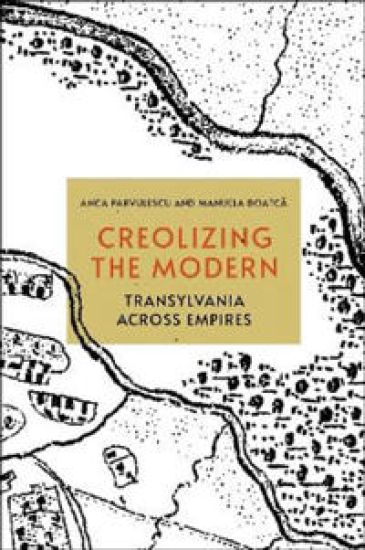
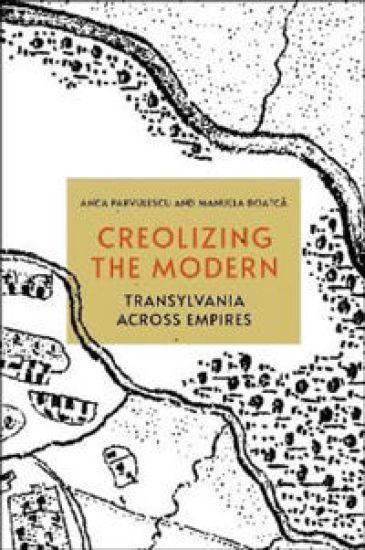
How are modernity, coloniality, and interimperiality entangled? Bridging the humanities and social sciences, Anca Parvulescu and Manuela Boatca provide innovative decolonial perspectives that aim to creolize modernity and the modern world-system. Historical Transylvania, at the intersection of the Habsburg Empire, the Ottoman Empire, Austria-Hungary, and Russia, offers the platform for their multi-level reading of the main themes in Liviu Rebreanu's 1920 novel Ion. Topics range from the question of the region's capitalist integration to antisemitism and the enslavement of Roma to multilingualism, gender relations, and religion. Creolizing the Modern develops a comparative method for engaging with areas of the world that have inherited multiple, conflicting imperial and anti-imperial histories.
How are modernity, coloniality, and interimperiality entangled? Bridging the humanities and social sciences, Anca Parvulescu and Manuela Boatca provide innovative decolonial perspectives that aim to creolize modernity and the modern world-system. Historical Transylvania, at the intersection of the Habsburg Empire, the Ottoman Empire, Austria-Hungary, and Russia, offers the platform for their multi-level reading of the main themes in Liviu Rebreanu's 1920 novel Ion. Topics range from the question of the region's capitalist integration to antisemitism and the enslavement of Roma to multilingualism, gender relations, and religion. Creolizing the Modern develops a comparative method for engaging with areas of the world that have inherited multiple, conflicting imperial and anti-imperial histories.

Decolonizing European Sociology
Encarnacion Gutierrez Rodriguez; Manuela Boatca; Sérgio Costa
Routledge
2016
nidottu
Decolonizing European Sociology builds on the work challenging the androcentric, colonial and ethnocentric perspectives eminent in mainstream European sociology by identifying and describing the processes at work in its current critical transformation. Divided into sections organized around themes like modernity, border epistemology, migration and 'the South', this book considers the self-definition and basic concepts of social sciences through an assessment of the new theoretical developments, such as postcolonial theory and subaltern studies, and whether they can be described as the decolonization of the discipline. With contributions from a truly international team of leading social scientists, this volume constitutes a unique and tightly focused exploration of the challenges presented by the decolonization of the discipline of sociology.
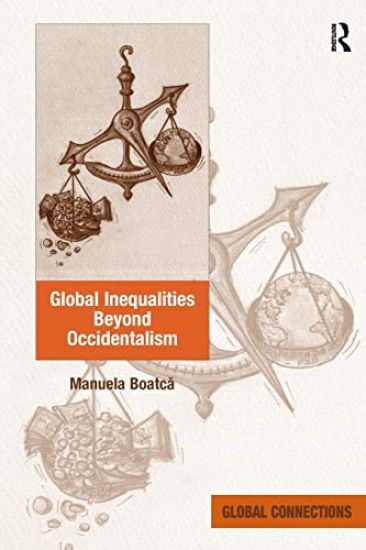
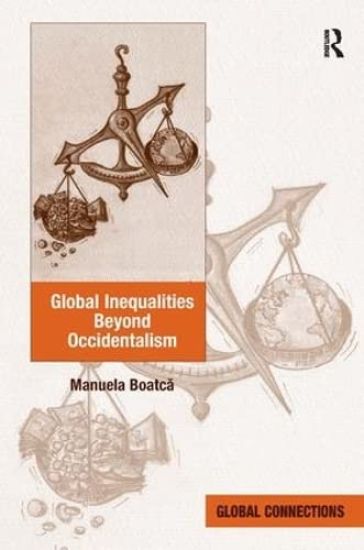
Based on theoretical developments in research on world-systems analysis, transnational migration, postcolonial and decolonial perspectives, whilst considering continuities of inequality patterns in the context of colonial and postcolonial realities, Global Inequalities Beyond Occidentalism proposes an original framework for the study of the long-term reproduction of inequalities under global capitalism. With attention to the critical assessment of both Marxist and Weberian perspectives, this book examines the wider implications of transferring classical approaches to inequality to a twenty-first-century context, calling for a reconceptualisation of inequality that is both theoretically informed and methodologically consistent, and able to cater for the implications of shifts from national and Western structures to global structures. Engaging with approaches to the study of class, gender, racial and ethnic inequalities at the global level, this innovative work adopts a relational perspective in the study of social inequalities that is able to reveal how historical interdependencies between world regions have translated as processes of inequality production and reproduction. As such, it will be of interest to scholars of sociology, political and social theory and anthropology concerned with questions of globalisation and inequality.
Based on theoretical developments in research on world-systems analysis, transnational migration, postcolonial and decolonial perspectives, whilst considering continuities of inequality patterns in the context of colonial and postcolonial realities, Global Inequalities Beyond Occidentalism proposes an original framework for the study of the long-term reproduction of inequalities under global capitalism. With attention to the critical assessment of both Marxist and Weberian perspectives, this book examines the wider implications of transferring classical approaches to inequality to a twenty-first-century context, calling for a reconceptualisation of inequality that is both theoretically informed and methodologically consistent, and able to cater for the implications of shifts from national and Western structures to global structures. Engaging with approaches to the study of class, gender, racial and ethnic inequalities at the global level, this innovative work adopts a relational perspective in the study of social inequalities that is able to reveal how historical interdependencies between world regions have translated as processes of inequality production and reproduction. As such, it will be of interest to scholars of sociology, political and social theory and anthropology concerned with questions of globalisation and inequality.
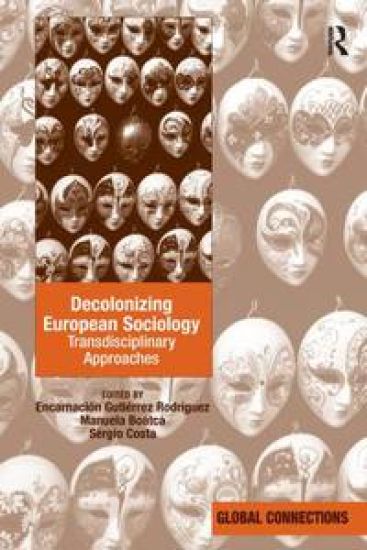
Decolonizing European Sociology
Encarnacion Gutierrez Rodriguez; Manuela Boatca; Sérgio Costa
Ashgate Publishing Limited
2010
sidottu
Decolonizing European Sociology builds on the work challenging the androcentric, colonial and ethnocentric perspectives eminent in mainstream European sociology by identifying and describing the processes at work in its current critical transformation. Divided into sections organized around themes like modernity, border epistemology, migration and 'the South', this book considers the self-definition and basic concepts of social sciences through an assessment of the new theoretical developments, such as postcolonial theory and subaltern studies, and whether they can be described as the decolonization of the discipline. With contributions from a truly international team of leading social scientists, this volume constitutes a unique and tightly focused exploration of the challenges presented by the decolonization of the discipline of sociology.