Kirjojen hintavertailu. Mukana 12 595 353 kirjaa ja 12 kauppaa.

Kirjailija

Mao Zedong

Kirjat ja teokset yhdessä paikassa: 15 kirjaa, julkaisuja vuosilta 2007-2024, suosituimpien joukossa The Red Book of Guerrilla Warfare. Vertaile teosten hintoja ja tarkista saatavuus suomalaisista kirjakaupoista.

15 kirjaa

Kirjojen julkaisuhaarukka 2007-2024.

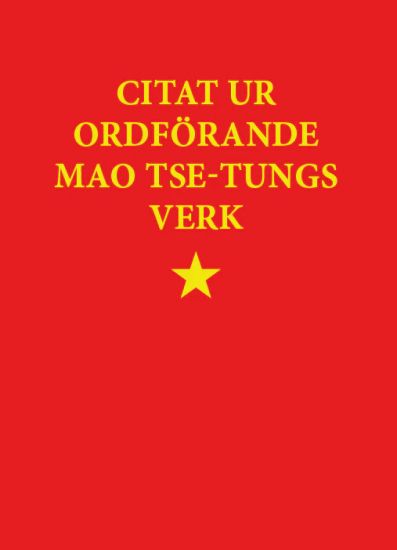
Citat ur ordförande Mao Tse-tungs verk

Citat ur ordförande Mao Tse-tungs verk

Mao Zedong

Oktoberförlaget
2024
nidottu
Citat ur ordförande Mao Tse-tungs verk sammansställdes för första gången 1964 inom Folkets befrielsearmé för att öka soldaternas kunskaper i Mao Zedongs tänkande. Från och med 1966, då kulturrevolutionen utbröt, trycktes boken i ett karaktäristisk rött plastomslag med ett förord av Lin Biao. Redan första upplagan uppgick till 175 miljoner och målsättningen var att alla kinesiska medborgare skulle äga ett exemplar. Totalt spreds Citatboken i och utanför Kina i miljarder exemplar; detta gör troligtvis citatboken till världens mest tryckta bok efter Bibeln. Citatboken spelade en mycket viktig roll under kulturrevolutionen i Kina 1966 – 1976. Den innehöll i koncentrat Maos tankar i en lättfattlig form. Idag bör Citatboken framför allt användas som en inkörsport till Mao Zedongs skrifter. Citaten bör inspirera läsarna att gå till själva ursprungstexterna. Mao Zedong förordade alltid att kadern i Kinas Kommunistiska Parti skulle studera klassikerna – och idag tillhör Mao Zedong definitivt klassikerna.
Le petit livre rouge: Citations du Président Mao Zedong
Le Petit Livre rouge est le livre le plus vendu au monde apr s la Bible, avec des ventes estim es plus de 5 milliards selon l'agence de presse officielle. Pendant la R volution culturelle dont il devient l'un des symboles, l' tude du livre est obligatoire dans les coles de l'enseignement primaire au sup rieur jusqu'au le lieu de travail. Toutes les organisations, industrielles, commerciales, agricoles, administratives, militaires organisaient des sessions de formation en groupes de tout le personnel pour tudier le livre pendant les heures de travail. Les citations de Mao taient imprim es en gras et en rouge, et presque toutes les publications crites, y compris les ouvrages scientifiques, devaient citer Mao. La compr hension et l'assimilation de la pens e Mao Zedong am liorent de fa on irr versible la rentabilit au travail compensant largement au niveau de la production, le temps pass cette tude.
Sobre La Guerra Prolongada

Sobre La Guerra Prolongada

Mao Zedong

Createspace Independent Publishing Platform
2017
nidottu
Jap n hab a invadido China y ocupado Manchuria en 1931. Mao en 1938 define la t ctica de Frente nico Antijapon s, el que se conformar a en 1937, tras el "incidente de Sian" en el que dos generales del Kuomintang, partidarios del Frente nico, arrestan a Chiang Kai-shek con la intenci n de fusilarlo. Mao env a a Zhou Enlai como mediador, quien sostiene en nombre del Partido Comunista que matar a Chian Kai Sek en ese momento favorec a al imperialismo japon s. Chiang Kai Sek es liberado y se firma un programa de 10 puntos, que ten a como centro poner fin a la guerra civil y unirse para resistir al Jap n, y la condici n era que cesaran los ataques al Ej rcito Rojo por parte del Kuomintang. Ser en este contexto (1938) cuando Mao, desarrollar a su obra de estrategia militar: "Sobre la Guerra Prolongada," que lo acreditar a tanto en la teor a como en la pr ctica en la lucha contra la invasi n japonesa y en el posterior enfrentamiento con el Kuomitang hasta la fundaci n de la Rep blica Popular China en 1949, como uno de los mayores estrategas militares de la historia de la humanidad. Los enunciados de esta obra maestra de estrategia militar recuerdan en muchos pasajes a la obra: "El Arte de la Guerra" escrita 2300 a os antes por Sun Tzu, Obra m s conocida que la de Mao en Occidente, pero, sin lugar a dudas, hay que considerar que por su proximidad hist rica y por estar avalada por la pr ctica la obra de Mao "Sobre la Guerra prolongada," tiene una mayor vigencia.
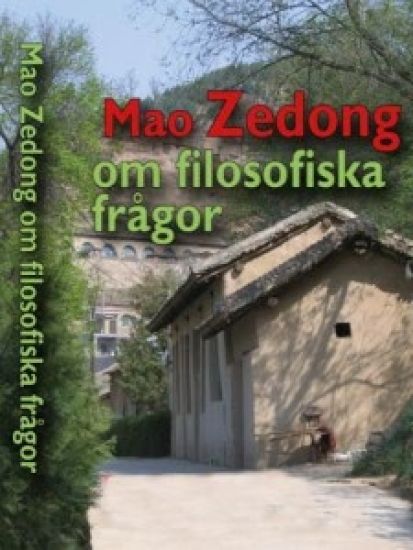
Mao Zedong om filosofiska frågor

Mao Zedong om filosofiska frågor

Mao Zedong

Oktoberförlaget
2016
nidottu
Varför ge ut en antologi med Mao Zedongs filosofiska texter? Är inte Mao Zedong död och begraven och hans tankar passé? Både Oktoberrevolutionen 1917 och det kinesiska folkets seger över den japanska imperialism och Guoumindang 1949 hade världshistorisk betydelse och skapade ett socialistiskt läger som omfattade en tredjedel av mänskligheten. Det kinesiska folket leddes av Kinas Kommunistiska Parti och Mao Zedong, vars linje alltså bekräftades av praktiken. När Sovjetunionen senare urartade, tog Kinas Kommunistiska Parti och Mao Zedong upp kampen mot den moderna revisionismen. Detta ledde till att en internationell marxist-leninistisk rörelse återuppstod på 1960-talet. Efter Mao Zedongs död återupprättades kapitalismen i Kina. Men förtvivla ej; som Mao Zedong skriver kommer pendeln att svänga igen. Imperialismen och kapitalismen kan aldrig skapa ett rättvist och jämlikt samhälle, fritt från förtryck och utsugning. Mao Zedong har vidareutvecklat marxismen-leninismen i en rad viktiga teoretiska hänseenden. Det gäller den dialektiska och historiska materialismen, partiteorin, enhetsfronttaktiken, masslinjen, folkkriget, den nationellt-demokratiska revolutionen och dess relation till den socialistiska revolutionen, det socialistiska uppbygget och klasskampens fortsättning under socialismen. Mao Zedongs teorier ska inte behandlas som en uppsättning lösryckta dogmer, som är giltiga i varje sammanhang eller vid varje tidpunkt. Det avgörande är att studera hans analysmetod, den dialektiska och historiska materialismen, i praxis, som löper igenom texterna i denna antologi. Mao Zedong må vara död, men hans idéer lever vidare.
Selected Works of Mao Zedong

Selected Works of Mao Zedong

Mao Zedong

Lulu.com
2014
nidottu
Mao Zedong (December 26, 1893 - September 9, 1976), was a Chinese Communist revolutionary and the founding father of the People's Republic of China, which he governed as Chairman of the Communist Party of China from its establishment in 1949 until his death in 1976. His Marxist-Leninist theories, military strategies and political policies are collectively known as Maoism or Mao Zedong Thought. These are the Selected Works published by the Marx-Engels-Lenin Institute: -Analysis of the Classes in Chinese Society 13 -Report on an Investigation of the Peasant Movement in Hunan -Be Concerned with the Well-Being of the Masses, Pay Attention to Methods of Work -On Guerilla Warfare -On Practice -On Contradiction -Combat Liberalism -On Protracted War
The Red Book of Guerrilla Warfare

The Red Book of Guerrilla Warfare

Mao Zedong

El Paso Norte Press
2010
pokkari
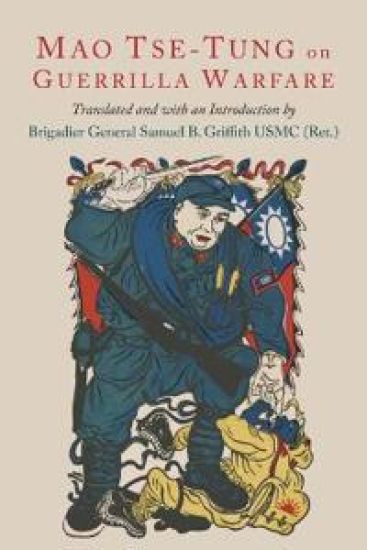
This special edition contains the two most important essays by Mao on guerrilla warfare tactics in a new, completely uncensored format.As a revolutionary leader, Mao Zedong laid the economic, technological and cultural foundations of modern China, transforming the country from an agrarian society into a major world power. "Time Magazine" voted Mao Zedong as one of the 100 most influential figures of the last century. He has often been described as both "brilliant and ruthless." His essays are described as "propaganda," and have historically been viewed as "subversive" and "revolutionary." They contain some of the most practical and controversial warfare theory ever presented in essay form.This special edition contains the translations completed for the US Military's internal library of Cold War era propaganda; presented in a new, completely uncensored format. "The Red Book of Guerrilla Warfare" contains: 1) "On Guerrilla Warfare" (full translation)2) "Problems of Strategy in Guerrilla War against Japan" (full translation)
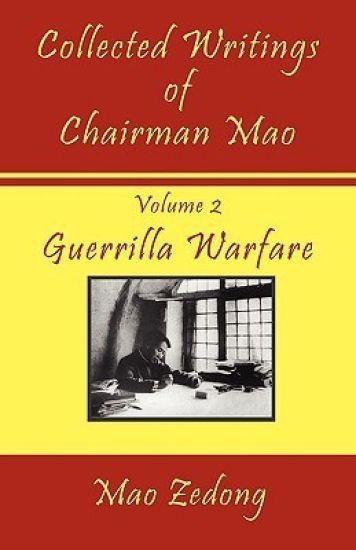
Collected Writings of Chairman Mao: Volume 2 - Guerrilla Warfare

Collected Writings of Chairman Mao: Volume 2 - Guerrilla Warfare

Mao Zedong; Mao Tse-Tung

Digital Pulse Publishing
2009
nidottu
Mao Zedong (also known as Mao Tse-tung) is regarded as one of the most controversial figures in modern world history. Having conquered the country, he ruled the People's Republic of China from its establishment as a Communist state in 1949 until the time of his death in 1976. Brilliant and ruthless, his legacy includes guerrilla warfare tactics, violent cultural revolutions, and enduring Communist propaganda. He was named one of the 100 most influential figures of the 20th century by Time Magazine. Eric Margolis, of the Huffington Post writes of Chairman Mao: "Mao was an accomplished poet, writer and historian, a profound thinker, and a superb military strategist. He crushed the US-backed Nationalist's 4.3-million strong armies in a series of titanic battles, forcing his rival, Chiang Kai-shek, to flee to Taiwan... The Great Helmsman united fractured, war-torn China, restoring its pride and self-confidence after two centuries of humiliation. Mao thwarted both Soviet and U.S. efforts to turn China into a client state, and built up China's military power... Mao's aides dared not tell him millions were starving. Red Emperor Mao was prodigal with his people's lives, and, according to aides who were close to him, was shockingly indifferent to their suffering. Mao horrified even brutal Soviet leaders by saying he was prepared to lose half his people to emerge victorious from a nuclear war... The second volume in this special collection contains three important lectures and essays by Chairman Mao dealing with guerrilla warfare: *Part 1 - On Guerrilla Warfare *Part 2 - Problems of Strategy in Guerrilla War against Japan *Part 3 - On Protracted War Excerpt from "Collected Writings of Chairman Mao: Volume 2 - Guerrilla Warfare" by Mao Zedong. Reprinted by permission. All rights reserved. In September 1812, Napoleon, in the course of swallowing all of Europe, invaded Russia at the head of a great army totaling several hundred thousand infantry, cavalry, and artillery. At that time, Russia was weak and her ill-prepared army was not concentrated. The most important phase of her strategy was the use made of Cossack cavalry and detachments of peasants to carry on guerrilla operations. After giving up Moscow, the Russians formed nine guerrilla divisions of about five hundred men each. These, and vast groups of organized peasants, carried on partisan warfare and continually harassed the French Army. When the French Army was withdrawing, cold and starving, Russian guerrillas blocked the way and, in combination with regular troops, carried out counterattacks on the French rear, pursuing and defeating them. The army of the heroic Napoleon was almost entirely annihilated, and the guerrillas captured many officers, men, cannon, and rifles. Though the victory was the result of various factors and depended largely on the activities of the regular army the function of the partisan groups was extremely important. The corrupt and poorly organized country that was Russia defeated and destroyed an army led by the most famous soldier of Europe and won the war in spite of the fact that her ability to organize guerrilla regimes was not fully developed. At times, guerrilla groups were hindered in their operations and the supply of equipment and arms was insufficient. If we use the Russian saying, it was a case of a battle between "the fist and the axe."