Kirjojen hintavertailu. Mukana 12 232 092 kirjaa ja 12 kauppaa.

Kirjailija

Mara Buchbinder

Kirjat ja teokset yhdessä paikassa: 6 kirjaa, julkaisuja vuosilta 2012-2025, suosituimpien joukossa Saving Babies?. Vertaile teosten hintoja ja tarkista saatavuus suomalaisista kirjakaupoista.

6 kirjaa

Kirjojen julkaisuhaarukka 2012-2025.

Scripting Death

Scripting Death

Mara Buchbinder

University of California Press
2025
pokkari
How the legalization of assisted dying is changing our lives. Over the past five years, medical aid-in-dying (also known as assisted suicide) has expanded rapidly in the United States and is now legally available to one in five Americans. This growing social and political movement heralds the possibility of a new era of choice in dying. Yet very little is publicly known about how medical aid-in-dying laws affect ordinary citizens once they are put into practice. Sociological studies of new health policies have repeatedly demonstrated that the realities often fall short of advocacy visions, raising questions about how much choice and control aid-in-dying actually affords. Scripting Death chronicles two years of ethnographic research documenting the implementation of Vermont’s 2013 Patient Choice and Control at End of Life Act. Author Mara Buchbinder weaves together stories collected from patients, caregivers, health care providers, activists, and legislators to illustrate how they navigate aid-in-dying as a new medical frontier in the aftermath of legalization. Scripting Death explains how medical aid-in-dying works, what motivates people to pursue it, and ultimately, why upholding the “right to die” is very different from ensuring access to this life-ending procedure. This unprecedented, in-depth account uses the case of assisted death as an entry point into ongoing cultural conversations about the changing landscape of death and dying in the United States.
Scripting Death

Scripting Death

Mara Buchbinder

University of California Press
2021
sidottu
How the legalization of assisted dying is changing our lives. Over the past five years, medical aid-in-dying (also known as assisted suicide) has expanded rapidly in the United States and is now legally available to one in five Americans. This growing social and political movement heralds the possibility of a new era of choice in dying. Yet very little is publicly known about how medical aid-in-dying laws affect ordinary citizens once they are put into practice. Sociological studies of new health policies have repeatedly demonstrated that the realities often fall short of advocacy visions, raising questions about how much choice and control aid-in-dying actually affords. Scripting Death chronicles two years of ethnographic research documenting the implementation of Vermont’s 2013 Patient Choice and Control at End of Life Act. Author Mara Buchbinder weaves together stories collected from patients, caregivers, health care providers, activists, and legislators to illustrate how they navigate aid-in-dying as a new medical frontier in the aftermath of legalization. Scripting Death explains how medical aid-in-dying works, what motivates people to pursue it, and ultimately, why upholding the “right to die” is very different from ensuring access to this life-ending procedure. This unprecedented, in-depth account uses the case of assisted death as an entry point into ongoing cultural conversations about the changing landscape of death and dying in the United States.
All in Your Head

All in Your Head

Mara Buchbinder

University of California Press
2015
sidottu
Although pain is a universal human experience, many view the pain of others as private, resistant to language, and, therefore, essentially unknowable. And, yet, despite the obvious limits to comprehending another's internal state, language is all that we have to translate pain from the solitary and unknowable to a phenomenon richly described in literature, medicine, and everyday life. Without denying the private dimensions of pain, All in Your Head offers an entirely fresh perspective that considers how pain may be configured, managed, explained, and even experienced in deeply relational ways. Drawing on ethnographic fieldwork in a pediatric pain clinic in California, Mara Buchbinder explores how clinicians, adolescent patients, and their families make sense of puzzling symptoms and work to alleviate pain. Through careful attention to the language of pain including narratives, conversations, models, and metaphors and detailed analysis of how young pain sufferers make meaning through interactions with others, her book reveals that however private pain may be, making sense of it is profoundly social.
All in Your Head

All in Your Head

Mara Buchbinder

University of California Press
2015
pokkari
Although pain is a universal human experience, many view the pain of others as private, resistant to language, and, therefore, essentially unknowable. And, yet, despite the obvious limits to comprehending another's internal state, language is all that we have to translate pain from the solitary and unknowable to a phenomenon richly described in literature, medicine, and everyday life. Without denying the private dimensions of pain, All in Your Head offers an entirely fresh perspective that considers how pain may be configured, managed, explained, and even experienced in deeply relational ways. Drawing on ethnographic fieldwork in a pediatric pain clinic in California, Mara Buchbinder explores how clinicians, adolescent patients, and their families make sense of puzzling symptoms and work to alleviate pain. Through careful attention to the language of pain - including narratives, conversations, models, and metaphors - and detailed analysis of how young pain sufferers make meaning through interactions with others, her book reveals that however private pain may be, making sense of it is profoundly social.
Saving Babies?

Saving Babies?

Stefan Timmermans; Mara Buchbinder

University of Chicago Press
2015
nidottu
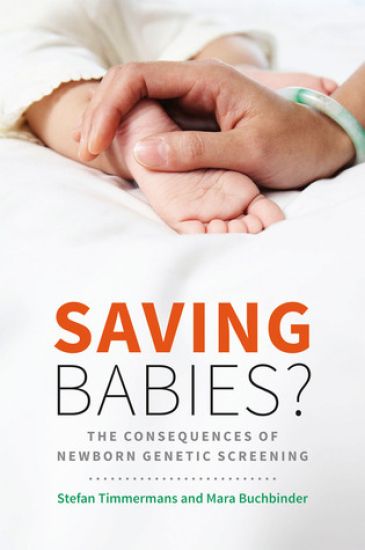
It has been close to six decades since Watson and Crick discovered the structure of DNA and more than ten years since the human genome was decoded. Today, through the collection and analysis of a small blood sample, every baby born in the United States is screened for more than fifty genetic disorders. Though the early detection of these abnormalities can potentially save lives, the test also has a high percentage of false positives-inaccurate results that can take a brutal emotional toll on parents before they are corrected. Now some doctors are questioning whether the benefits of these screenings outweigh the stress and pain they sometimes produce. In Saving Babies?, Stefan Timmermans and Mara Buchbinder evaluate the consequences and benefits of state-mandated newborn screening - and the larger policy questions they raise about the inherent inequalities in American medical care that limit the effectiveness of this potentially life - saving technology. Drawing on observations and interviews with families, doctors, and policy actors, Timmermans and Buchbinder have given us the first ethnographic study of how parents and geneticists resolve the many uncertainties in screening newborns. Ideal for scholars of medicine, public health, and public policy, this book is destined to become a classic in its field.
Saving Babies?

Saving Babies?

Stefan Timmermans; Mara Buchbinder

University of Chicago Press
2012
sidottu
It has been close to six decades since Watson and Crick discovered the structure of DNA and more than ten years since the human genome was decoded. Today, through the collection and analysis of a small blood sample, every baby born in the United States is screened for more than fifty genetic disorders. Though the early detection of these abnormalities can potentially save lives, the test also has a high percentage of false positives - inaccurate results that can take a brutal emotional toll on parents before they are corrected. Now some doctors are questioning whether the benefits of these screenings outweigh the stress and pain they sometimes produce. In "Saving Babies?" Stefan Timmermans and Mara Buchbinder evaluate the consequences and benefits of state-mandated newborn screening - and the larger policy questions they raise about the inherent inequalities in American medical care that limit the effectiveness of this potentially lifesaving technology. Drawing on observations and interviews with families, doctors, and policy actors, Timmermans and Buchbinder have given us the first ethnographic study of how parents and geneticists resolve the many uncertainties in screening newborns. Ideal for scholars of medicine, public health, and public policy, this book is destined to become a classic in its field.