Kirjojen hintavertailu. Mukana 12 155 539 kirjaa ja 12 kauppaa.

Kirjailija

Mara Einstein

Kirjat ja teokset yhdessä paikassa: 9 kirjaa, julkaisuja vuosilta 2003-2025, suosituimpien joukossa Black Ops Advertising. Vertaile teosten hintoja ja tarkista saatavuus suomalaisista kirjakaupoista.

9 kirjaa

Kirjojen julkaisuhaarukka 2003-2025.

Hoodwinked

Hoodwinked

Mara Einstein; Douglas Rushkoff

GLOBE PEQUOT PRESS
2025
sidottu
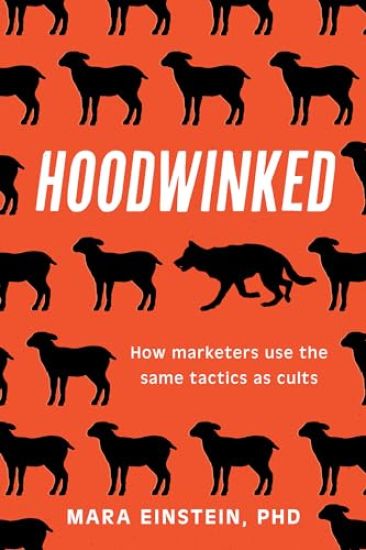
Big brands are the gods of today’s world, and the algorithm is their gospel. What makes the cult marketing vortex so attractive to otherwise smart people, and how does online manipulation render us victim to the dangerous whims of digital companies, corporations, and conglomerates? Hoodwinked reveals the new world of digital marketing where steady, seductive tactics once used by spiritual charlatans are now applied to sell everything from toothpaste to apps and even political leaders. Companies have discovered that us consumers are lured by sophisticated and deceptive marketing techniques, like sensory marketing, cult branding, influencers, and AI programmed to induce maximum anxiety. Combined with behavior-modifying apps and persuasively designed UX that compels us to buy things we don’t need or cannot afford, goods and services like prestige education, fitness trackers, makeup, and those viral leggings from American Eagle seem like must-haves rather than luxury extras. Aided by algorithms and buoyed by the greed of social media CEOs, marketers use the same deceptive and emotionally manipulative tactics that cults do, including scarcity, an all-encompassing ideology, and a charismatic leader. Once indoctrinated, consumer-followers become ensnared in the perfect capitalist loop: anxiety-purchase-anxiety-purchase-anxiety-purchase. Then, social media appearances reinforce the cycle of purchase, performance, and panic.Using memorable real-life cautionary tales, Dr. Einstein narrates how smart, sensible people are sucked into the cult marketing vortex and, importantly, what enables them to get out. Protection comes from understanding the scope of the problem and knowing how to spot the many pervasive tactics used. Combining industry interviews, advertising campaign analysis, and business and scholarly research, Hoodwinked offers an insider’s view into how marketers co-opt our emotions in the name of corporate profits. Armed with this information, readers can learn to spot cult-inspired marketing so they can decide how, or if, they should engage with it.
Advertising

Advertising

Mara Einstein

Oxford University Press Inc
2017
sidottu
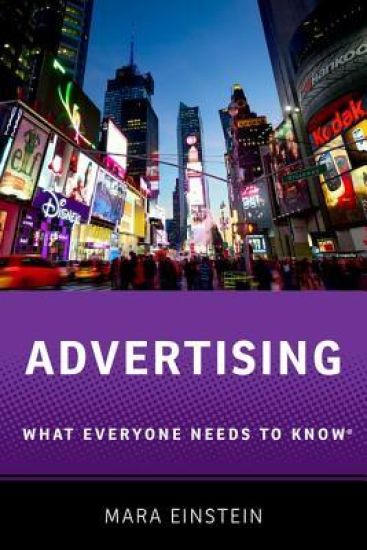
3000. That's the number of marketing messages the average American confronts on a daily basis from TV commercials, magazine and newspaper print ads, radio commercials, pop-up ads on gaming apps, to pre-roll on YouTube videos and native advertising on mobile news apps. These commercial messages are so pervasive that we cannot help but be affected by perpetual come-ons to keeping buying. Over the last decade, advertising has become more devious, more digital, and more deceptive, with an increasing number of ads designed to appear to the untrained eye to be editorial content. It's easy to see why. As we have become smarter at avoiding ads, advertisers have become smarter about disguising them. Mara Einstein exposes how our shopping, political and even dating preferences are unwittingly formed by brand images and the mythologies embedded in them. Advertising: What Everyone Needs to Know® helps us combat the effects of manipulative advertising, and enables the reader to understand how marketing industries work in the digital age, particularly in their uses and abuses of Big Data. Most importantly, it awakens us to advertising's subtle and not so subtle impact on our lives-both as individuals and as a global society. What ideas and information are being communicated to us-and to what end?
Advertising

Advertising

Mara Einstein

Oxford University Press Inc
2017
nidottu
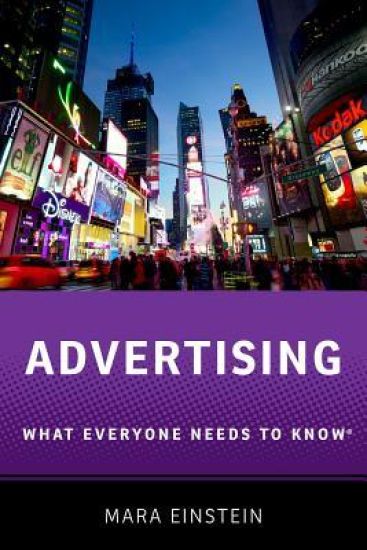
3000. That's the number of marketing messages the average American confronts on a daily basis from TV commercials, magazine and newspaper print ads, radio commercials, pop-up ads on gaming apps, to pre-roll on YouTube videos and native advertising on mobile news apps. These commercial messages are so pervasive that we cannot help but be affected by perpetual come-ons to keeping buying. Over the last decade, advertising has become more devious, more digital, and more deceptive, with an increasing number of ads designed to appear to the untrained eye to be editorial content. It's easy to see why. As we have become smarter at avoiding ads, advertisers have become smarter about disguising them. Mara Einstein exposes how our shopping, political and even dating preferences are unwittingly formed by brand images and the mythologies embedded in them. Advertising: What Everyone Needs to Know® helps us combat the effects of manipulative advertising, and enables the reader to understand how marketing industries work in the digital age, particularly in their uses and abuses of Big Data. Most importantly, it awakens us to advertising's subtle and not so subtle impact on our lives-both as individuals and as a global society. What ideas and information are being communicated to us-and to what end?
Black Ops Advertising

Black Ops Advertising

Mara Einstein

OR Books
2016
nidottu
From Facebook to Talking Points Memo to the New York Times, often what looks like fact-based journalism is not. It s advertising. Not only are ads indistinguishable from reporting, the Internet we rely on for news, opinions and even impartial sales content is now the ultimate corporate tool. Reader beware: content without a corporate sponsor lurking behind it is rare indeed. Black Ops Advertising dissects this rapid rise of sponsored content, a strategy whereby advertisers have become publishers and publishers create advertisingall under the guise of unbiased information. Covert selling, mostly in the form of native advertising and content marketing, has so blurred the lines between editorial content and marketing message that it is next to impossible to tell real news from paid endorsements. In the 21st century, instead of telling us to buy, buy, BUY, marketers engage with us so that we share, share, SHAREthe ultimate subtle sell. Why should this concern us? Because personal data, personal relationships, and our very identities are being repackaged in pursuit of corporate profits. Because tracking and manipulation of data make likes and tweets and followers the currency of importance, rather than scientific achievement or artistic talent or information the electorate needs to fully function in a democracy. And because we are being manipulated to spend time with technology, to interact with friends, to always be on, even when it is to our physical and mental detriment."
Compassion, Inc.

Compassion, Inc.

Mara Einstein

University of California Press
2012
sidottu
Pink ribbons, red dresses, and greenwashing - American corporations are scrambling to tug at consumer heartstrings through cause-related marketing, corporate social responsibility, and ethical branding, tactics that can increase sales by as much as 74 per cent. Harmless? Marketing insider Mara Einstein demonstrates in this penetrating analysis why the answer is a resounding "No"! In "Compassion, Inc", she outlines how cause-related marketing desensitizes the public by putting a pleasant face on complex problems. She takes us through the unseen ways in which large sums of consumer dollars go into corporate coffers rather than helping the less fortunate. She also discusses companies that truly do make the world a better place, and those that just pretend to.
Brands of Faith

Brands of Faith

Mara Einstein

Routledge
2007
nidottu
In a society overrun by commercial clutter, religion has become yet another product sold in the consumer marketplace, and faiths of all kinds must compete with a myriad of more entertaining and more convenient leisure activities. Brands of Faith argues that in order to compete effectively faiths have had to become brands – easily recognizable symbols and spokespeople with whom religious prospects can make immediate connectionsMara Einstein shows how religious branding has expanded over the past twenty years to create a blended world of commerce and faith where the sacred becomes secular and the secular sacred. In a series of fascinating case studies of faith brands, she explores the significance of branded church courses, such as Alpha and The Purpose Driven Life, mega-churches, and the popularity of the televangelist Joel Olsteen and television presenter Oprah Winfrey, as well as the rise of Kaballah. She asks what the consequences of this religious marketing will be, and outlines the possible results of religious commercialism – good and bad. Repackaging religion – updating music, creating teen-targeted bibles – is justifiable and necessary. However, when the content becomes obscured, religion may lose its unique selling proposition – the very ability to raise us above the market.
Brands of Faith

Brands of Faith

Mara Einstein

Routledge
2007
sidottu
In a society overrun by commercial clutter, religion has become yet another product sold in the consumer marketplace, and faiths of all kinds must compete with a myriad of more entertaining and more convenient leisure activities. Brands of Faith argues that in order to compete effectively faiths have had to become brands – easily recognizable symbols and spokespeople with whom religious prospects can make immediate connectionsMara Einstein shows how religious branding has expanded over the past twenty years to create a blended world of commerce and faith where the sacred becomes secular and the secular sacred. In a series of fascinating case studies of faith brands, she explores the significance of branded church courses, such as Alpha and The Purpose Driven Life, mega-churches, and the popularity of the televangelist Joel Olsteen and television presenter Oprah Winfrey, as well as the rise of Kaballah. She asks what the consequences of this religious marketing will be, and outlines the possible results of religious commercialism – good and bad. Repackaging religion – updating music, creating teen-targeted bibles – is justifiable and necessary. However, when the content becomes obscured, religion may lose its unique selling proposition – the very ability to raise us above the market.
Media Diversity

Media Diversity

Mara Einstein

Routledge Member of the Taylor and Francis Group
2004
nidottu
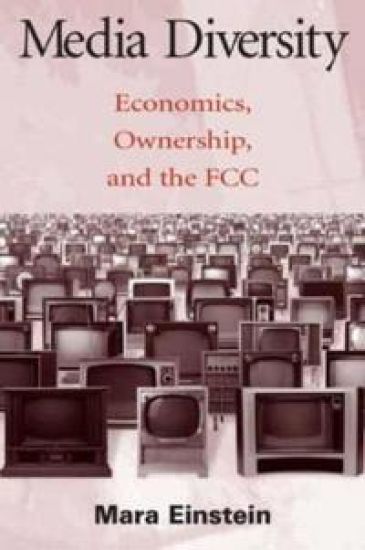
Media Diversity: Economics, Ownership, and the FCC provides a detailed analysis of the regulation of diversity and its impact on the structure and practices within the broadcast television industry. As deregulation is quickly changing the media landscape, this volume puts the changing structure of the industry into perspective through the use of an insider's point of view to examine how policy and programming get made. Author Mara Einstein blends her industry experience and academic expertise to examine diversity as a media policy, suggesting that it has been ineffective and is potentially outdated, as study after study has found diversity regulations to be wanting. In addition to reviewing diversity research on the impact of minority ownership, regulation of cable and DBS, duopolies, ownership of multiple networks and cross ownership of media on program content, Einstein considers the financial interest and syndication rules as a case study, due to their profound effects on the structure of the television industry. She also poses questions from an economic perspective on why the FCC regulates structure rather than content. Through the presentation of her research results, she argues persuasively that the consolidation of the media industry does not affect the diversity of entertainment programming, a conclusion with broad ramifications for all media and for future research about media monopolies. This volume serves as a defining work in its examination of the intersection of regulation and economics with media content. It is appropriate as a supplemental text in courses on communication policy, broadcast economic and media management, broadcast programming, political economy of the mass media, and media criticism at the advanced and graduate level. It is also likely to interest broadcast professionals, media policymakers, communication lawyers, and academics. It is a must-read for all who are interested in the media monopoly debate.
Media Diversity

Media Diversity

Mara Einstein

Routledge Member of the Taylor and Francis Group
2003
sidottu
Media Diversity: Economics, Ownership, and the FCC provides a detailed analysis of the regulation of diversity and its impact on the structure and practices within the broadcast television industry. As deregulation is quickly changing the media landscape, this volume puts the changing structure of the industry into perspective through the use of an insider's point of view to examine how policy and programming get made. Author Mara Einstein blends her industry experience and academic expertise to examine diversity as a media policy, suggesting that it has been ineffective and is potentially outdated, as study after study has found diversity regulations to be wanting. In addition to reviewing diversity research on the impact of minority ownership, regulation of cable and DBS, duopolies, ownership of multiple networks and cross ownership of media on program content, Einstein considers the financial interest and syndication rules as a case study, due to their profound effects on the structure of the television industry. She also poses questions from an economic perspective on why the FCC regulates structure rather than content. Through the presentation of her research results, she argues persuasively that the consolidation of the media industry does not affect the diversity of entertainment programming, a conclusion with broad ramifications for all media and for future research about media monopolies. This volume serves as a defining work in its examination of the intersection of regulation and economics with media content. It is appropriate as a supplemental text in courses on communication policy, broadcast economic and media management, broadcast programming, political economy of the mass media, and media criticism at the advanced and graduate level. It is also likely to interest broadcast professionals, media policymakers, communication lawyers, and academics. It is a must-read for all who are interested in the media monopoly debate.