Kirjailija
Marc Augé
Kirjat ja teokset yhdessä paikassa: 25 kirjaa, julkaisuja vuosilta 1981-2025, suosituimpien joukossa Das Pariser Bistro. Vertaile teosten hintoja ja tarkista saatavuus suomalaisista kirjakaupoista.
Mukana myös kirjoitusasut: Marc Auge
25 kirjaa
Kirjojen julkaisuhaarukka 1981-2025.
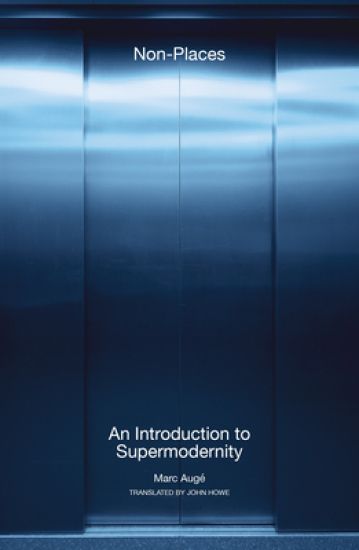
An ever-increasing proportion of our lives is spent in supermarkets, airports and hotels, on motorways or in front of TVs, computer and cash machines. This invasion of the world by what Marc Auge calls 'non-space' results in a profound alteration of awareness: something we perceive, but only in a partial and incoherent manner. Auge uses the concept of 'supermodernity' to describe the logic of these late-capitalist phenomena - a logic of excessive information and excessive space. In this fascinating and lucid essay he seeks to establish and intellectual armature for an anthropology of supermodernity. Starting with an attempt to disentangle anthropology from history, Auge goes on to map the distinction between place, encrusted with historical monuments and creative social life, and non-place, to which individuals are connected in a uniform manner and where no organic social life is possible.Unlike Baudelairean modernity, where old and new are interwoven, supermodernity is self-contained: from the motorway or aircraft, local or exotic particularities are presented two-dimensionally as a sort of theme-park spectacle. Auge does not suggest that supermodernity is all-encompassing: place still exist outside non-place and tend to reconstitute themselves inside it. But he argues powerfully that we are in transit through non-place for more and more of our time, as if between immense parentheses, and concludes that this new form of solitude should become the subject of an anthropology of its own.
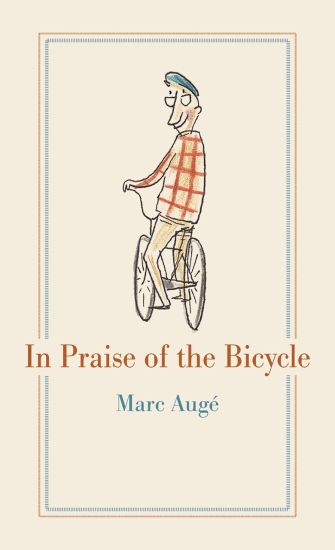
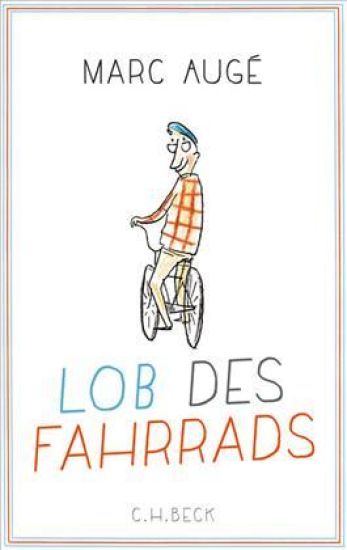
This is the French anthropologist as we've never heard him before: Marc Augé coined the term ‘non-place’ to describe uniquitous, global airports, hotels and motorways filled with anonymous individuals. In this new book, he casts his anthropologist’s eye on a subject close to his heart: cycling. In In Praise of the Bicycle, Augé takes us on a personal journey of his own, on a two-wheeled ride around our cities, and on a journey into ourselves. We all remember the thrill of riding a bike for the first time and the joys of cycling. Here he reminds us that these memories are not just personal, but rooted in a time and a place, in a history that is shared with millions of others.Part memoir, part manifesto, Augé celebrates cycling as a way of reconnecting with the places in which we live, and, ultimately, as a necessary alternative to our disconnected world.
In recent years, social workers have raised a new concern about the appearance of a new category among the working poor. Even employed, there are people so overburdened by the cost of living and so under compensated that they cannot afford a place to sleep. Contrary to popular opinion, according to the website for the Coalition for the Homeless, forty-four percent of the homeless in first world countries actually have jobs.In No Fixed Abode, Marc Augé’s pathbreaking ethnofiction—a fictional ethnography—a man named Henri narrates his strange existence in the margins of Paris. By day he walks the streets, lingers in conversation with the local shopkeepers, and sits writing in cafés, but at night he takes shelter in an abandoned house. From here, we see a progressive erosion of Henri’s identity, a loss of bearings, and a slow degeneration of his ability to relate to others. But then he meets the artist Dominique, whose willingness to share her life with him raises questions about who he has become and about what a person needs in order to be a part of society.This is a book about how we live in geographical space and how work and patterns of domicile affect our status and our inner being. Despite the apparent simplicity of the fictional premise, Augé’s book asks serious questions about the nature of our culture.

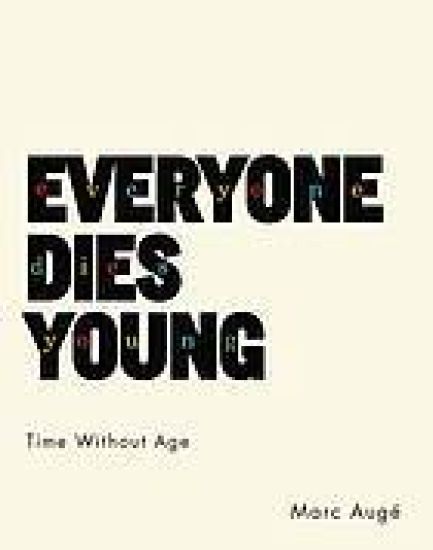
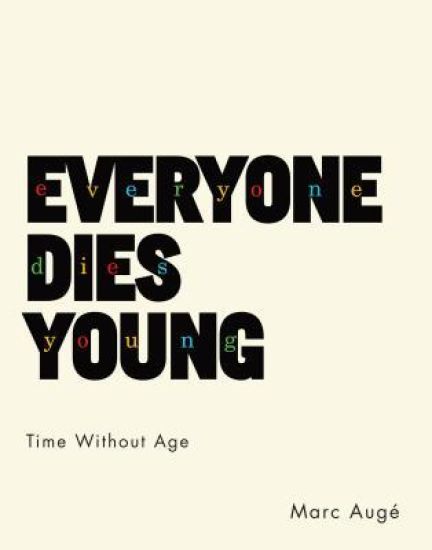
"We are awash in time, savoring a few moments of it; we project ourselves into it, reinvent it, play with it; we take our time or let it slip away: it is the raw material of our imagination. Age, on the other hand, is the detailed account of the days that pass, the one-way view of the years whose total sum when set forth can stupefy us. Age wedges each of us between a date of birth that, at least in the West, we know for certain and an expiration date that, as a general rule, we would like to defer. Time is a freedom, age a constraint." Marc Auge remembers his beloved childhood cat, who seemed to grow wise with age, though her essential nature remained unchanged. He considers our belief that objects mature, when it is our perception of them that evolves over time. He wonders why public demonstrations of affection between the elderly make the young so uncomfortable and why we torture ourselves with regret at what might have been. Time can be liberating, he finds; it is a resource we can squander or relish. Yet age is a burden, bound by our personal and cultural neuroses. With an ethnologist's understanding of construct and practice, Auge isolates age from the development of consciousness, desire, and representations of the self. In bold, eye-opening strokes, he casts age as a physical marker and treats one's youthful approach to the world as the true measure of life's value.
"We are awash in time, savoring a few moments of it; we project ourselves into it, reinvent it, play with it; we take our time or let it slip away: it is the raw material of our imagination. Age, on the other hand, is the detailed account of the days that pass, the one-way view of the years whose total sum when set forth can stupefy us. Age wedges each of us between a date of birth that, at least in the West, we know for certain and an expiration date that, as a general rule, we would like to defer. Time is a freedom, age a constraint." Marc Auge remembers his beloved childhood cat, who seemed to grow wise with age, though her essential nature remained unchanged. He considers our belief that objects mature, when it is our perception of them that evolves over time. He wonders why public demonstrations of affection between the elderly make the young so uncomfortable and why we torture ourselves with regret at what might have been. Time can be liberating, he finds; it is a resource we can squander or relish. Yet age is a burden, bound by our personal and cultural neuroses. With an ethnologist's understanding of construct and practice, Auge isolates age from the development of consciousness, desire, and representations of the self. In bold, eye-opening strokes, he casts age as a physical marker and treats one's youthful approach to the world as the true measure of life's value.

As he leaves the cinema where he has just watched Casablanca, one of his favorite films, Julien is approached by a mysterious young woman, Claire. Unbeknownst to Julien, Claire has been following him for several days. Outside the cinema she relays a cryptic message: "Someone's trying to find you." She insists that as a practitioner of the little-known science of narrative psychology she is acting as the anonymous individual's intermediary Slowly, Julien allows himself to be sucked into Claire's investigation, and a strange odyssey through his past ensues. In this novel by Marc Auge, a master of ethnofiction, the two meet up in Paris cafes to discuss the events of their lives - Occupation and Liberation, the Algerian War, and 1968- and Julien puzzles over who in his past could be searching for him. His ex-wife? An enigmatic lover from a seedy corner of Berlin? Soon, Julien realizes he is in the midst of a mysterious game of confession with a woman he knows nothing about. In a quick reversal, he shines the spotlight on Claire. Who is she, and why are her questions so intense? Why does she seem focused on one particular year - 1968? As the story unravels, we begin to understand that the puzzling nature of Claire's quest proves to be a metaphor for other enigmas, including the mysteries of the heart. Beautifully written, Someone's Trying to Find You is a haunting addition to Seagull's French List, and it should not be missed.
For Marc Augé, best-selling author of Non-Places, the prevailing idea of "the Future" rests on our present fears of the contemporary world. It is to the future that we look for redemption and progress; but it is also where we project our personal and apocalyptic anxieties. By questioning notions of certainty, truth, and totality, Augé finds ways to separate the future from our eternal, terrified present and liberates the mind to allow it to conceptualize our possible futures afresh.
Marc Augé was eleven or twelve years old when he first saw Casablanca. Made in 1942 but not released in France until 1947, the film had a profound effect on him. Like cinephiles everywhere, Augé was instantly drawn to Rick Blaine's mysterious past, his friendship with Sam and Captain Renault, and Ilsa's stirring, seductive beauty. The film-with its recurring scenes of waiting, menace, and flight-occupies a significant place in Augé's own memory of his uprooted childhood and the wartime exploits of his family.Marc Augé's elegant and thoughtful essay on film and the nature of both personal and collective memory contends that some of our most haunting memories are deeply embedded in the cinema. His own recollections of the hurried, often chaotic embarkations of his childhood, he writes, are become intertwined with scenes from Casablanca that have become bigger in his memory through repeated viewings in the movie houses of Paris's Latin Quarter.Seamlessly weaving together film criticism and memoir, Casablanca moves between Augé's insights into the filmgoing experience and his reflections on his own life, the collective trauma of France's wartime history, and how such events as the fall of Paris, the exodus of refugees, and the Occupation-all depicted in the film-were lived and are remembered.
“Remembering or forgetting is doing gardener’s work, selecting, pruning. Memories are like plants: there are those that need to be quickly eliminated in order to help the others burgeon, transform, flower.”For the health of the psyche and the culture, for the individual and the whole society, oblivion is as necessary as memory. One must know how to forget, Marc AugÉ suggests, not just to live fully in the present but also to comprehend the past.Renowned as an anthropologist and an innovative social thinker, AugÉ’s meditation moves from how forgetting the present or recent past enables us to return to earlier pasts, to how forgetting propels us into the present, and finally to how forgetting becomes a necessary part of survival. Oblivion moves with authority and ease among a wide variety of sources-literature, common experience, psychoanalysis, philosophy, ethnography-to illustrate the interplay of memory and forgetting in the stories of life and death told across many cultures and many times. Memory and oblivion, he concludes, cannot be separated: “Memories are crafted by oblivion as the outlines of the shore are created by the sea.”
Tourists climb the Eiffel Tower to see Paris. Parisians know that to really see the city you must descend into the metro. In this revelatory book, Marc Auge takes readers below Paris in a work that is both an ethnography of the city and a personal narrative. Guiding us through history, memory, and physical space, Auge juxtaposes the romance of the metro with the reality of multiethnic urban France. His work is part autobiography, with impressions from a lifetime riding the trains; part meditation on self and memory reflected in the people and places underneath Paris; part analysis of a place where the third world and the first world meet, where remnants of cultures move and press together; and part a reflection on anthropology in an era of globalization and urban development.Although he is a pillar of French thought, In the Metro is Auge's first major critical and creative work translated into English. It shows him to be firmly rooted in a tradition of literary ethnography that reaches back to Claude Levi-Strauss and Michel de Certeau, but also engaged in current theoretical debates in literary and cultural studies. In Auge's idiosyncratic and innovative approach, the act of observing the quotidian is elevated to an art. The writer and his history become part of the field he observes, and anthropology interacts with a site -- urban life -- usually reserved for sociology and cultural studies. Throughout, Auge reveals a passion for his milieu, seeing the metro as a place rich with history and literature -- an eclectic egalitarian society.
If the end of exoticism is one of the characteristics of our time, and if classical anthropology based its study of alterity on this exotic distance from the other, is anthropology still possible, and if so, to what end? The author uses these questions as a point of departure for a probing interrogation of ethnological practice, starting with Lévi-Strauss. For several years, the author has advocated an anthropology of “proximity” in place of the usual anthropology of distance. He has studied such emblematic places of Western modernity as the Parisian Metro, or such emblematic “non-places” as airports or freeways, treating as valid anthropological objects phenomena that others might judge less “pure” or “significant” than systems of filiation or matrimonial alliance. The proper place of the ethnographer, he argues, is sufficiently distanced to comprehend a system as a system, yet participatory enough to live it as an individual. How can one best arrive at such a place? This book answers by outlining an approach to anthropology that focuses on negotiating the social meanings we and others use in making sense of the world, and on the processes of identification that create the difference between same and other. Why trace a line of demarcation between societies thought to warrant and require anthropological observation and others (namely, our own) thought to demand a different type of study? Once anthropology, through its study of rites, takes social meaning as its principal object, the necessity for a “generalized anthropology” that includes the entire planet seems obvious, especially in view of the rapid proliferation of new networks of communication and the integration of individuals into those networks.
Anthropology is both outside of history and within it. Histories of anthropology tend to summarise particular authors' intellectual differences; but, as Marc Augé argues in this book, first published in English in 1982, these differences may in fact be intrinsically derived from intellectual divisions within anthropology as obvious as they are irreconcilable. Augé identifies, in contemporary debates in French anthropology, the paths that perhaps allow us to transcend these oppositions. On doing so, he explores and clarifies the relationship that anthropology enjoys with history, on the intellectual plane, and with politics, on the historical plane. His argument is stimulating and challenging, and will interest all social anthropologists and sociologists concerned with the theoretical foundations of their disciplines, as well as demonstrating to historians and political scientists what anthropology has to offer them.
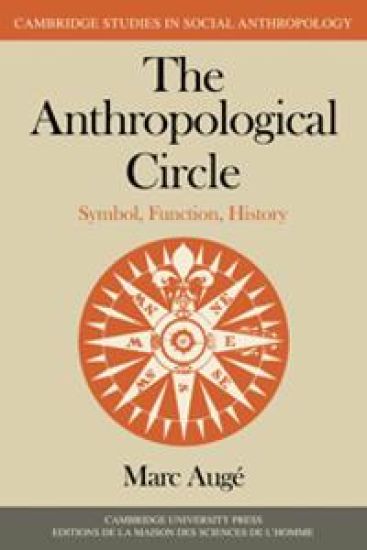
Anthropology is both outside of history and within it. Histories of anthropology tend to summarise particular authors' intellectual differences; but, as Marc Auge argues in this book, first published in English in 1982, these differences may in fact be intrinsically derived from intellectual divisions within anthropology as obvious as they are irreconcilable. Auge identifies, in contemporary debates in French anthropology, the paths that perhaps allow us to transcend these oppositions. On doing so, he explores and clarifies the relationship that anthropology enjoys with history, on the intellectual plane, and with politics, on the historical plane. His argument is stimulating and challenging, and will interest all social anthropologists and sociologists concerned with the theoretical foundations of their disciplines, as well as demonstrating to historians and political scientists what anthropology has to offer them.