

Kirjailija
Marc Becker
Kirjat ja teokset yhdessä paikassa: 20 kirjaa, julkaisuja vuosilta 2005-2026, suosituimpien joukossa Monodramen. Vertaile teosten hintoja ja tarkista saatavuus suomalaisista kirjakaupoista.
20 kirjaa
Kirjojen julkaisuhaarukka 2005-2026.

Künstliche Intelligenz im Arbeitsverhältnis
Stefan Müller; Marc Becker; Michael Funke
Nomos Verlags GmbH
2026
nidottu


Der Ausschluss Der Kostenerstattung Im Arbeitsgerichtlichen Urteilsverfahren: Eine Untersuchung Zur Vereinbarkeit Von 12a Abs. 1 S. 1 Arbgg Mit Verfas
Marc Becker
Nomos Verlagsgesellschaft
2024
nidottu
The exclusion of the reimbursement of costs is one of the central provisions of labour court proceedings. In deviation from the general principle of reimbursement of costs in the event of victory, Section 12a ArbGG makes a special provision for the parties to the first-instance labour court judgement proceedings. This has always been justified with the aim of "cheapening" the legal dispute. In addition to a comprehensive description of the historical development of the provision, the work examines the questions of what effects the provision can have in labour court disputes and whether the provision is (still) compatible with constitutional and EU law requirements.
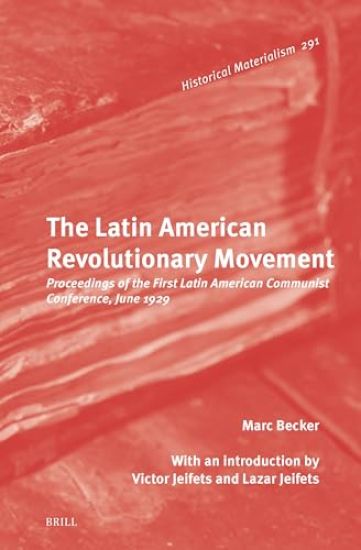
This volume collects the proceedings of the First Latin American Communist Conference, organized in Buenos Aires, Argentina in June 1929 by the South American Secretariat of the Moscow-based Communist International (Comintern). The Conference was the first and in some ways only opportunity that communists in Latin America had to engage in a broad discussion of the most important problems and challenges that they faced. The topics that the assembled delegates addressed – including militarism, anti-imperialism, trade union issues, and racial discrimination – were all central to the question of how to organise a strong revolutionary movement. This major documentary collection of the Latin American Communist movement, newly translated into English and with a substantial introduction, remains surprisingly relevant to our world today. With an introduction by Victor Jeifets and Lazar Jeifets.


This clear text extends our understanding of revolutions with critical narrative analysis of key case studies. Becker analyzes revolutions through the lens of participants and explores the sociopolitical conditions that led to a revolutionary situation, the differing responses to those conditions, and the outcomes of the political changes.

This clear text extends our understanding of revolutions with critical narrative analysis of key case studies. Becker analyzes revolutions through the lens of participants and explores the sociopolitical conditions that led to a revolutionary situation, the differing responses to those conditions, and the outcomes of the political changes.
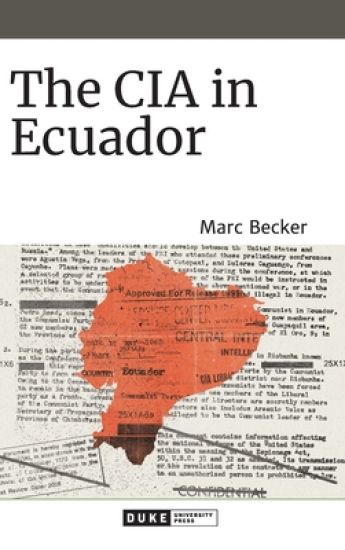
In The CIA in Ecuador Marc Becker draws on recently released US government surveillance documents on the Ecuadorian left to chart social movement organizing efforts during the 1950s. Emphasizing the competing roles of the domestic ruling class and grassroots social movements, Becker details the struggles and difficulties that activists, organizers, and political parties confronted. He shows how leftist groups, including the Communist Party of Ecuador, navigated disagreements over tactics and ideology, and how these influenced shifting strategies in support of rural Indigenous communities and urban labor movements. He outlines the CIA's failure to understand that the Ecuadorian left was rooted in local social struggles rather than bankrolled by the Soviet Union. By decentering US-Soviet power struggles, Becker shows that the local patterns and dynamics that shaped the development of the Ecuadorian left could be found throughout Latin America during the cold war.

In The CIA in Ecuador Marc Becker draws on recently released US government surveillance documents on the Ecuadorian left to chart social movement organizing efforts during the 1950s. Emphasizing the competing roles of the domestic ruling class and grassroots social movements, Becker details the struggles and difficulties that activists, organizers, and political parties confronted. He shows how leftist groups, including the Communist Party of Ecuador, navigated disagreements over tactics and ideology, and how these influenced shifting strategies in support of rural Indigenous communities and urban labor movements. He outlines the CIA's failure to understand that the Ecuadorian left was rooted in local social struggles rather than bankrolled by the Soviet Union. By decentering US-Soviet power struggles, Becker shows that the local patterns and dynamics that shaped the development of the Ecuadorian left could be found throughout Latin America during the cold war.

During the Second World War, the FDR administration placed the FBI in charge of political surveillance in Latin America. Through a program called the Special Intelligence Service (SIS), 700 agents were assigned to combat Nazi influence in Mexico, Brazil, Chile, and Argentina. The SIS’s mission, however, extended beyond countries with significant German populations or Nazi spy rings. As evidence of the SIS’s overreach, forty-five agents were dispatched to Ecuador, a country without any German espionage networks. Furthermore, by 1943, FBI director J. Edgar Hoover shifted the SIS’s focus from Nazism to communism. Marc Becker interrogates a trove of FBI documents from its Ecuador mission to uncover the history and purpose of the SIS’s intervention in Latin America and for the light they shed on leftist organizing efforts in Latin America. Ultimately, the FBI’s activities reveal the sustained nature of US imperial ambitions in the Americas.

During the Second World War, the FDR administration placed the FBI in charge of political surveillance in Latin America. Through a program called the Special Intelligence Service (SIS), 700 agents were assigned to combat Nazi influence in Mexico, Brazil, Chile, and Argentina. The SIS’s mission, however, extended beyond countries with significant German populations or Nazi spy rings. As evidence of the SIS’s overreach, forty-five agents were dispatched to Ecuador, a country without any German espionage networks. Furthermore, by 1943, FBI director J. Edgar Hoover shifted the SIS’s focus from Nazism to communism. Marc Becker interrogates a trove of FBI documents from its Ecuador mission to uncover the history and purpose of the SIS’s intervention in Latin America and for the light they shed on leftist organizing efforts in Latin America. Ultimately, the FBI’s activities reveal the sustained nature of US imperial ambitions in the Americas.

Global Democracy and the World Social Forums
Jackie Smith; Marina Karides; Marc Becker; Dorval Brunelle; Christopher Chase-Dunn; Donatella Della Porta
Paradigm
2014
nidottu
The World Social Forum quickly became the largest political gathering in human history and continues to offer a direct challenge to the extreme inequities of corporate-led globalisation. It has expanded its presence and continues to be an exciting experiment in global and participatory democracy. The book's contributors have participated in World Social Forums around the globe. Recounting dozens of dramatic firsthand experiences, they draw on their knowledge of global politics to introduce the process, its foundations and relevance to ongoing transnational efforts toward democracy. This second edition of Global Democracy shows how the Forums have developed since their inception in 2001 and how they are now connected with other global movements including Occupy, the Arab Spring and beyond.

Global Democracy and the World Social Forums
Jackie Smith; Marina Karides; Marc Becker; Dorval Brunelle; Christopher Chase-Dunn; Donatella Della Porta
Paradigm
2014
sidottu
The World Social Forum quickly became the largest political gathering in human history and continues to offer a direct challenge to the extreme inequities of corporate-led globalisation. It has expanded its presence and continues to be an exciting experiment in global and participatory democracy. The book's contributors have participated in World Social Forums around the globe. Recounting dozens of dramatic firsthand experiences, they draw on their knowledge of global politics to introduce the process, its foundations and relevance to ongoing transnational efforts toward democracy. This second edition of Global Democracy shows how the Forums have developed since their inception in 2001 and how they are now connected with other global movements including Occupy, the Arab Spring and beyond.

This authoritative book provides a deeply informed overview of one of the most dynamic social movements in Latin America. Focusing on contemporary Indigenous movements in Ecuador, leading scholar Marc Becker traces the growing influence of the Confederation of Indigenous Nationalities of Ecuador (CONAIE), which in 1990 led a powerful uprising that dramatically placed a struggle for Indigenous rights at the center of public consciousness. Activists began to refer to this uprising as a "pachakutik," a Kichwa word that means change, rebirth, and transformation, both in the sense of a return in time and the coming of a new era. Five years later, proponents launched a new political movement called Pachakutik to compete for elected office. In 2006, Ecuadorians elected Rafael Correa, who many saw as emblematic of the new Latin American left, to the presidency of the country. Even though CONAIE, Pachakutik, and Correa shared similar concerns for social justice, they soon came into conflict with each other. Becker examines the competing strategies and philosophies that emerge when social movements and political parties embrace comparable visions but follow different paths to realize their objectives. In exploring the multiple and conflictive strategies that Indigenous movements have followed over the past twenty years, he definitively documents the recent history and charts the trajectory of one of the Americas' most powerful and best organized social movements. This paperback volume features a new epilogue in which Becker examines heightened conflicts over the extraction of natural resources and new challenges to the Correa administration.

This authoritative book provides a deeply informed overview of one of the most dynamic social movements in Latin America. Focusing on contemporary Indigenous movements in Ecuador, leading scholar Marc Becker traces the growing influence of the Confederation of Indigenous Nationalities of Ecuador (CONAIE), which in 1990 led a powerful uprising that dramatically placed a struggle for Indigenous rights at the center of public consciousness. Activists began to refer to this uprising as a "pachakutik," a Kichwa word that means change, rebirth, and transformation, both in the sense of a return in time and the coming of a new era. Five years later, proponents launched a new political movement called Pachakutik to compete for elected office. In 2006, Ecuadorians elected Rafael Correa, who many saw as emblematic of the new Latin American left, to the presidency of the country. Even though CONAIE, Pachakutik, and Correa shared similar concerns for social justice, they soon came into conflict with each other. Becker examines the competing strategies and philosophies that emerge when social movements and political parties embrace comparable visions but follow different paths to realize their objectives. In exploring the multiple and conflictive strategies that Indigenous movements have followed over the past twenty years, he definitively documents the recent history and charts the trajectory of one of the Americas' most powerful and best organized social movements.

Das Sprechen über Emotionen als Teil der menschlichen Kultur
Andrea Lieske; Marc Becker
Grin Publishing
2009
pokkari

Indians and Leftists in the Making of Ecuador's Modern Indigenous Movements
Marc Becker
Duke University Press
2008
pokkari
In June 1990, Indigenous peoples shocked Ecuadorian elites with a powerful uprising that paralyzed the country for a week. Militants insisted that the government address Indigenous demands for land ownership, education, and economic development. This uprising was a milestone in the history of Ecuador’s social justice movements, and it inspired popular organizing efforts across Latin America. While the insurrection seemed to come out of nowhere, Marc Becker demonstrates that it emerged out of years of organizing and developing strategies to advance Indigenous rights. In this richly documented account, he chronicles a long history of Indigenous political activism in Ecuador, from the creation of the first local agricultural syndicates in the 1920s through the galvanizing protests of 1990. In so doing, he reveals the central role of women in Indigenous movements and the history of productive collaborations between rural Indigenous activists and urban leftist intellectuals.Becker explains how rural laborers and urban activists worked together in Ecuador, merging ethnic and class-based struggles for social justice. Socialists were often the first to defend Indigenous languages, cultures, and social organizations. They introduced rural activists to new tactics, including demonstrations and strikes. Drawing on leftist influences, Indigenous peoples became adept at reacting to immediate, local forms of exploitation while at the same time addressing broader underlying structural inequities. Through an examination of strike activity in the 1930s, the establishment of a national-level Ecuadorian Federation of Indians in 1944, and agitation for agrarian reform in the 1960s, Becker shows that the history of Indigenous mobilizations in Ecuador is longer and deeper than many contemporary observers have recognized.

Indians and Leftists in the Making of Ecuador's Modern Indigenous Movements
Marc Becker
Duke University Press
2008
sidottu
In June 1990, Indigenous peoples shocked Ecuadorian elites with a powerful uprising that paralyzed the country for a week. Militants insisted that the government address Indigenous demands for land ownership, education, and economic development. This uprising was a milestone in the history of Ecuador’s social justice movements, and it inspired popular organizing efforts across Latin America. While the insurrection seemed to come out of nowhere, Marc Becker demonstrates that it emerged out of years of organizing and developing strategies to advance Indigenous rights. In this richly documented account, he chronicles a long history of Indigenous political activism in Ecuador, from the creation of the first local agricultural syndicates in the 1920s through the galvanizing protests of 1990. In so doing, he reveals the central role of women in Indigenous movements and the history of productive collaborations between rural Indigenous activists and urban leftist intellectuals.Becker explains how rural laborers and urban activists worked together in Ecuador, merging ethnic and class-based struggles for social justice. Socialists were often the first to defend Indigenous languages, cultures, and social organizations. They introduced rural activists to new tactics, including demonstrations and strikes. Drawing on leftist influences, Indigenous peoples became adept at reacting to immediate, local forms of exploitation while at the same time addressing broader underlying structural inequities. Through an examination of strike activity in the 1930s, the establishment of a national-level Ecuadorian Federation of Indians in 1944, and agitation for agrarian reform in the 1960s, Becker shows that the history of Indigenous mobilizations in Ecuador is longer and deeper than many contemporary observers have recognized.

Das Buch stellt ein praxisnahes Controllinginstrumentarium zur Verfugung, das Firmen zur Reflexion des Internationalisierungsprozesses benutzen konnen. Damit lasst sich die Rationalitat des Internationalisierungsprozesses sicherstellen, und eine erfolgstrachtige Ausgestaltung und Steuerung des internationalen Expansionsprozesses wird ermoglicht.