
Kirjailija
Marc Simmons
Kirjat ja teokset yhdessä paikassa: 52 kirjaa, julkaisuja vuosilta 1974-2019, suosituimpien joukossa Turquoise and Six-Guns. Vertaile teosten hintoja ja tarkista saatavuus suomalaisista kirjakaupoista.
52 kirjaa
Kirjojen julkaisuhaarukka 1974-2019.
"Having written about New Mexico history for more than forty years," explains the author, "it was perhaps inevitable that in time I should publish a few articles on Billy the Kid. After all, he is the one figure from this state's past whose name is known around the world. The Kid's career, although astonishingly short, nonetheless, left an indelible mark in the annals of the Old West. And his name, William H. Bonney, alias Billy the Kid, seems locked forever into the consciousness of the starry-eyed public. Upon request," the author continues, "I was able to assemble a collection of my varied writings pertaining to some of Billy's real or imagined deeds. Each section opens a small window on an aspect of his tumultuous life, or casts light upon others whose fortunes intersected with his. In this book, I have stalked Billy in an erratic rather than a systematic way, taking pleasure merely in adding a few new and unusual fragments to his biography. I trust that readers who have a fascination with the history and legend of Billy the Kid will find in these pages something of interest and value. As Eugene Cunningham wrote more than seventy years ago, 'in our imagination the Kid still lives--the Kid still rides.'" Marc Simmons is a professional author and historian who has published more than forty books on New Mexico and the American Southwest. His popular "Trail Dust" column is syndicated in several regional newspapers. In 1993, King Juan Carlos of Spain admitted him to the knightly Order of Isabel la Cat lica for his contributions to Spanish colonial history.

Written by the foremost historian on New Mexico, this popular fourth-grade-level textbook introduces the young reader to New Mexico's past and present. When students finish reading this book, they will better understand how different cultures shaped the way we live today as well as know about major events and key people in New Mexico's development. Simmons approaches history as a window to the past. That is, students come to understand they are part of a long flow of human events. This book surveys the experiences of first the Indians, then the Spanish, and finally those people who have come to New Mexico since it has been part of the United States.Supplementing each of the eleven chapters are maps and photographs, about a third of them in color.Reading level: grade 4.
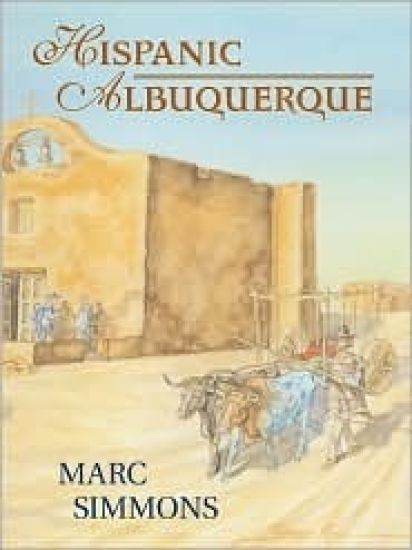
In anticipation of the tricentennial of Albuquerque's founding in 2006, this book presents an engaging, narrative history of the city from 1706 to 1846, its era as a Hispanic community. Written by the foremost historian of colonial and nineteenth-century New Mexico, this book is an abridgement of his award-winning 'Albuquerque: A Narrative History', first published in 1982 and long unavailable. Here is history to fascinate and inform. In re-examining the founding of the city, Simmons shows how contemporary land and water rights issues are tied to the original document creating the town. His account of commercial activities and relations with Native Americans is a reminder of the complexity of daily life in the colonial period.
Historian Marc Simmons is already a favourite among scholars, students, Hispanophiles, and borderland enthusiasts for his careful, readable histories of the American Southwest. In the twelve essays collected in here, the author's topical, in-depth approach to New Mexico's colonial period is skilfully deployed. His original research and unique insights transform New Mexico's colonial history into an engaging story of real people and the real events that shaped their lives - a true journey of discovery. Simmons finds in the commonplace moments of everyday life ways to place the reader fully within the realities of the past. Immersion in details permits us to understand the behaviour and character of a people and the true tenor of their times: how the average person lived and played, how he or she made economic choices, how worship and religious concerns were integrated into daily life. The book covers such topics as the Pueblo Revolt, New Mexico sheep and cattle ranching, Spanish irrigation practices, the settlement of Albuquerque, the smallpox epidemic of 1780-81, and the Feast of St. John. The society and economy of the upper Rio Grande were complex and richly textured, and the people who sustained themselves there became resilient and stoic, fashioning their own formulas for survival and forever impacting the directions taken by history's currents.

A professional historian, author, editor, and translator, Marc Simmons has published numerous books and monographs on the Southwest as well as articles in more than twenty scholarly and popular journals.
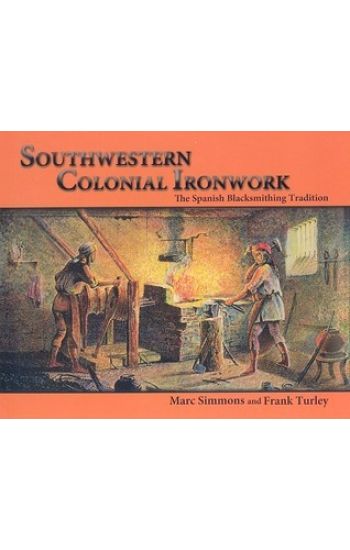
Colonial blacksmiths were more common in the American Southwest and their work more sophisticated than has generally been recognized. They forged all manner of domestic utensils and hardware and served as gunsmiths, armorers and farriers. This book is the first historical and practical survey of the full range of ornamental and utilitarian ironwork used and made by Spanish people in California, Arizona, New Mexico and Texas from the 1500s to about 1850, and is one of the most complete pictures of any Southwestern colonial craft. It presents, also for the first time, a detailed summary of the distinctive methods employed by the old Hispanic smiths. The book contains two parts. The first looks at the early iron manufacturing and blacksmithing industries of Spain and Mexico. The second deals with the colonial smith, his equipment, his methods, and the products of his forge. Information on these subjects has been derived from documents such as wills of blacksmiths, supply lists of expeditions, and inventories of mission workshops. All in all, the book is an invaluable and permanent source for practicing blacksmiths, historians, archaeologists, craftspeople, antique collectors, designers, and architects. Two hundred black and white photographs and fifty line drawings are included as well as a glossary of Spanish smith terms.
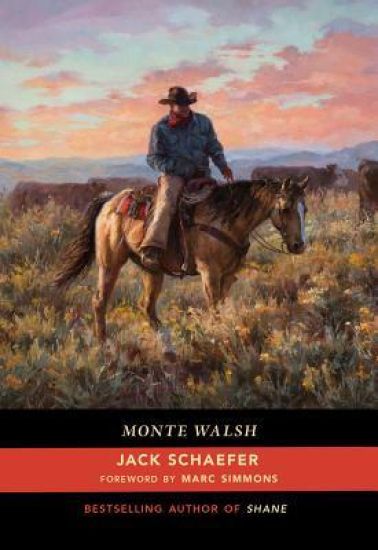
Originally published in 1963, Monte Walsh continues to delight readers as a Western classic and popular favorite. The novel explores the cowboy lives of Monte Walsh and Chet Rollins as they carouse, ride, and work at the Slash Y with Cal Brennan. As the West changes and their cowboy antics are challenged, the two must part ways to pursue new ways of life. Chet marries and goes on to become a successful merchant and then a politician, while Monte can only find solace in continuing the cowboy’s way of life until the very end.
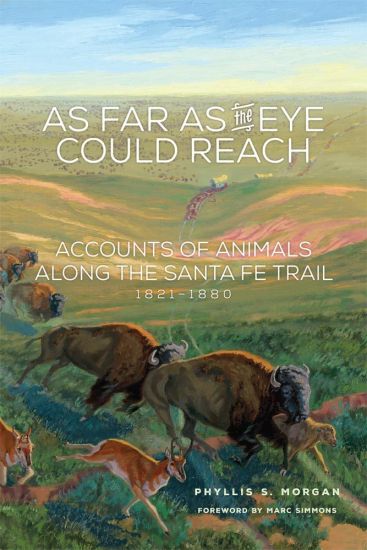
As Far as the Eye Could Reach
Phyllis S. Morgan; Marc Simmons
University of Oklahoma Press
2015
nidottu
Travelers and traders taking the Santa Fe Trail's routes from Missouri to New Mexico wrote vivid eyewitness accounts of the diverse and abundant wildlife encountered as they crossed arid plains, high desert, and rugged mountains. Most astonishing to these observers were the incredible numbers of animals, many they had not seen before - buffalo, antelope (pronghorn), prairie dogs, roadrunners, mustangs, grizzlies, and others. They also wrote about the domesticated animals they brought with them, including oxen, mules, horses, and dogs. Their letters, diaries, and memoirs open a window onto an animal world on the plains seen by few people other than the Plains Indians who had lived there for thousands of years. Phyllis S. Morgan has gleaned accounts from numerous primary sources and assembled them into a delightfully informative narrative. She has also explored the lives of the various species, and in this book tells about their behaviors and characteristics, the social relations within and between species, their relationships with humans, and their contributions to the environment and humankind. With skillful prose and a keen eye for a priceless tale, Morgan reanimates the story of life on the Santa Fe Trail's well-worn routes, and its sometimes violent intersection with human life. She provides a stirring view of the land and of the animals visible ""as far as the eye could reach,"" as more than one memoirist described. She also champions the many contributions animals made to the Trail's success and to the opening of the American West.
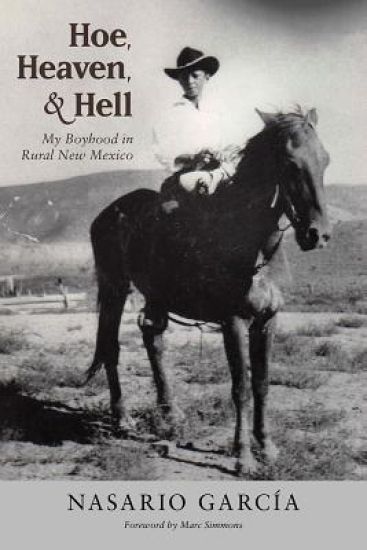
When Nasario García was a boy in Ojo del Padre, a village in the Rio Puerco Valley northwest of Albuquerque, he grew up the way rural New Mexicans had for generations. His parents built their own adobe house, raised their own food, hauled their water from the river, and brought up their children to respect the old ways.In this account of his boyhood García writes unforgettably about his family’s village life, telling story after story, all of them true, and fascinating everyone interested in New Mexico history and culture.
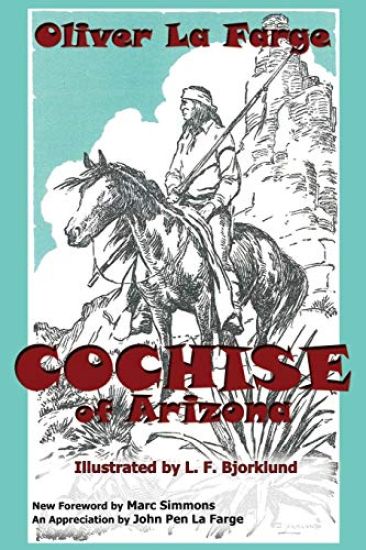

This is the true story, told in fictional form, of one of the greatest of all American Indian chiefs, Cochise of the Chiricahua Apaches. Indians were once thought of as warlike, and the encroaching white men as wanting peace, but it was the white men who forced Cochise into war against his will. History tells us that Cochise and his tiny band of warriors not only held the United States Army at bay for more than ten years, but they were often on the offensive. It is a heroic and extraordinary story. The story ends with the equally extraordinary way in which peace was made, when Major General Howard, the bible-reading soldier, and Cochise, the religious-minded warrior, found that they could trust each other. The many illustrations are by L. F. Bjorklund, well-known for the accuracy of his interpretation of Indian scenes.
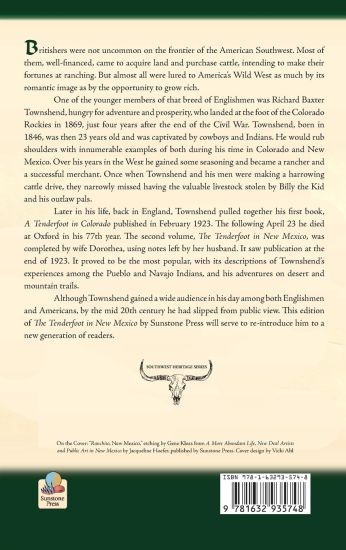
The Tenderfoot in New Mexico
R B Townshend; Richard Baxter Townshend; Marc Simmons
Sunstone Press
2013
sidottu
Britishers were not uncommon on the frontier of the American Southwest. Most of them, well-financed, came to acquire land and purchase cattle, intending to make their fortunes at ranching. But almost all were lured to America's Wild West as much by its romantic image as by the opportunity to grow rich. One of the younger members of that breed of Englishmen was Richard Baxter Townshend, hungry for adventure and prosperity, who landed at the foot of the Colorado Rockies in 1869, just four years after the end of the Civil War. Townshend, born in 1846, was then 23 years old and was captivated by cowboys and Indians. He would rub shoulders with innumerable examples of both during his time in Colorado and New Mexico. Over his years in the West he gained some seasoning and became a rancher and a successful merchant. Once when Townshend and his men were making a harrowing cattle drive, they narrowly missed having the valuable livestock stolen by Billy the Kid and his outlaw pals. Later in his life, back in England, Townshend pulled together his first book, "A Tenderfoot in Colorado." It was published in February 1923. The following April 23 he died at Oxford in his 77th year. The second volume, "The Tenderfoot in New Mexico," was completed by his wife Dorothea, using notes left by her husband. It saw publication at the end of 1923. It proved to be the most popular, with its descriptions of Townshend's experiences among the Pueblo and Navajo Indians, and his adventures on desert and mountain trails. Although Townshend gained a wide audience in his day among both Englishmen and Americans, by the mid 20th century he had slipped from public view. This reprinting of "The Tenderfoot in New Mexico" by Sunstone Press will serve to re-introduce him to a new generation of readers.
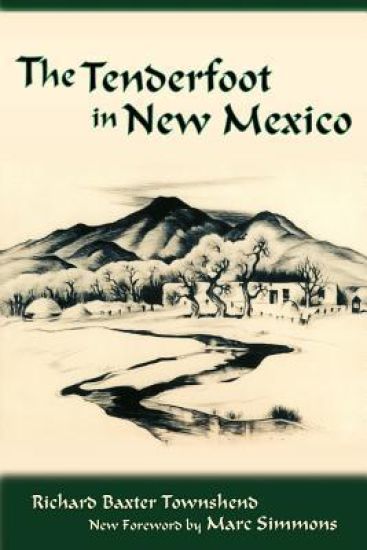
The Tenderfoot in New Mexico
R B Townshend; Richard Baxter Townshend; Marc Simmons
Sunstone Press
2013
pokkari

Kit Carson (1809-1868) has long held a prominent place in the popular imagination of the American West. However, little is known about his family life thanks largely to Carson's own guardianship of his privacy. After almost four decades devoted to researching Kit Carson's personal life, Marc Simmons provides information here to further our understanding of Carson.Viewing Kit Carson's career as a husband and father sheds new light on the life choices he made. The changing economy of the 1840s made it increasingly difficult for a trapper and scout to support a growing family. Carson's years as an Indian agent in the 1850s provided him stability although he was never able to spend as much time with his family as any of them would have liked and he was never able to bring in a comfortable income.The Kit Carson Simmons portrays offers a welcome change from recent politicized interpretations of Carson's actions.
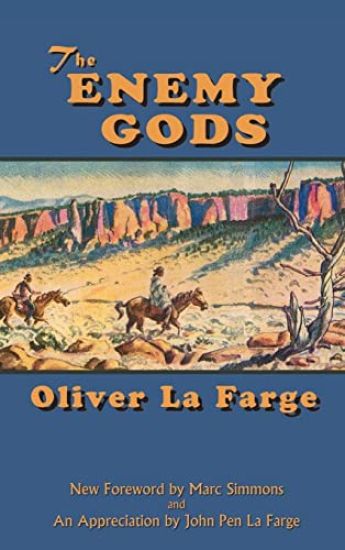
In his first book, the Pulitzer Prize novel "Laughing Boy," Oliver La Farge gave us a superb lyrical story of Navajo Indian life. In the fullness of his maturity as a writer, he later returned to the Navajo scene with "The Enemy Gods," a richer, deeper book than he had written before and its theme, both an absorbing story and a living social document, is nearer to his heart. It centers around Myron Begay-Divine Arrow is his Indian name-a young Navajo who is apparently won away from his tribe until he believes that he can solve the problem of life by making an imitation white man out of himself. Never able to escape from what he really is-a potential leader of his own people-he becomes more and more confused until he finally breaks down and commits murder. As one under a curse, Myron instinctively goes back into the Navajo country where he drifts as a lost soul. Through a series of superb scenes, the story rises to the final emotional crisis leading to the solution of his life.