Kirjojen hintavertailu. Mukana 12 481 736 kirjaa ja 12 kauppaa.

Kirjailija

Marc Zvi Brettler

Kirjat ja teokset yhdessä paikassa: 17 kirjaa, julkaisuja vuosilta 1995-2025, suosituimpien joukossa Torah Through Time. Vertaile teosten hintoja ja tarkista saatavuus suomalaisista kirjakaupoista.

17 kirjaa

Kirjojen julkaisuhaarukka 1995-2025.

The Bible With and Without Jesus

The Bible With and Without Jesus

Amy-Jill Levine; Marc Zvi Brettler

HarperCollins Publishers
2020
sidottu
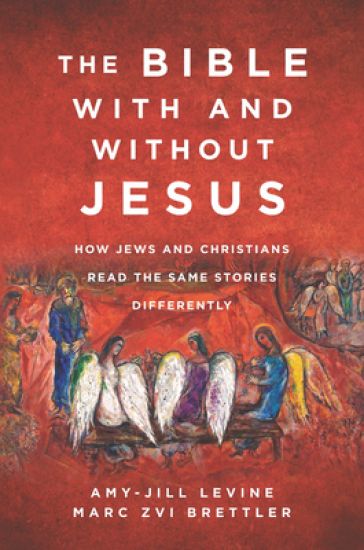
The editors of The Jewish Annotated New Testament show how and why Jews and Christians read many of the same Biblical texts – including passages from the Pentateuch, the Prophets, and the Psalms – differently. Exploring and explaining these diverse perspectives, they reveal more clearly Scripture’s beauty and power. Esteemed Bible scholars and teachers Amy-Jill Levine and Marc Z. Brettler take readers on a guided tour of the most popular Hebrew Bible passages quoted in the New Testament to show what the texts meant in their original contexts and then how Jews and Christians, over time, understood those same texts. Passages include the creation of the world, the role of Adam and Eve, the Suffering Servant of Isiah, the book of Jonah, and Psalm 22, whose words, “My God, my God, why have you forsaken me,” Jesus quotes as he dies on the cross. Comparing various interpretations – historical, literary, and theological - of each ancient text, Levine and Brettler offer deeper understandings of the original narratives and their many afterlives. They show how the text speaks to different generations under changed circumstances, and so illuminate the Bible’s ongoing significance. By understanding the depth and variety by which these passages have been, and can be, understood, The Bible With and Without Jesus does more than enhance our religious understandings, it helps us to see the Bible as a source of inspiration for any and all readers.
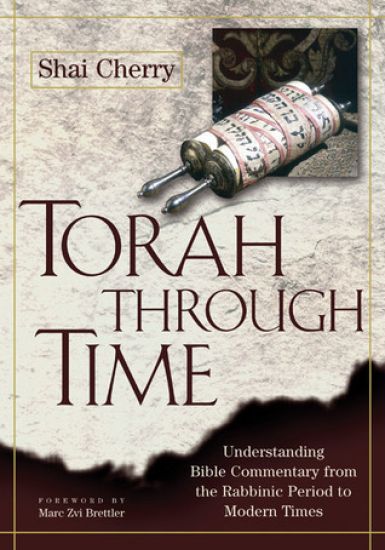
Torah Through Time

Torah Through Time

Shai Cherry; Marc Zvi Brettler

Jewish Publication Society
2007
pokkari
Thanks to these generous donors for making the publication of this book possible: Kinney Zalesne and Scott Siff. Every commentator, from the classical rabbi to the modern-day scholar, has brought his or her own worldview, with all of its assumptions, to bear on the reading of holy text. This relationship between the text itself and the reader's interpretation is the subject of Torah Through Time. Shai Cherry traces the development of Jewish Bible commentary through three pivotal periods in Jewish history: the rabbinic, medieval, and modern periods. The result is a fascinating and accessible guide to how some of the world's leading Jewish commentators read the Bible. Torah Through Time focuses on specific narrative sections of the Torah: the creation of humanity, the rivalry between Cain and Abel, Korah's rebellion, the claim of the daughters of Zelophechad, and legal matters concerning Hebrew slavery. Cherry closely examines several different commentaries for each of these source texts, and in so doing he analyzes how each commentator resolves questions raised by the texts and asks if and how the commentator's own historical frame of reference—his own time and place—contributes to the resolution. A chart at the end of each chapter provides a visual summary that helps the reader understand the many different elements at play.
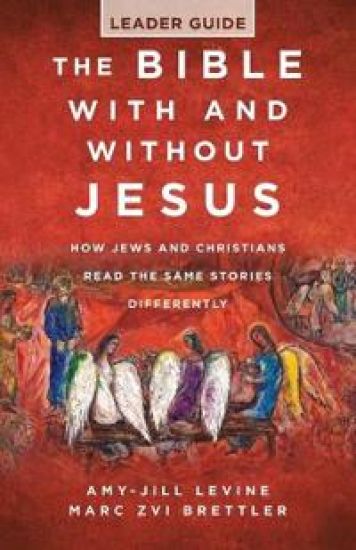
The Bible With And Without Jesus

The Bible With And Without Jesus

Marc Zvi Brettler; Amy-Jill Levine

HarperCollins
2023
pokkari
The editors of The Jewish Annotated New Testament show how and why Jews and Christians read many of the same Biblical texts – including passages from the Pentateuch, the Prophets, and the Psalms – differently. Exploring and explaining these diverse perspectives, they reveal more clearly Scripture's beauty and power. Esteemed Bible scholars and teachers Amy-Jill Levine and Marc Z. Brettler take readers on a guided tour of the most popular Hebrew Bible passages quoted in the New Testament to show what the texts meant in their original contexts and then how Jews and Christians, over time, understood those same texts. Passages include the creation of the world, the role of Adam and Eve, the Suffering Servant of Isiah, the book of Jonah, and Psalm 22, whose words, “My God, my God, why have you forsaken me,” Jesus quotes as he dies on the cross. Comparing various interpretations – historical, literary, and theological - of each ancient text, Levine and Brettler offer deeper understandings of the original narratives and their many afterlives. They show how the text speaks to different generations under changed circumstances, and so illuminate the Bible's ongoing significance. By understanding the depth and variety by which these passages have been, and can be, understood, The Bible With and Without Jesus does more than enhance our religious understandings, it helps us to see the Bible as a source of inspiration for any and all readers.
The Jewish Annotated New Testament

The Jewish Annotated New Testament

Amy-Jill Levine; Marc Zvi Brettler

Oxford University Press Inc
2017
sidottu
First published in 2011, The Jewish Annotated New Testament was a groundbreaking work, bringing the New Testament's Jewish background to the attention of students, clergy, and general readers. In this new edition, eighty Jewish scholars bring together unparalleled scholarship to shed new light on the text. This thoroughly revised and greatly expanded second edition brings even more helpful information and new insights to the study of the New Testament. · Introductions to each New Testament book, containing guidance for reading and specific information about how the book relates to the Judaism of the period, have been revised and augmented, and in some cases newly written. · Annotations on the text--some revised, some new to this edition--provide verse-by-verse commentary. · The thirty essays from the first edition are thoroughly updated, and there are twenty-four new essays, on topics such as "Mary in Jewish Tradition,", "Christology," and "Messianic Judaism." · For Christian readers The Jewish Annotated New Testament offers a window into the first-century world of Judaism from which the New Testament springs. There are explanations of Jewish concepts such as food laws and rabbinic argumentation. It also provides a much-needed corrective to many centuries of Christian misunderstandings of the Jewish religion. · For Jewish readers, this volume provides the chance to encounter the New Testament--a text of vast importance in Western European and American culture--with no religious agenda and with guidance from Jewish experts in theology, history, and Jewish and Christian thought. It also explains Christian practices, such as the Eucharist. The Jewish Annotated New Testament, Second Edition is an essential volume that places the New Testament writings in a context that will enlighten readers of any faith or none.
The Bible and the Believer

The Bible and the Believer

Marc Zvi Brettler; Peter Enns; Daniel J. Harrington

Oxford University Press Inc
2015
nidottu
Can the Bible be approached both as sacred scripture and as a historical and literary text? For many people, it must be one or the other. How can we read the Bible both ways? The Bible and the Believer brings together three distinguished biblical scholars--one Jewish, one Catholic, and one Protestant--to illustrate how to read the Hebrew Bible/ Old Testament critically and religiously. Marc Zvi Brettler, Peter Enns, and Daniel J. Harrington tackle a dilemma that not only haunts biblical scholarship today, but also disturbs students and others exposed to biblical criticism for the first time, either in university courses or through their own reading. Failure to resolve these conflicting interpretive strategies often results in rejection of either the critical approach or the religious approach--or both. But the authors demonstrate how biblical criticism--the process of establishing the original contextual meaning of biblical texts with the tools of literary and historical analysis--need not undermine religious interpretations of the Bible, but can in fact enhance them. They show how awareness of new archeological evidence, cultural context, literary form, and other tools of historical criticism can provide the necessary preparation for a sound religious reading. And they argue that the challenges such study raises for religious belief should be brought into conversation with religious tradition rather than deemed grounds for dismissing either that tradition or biblical criticism. Guiding readers through the history of biblical exegesis within the Jewish, Catholic, and Protestant faith traditions, The Bible and the Believer bridges an age-old gap between critical and religious approaches to the Old Testament.
The Book of Job

The Book of Job

Marc Zvi Brettler

Skylight Paths Publishing
2012
sidottu
The poetical masterpiece that confronts the inexplicable mystery of good and evil can be a companion on your own spiritual journey. The book of Job, celebrated as a classic of world literature and one of the glories of the Bible, can often be puzzling and frustrating: puzzling for its dialogue form and off-putting because of the many questions it leaves unanswered. The book was written in a world very different from our own, and yet the fundamental questions it raises are still ones we grapple with today: Is it worthwhile to act for the best? Does life have a meaning beyond itself? Why do the righteous suffer and the guilty prosper? In this accessible guide to a spiritual masterpiece, Donald Kraus, the editor of the Oxford University Press Study Bible program, clarifies what Job is, helps overcome difficulties in the text and suggests what Job may mean for us today. Kraus's fresh translation captures some of the finest poetry in the Hebrew Bible and uncovers the original author's intent in a way that is accessible for modern readers and spiritual seekers. This inviting SkyLight Illuminations edition, with probing facing-page commentary, explores Job’s daring challenges to God’s goodness, asks questions about the basic fairness of existence, and offers compelling descriptions of the glories of the created world and the bitter sorrows of human life.
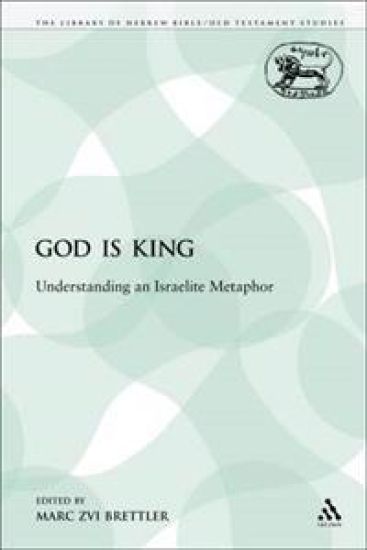
God is King

God is King

Marc Zvi Brettler

Continuum International Publishing Group Ltd.
2009
nidottu
This is the first attempt in biblical studies to apply the tools developed by theoreticians of metaphor to the common biblical metaphor of God as king. The extent to which elements of human kingship are projected onto God is investigated, and several significant conclusions emerge: 1. Royal characteristics that have a diminutive connotation are generally not projected onto God. 2. God's nature as greatest king is emphasized through use of superlatives. For example, his garb is enormous and he has a large number of royal attendants. God is not limited by the metaphor. 3. When the entailments of the metaphor would have conflicted with Israelite proscriptions, such as the iconic prohibition, the metaphor is avoided. 4. The metaphor is predominant enough to influence Israel's depiction of human kingship. For example, the term gadol ('great', 'majestic') is appropriated by God the king and is not used of the Israelite king. 5. There is no single metaphor 'God is king'; as Israelite kingship changes, the metaphor undergoes parallel changes. Also, biblical authors emphasize different aspects of God's kingship in specific contexts. The lack of a complete fit between human kingship (the vehicle) and God as king (the tenor) is consistent with the tensive view of metaphor, which predominates in contemporary scholarship. The literary study has other benefits. By enumerating the parallels between human and heavenly messengers, it finds that 'angels' should be construed as projections of royal officials. The analysis of human enthronement rituals as they are projected onto God suggests that there was no annual 'enthronement festival' which celebrated God becoming king. The systematic study of the metaphor also opens new avenues for exploring a number of issues in the study of Israelite religion.
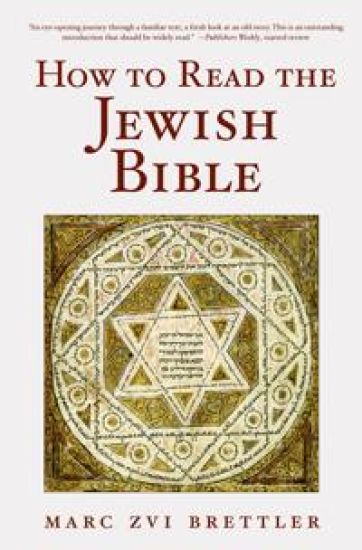
How to Read the Jewish Bible

How to Read the Jewish Bible

Marc Zvi Brettler

Oxford University Press Inc
2007
nidottu
Master Bible scholar and teacher Marc Brettler argues that today's contemporary readers can only understand the ancient Hebrew Scripture by knowing more about the culture that produced it. And so Brettler unpacks the literary conventions, ideological assumptions, and historical conditions that inform the biblical text and demonstrates how modern critical scholarship and archaeological discoveries shed light on this fascinating and complex literature. Brettler surveys representative biblical texts from different genres to illustrate how modern can read these texts. He guides us in reading the Bible as it was read in the biblical period, independent of later religious norms and interpretive traditions. Understanding the Bible this way lets us appreciate it as an interesting text that speaks in multiple voices on profound issues. Although the emphasis of How to Read the Jewish Bible is on showing contemporary Jews, as well as Christians, how they can relate to the Bible in a more meaningful way, readers at any level of religious faith can benefit greatly from this comprehensive but remarkably clear guide to interpreting the Jewish Bible.
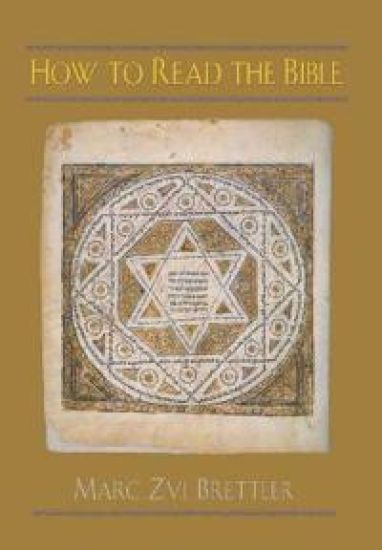
How to Read the Bible

How to Read the Bible

Marc Zvi Brettler

Jewish Publication Society
2005
sidottu
"As a professor of biblical studies, I am frequently sent textbooks . . . and I often consult academic introductions to the field as well. None of them is as clear, sophisticated, and readable as this book. For Jewish and non-Jewish readers. . . . The book's accomplishments remain stellar.”-Benjamin D. Sommer; Sh’ma/Koret Book ReviewMaster Bible scholar and teacher Marc Brettler argues that today’s contemporary readers can only understand the ancient Hebrew Scripture by knowing more about the culture that produced it. And so Brettler unpacks the literary conventions, ideological assumptions, and historical conditions that inform the biblical text and demonstrates how modern critical scholarship and archaeological discoveries shed light on this fascinating and complex literature.Brettler surveys representative biblical texts from different genres to illustrate how modern scholars have taught us to “read” these texts. Using the “historical-critical method” long popular in academia, he guides us in reading the Bible as it was read in the biblical period, independent of later religious norms and interpretive traditions. Understanding the Bible this way lets us appreciate it as an interesting text that speaks in multiple voices on profound issues.This book is the first “Jewishly sensitive” introduction to the historical-critical method. Unlike other introductory texts, the Bible that this book speaks about is the Jewish one-with the three-part TANAKH arrangement, the sequence of books found in modern printed Hebrew editions, and the chapter and verse enumerations used in most modern Jewish versions of the Bible. In an afterword, the author discusses how the historical-critical method can help contemporary Jews relate to the Bible as a religious text in a more meaningful way.
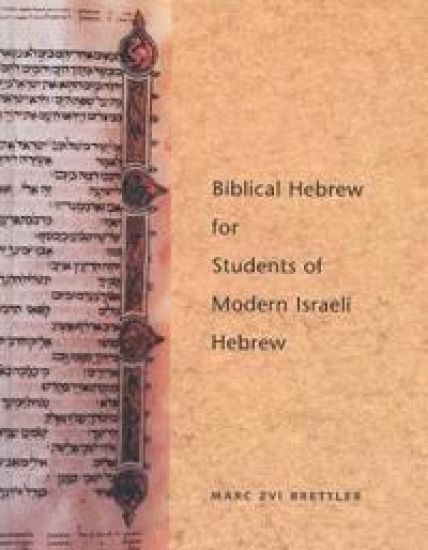
Biblical Hebrew for Students of Modern Israeli Hebrew

Biblical Hebrew for Students of Modern Israeli Hebrew

Marc Zvi Brettler

Yale University Press
2002
sidottu
This is the first textbook written for the purpose of teaching biblical Hebrew to college-level students who already know some modern, Israeli Hebrew. Marc Brettler provides a clear, comprehensive book with numerous well-constructed exercises to help students either make the transition from modern Israeli Hebrew to biblical Hebrew or deepen their understanding of biblical Hebrew. The book is also ideal for individuals who might like to study independently, and for serious Jewish adult-education programs.Biblical Hebrew for Students of Modern Israeli Hebrew is unique in its emphasis on phonology, based on the conviction that a strong grounding in phonology makes it possible to learn biblical Hebrew grammar in a much more systematic fashion. This method also allows verbal conjugations to be taught much more quickly and systematically. Although the text is not inductive, it uses authentic biblical texts throughout to illustrate fundamental points, and it contains many biblical texts in the exercises. Students progressing through the book will quickly be encouraged by a sense of accomplishment as they encounter and understand well-known biblical passages.
The Book of Judges

The Book of Judges

Marc Zvi Brettler

Routledge
2001
sidottu
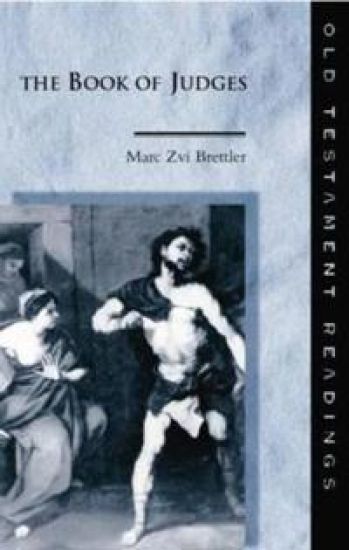
The Book of Judges has typically been treated either as a historical account of the conquest of Israel and the rise of the monarch, or as an ancient Israelite work of literary fiction. In this new approach, Brettler contends that Judges is essentially a political tract, which argues for the legitimacy of Davidic kingship. He skilfully and accessibly shows the tension between the stories in their original forms, and how they were altered and reused to create a book with a very different meaning. Important reading for all those studying this part of the Bible.
The Book of Judges

The Book of Judges

Marc Zvi Brettler

Routledge
2001
nidottu
The Book of Judges has typically been treated either as a historical account of the conquest of Israel and the rise of the monarch, or as an ancient Israelite work of literary fiction. In this new approach, Brettler contends that Judges is essentially a political tract, which argues for the legitimacy of Davidic kingship. He skilfully and accessibly shows the tension between the stories in their original forms, and how they were altered and reused to create a book with a very different meaning. Important reading for all those studying this part of the Bible.