Kirjojen hintavertailu. Mukana 12 595 353 kirjaa ja 12 kauppaa.

Kirjailija

Marcel Detienne

Kirjat ja teokset yhdessä paikassa: 11 kirjaa, julkaisuja vuosilta 1994-2021, suosituimpien joukossa La Notion de Daimon Dans Le Pythagorisme Ancien: de la Pensee Religieuse a la Pensee Philosophique. Vertaile teosten hintoja ja tarkista saatavuus suomalaisista kirjakaupoista.

11 kirjaa

Kirjojen julkaisuhaarukka 1994-2021.

La Notion de Daimon Dans Le Pythagorisme Ancien: de la Pensee Religieuse a la Pensee Philosophique
En etudiant la notion de daimon dans le pythagorisme ancien, Marcel Detienne met en lumiere la transformation d'une pensee religieuse en une pensee philosophique. A l'origine, le mot daimon recouvre une grande variete de significations, qui se situent a des niveaux differents de la pensee, en l'occurrence donc, une pensee sociale. Les textes choisis et commentes par Marcel Detienne nous font considerer successivement demons et communaute agricole, culte des demons, demons et reves, demons et maladies, demons et vengeance et le demon de l'airain. A ce niveau, les diverses significations de daimon ne sont guere que des variations sur un theme general - la relation des vivants et des puissances du monde invisible. Il n'y a encore la nulle reflexion sur la nature du daimon, sur son essence. Bien plutot, il s'agit d'experience religieuse . A partir de temoignages concordants d'auteurs divers, Marcel Detienne developpe ensuite l'idee d'une demonologie dans la pensee religieuse du pythagorisme. On y apprend que le terme ne designe pas seulement la portion du divin que l'homme porte en lui et, en quelque sorte, l'etre divin qui reside en l'homme, mais qu'il peut avoir un sens eschatologique. Il existe en effet une croyance pythagoricienne d'apres laquelle les ames vertueuses deviennent des demons bons et pleins d'amour pour les hommes . Il ne s'agit plus seulement d'avoir un bon demon, mais, par la pratique de la vertu, de l'etre, que ce soit apres la mort ou pendant la vie; et Pythagore lui-meme, dans la pensee de ses disciples, est l'illustration la plus parfaite de ce type de demon, inferieur aux dieux et superieur aux hommes, qui descend sur terre pour intervenir dans les affaires humaines et sauver la race des hommes.
Comparative Anthropology of Ancient Greece

Comparative Anthropology of Ancient Greece

Marcel Detienne

Harvard University, Center for Hellenic Studies
2009
nidottu
Comparative Anthropology of Ancient Greece looks at the anthropology of the Greeks and other cultures across space and time, and in the process discovers aspects of the art of comparability. Historians and ethnologists can pool a wealth of knowledge about different cultures across space and time. Their joint task is to analyze human societies and to understand cultural products. Comparative analysis involves working together in an experimental and constructive enterprise. Marcel Detienne, alerted by dissonances, tries to see how cultural systems react not just to a touchstone category, but also to the questions and concepts that arise from the reaction. What does it mean to found something, or rather to establish a territory, or to have or not have roots? What is a site or a place?
Comparing the Incomparable

Comparing the Incomparable

Marcel Detienne

Stanford University Press
2008
pokkari
In Comparing the Incomparable, Marcel Detienne challenges the cordoning off of disciplines that prevent us from asking trans-cultural questions that would permit one society to shed light on another. Some years ago, he undertook the study of "construction sites" grouped around general questions to be put to historians and ethnologists about their particular areas of expertise. Four of these comparative experiments are presented in the chapters of this book. The first concerns myths and practices related to the founding of cities or sacred spaces from Africa to Japan to Ancient Greece. The second looks at "regimes of historicity" and asks why we speak of history and what we mean by it, which leads to a comparison of cultural philosophies and of the ways different cultures express themselves, be they oral, written, or visual. The third chapter, following in the footsteps of comparative philologist Georges Dumézil, turns to polytheistic pantheons, arguing that we should not only look at the gods in and of themselves but also at the relations between them. The final section of the book examines how, from Ancient Greek democracy to the Ochollo of Ethiopia to the French Revolution, peoples form a consciousness of themselves that translates into assembly practices. A deliberately post-deconstructionist manifesto against the dangers of incommensurability, Detienne argues for and engages in the constructive comparison of societies of a great temporal and spatial diversity. The result testifies to what new and illuminating insights his comparatist method can produce.
Comparing the Incomparable

Comparing the Incomparable

Marcel Detienne

Stanford University Press
2008
sidottu
In Comparing the Incomparable, Marcel Detienne challenges the cordoning off of disciplines that prevent us from asking trans-cultural questions that would permit one society to shed light on another. Some years ago, he undertook the study of "construction sites" grouped around general questions to be put to historians and ethnologists about their particular areas of expertise. Four of these comparative experiments are presented in the chapters of this book. The first concerns myths and practices related to the founding of cities or sacred spaces from Africa to Japan to Ancient Greece. The second looks at "regimes of historicity" and asks why we speak of history and what we mean by it, which leads to a comparison of cultural philosophies and of the ways different cultures express themselves, be they oral, written, or visual. The third chapter, following in the footsteps of comparative philologist Georges Dumézil, turns to polytheistic pantheons, arguing that we should not only look at the gods in and of themselves but also at the relations between them. The final section of the book examines how, from Ancient Greek democracy to the Ochollo of Ethiopia to the French Revolution, peoples form a consciousness of themselves that translates into assembly practices. A deliberately post-deconstructionist manifesto against the dangers of incommensurability, Detienne argues for and engages in the constructive comparison of societies of a great temporal and spatial diversity. The result testifies to what new and illuminating insights his comparatist method can produce.
The Greeks and Us

The Greeks and Us

Marcel Detienne

Polity Press
2007
sidottu
The human race is all too pre-disposed to think in terms of us and them. Europeans have always laid claim to the Ancient Greeks they are our Greeks, our ancestors but their legacy reaches further than we could ever imagine. Their influence stretches from the Japanese to the Cossacks, from Ancient Rome to Indonesia. In this path-breaking new volume, the great French historian Marcel Detienne focuses on Eurocentric approaches which have trumpeted the Greeks and their democratic practices as our ancestors and the superiority of the Western tradition to which they gave rise. He argues that such approaches can be seen as narrow-minded and often covertly nationalistic. Detienne advocates what he calls comparative anthropology which sets out to illuminate the comparisons and contrasts between the beliefs, practices and institutions of different ancient and modern societies. Detienne aims to put the Greeks in perspective among other civilisations and also to look afresh at questions of political structure, literacy, nationhood, intellect and mythology. The work of Marcel Detienne has made an enormous impact on our thinking about the Greeks in areas such as rationality, literacy and mythology, and in this new volume he challenges once again our conception of the Greeks and their impact on the modern world.
The Greeks and Us

The Greeks and Us

Marcel Detienne

Polity Press
2007
nidottu
The human race is all too pre-disposed to think in terms of us and them. Europeans have always laid claim to the Ancient Greeks they are our Greeks, our ancestors but their legacy reaches further than we could ever imagine. Their influence stretches from the Japanese to the Cossacks, from Ancient Rome to Indonesia. In this path-breaking new volume, the great French historian Marcel Detienne focuses on Eurocentric approaches which have trumpeted the Greeks and their democratic practices as our ancestors and the superiority of the Western tradition to which they gave rise. He argues that such approaches can be seen as narrow-minded and often covertly nationalistic. Detienne advocates what he calls comparative anthropology which sets out to illuminate the comparisons and contrasts between the beliefs, practices and institutions of different ancient and modern societies. Detienne aims to put the Greeks in perspective among other civilisations and also to look afresh at questions of political structure, literacy, nationhood, intellect and mythology. The work of Marcel Detienne has made an enormous impact on our thinking about the Greeks in areas such as rationality, literacy and mythology, and in this new volume he challenges once again our conception of the Greeks and their impact on the modern world.
The Writing of Orpheus

The Writing of Orpheus

Marcel Detienne

Johns Hopkins University Press
2003
sidottu
Son of a mortal king and an immortal Muse, Orpheus possessed a gift for music unmatched among humans; with his lyre he could turn the course of rivers, drown the fatal song of the Sirens, and charm the denizens of the underworld. The allure of his music speaks through the myths and stories of the Greeks and Romans, who tell of his mysterious compositions, with lyrics that only the initiated could understand after undergoing secret rites. Where readers of subsequent centuries have been content to understand these mysteries as the stuff of obfuscation or mere folderol, Marcel Detienne finds in the writing of Orpheus a key to the thinking of the ancient Greeks. A profound understanding of ancient Greek myth in its cultural contexts allows Detienne to recover a cultural system from fragments and ephemera-to reproduce, with sensitivity to variation and nuance, the full richness of the mythological repertoire flowing from the writing of Orpheus. His investigation moves from the Orphic writings to broader mysteries: how Greek gods became myths, how myths informed later religious thinking, and how myths have come into play in polemics between competing religions. An eloquent answer to some of the most vexing questions about the myth of Orpheus and its far-reaching ramifications through time and culture, Detienne's work ultimately offers a major rethinking of Greek mythology.
The Daily Life of the Greek Gods

The Daily Life of the Greek Gods

Giulia Sissa; Marcel Detienne

Stanford University Press
2000
sidottu
Despite the rousing stories of male heroism in battles, the Trojan War transcended the activities of its human participants. For Homer, it was the gods who conducted and accounted for what happened. In the first part of this book, the authors find in Homer's Iliad material for exploring the everyday life of the Greek gods: what their bodies were made of and how they were nourished, the organization of their society, and the sort of life they led both in Olympus and in the human world. The gods are divided in their human nature: at once a fantasized model of infinite joys and an edifying example of engagement in the world, they have loves, festivities, and quarrels. In the second part, the authors show how citizens carried on everyday relations with the gods and those who would become the Olympians, inviting them to reside with humans organized in cities. At the heart of rituals and of social life, the gods were omnipresent: in sacrifices, at meals, in political assemblies, in war, in sexuality. In brief, the authors show how the gods were indispensable to the everyday social organization of Greek cities. To set on stage a number of gods implicated in the world of human beings, the authors give precedence to the feminine over the masculine, choosing to show how such great powers as Hera and Athena wielded their sovereignty over cities, reigning over not only the activities of women but also the moulding of future citizens. Equally important, the authors turn to Dionysus and follow the evolution of one of his forms, that of the phallus paraded in processions. Under this god, so attentive to all things feminine, the authors explore the typically civic ways of thinking about the relations between natural fecundity and the sexuality of daily life.
The Masters of Truth in Archaic Greece

The Masters of Truth in Archaic Greece

Marcel Detienne; Pierre Vidal-Naquet

Zone Books
1999
pokkari
The acclaimed French classicist Marcel Detienne's first book traces the odyssey of "truth," aletheia, from mytho-religious concept to philosophical thought in archaic Greece. Detienne begins by examining how truth in Greek literature first emerges as an enigma. He then looks at the movement from a religious to a secular thinking about truth in the speech of the sophists and orators. His study culminates with an original interpretation of Parmenides' poem on Being.
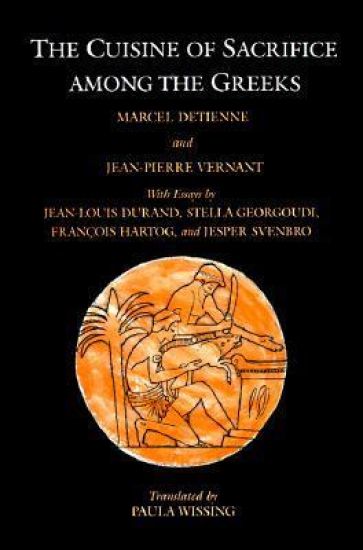
The Cuisine of Sacrifice among the Greeks

The Cuisine of Sacrifice among the Greeks

Marcel Detienne; Jean-Pierre Vernant

University of Chicago Press
1998
nidottu
For the Greeks, the sharing of cooked meats was the fundamental communal act, so that to become vegetarian was a way of refusing society. It follows that the roasting or cooking of meat was a political act, as the division of portions asserted a social order. And the only proper manner of preparing meat for consumption, according to the Greeks, was blood sacrifice. The fundamental myth is that of Prometheus, who introduced sacrifice and, in the process, both joined us to and separated us from the gods—and ambiguous relation that recurs in marriage and in the growing of grain. Thus we can understand why the ascetic man refuses both women and meat, and why Greek women celebrated the festival of grain-giving Demeter with instruments of butchery. The ambiguity coded in the consumption of meat generated a mythology of the "other"—werewolves, Scythians, Ethiopians, and other "monsters." The study of the sacrificial consumption of meat thus leads into exotic territory and to unexpected findings. In The Cuisine of Sacrifice, the contributors—all scholars affiliated with the Center for Comparative Studies of Ancient Societies in Paris—apply methods from structural anthropology, comparative religion, and philology to a diversity of topics: the relation of political power to sacrificial practice; the Promethean myth as the foundation story of sacrificial practice; representations of sacrifice found on Greek vases; the technique and anatomy of sacrifice; the interaction of image, language, and ritual; the position of women in sacrificial custom and the female ritual of the Thesmophoria; the mythical status of wolves in Greece and their relation to the sacrifice of domesticated animals; the role and significance of food-related ritual in Homer and Hesiod; ancient Greek perceptions of Scythian sacrificial rites; and remnants of sacrificial ritual in modern Greek practices.
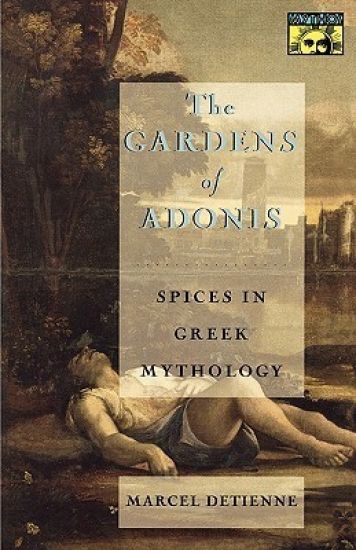
The Gardens of Adonis

The Gardens of Adonis

Marcel Detienne

Princeton University Press
1994
pokkari
Rich with implications for the history of sexuality, gender issues, and patterns of Hellenic literary imagining, Marcel Detienne's landmark book recasts long-standing ideas about the fertility myth of Adonis. The author challenges Sir James Frazer's thesis that the vegetation god Adonis-- whose premature death was mourned by women and whose resurrection marked a joyous occasion--represented the annual cycle of growth and decay in agriculture. Using the analytic tools of structuralism, Detienne shows instead that the festivals of Adonis depict a seductive but impotent and fruitless deity--whose physical ineptitude led to his death in a boar hunt, after which his body was found in a lettuce patch. Contrasting the festivals of Adonis with the solemn ones dedicated to Demeter, the goddess of grain, he reveals the former as a parody and negation of the institution of marriage. Detienne considers the short-lived gardens that Athenian women planted in mockery for Adonis's festival, and explores the function of such vegetal matter as spices, mint, myrrh, cereal, and wet plants in religious practice and in a wide selection of myths. His inquiry exposes, among many things, attitudes toward sexual activities ranging from "perverse" acts to marital relations.