Kirjojen hintavertailu. Mukana 12 595 353 kirjaa ja 12 kauppaa.

Kirjailija

Marcia Haag

Kirjat ja teokset yhdessä paikassa: 5 kirjaa, julkaisuja vuosilta 2001-2025, suosituimpien joukossa Choctaw Language and Culture. Vertaile teosten hintoja ja tarkista saatavuus suomalaisista kirjakaupoista.

5 kirjaa

Kirjojen julkaisuhaarukka 2001-2025.

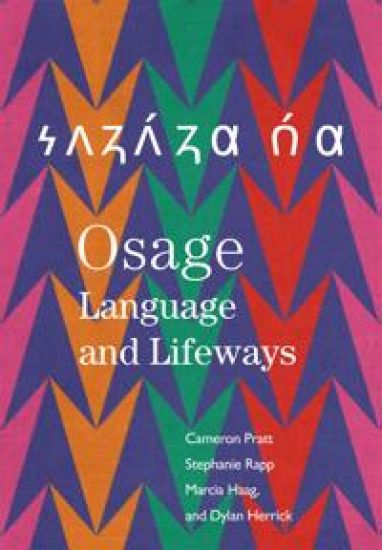
Osage Language and Lifeways

Osage Language and Lifeways

Cameron Pratt; Stephanie Rapp; Marcia Haag; Dylan Herrick

UNIVERSITY OF OKLAHOMA PRESS
2025
nidottu
The Osage language is a vital part of Osage identity. The language suffered rapid decline during the twentieth century, but the Osage people are taking significant steps to revitalize its use. To that end, this volume—the first ever introductory Osage grammar textbook—is a much-needed resource for students, teachers, scholars, and anyone wishing to learn how to speak and write Osage. Written collectively by bilingual Osage speakers and linguists, Osage Language and Lifeways offers both clear grammatical instruction and valuable cultural information. As the authors explain in their introduction, the Osage language, a Dhegiha language within the Siouan language family, is highly complex. Drawing on their Native language expertise and classroom experience, the authors clarify elements of Osage grammar that are entirely different from English grammar or other European languages. Each chapter begins with a short dialogue or story written by Osage speakers. These passages present commonly used expressions and provide glimpses into Osage life experiences. The lessons are ordered in such a way that students can quickly learn how to pronounce Osage words, understand and make full sentences, and read and write the Osage alphabet. Where possible, the authors limit the amount of difficult linguistic terminology and include numerous examples to illustrate their points. At the same time, this book is sufficiently descriptive for linguists seeking to study the language on a more technical level. An important contribution to the study of indigenous languages, Osage Language and Lifeways opens a new pathway for Osages to learn and practice the language of their ancestors and ensure its continuity for future generations.
Osage Language and Lifeways

Osage Language and Lifeways

Cameron Pratt; Stephanie Rapp; Marcia Haag; Dylan Herrick

UNIVERSITY OF OKLAHOMA PRESS
2025
sidottu
The Osage language is a vital part of Osage identity. The language suffered rapid decline during the twentieth century, but the Osage people are taking significant steps to revitalize its use. To that end, this volume—the first ever introductory Osage grammar textbook—is a much-needed resource for students, teachers, scholars, and anyone wishing to learn how to speak and write Osage. Written collectively by bilingual Osage speakers and linguists, Osage Language and Lifeways offers both clear grammatical instruction and valuable cultural information. As the authors explain in their introduction, the Osage language, a Dhegiha language within the Siouan language family, is highly complex. Drawing on their Native language expertise and classroom experience, the authors clarify elements of Osage grammar that are entirely different from English grammar or other European languages. Each chapter begins with a short dialogue or story written by Osage speakers. These passages present commonly used expressions and provide glimpses into Osage life experiences. The lessons are ordered in such a way that students can quickly learn how to pronounce Osage words, understand and make full sentences, and read and write the Osage alphabet. Where possible, the authors limit the amount of difficult linguistic terminology and include numerous examples to illustrate their points. At the same time, this book is sufficiently descriptive for linguists seeking to study the language on a more technical level. An important contribution to the study of indigenous languages, Osage Language and Lifeways opens a new pathway for Osages to learn and practice the language of their ancestors and ensure its continuity for future generations.
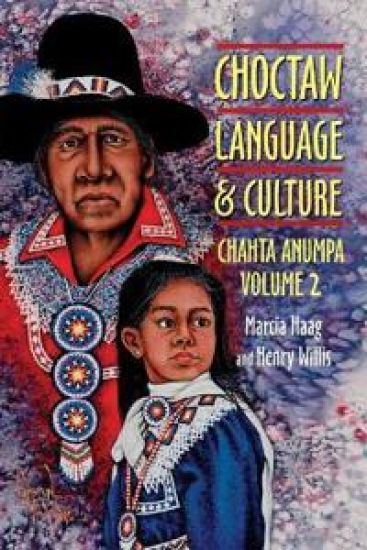
Choctaw Language and Culture

Choctaw Language and Culture

Marcia Haag; Henry Willis

University of Oklahoma Press
2007
nidottu
Building on the foundations laid by the first volume of Choctaw Language and Culture, this follow-up text presents a more advanced linguistic study of Oklahoma Choctaw, accompanied by short stories and anecdotes written by Choctaws in their native language.The book is organized around twelve texts with translations, each followed by a grammar lesson, a vocabulary section that acquaints students with new words, a word-study section, and exercises. The authors present such topics as idioms, ways to say ""or,"" negative conditionals, and compound tenses. Particularly important is the subject of negation, which permeates Choctaw at all levels, and the concept of definiteness. The authors also demonstrate the many ways a single Choctaw word can be modified to yield subtle differences in meaning. Exercises encourage the student to think about how the language works rather than relying on rote memorization.Volume 2 of Choctaw Language and Culture is designed to help teachers and students alike further their understanding of Choctaw by working with and mastering grammatically complex examples of its use. It marks the first such advanced textbook of Choctaw as well as the first easily available reference grammar for teachers. By including actual voices of Choctaw people describing their own lives, it also represents a unique new repository of Choctaw culture.Contributors include Jay McAlvain, Phillip Carroll Morgan, Grayson Noley, Bill Nowlin, Lois Pugh, Eveline Steele, and Tim Tingle.
Chahta Anumpa

Chahta Anumpa

Arlen L. Fowler; Marcia Haag

University of Oklahoma Press
2001
cd
A Choctaw Tutorial CD-Rom, by Marcia Haag and Loretta FowlerDesigned for use with Choctaw Language and Culture, this interactive CD-Rom allows language students to watch the pronunciations of Choctaw speakers Buster Jefferson and Leroy Sealy while they hear and learn Choctaw words, phrases, and stories.The lessons are divided into three parts, with instructional sections that focus on grammatical constructions, vocabulary, and comprehension. Students see and hear the Choctaw speakers pronounce words and phrases. They then choose the correct translation by clicking the mouse on the button that corresponds to the image or English phrase. The word kiyo, ""no,"" appears if the choice is incorrect, and achukma, ""good,"" with a smiling face, appears when the student responds correctly. Interactive buttons allow students to repeat each selection as needed, to advance and move back within the lessons, or to get additional help.
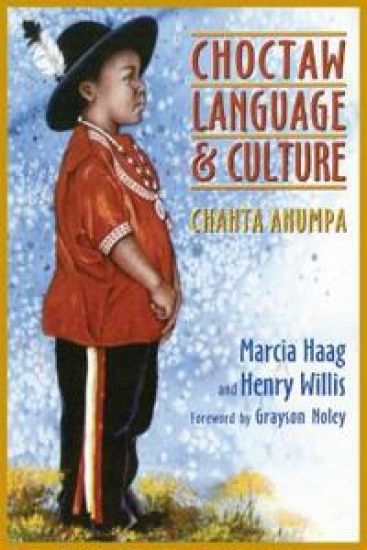
Choctaw Language and Culture

Choctaw Language and Culture

Marcia Haag; Henry Willis; Grayson Noley

University of Oklahoma Press
2001
nidottu
Choctaw Language and Culture combines a beginning language and grammar text with a selection of essays on Choctaw history, language, and culture from prehistoric times to the present.In part one of the book, ""Chahta Anumpa,"" Marcia Haag, a linguist, and Henry Willis, a native speaker and Choctaw instructor, present the Choctaw language. Each chapter begins with a conversation or a Choctaw story. Designed for classroom use and to preserve the rich heritage of the Choctaw language, the lessons introduce new words, explain sentence construction and correct usage, and provide exercises in grammar and composition. Part two, ""Kaniohmichi-hosh Okchayat Il-asha (""The Way We Live""),"" contains essays on Choctaw history and culture written especially for this volume by leading scholars in anthropology, history, linguistics, archaeology, and Native American studies. Beginning with ""The Ancient Ones,"" the chapters describe Choctaw prehistory, daily life before contact, ritual and religion, trade, removal to Indian Territory, schools, newspapers, and contemporary life.