Kirjojen hintavertailu. Mukana 12 595 353 kirjaa ja 12 kauppaa.
Kirjailija
Marco Buti
Kirjat ja teokset yhdessä paikassa: 4 kirjaa, julkaisuja vuosilta 2004-2021, suosituimpien joukossa An Agenda for a Growing Europe. Vertaile teosten hintoja ja tarkista saatavuus suomalaisista kirjakaupoista.
André Sapir; Philippe Aghion; Giuseppe Bertola; Martin Hellwig; Jean Pisani-Ferry; Dariusz Rosati; José Viñals; Helen Wallace; Marco Buti; Mario Nava; Peter M. Smith
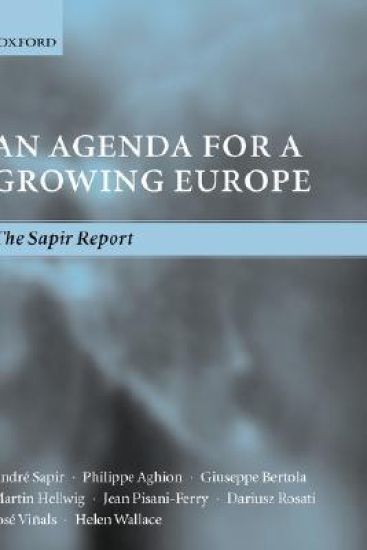
Over the past decade European economic integration has seen considerable institutional success, but the economic performance of the EU has been varied. While macroeconomic stability has improved and an emphasis on cohesion preserved, the EU economic system has not delivered satisfactory growth performance. This book is the report of a high-level group commissioned by the President of the European Commission to review the EU economic system and propose a blueprint for an economic system capable of delivering faster growth along with stability and cohesion. It assesses the EU s economic performance, examines the challenges facing the EU in the coming years, and presents a series of recommendations. The report views Europe's unsatisfactory growth performance during the last decades as a symptom of its failure to transform into an innovation-based economy. It has now become clear that the context in which economic policies have been developed has changed fundamentally over the past thirty years. A system built around the assimilation of existing technologies, mass production generating economics of scale, and an industrial structure dominated by large firms with stable markets and long term employment patterns no longer delivers in the world of today, characterized by economic globalization and strong external competition. What is needed now is more opportunity for new entrants, greater mobility of employees within and across firms, more retraining, greater reliance on market financing, and higher investment in both R&D and higher education. This requires a massive and urgent change in economic policies in Europe.
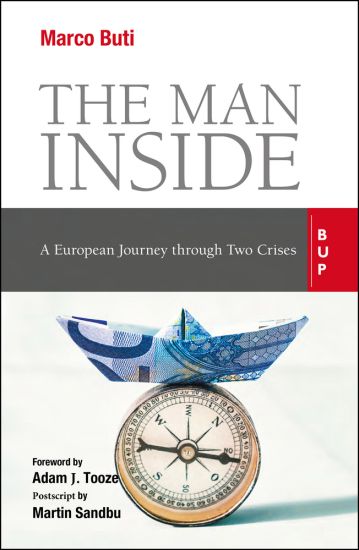
This book explores the origins, rationale, problems and prospects of the European fiscal policy framework. It provides the reader with a roadmap to EMU's budgetary framework by exploring its theoretical and empirical foundations, uncovering its historical roots and emphasising its supranational nature.The authors, who have been at the forefront of the academic and policy debate on economic policy in Europe, argue that fiscal policy has always been at the core of the EMU debate. The Maastricht criteria and the Stability and Growth Pact are the most contentious building blocks of EMU's institutional architecture: they have aroused heated controversies between academics and policymakers ever since their adoption. As EMU's budgetary rules undergo their first severe shock, Europe is still searching for its fiscal soul. The book's basic premise is that one cannot fully understand EMU's fiscal framework and the recent debate on its reform without placing them in a historical and institutional perspective and abstracting from the uniqueness of EMU, where sovereign countries retain a large degree of fiscal independence, and monetary policy is entrusted to an independent central bank with the overriding mission of maintaining price stability.Analysing all aspects of EMU's fiscal rules and institutions, this book will strongly appeal to students, academics and researchers of macroeconomic policy and European integration. Policymakers and fiscal policy experts at both national and international levels will also find the book to be of great interest.
André Sapir; Philippe Aghion; Giuseppe Bertola; Martin Hellwig; Jean Pisani-Ferry; Dariusz Rosati; José Viñals; Helen Wallace; Marco Buti; Mario Nava; Peter M. Smith
Over the past decade European economic integration has seen considerable institutional success, but the economic performance of the EU has been varied. While macroeconomic stability has improved and an emphasis on cohesion preserved, the EU economic system has not delivered satisfactory growth performance. This book is the report of a high-level group commissioned by the President of the European Commission to review the EU economic system and propose a blueprint for an economic system capable of delivering faster growth along with stability and cohesion. It assesses the EU s economic performance, examines the challenges facing the EU in the coming years, and presents a series of recommendations. The report views Europe's unsatisfactory growth performance during the last decades as a symptom of its failure to transform into an innovation-based economy. It has now become clear that the context in which economic policies have been developed has changed fundamentally over the past thirty years. A system built around the assimilation of existing technologies, mass production generating economics of scale, and an industrial structure dominated by large firms with stable markets and long term employment patterns no longer delivers in the world of today, characterized by economic globalization and strong external competition. What is needed now is more opportunity for new entrants, greater mobility of employees within and across firms, more retraining, greater reliance on market financing, and higher investment in both R&D and higher education. This requires a massive and urgent change in economic policies in Europe.