Kirjojen hintavertailu. Mukana 12 245 958 kirjaa ja 12 kauppaa.

Kirjailija

Marco Conti

Kirjat ja teokset yhdessä paikassa: 5 kirjaa, julkaisuja vuosilta 2008-2019, suosituimpien joukossa Online Social Networks. Vertaile teosten hintoja ja tarkista saatavuus suomalaisista kirjakaupoista.

5 kirjaa

Kirjojen julkaisuhaarukka 2008-2019.

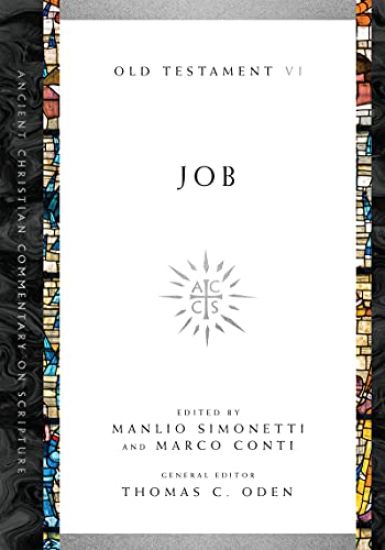
Job

Job

Manlio Simonetti; Marco Conti; Thomas C. Oden

IVP Academic
2019
nidottu
The book of Job presents its readers with a profound drama concerning innocent suffering. Such honest, forthright wrestling with the problem of evil and the silence of God has intrigued a wide gamut of readers both religious and nonreligious. Surprisingly, the earliest church fathers showed little interest in the book of Job. Not until Origen in the early third century is there much evidence of any systematic treatment of the book, and most of Origen's treatment is known to us only from the catenae. More intense interest came at the end of the fourth century and the beginning of the fifth. The excerpts in this Ancient Christian Commentary on Scripture volume focus on systematic treatment. Among Greek texts are those from Origen, Didymus the Blind, Julian the Arian, John Chrysostom, Hesychius of Jerusalem, and Olympiodorus. Among Latin sources we find Julian of Eclanum, Philip the Priest, and Gregory the Great. Among Syriac sources we find Ephrem the Syrian and Isho'dad of Merv, some of whose work is made available here for the first time in English. In store for readers of this volume is a great feast of wisdom from the ancient resources of the church with fresh relevance for today.
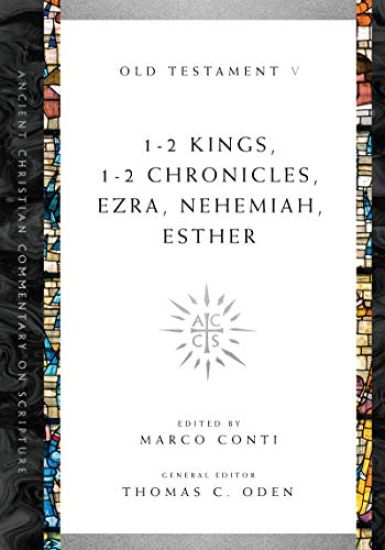
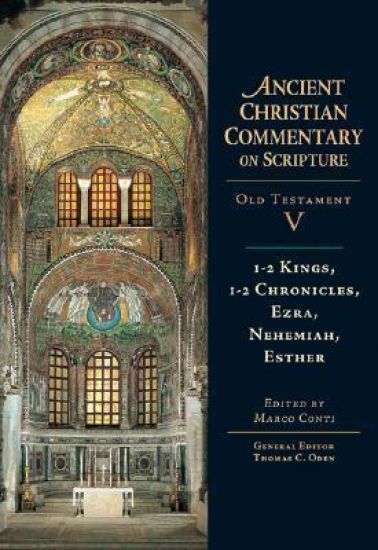
1–2 Kings, 1–2 Chronicles, Ezra, Nehemiah, Esther

1–2 Kings, 1–2 Chronicles, Ezra, Nehemiah, Esther

Marco Conti; Thomas C. Oden

IVP Academic
2019
nidottu
The church fathers, as they did in earlier books dealing with Israel's history from the time of Joshua to the united monarchy, found ample material for typological and moral interpretation in 1-2 Kings, 1-2 Chronicles, Ezra, Nehemiah and Esther. It will be immediately clear to readers of this volume that they gave much more attention to 1-2 Kings than to others; whether this was due to a certain repetitiveness in the story line or other reasons is unclear. But the narratives of wise King Solomon, the construction of the temple, the prophets Elijah and Elisha, and the fates of various faithful and unfaithful kings and other powerful people were well suited to their purposes. Among Greek commentators in this Ancient Christian Commentary on Scripture volume, readers will find Justin Martyr, Clement of Alexandria, Origen, Methodius, Eusebius of Caesarea, Athanasius, Cyril of Jerusalem, Basil the Great, Gregory of Nazianzus, John Chrysostom, Cyril of Alexandria, Theodoret of Cyr, Procopius of Gaza and John the Monk. Among Latin commentators are Tertullian, Cyprian, Novatian, Lactantius, Ambrose, Jerome, Prudentius, Augustine, Paulinus of Nola, John Cassian, Peter Chrysologus, Maximus of Turin, Salvian the Presbyter, Fulgentius of Ruspe, Caesarius of Arles, Gregory the Great, Bede and Rabanus Maurus. Syriac commentators include Aphrahat, Ephrem, Sahdona, Isaac of Nineveh and Isho'dad of Merv. Together they set before readers a table of delights and theological insights, some of which are here available to English readers for the first time.
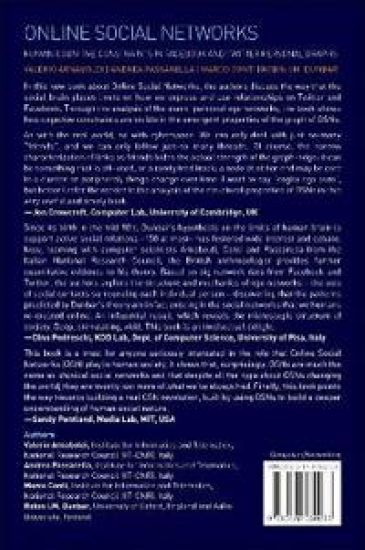
Online Social Networks

Online Social Networks

Valerio Arnaboldi; Andrea Passarella; Marco Conti; Robin I.M. Dunbar

Elsevier Science Publishing Co Inc
2015
nidottu
Online Social Networks: Human Cognitive Constraints in Facebook and Twitter provides new insights into the structural properties of personal online social networks and the mechanisms underpinning human online social behavior. As the availability of digital communication data generated by social media is revolutionizing the field of social networks analysis, the text discusses the use of large- scale datasets to study the structural properties of online ego networks, to compare them with the properties of general human social networks, and to highlight additional properties. Users will find the data collected and conclusions drawn useful during design or research service initiatives that involve online and mobile social network environments.
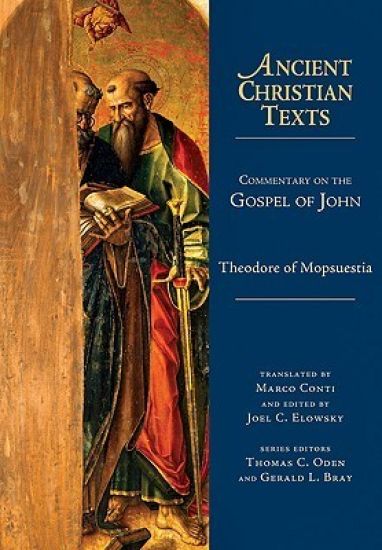
Commentary on the Gospel of John

Commentary on the Gospel of John

Theodore of Mopsuestia; Marco Conti; Joel C. Elowsky; Thomas C. Oden; Gerald L. Bray

Inter-Varsity Press,US
2010
sidottu
Theodore of Mopsuestia, born in Antioch (c. 350) and a disciple of Diodore of Tarsus, serves as one of the most important exemplars of Antiochene exegesis of his generation. Committed to literal, linguistic, grammatical and historical interpretation, he eschewed allegorical explanations that could not be supported from the text, though he was not averse to typological interpretations of Old Testament texts that were supported by the New. Regrettably, Theodore was dragged posthumously into the Nestorian controversy, and his works were condemned by the Three Chapters and the Council of Constantinople in 553. As a result many of his theological and exegetical works were lost or destroyed. The original Greek version of his Commentary on the Gospel of John remains only in fragments. This new English translation is based on an early complete Syriac translation dated A.D. 460-465, within forty years of Theodore?s death in 428. While charges of heterodoxy against Theodore may not be entirely justified, there remains an apparent dualism in his Christology that should be critically viewed in light of the later Chalcedonian formula. With this caution, there still remains much that is valuable for contemporary readers, whether preachers, students or lay people interested in the early church's understanding of the Gospel of John. Here for the first time is a complete English translation of this valuable work, ably translated by Marco Conti and edited by Joel C. Elowsky. Ancient Christian Texts is a series of new translations, most of which are here presented in English for the first time. The series provides contemporary readers with the resources they need to study for themselves the key writings of the early church. The texts represented in the series are full-length commentaries or sermon series based on biblical books or extended scriptural passages. Ancient Christian Texts are new English translations of full-length commentaries or sermon series from ancient Christian authors that allow you to study key writings of the early church fathers in a fresh way.
1–2 Kings, 1–2 Chronicles, Ezra, Nehemiah, Esther

1–2 Kings, 1–2 Chronicles, Ezra, Nehemiah, Esther

Marco Conti; Thomas C. Oden

Inter-Varsity Press,US
2008
sidottu
The church fathers, as they did in earlier books dealing with Israel's history from the time of Joshua to the united monarchy, found ample material for typological and moral interpretation in 1-2 Kings, 1-2 Chronicles, Ezra, Nehemiah and Esther. It will be immediately clear to readers of this volume that they gave much more attention to 1-2 Kings than to others; whether this was due to a certain repetitiveness in the story line or other reasons is unclear. But the narratives of wise King Solomon, the construction of the temple, the prophets Elijah and Elisha, and the fates of various faithful and unfaithful kings and other powerful people were well suited to their purposes. Among Greek commentators in this Ancient Christian Commentary on Scripture volume, readers will find Justin Martyr, Clement of Alexandria, Origen, Methodius, Eusebius of Caesarea, Athanasius, Cyril of Jerusalem, Basil the Great, Gregory of Nazianzus, John Chrysostom, Cyril of Alexandria, Theodoret of Cyr, Procopius of Gaza and John the Monk. Among Latin commentators are Tertullian, Cyprian, Novatian, Lactantius, Ambrose, Jerome, Prudentius, Augustine, Paulinus of Nola, John Cassian, Peter Chrysologus, Maximus of Turin, Salvian the Presbyter, Fulgentius of Ruspe, Caesarius of Arles, Gregory the Great, Bede and Rabanus Maurus. Syriac commentators include Aphrahat, Ephrem, Sahdona, Isaac of Nineveh and Isho'dad of Merv. Together they set before readers a table of delights and theological insights, some of which are here available to English readers for the first time.