Kirjailija
Marcus Rediker
Kirjat ja teokset yhdessä paikassa: 26 kirjaa, julkaisuja vuosilta 1989-2026, suosituimpien joukossa Under the Banner of King Death. Vertaile teosten hintoja ja tarkista saatavuus suomalaisista kirjakaupoista.
26 kirjaa
Kirjojen julkaisuhaarukka 1989-2026.
Under the Banner of King Death is a tale of mutiny, bloody battle, and social revolution, bringing to life an itinerant community of outsiders behind today's legends. This graphic novel breaks new ground in our understanding of piracy and pirate culture, giving us real reasons to love the rebellious and stouthearted marauders of the seas.At the pinnacle of the Golden Age of Atlantic piracy, three unlikely companions are sold into servitude on a merchant ship and thrust into a voyage of rebellion. They are John Gwin, an African American fugitive from bondage in South Carolina; Ruben Dekker, a common seaman from Amsterdam; and Mark (a.k.a. Mary) Reed, an American woman who dresses as a man.When the crew turn to mutiny, they and the freed slaves establish democracy aboard The Night Rambler. This new dispensation provides radical social benefits, all based on the documented practices of real pirate ships of the era: democratic decision-making, a social security net, health and disability insurance, and an equal distribution of spoils taken from prize ships. But before long the London elites enlist a war-hungry captain to take down The Night Rambler in a war that pitches high society against high-seas freebooters.Adapted from the scholarship and research of celebrated historian Marcus Rediker, Under the Banner of King Death is an inspiring story of the oppressed steering a course against adversity and injustice.

The Black Schooner: Rebellion on the Amistad, a Graphic Novel
David Lester; Marcus Rediker
BEACON PRESS
2026
nidottu
A stunning graphic history of how enslaved Africans on board the Amistad rebelled and captured the slave ship in 1839, challenging a whitewashed version of history and putting the Africans back at the center of their own freedom story From the trio of Rediker, Lester, and Buhle comes another graphic "history from below" about the Amistad rebellion of 1839 when 53 enslaved Africans on the slave ship Amistad slipped out of their restraints and overpowered their enslavers and ship's crew. Sold into slavery in their homeland of Sierra Leone and later bound for Puerto Pr ncipe, Cuba, from Havana, these Africans, led by the charismatic warrior Cinqu , forced the ship's remaining crew to sail homeward. Divided into 3 parts, The Black Schooner begins with the intense night of the uprising and takes readers on a reconstructed journey: from sailing on the open ocean to a New Haven, Connecticut, jail, where the captured Africans awaited trial for mutiny and murder; to the Supreme courtroom that found that the rebels had been illegally enslaved and would now be free to return to their native land. Through it all, artist David Lester chronicles their story using striking imagery, showing how they achieved an unexpected and powerful international victory for the abolitionist movement and forced some of the most powerful people in the world to confront the issue of human bondage. Based on Rediker's book The Amistad Rebellion: An Atlantic Odyssey of Slavery and Freedom, The Black Schooner challenges a whitewashed history and instead, puts the Africans back at the center of their own freedom story--where they belong.
Freedom Ship is a gripping history of stowaway slaves and the vessels that carried them to liberty. Up to 100,000 fugitives successfully fled the horrors of bondage in the American South. Many were ushered clandestinely northwards from safe house to safe house: know as the Underground Railway. Thousands of others escaped not by land, but by sea. Their dramatic tales of whispered conspiracy and billowing sails make Freedom Ship essential and enthralling reading.Through the intricate riverways of the Carolinas to the banks of the Chesapeake Bay, Freedom Ship traces the freedom seekers who turned their sights to the sea. Sailaways regularly arrived in Britain on cotton ships from New York or Southern ports. For example, Moses Roper, one of the most determined runaways in American history, traveled 350 miles through slave country before eventually taking a ship named the Napoleon to Liverpool. Both legendary abolitionists Frederick Douglass and Harriet Tubman used the waterfront as a path to freedom.Marcus Rediker puts his command of archival research on full display in this luminous portrait of the Atlantic seaboard as a place of conspiracy, mutiny and liberation.PRAISE FOR THE SLAVE SHIP'I'm rereading The Slave Ship by Marcus Rediker, because it's an absolutely fantastic book'David Olusoga, Guardian 'A truly magnificent book'Sunday Telegraph 'A shockingly vivid work . . . from a gifted chronicler of history's lower decks, at home in the unruly Atlantic world of pirates, slavers, sailors, runaways and rebels' Boyd Tonkin, Independent
A definitive, sweeping account of the Underground Railroad's long-overlooked maritime origins, from a pre-eminent scholar of Atlantic history and the award-winning author of The Slave Ship As many as 100,000 enslaved people fled successfully from the horrors of bondage in the antebellum South, finding safe harbor along a network of passageways across North America now known as the Underground Railroad. Yet imagery of fugitives ushered clandestinely from safe house to safe house fails to capture the full breadth of these harrowing journeys: many escapes took place not by land but by sea. Deeply researched and grippingly told, Freedom Ship offers a groundbreaking new look into the secret world of stowaways and the vessels that carried them to freedom across the North and into Canada. Sprawling through the intricate riverways of the Carolinas to the banks of the Chesapeake Bay to Boston's harbors, these tales illuminate the little-known stories of freedom seekers who turned their sights to the sea--among them the legendary abolitionist Frederick Douglass and Harriet Tubman, one of the Underground Railroad's most famous architects. Marcus Rediker, one of the leading scholars of maritime history, puts his command of archival research on full display in this luminous portrait of the Atlantic waterfront as a place of conspiracy, mutiny, and liberation. Freedom Ship is essential reading for anyone looking to understand the complete story of one of North America's most significant historical moments.
A must-have hardcover edition of the watershed book on 18th-century pirates and the amazingly democratic and egalitarian communities they created Part of the Beacon Classics series Villains of All Nations explores the "Golden Age" of Atlantic piracy (1716-1726) and the infamous generation whose images underlie our modern, romanticized view of pirates. Rediker introduces us to the dreaded black flag, the Jolly Roger; swashbuckling figures such as Edward Teach, better known as Blackbeard; and the unnamed, unlimbed pirate who was likely Robert Louis Stevenson's model for Long John Silver in Treasure Island. This history shows from the bottom up how sailors emerged from deadly working conditions on merchant and naval ships, turned pirate, and created a starkly different reality aboard their own ships, electing their officers, dividing their booty equitably, and maintaining a multinational social order. The real lives of this motley crew --which included cross-dressing women, people of color, and the "outcasts of all nations"--are far more compelling than contemporary myth.
Based on the little known real life "Slave Insurrection" of 1741, this book imagines outlaw fugitive John Gwin and an eclectic crew of renegades as they attempt to disrupt and overthrow the colonial social order Rebel fugitive John Gwin was previously introduced in Under the Banner of King Death and this graphic novel continues his adventures. Revolution by Fire is a hypothetical look at the inner workings of the so called "New York Conspiracy" or "Slave Rebellion" of 1741, following the figures who were considered the real-life masterminds of the plot. Featuring an eclectic crew of African-American, Irish, and mixed race Hispanic sailors, soldiers, and renegades, Gwin and his band are determined to capture New York City in their own names and fight the higher class "wigs and ruffles" wearing white people. Unfortunately for the conspirators, suspicions about an uprising were already in the minds of the Governor and his fellow elites, and the events that followed change the course of everyone's lives forever. Based on the chapter titled "Outcasts of the Nations of the Earth" in Rediker's and Peter Linebaugh's The Many-Headed Hydra: Sailors, Slaves, Commoners, and the Hidden History of the Revolutionary Atlantic, the book provides a fly-on-the-wall view of a historical event reimagined, highlighting cooperation among races and classes that transcends the social order of its time--and inspire us today.
In your hearts you know the truth: I was here among you three hundred years ago . . . Had you chosen differently then - before slavery and greed breathed their venom so deeply into our souls - we would be living in another world now. It is not too late to purge these poisons.Benjamin Lay - shepherd, sailor, prophet, and the British Empire's first revolutionary abolitionist - returns from the grave almost three hundred years after his death, as feisty and unpredictable as ever.A four-feet-tall 'Little David' confronts the 'Goliath' of slavery once again as he pleads to be readmitted into the Quaker community that has disowned him and who still believe him to be dangerous.Now, 'trembling at the edge of playing God himself', how far will Benjamin go as he stares down his accusers?The Return of Benjamin Lay sweeps across the centuries in a bold exploration of an utterly impossible man. The play opened at the Finborough Theatre, London, in June 2023.
The Fearless Benjamin Lay chronicles the transatlantic life and times of a singular and astonishing man-a Quaker dwarf who became one of the first ever to demand the total, unconditional emancipation of all enslaved Africans around the world. He performed public guerrilla theatre to shame slave masters, insisting that human bondage violated the fundamental principles of Christianity. He wrote a fiery, controversial book against bondage that Benjamin Franklin published in 1738. He lived in a cave, made his own clothes, refused to consume anything produced by slave labour, championed animal rights, and embraced vegetarianism. He acted on his ideals to create a new, practical, revolutionary way of life.
Featuring an African American fugitive from bondage, an undercover woman, and 'outcasts of all nations, ' an arresting graphic exploration of the resistance and radical vision of18th century pirates A tale of mutiny, bloody battle, and social revolution, Under the Banner of King Death novelizes for the first time the real pirates, an itinerant community of outsiders, behind our legends. This graphic novel breaks new ground in our understanding of piracy and pirate culture, giving us more reasons to love the rebellious and stouthearted marauders of the high seas. Set at the pinnacle of the "Golden Age" of Atlantic piracy, this novel follows three unlikely companions, who are sold into servitude on a merchant ship and unwittingly thrust into a voyage of rebellion. They are John Gwin, an African American fugitive from bondage in South Carolina-- Ruben Dekker, a common seaman from Amsterdam-- And Mark/Mary Reed, an American woman who defies stereotypes by dressing as a man. Mutiny ensues against the tyrannical Captain Skinner, who is thrown overboard to make way for democracy aboard The Night Rambler. The crew's new order provides radical social benefits, all based on real, documented practices of contemporary pirate ships: democratic decision-making, a social security net, health and disability insurance, and equal distribution of spoils taken from prize ships. It's not long before the London elites enlist a war-hungry captain to take down The Night Rambler and start a war of high society versus high-seas pirates. Adapted from the scholarship and research of historian Marcus Rediker, Under the Banner of King Death will inspire readers with its tale of those on the bottom fighting back and achieving, against all odds, a democratic and egalitarian social order, if only for a short time.
The revolutionary life of an 18th-century dwarf activist who was among the first to fight against slavery and animal cruelty. Prophet Against Slavery is an action-packed chronicle of the remarkable and radical Benjamin Lay, based on the award-winning biography by Marcus Rediker that sparked the Quaker community to re-embrace Lay after 280 years of disownment. Graphic novelist David Lester brings the full scope of Lay's activism and ideas to life. Born in 1682 to a humble Quaker family in Essex, England, Lay was a forceful and prescient visionary. Understanding the fundamental evil that slavery represented, he would unflinchingly use guerrilla theatre tactics and direct action to shame slave owners and traders in his community. The prejudice that Lay suffered as a dwarf and a hunchback, as well as his devout faith, informed his passion for human and animal liberation. Exhibiting stamina, fortitude, and integrity in the face of the cruelties practiced against what he called his "fellow creatures," he was often a lonely voice that spoke truth to power. Lester's beautiful imagery and storytelling, accompanied by afterwords from Rediker and Paul Buhle, capture the radicalism, the humor, and the humanity of this truly modern figure. A testament to the impact each of us can make, Prophet Against Slavery brings Lay's prophetic vision to a new generation of young activists who today echo his call of 300 years ago: "No justice, no peace "
The Fearless Benjamin Lay: The Quaker Dwarf Who Became the First Revolutionary Abolitionist, with a New Preface and Afterword
Marcus Rediker
BEACON PRESS
2018
nidottu
The little-known story of an eighteenth-century Quaker dwarf who fiercely attacked slavery and imagined a new, more humane way of life In The Fearless Benjamin Lay, renowned historian Marcus Rediker chronicles the transatlantic life and times of a singular man--a Quaker dwarf who demanded the total, unconditional emancipation of all enslaved Africans around the world. Mocked and scorned by his contemporaries, Lay was unflinching in his opposition to slavery, often performing colorful guerrilla theater to shame slave masters, insisting that human bondage violated the fundamental principles of Christianity. He drew on his ideals to create a revolutionary way of life, one that embodied the proclamation "no justice, no peace." Lay was born in 1682 in Essex, England. His philosophies, employments, and places of residence--spanning England, Barbados, Philadelphia, and the open seas--were markedly diverse over the course of his life. He worked as a shepherd, glove maker, sailor, and bookseller. His worldview was an astonishing combination of Quakerism, vegetarianism, animal rights, opposition to the death penalty, and abolitionism. While in Abington, Philadelphia, Lay lived in a cave-like dwelling surrounded by a library of two hundred books, and it was in this unconventional abode where he penned a fiery and controversial book against bondage, which Benjamin Franklin published in 1738. Always in motion and ever confrontational, Lay maintained throughout his life a steadfast opposition to slavery and a fierce determination to make his fellow Quakers denounce it, which they finally began to do toward the end of his life. With passion and historical rigor, Rediker situates Lay as a man who fervently embodied the ideals of democracy and equality as he practiced a unique concoction of radicalism nearly three hundred years ago. Rediker resurrects this forceful and prescient visionary, who speaks to us across the ages and whose innovative approach to activism is a gift, transforming how we consider the past and how we might imagine the future.
The Fearless Benjamin Lay: The Quaker Dwarf Who Became the First Revolutionary Abolitionist
Marcus Rediker
BEACON PRESS
2017
sidottu
The little-known story of an eighteenth-century Quaker dwarf who fiercely attacked slavery and imagined a new, more humane way of life The Fearless Benjamin Lay chronicles the transatlantic life and times of a singular and astonishing man--a Quaker dwarf who became one of the first ever to demand the total, unconditional emancipation of all enslaved Africans around the world. He performed public guerrilla theater to shame slave masters, insisting that human bondage violated the fundamental principles of Christianity. He wrote a fiery, controversial book against bondage that Benjamin Franklin published in 1738. He lived in a cave, made his own clothes, refused to consume anything produced by slave labor, championed animal rights, and embraced vegetarianism. He acted on his ideals to create a new, practical, revolutionary way of life.
Legacy of the Lash is a compelling social and cultural history of the Brazilian navy in the decades preceding and immediately following the 1888 abolition of slavery in Brazil. Focusing on non-elite, mostly black enlisted men and the oppressive labor regimes under which they struggled, the book is an examination of the four-day Revolta da Chibata (Revolt of the Lash) of November 1910, during which nearly half of Rio de Janeiro's enlisted men rebelled against the use of corporal punishment in the navy. These men seized four new, powerful warships, turned their guns on Rio de Janeiro, Brazil's capital city, and held its population hostage until the government abolished the use of the lash as a means of military discipline. Although the revolt succeeded, the men involved paid dearly for their actions. This event provides a clear lens through which to examine racial identity, violence, masculinity, citizenship, modernity, and the construction of the Brazilian nation.
Outlaws of the Atlantic turns maritime history upside down, exploring the dramatic world of seafaring adventure, not from the perspective of admirals, merchants and other builders of empire, but rather from the point-of-view of common people whose labors made that world possible-sailors, slaves, indentured servants, pirates and other outlaws, whose formative experiences at sea are brought together for the first time.Against long-dominant national histories, this book shows that important historical processes transpired on the vast, nationless commons called the sea: the rise of capitalism, the formation of race and class, and the creation, from below, of oppositional cultures that promised more just and democratic ways of life.
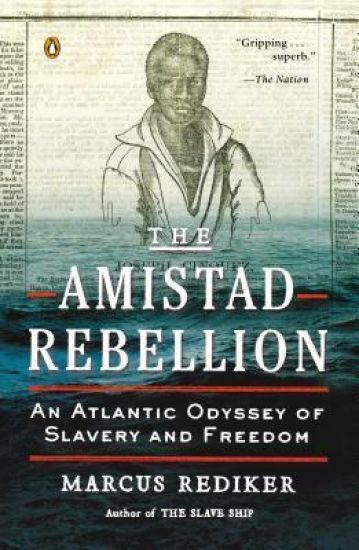
The Amistad Rebellion: An Atlantic Odyssey of Slavery and Freedom
Marcus Rediker
PENGUIN BOOKS
2013
nidottu
"Vividly drawn . . . this stunning book honors the achievement of the captive Africans who fought for--and won--their freedom."--The Philadelphia Tribune A unique account of the most successful slave rebellion in American history, now updated with a new epilogue--from the award-winning author of The Slave Ship In this powerful and highly original account, Marcus Rediker reclaims the Amistad rebellion for its true proponents: the enslaved Africans who risked death to stake a claim for freedom. Using newly discovered evidence and featuring vividly drawn portraits of the rebels, their captors, and their abolitionist allies, Rediker reframes the story to show how a small group of courageous men fought and won an epic battle against Spanish and American slaveholders and their governments. The successful Amistad rebellion changed the very nature of the struggle against slavery. As a handful of self-emancipated Africans steered their own course for freedom, they opened a way for millions to follow. This edition includes a new epilogue about the author's trip to Sierra Leona to search for Lomboko, the slave-trading factory where the Amistad Africans were incarcerated, and other relics and connections to the Amistad rebellion, especially living local memory of the uprising and the people who made it.
On 28 June 1839, the Spanish slave schooner La Amistad set sail from Havana to make a routine delivery of human cargo. After four days at sea, on a moonless night, the captive Africans that comprised that cargo escaped from the hold, killed the captain, and seized control of the ship. They attempted to sail to a safe port, but were captured by the US navy and thrown into a Connecticut jail. Their legal battle for freedom eventually made its way to the Supreme Court, where former president John Quincy Adams took up their cause. In a landmark ruling, they were freed and eventually returned to Africa. The rebellion became one of the best-known events in the history of American slavery, celebrated as a triumph of the US legal system in books and films, most famously Steven Spielberg's Amistad. These narratives reflect the elite perspective of the judges, politicians, and abolitionists involved. In this powerful and highly original account, Marcus Rediker reclaims the rebellion for its instigators: the African rebels who risked death to stake a claim for freedom.Using newly discovered evidence, Rediker reaches back to Africa to find the rebels' roots, narrates their cataclysmic transatlantic journey, and unfolds a prison story of great drama and emotive power. Featuring vividly drawn portraits of the Africans, their captors, and their abolitionist allies, The Amistad Rebellion shows how the rebels captured the popular imagination and helped to inspire and build a movement that was part of a grand global struggle for emancipation. The actions of that distant July night and inthe days and months that followed were pivotal events in American and Atlantic history, but not for the reasons we have always thought.The successful Amistad rebellion changed the very nature of the struggle against slavery. As a handful of Africans steered a course to freedom, they opened a way for millions to follow. This stunning book honours their achievement.
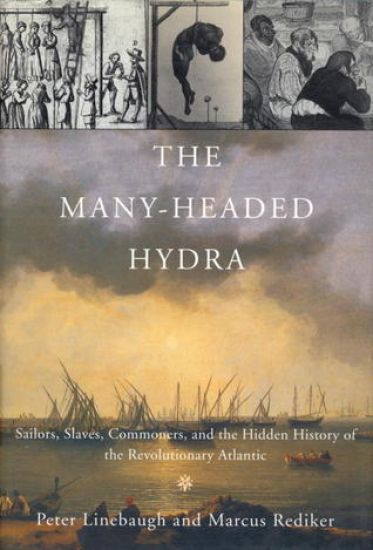
The Many-Headed Hydra: Sailors, Slaves, Commoners, and the Hidden History of the Revolutionary Atlantic
Peter Linebaugh; Marcus Rediker
BEACON PRESS
2013
nidottu
Winner of the International Labor History Award Long before the American Revolution and the Declaration of the Rights of Man, a motley crew of sailors, slaves, pirates, laborers, market women, and indentured servants had ideas about freedom and equality that would forever change history. The Many Headed-Hydra recounts their stories in a sweeping history of the role of the dispossessed in the making of the modern world. When an unprecedented expansion of trade and colonization in the early seventeenth century launched the first global economy, a vast, diverse, and landless workforce was born. These workers crossed national, ethnic, and racial boundaries, as they circulated around the Atlantic world on trade ships and slave ships, from England to Virginia, from Africa to Barbados, and from the Americas back to Europe. Marshaling an impressive range of original research from archives in the Americas and Europe, the authors show how ordinary working people led dozens of rebellions on both sides of the North Atlantic. The rulers of the day called the multiethnic rebels a 'hydra' and brutally suppressed their risings, yet some of their ideas fueled the age of revolution. Others, hidden from history and recovered here, have much to teach us about our common humanity.
Long before the American Revolution and the Declaration of the Rights of Man, a motely crew of sailors, slaves, pirates, labourers, market women, and indentured servants had ideas about freedom and equality that would for ever change history. The Many-Headed Hydra recounts their stories in a sweeping history of the role of the dispossessed in the making of the modern world.