
Kirjailija
Marcus Tullius Cicero
Kirjat ja teokset yhdessä paikassa: 1 116 kirjaa, julkaisuja vuosilta 1804-2026, suosituimpien joukossa Keskusteluja Tusculumissa. Vertaile teosten hintoja ja tarkista saatavuus suomalaisista kirjakaupoista.
1 116 kirjaa
Kirjojen julkaisuhaarukka 1804-2026.
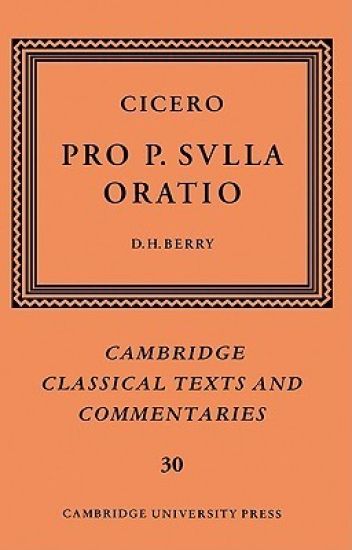
In 62 BC, the year after his suppression of Catiline, Cicero delivered Pro Sulla, a successful defence of P. Cornelius Sulla, the nephew of the dictator, on a charge of participation in the Catilinarian conspiracy. This edition, which contains a new text together with introduction, commentary and appendices, is the first full-scale scholarly treatment of the speech. The text takes account of Gulielmius’ reports of the missing portion of the Erfurtensis manuscript, recovered by Dr Berry and published as a preliminary to this edition in 1989; a complete collation is provided of this and the other principal manuscripts. The introduction includes a reassessment of Sulla’s guilt and Cicero’s undertaking of the case, and also considers issues such as the prose rhythm of the speech and its publication. The commentary discusses history, text and syntax as well as rhetoric and style.
On the Commonwealth 1929
Marcus Tullius Cicero; George Holland (TRN) Sabine
Kessinger Pub
2004
pokkari

This edition is the first since J. D. Denniston’s of 1926 to present the Latin text of and a commentary on the First and Second Philippics, two of the most polished orations in the Ciceronian corpus. These speeches, which were composed less than six months after the murder of Julius Caesar in March 44 BC, offer a scathing account of the early years and the rise to power of Mark Antony, Caesar's chief lieutenant. The period covered by these speeches (roughly 63–44 BC) is an important one because the Roman state was in transition from Republic to Empire. The Second Philippic not only gives us Cicero’s assessment of his own political career and place in Roman history from a perspective late in life, but it also provides a vivid eyewitness account of how the dominance first of Julius Caesar and later of Mark Antony was shifting the locus of power from the Senate and Roman aristocracy to a single dynast.
Book 1 of De Natura Deorum exhibits in a nutshell Cicero's philosophical method, with the prior part stating the case for Epicurean theology, the latter (rather longer) part refuting it. Thus the reader observes Cicero at work in both constructive and skeptical modes as well as his art of characterizing speakers. Prefaced to the Book is Cicero's most elaborate justification of his philosophical writing. The Book thus makes an ideal starting point for the study of Cicero's philosophica or indeed of any philosophical writing in Latin, since it delineates the problems such a project raised in the minds of Roman readers and shows how Cicero thought they could be met. There is also a systematic and detailed doxography of ancient views about the deity, an important document in itself, presented from an Epicurean perspective. The volume's Introduction situates this text within Cicero's intellectual development and ancient reflection about the gods.
The Bibliotheca Teubneriana, established in 1849, has evolved into the world's most venerable and extensive series of editions of Greek and Latin literature, ranging from classical to Neo-Latin texts. Some 4-5 new editions are published every year. A team of renowned scholars in the field of Classical Philology acts as advisory board: Gian Biagio Conte (Scuola Normale Superiore di Pisa) Marcus Deufert (Universität Leipzig) James Diggle (University of Cambridge) Donald J. Mastronarde (University of California, Berkeley) Franco Montanari (Università di Genova) Heinz-Günther Nesselrath (Georg-August-Universität Göttingen) Dirk Obbink (University of Oxford) Oliver Primavesi (Ludwig-Maximilians Universität München) Michael D. Reeve (University of Cambridge) Richard J. Tarrant (Harvard University) Formerly out-of-print editions are offered as print-on-demand reprints. Furthermore, all new books in the Bibliotheca Teubneriana series are published as eBooks. The older volumes of the series are being successively digitized and made available as eBooks. If you are interested in ordering an out-of-print edition, which hasn't been yet made available as print-on-demand reprint, please contact us: [email protected] All editions of Latin texts published in the Bibliotheca Teubneriana are collected in the online database BTL Online.
In seiner Schrift "Orator" entwickelt Cicero das Bild eines allseitig gebildeten Redners, der - entsprechend den wechselnden Anlassen - alle Stilgattungen der Rede beherrscht. Somit wurde der "Orator " uber Jahrhunderte ein Lehrwerk der Rhetorik allgemein."

Friendship
Marcus Tullius Cicero; Francis Bacon; Ralph Waldo Emerson
Fredonia Books (NL)
2002
pokkari
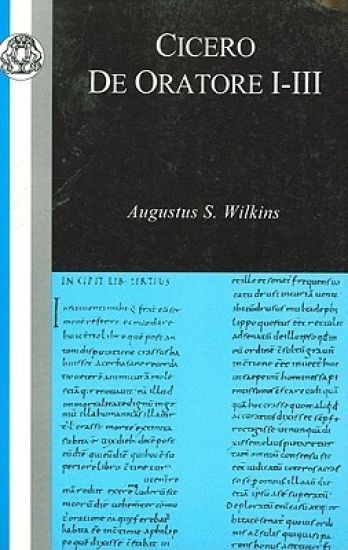
Of all the philosophical and rhetorical treatises of Cicero, his three books "On the Orator" (de Oratore) represent perhaps the most polished and appealing. Here is Rome's consummate orator and composer of forensic and political speeches, at the height of his powers, giving the considered results of his personal experience - not the dry theorising and bickering of different schools of declamation - in a way which continually keeps in view the practical needs of one who wishes to play the part of a true Roman citizen in the contests of the popular assemblies and the law-courts.
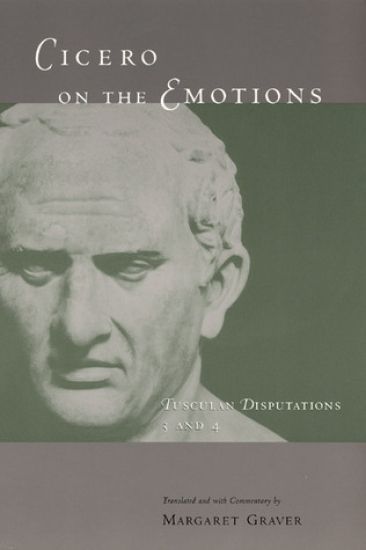
The third and fourth books of Cicero's "Tusculan Disputations" deal with the nature and management of human emotion: first grief, then the emotions in general. Cicero presents the insights of Greek philosophers on the subject, reporting the views of Epicurians and Peripatetics and giving a detailed account of the Stoic position, which he himself favours for it's close reasoning and moral earnestness. He describes the Stoic's analysis of grief, their classification of emotions by genus and species, their lists of oddly named character flaws, and by the philosophical debate that develops over the utility of anger in politics and war.
The third and fourth books of Cicero's "Tusculan Disputations" deal with the nature and management of human emotion: first grief, then the emotions in general. Cicero presents the insights of Greek philosophers on the subject, reporting the views of Epicurians and Peripatetics and giving a detailed account of the Stoic position, which he himself favours for it's close reasoning and moral earnestness. He describes the Stoic's analysis of grief, their classification of emotions by genus and species, their lists of oddly named character flaws, and by the philosophical debate that develops over the utility of anger in politics and war.
This 2001 translation makes one of the most important texts in ancient philosophy available to modern readers. Cicero is increasingly being appreciated as an intelligent and well-educated amateur philosopher, and in this work he presents the major ethical theories of his time in a way designed to get the reader philosophically engaged in the important debates. Raphael Woolf's translation does justice to Cicero's argumentative vigour as well as to the philosophical ideas involved, while Julia Annas's introduction and notes provide a clear and accessible explanation of the philosophical context of the work. This edition will appeal to all readers interested in this central text in ancient philosophy and the history of ethics.
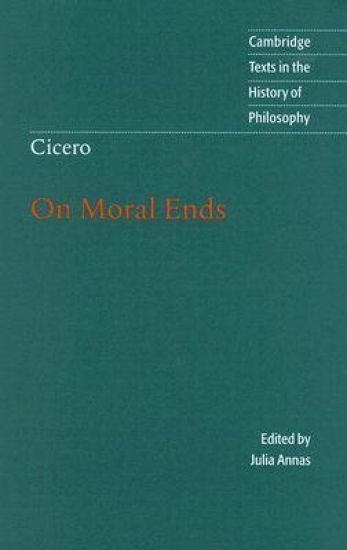
This 2001 translation makes one of the most important texts in ancient philosophy available to modern readers. Cicero is increasingly being appreciated as an intelligent and well-educated amateur philosopher, and in this work he presents the major ethical theories of his time in a way designed to get the reader philosophically engaged in the important debates. Raphael Woolf's translation does justice to Cicero's argumentative vigour as well as to the philosophical ideas involved, while Julia Annas's introduction and notes provide a clear and accessible explanation of the philosophical context of the work. This edition will appeal to all readers interested in this central text in ancient philosophy and the history of ethics.
Cicero's Three Books of Offices, or Moral Duties (1871)
Marcus Tullius Cicero
Kessinger Publishing
2001
nidottu
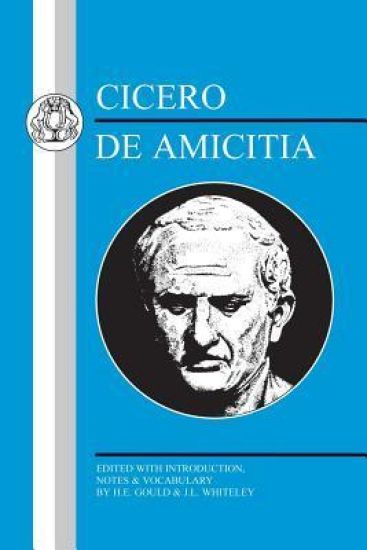
The De Amicitia is one of Cicero's most carefully crafted philosophical treatises. It offers an excellent introduction both to the eleoquence of his expository prose style and to the ethical values of Roman society during the first century BC. Moreover, many of the issues raised by its content are not entirely divorced from the realities that present-day students may encounter in regard to friendship.This edition contains a full vocabulary, a biographical index, and notes which give assistance ewith translation, as well as informative and detailed coverage of language and content.
Scripta Quae Manserunt Omnia, fasc. 28
Marcus Tullius Cicero
The University of Michigan Press
1998
sidottu
The Bibliotheca Teubneriana, established in 1849, has evolved into the world's most venerable and extensive series of editions of Greek and Latin literature, ranging from classical to Neo-Latin texts. Some 4-5 new editions are published every year. A team of renowned scholars in the field of Classical Philology acts as advisory board: Gian Biagio Conte (Scuola Normale Superiore di Pisa)Marcus Deufert (Universitat Leipzig)James Diggle (University of Cambridge)Donald J. Mastronarde (University of California, Berkeley)Franco Montanari (Universita di Genova)Heinz-Gunther Nesselrath (Georg-August-Universitat Goettingen)Dirk Obbink (University of Oxford)Oliver Primavesi (Ludwig-Maximilians Universitat Munchen)Michael D. Reeve (University of Cambridge)Richard J. Tarrant (Harvard University) Formerly out-of-print editions are offered as print-on-demand reprints. Furthermore, all new books in the Bibliotheca Teubneriana series are published as eBooks. The older volumes of the series are being successively digitized and made available as eBooks.If you are interested in ordering an out-of-print edition, which hasn't been yet made available as print-on-demand reprint, please contact us: [email protected] editions of Latin texts published in the Bibliotheca Teubneriana are collected in the online database BTL Online.
Scripta Quae Manserunt Omnia, fasc. 7
Marcus Tullius Cicero
The University of Michigan Press
1998
nidottu
The Bibliotheca Teubneriana, established in 1849, has evolved into the world's most venerable and extensive series of editions of Greek and Latin literature, ranging from classical to Neo-Latin texts. Some 4-5 new editions are published every year. A team of renowned scholars in the field of Classical Philology acts as advisory board: Gian Biagio Conte (Scuola Normale Superiore di Pisa)Marcus Deufert (Universitat Leipzig)James Diggle (University of Cambridge)Donald J. Mastronarde (University of California, Berkeley)Franco Montanari (Universita di Genova)Heinz-Gunther Nesselrath (Georg-August-Universitat Goettingen)Dirk Obbink (University of Oxford)Oliver Primavesi (Ludwig-Maximilians Universitat Munchen)Michael D. Reeve (University of Cambridge)Richard J. Tarrant (Harvard University) Formerly out-of-print editions are offered as print-on-demand reprints. Furthermore, all new books in the Bibliotheca Teubneriana series are published as eBooks. The older volumes of the series are being successively digitized and made available as eBooks.If you are interested in ordering an out-of-print edition, which hasn't been yet made available as print-on-demand reprint, please contact us: [email protected] editions of Latin texts published in the Bibliotheca Teubneriana are collected in the online database BTL Online.
Scripta Quae Manserunt Omnia, fasc. 39
Marcus Tullius Cicero
The University of Michigan Press
1998
nidottu
Die Bibliotheca Teubneriana, gegrundet 1849, ist die weltweit alteste, traditionsreichste und umfangreichste Editionsreihe griechischer und lateinischer Literatur von der Antike bis zur Neuzeit. Pro Jahr erscheinen 4-5 neue Editionen. Samtliche Ausgaben werden durch eine lateinische Praefatio erganzt.Die wissenschaftliche Betreuung der Reihe obliegt einem Team anerkannter Philologen: Gian Biagio Conte (Scuola Normale Superiore di Pisa)James Diggle (University of Cambridge)Donald J. Mastronarde (University of California, Berkeley)Franco Montanari (Universita di Genova)Heinz-Gunther Nesselrath (Georg-August-Universitat Goettingen)Dirk Obbink (University of Oxford)Oliver Primavesi (Ludwig-Maximilians Universitat Munchen)Michael D. Reeve (University of Cambridge)Richard J. Tarrant (Harvard University)Vergriffene Titel werden als Print-on-Demand-Nachdrucke wieder verfugbar gemacht. Zudem werden alle Neuerscheinungen der Bibliotheca Teubneriana parallel zur gedruckten Ausgabe auch als eBook angeboten. Die alteren Bande werden sukzessive ebenfalls als eBook bereitgestellt.Falls Sie einen vergriffenen Titel bestellen moechten, der noch nicht als Print-on-Demand angeboten wird, schreiben Sie uns an: [email protected] Samtliche in der Bibliotheca Teubneriana erschienenen Editionen lateinischer Texte sind in der Datenbank BTL Online elektronisch verfugbar.