Kirjojen hintavertailu. Mukana 12 152 606 kirjaa ja 12 kauppaa.

Kirjailija

Margaret Aston

Kirjat ja teokset yhdessä paikassa: 4 kirjaa, julkaisuja vuosilta 1984-2020, suosituimpien joukossa Lollards and Reformers. Vertaile teosten hintoja ja tarkista saatavuus suomalaisista kirjakaupoista.

4 kirjaa

Kirjojen julkaisuhaarukka 1984-2020.

Broken Idols of the English Reformation

Broken Idols of the English Reformation

Margaret Aston

Cambridge University Press
2020
pokkari
Why were so many religious images and objects broken and damaged in the course of the Reformation? Margaret Aston's magisterial new book charts the conflicting imperatives of destruction and rebuilding throughout the English Reformation from the desecration of images, rails and screens to bells, organs and stained glass windows. She explores the motivations of those who smashed images of the crucifixion in stained glass windows and who pulled down crosses and defaced symbols of the Trinity. She shows that destruction was part of a methodology of religious revolution designed to change people as well as places and to forge in the long term new generations of new believers. Beyond blanked walls and whited windows were beliefs and minds impregnated by new modes of religious learning. Idol-breaking with its emphasis on the treacheries of images fundamentally transformed not only Anglican ways of worship but also of seeing, hearing and remembering.
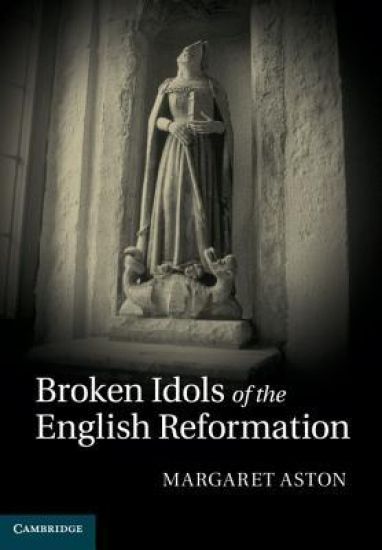
Broken Idols of the English Reformation

Broken Idols of the English Reformation

Margaret Aston

Cambridge University Press
2015
sidottu
Why were so many religious images and objects broken and damaged in the course of the Reformation? Margaret Aston's magisterial new book charts the conflicting imperatives of destruction and rebuilding throughout the English Reformation from the desecration of images, rails and screens to bells, organs and stained glass windows. She explores the motivations of those who smashed images of the crucifixion in stained glass windows and who pulled down crosses and defaced symbols of the Trinity. She shows that destruction was part of a methodology of religious revolution designed to change people as well as places and to forge in the long term new generations of new believers. Beyond blanked walls and whited windows were beliefs and minds impregnated by new modes of religious learning. Idol-breaking with its emphasis on the treacheries of images fundamentally transformed not only Anglican ways of worship but also of seeing, hearing and remembering.
England's Iconoclasts

England's Iconoclasts

Margaret Aston

Clarendon Press
1988
sidottu
This is a study of the enormous religious reversal that England experienced as the avoidance of idolatry became a priority of the Reformation. Opposition to church images was a feature of English life from Wyclif to Oliver Cromwell. It was an aspect of reform that affected all believers, from theologians who wrote so massively on the topic of idolatry, to parishioners who were taught to reject idols and whose churches were denuded of colour and ornament. The phenomenon of iconoclasm cannot be understood except through the developments in theology brought about by sixteenth-century reformers. Both divine and secular laws were changed, as Protestants remodelled the text of the decalogue to give new prominence to the prohibition of images, and the new scriptural priority was reflected in the enactments of church and state. Pressure for image reform was building up long before Henry VIII turned iconoclast, and by the time of the civil war, a century of action and teaching against images had profoundly affected English belief, as well as English churches. England's Iconoclasts offers new insight into the nature and effect of these changes, and is a substantial contribution to our understanding of the entire process of Reformation.
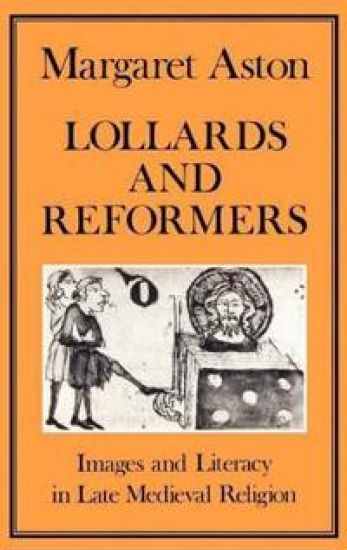
Lollards and Reformers

Lollards and Reformers

Margaret Aston

Hambledon Continuum
1984
nidottu
While much has been written on the connections between Lollardy and the Reformation, this collection of essays is the first detailed and satisfactory interpretation of many aspects of the problem. Margaret Aston shows how Protestant Reformers derived encouragement from their predecessors, while interpreting Lollards in the light of their own faith. This highly readable book makes an important contribution to the history of the Reformation, bringing to life the men and women of a movement interesting for its own sake and for the light it sheds on the religious and intellectual history of the period.