Kirjojen hintavertailu. Mukana 12 390 323 kirjaa ja 12 kauppaa.

Kirjailija

Margaret C. Jacob

Kirjat ja teokset yhdessä paikassa: 12 kirjaa, julkaisuja vuosilta 1969-2023, suosituimpien joukossa Science And Technology In The. Vertaile teosten hintoja ja tarkista saatavuus suomalaisista kirjakaupoista.

12 kirjaa

Kirjojen julkaisuhaarukka 1969-2023.

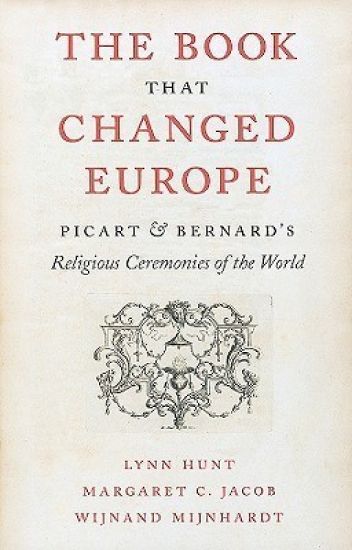
The Book That Changed Europe

The Book That Changed Europe

Lynn Hunt; Margaret C. Jacob; Wijnand Mijnhardt

The Belknap Press
2010
sidottu
Two French Protestant refugees in eighteenth-century Amsterdam gave the world an extraordinary work that intrigued and outraged readers across Europe. In this captivating account, Lynn Hunt, Margaret Jacob, and Wijnand Mijnhardt take us to the vibrant Dutch Republic and its flourishing book trade to explore the work that sowed the radical idea that religions could be considered on equal terms.Famed engraver Bernard Picart and author and publisher Jean Frederic Bernard produced The Religious Ceremonies and Customs of All the Peoples of the World, which appeared in the first of seven folio volumes in 1723. They put religion in comparative perspective, offering images and analysis of Jews, Catholics, Muslims, the peoples of the Orient and the Americas, Protestants, deists, freemasons, and assorted sects. Despite condemnation by the Catholic Church, the work was a resounding success. For the next century it was copied or adapted, but without the context of its original radicalism and its debt to clandestine literature, English deists, and the philosophy of Spinoza.Ceremonies and Customs prepared the ground for religious toleration amid seemingly unending religious conflict, and demonstrated the impact of the global on Western consciousness. In this beautifully illustrated book, Hunt, Jacob, and Mijnhardt cast new light on the profound insight found in one book as it shaped the development of a modern, secular understanding of religion.
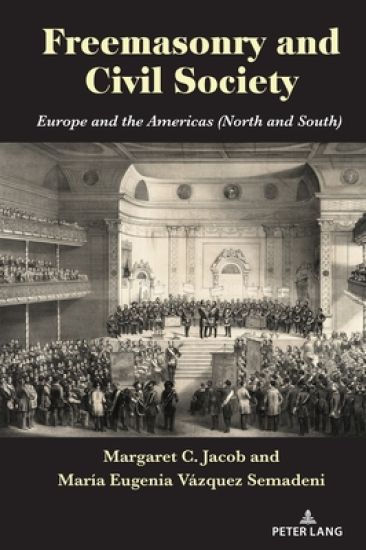
Freemasonry and Civil Society

Freemasonry and Civil Society

Margaret C. Jacob; María Eugenia Vázquez Semadeni

PETER LANG PUBLISHING INC
2023
sidottu
This is the first comprehensive account of freemasonry in the Western world, written by two of the field’s foremost scholars. It embraces every country in the Americas, with a particular focus on the American experience. The authors devote significant attention to the Scottish origins of the lodges and their growth in the American colonies, against a backdrop of European imperialism and the emergence of democratic movements. Later they examine the story of freemasonry in the twentieth century, from its encounter with Nazism to its decline beginning in the 1960s. Future directions for the movement are also discussed. Along the way major figures in the movement are assessed: Benjamin Franklin, Alessandro Cagliostro, Giuseppe Garibaldi, Harry S. Truman, and many others. Masons and non-masons, college students, and the curious general reader will find Freemasonry and Civil Society a dazzling and accessible account of one of the world’s most enduring fraternal organizations.“In this lucid and engaging survey, two of the world’s leading experts on the history of freemasonry explain how it shaped modern social and political cultures. The history of freemasonry can be bewildering, but Margaret Jacob and Maru Vázquez provide an authoritative and accessible overview which deftly disentangles the many different threads in the masonic story. This will be the definitive introduction to the history of freemasonry for many years to come.”—Andrew Prescott, University of Glasgow
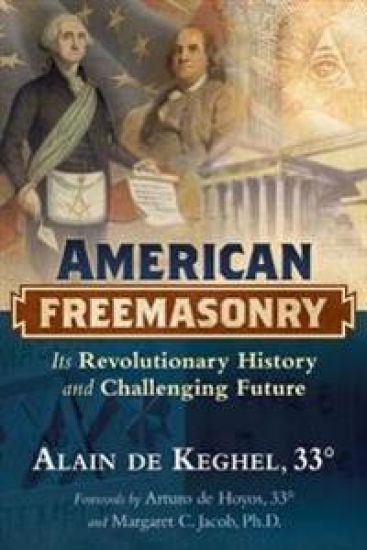
American Freemasonry

American Freemasonry

Alain de Keghel; Arturo de Hoyos; Margaret C. Jacob

Inner Traditions Bear and Company
2017
sidottu
Freemasonry bears the imprint of the society in which it exists, and Freemasonry in North America is no exception. While keeping close ties to French lodges until 1913, American Freemasonry was also deeply influenced by the experiences of many early American political leaders, leading to distinctive differences from European lodges. The author investigates the racial split in American Freemasonry between black lodges and white and how, unlike French lodges, women are ineligible to become Masons in the U.S. He examines how American Freemasonry has remained deeply religious across the centuries and forbids discussion of religious or social issues in its lodges, unlike some branches of French Freemasonry, which removed belief in God as a prerequisite for membership in 1877 and whose lodges operate in some respects as philosophical debating societies. Revealing the factors that have resulted in shrinking Masonic enrollment in America, the author explores the revitalization work done by the Grand Lodge of California and sounds the call to make Freemasonry and its principles relevant to America once again.
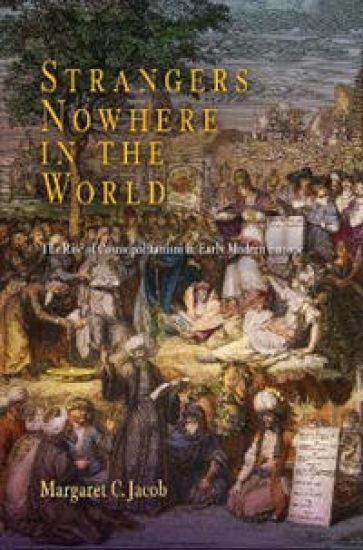
Strangers Nowhere in the World

Strangers Nowhere in the World

Margaret C. Jacob

University of Pennsylvania Press
2016
pokkari
The mingling of aristocrats and commoners in a southern French city, the jostling of foreigners in stock markets across northern and western Europe, the club gatherings in Paris and London of genteel naturalists busily distilling plants or making air pumps, the ritual fraternizing of "brothers" in privacy and even secrecy-Margaret Jacob invokes all these examples in Strangers Nowhere in the World to provide glimpses of the cosmopolitan ethos that gradually emerged over the course of the seventeenth and eighteenth centuries. Jacob investigates what it was to be cosmopolitan in Europe during the early modern period. Then-as now-being cosmopolitan meant the ability to experience people of different nations, creeds, and colors with pleasure, curiosity, and interest. Yet such a definition did not come about automatically, nor could it always be practiced easily by those who embraced its principles. Cosmopolites had to strike a delicate balance between the transgressive and the subversive, the radical and the dangerous, the open-minded and the libertine. Jacob traces the history of this precarious balancing act to illustrate how ideals about cosmopolitanism were eventually transformed into lived experiences and practices. From the representatives of the Inquisition who found the mixing of Catholics and Protestants and other types of "border crossing" disruptive to their authority, to the struggles within urbane masonic lodges to open membership to Jews, Jacob also charts the moments when the cosmopolitan impulse faltered. Jacob pays particular attention to the impact of science and merchant life on the emergence of the cosmopolitan ideal. In the decades after 1650, modern scientific practices coalesced and science became an open enterprise. Experiments were witnessed in social settings of natural inquiry, congenial for the inculcation of cosmopolitan mores. Similarly, the public venues of the stock exchanges brought strangers and foreigners together in ways encouraging them to be cosmopolites. The amount of international and global commerce increased greatly after 1700, and luxury tastes developed that valorized foreign patterns and designs. Drawing upon sources as various as Inquisition records and spy reports, minutes of scientific societies and the writings of political revolutionaries, Strangers Nowhere in the World reveals a moment in European history when an ideal of cultural openness came to seem strong enough to counter centuries of chauvinism and xenophobia. Perhaps at no time since, Jacob cautions, has that cosmopolitan ideal seemed more fragile and elusive than it is today.
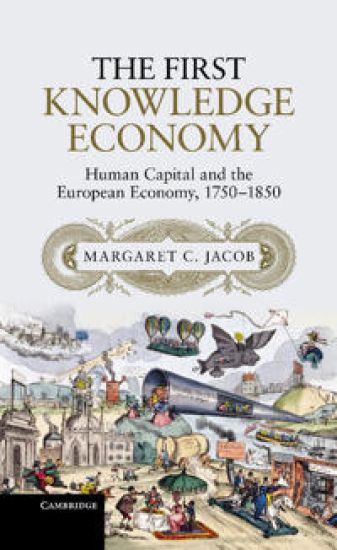
The First Knowledge Economy

The First Knowledge Economy

Margaret C. Jacob

Cambridge University Press
2014
pokkari
Ever since the Industrial Revolution debate has raged about the sources of the new, sustained western prosperity. Margaret Jacob here argues persuasively for the critical importance of knowledge in Europe's economic transformation during the period from 1750 to 1850, first in Britain and then in selected parts of northern and western Europe. This is a new history of economic development in which minds, books, lectures and education become central. She shows how, armed with knowledge and know-how and inspired by the desire to get rich, entrepreneurs emerged within an industrial culture wedded to scientific knowledge and technology. She charts how, across a series of industries and nations, innovative engineers and entrepreneurs sought to make sense and a profit out of the world around them. Skilled hands matched minds steeped in the knowledge systems new to the eighteenth century to transform the economic destiny of western Europe.
The First Knowledge Economy

The First Knowledge Economy

Margaret C. Jacob

Cambridge University Press
2014
sidottu
Ever since the Industrial Revolution debate has raged about the sources of the new, sustained western prosperity. Margaret Jacob here argues persuasively for the critical importance of knowledge in Europe's economic transformation during the period from 1750 to 1850, first in Britain and then in selected parts of northern and western Europe. This is a new history of economic development in which minds, books, lectures and education become central. She shows how, armed with knowledge and know-how and inspired by the desire to get rich, entrepreneurs emerged within an industrial culture wedded to scientific knowledge and technology. She charts how, across a series of industries and nations, innovative engineers and entrepreneurs sought to make sense and a profit out of the world around them. Skilled hands matched minds steeped in the knowledge systems new to the eighteenth century to transform the economic destiny of western Europe.
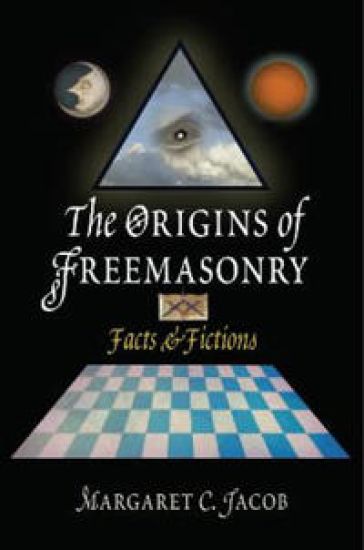
The Origins of Freemasonry

The Origins of Freemasonry

Margaret C. Jacob

University of Pennsylvania Press
2007
pokkari
Can the ancestry of freemasonry really be traced back to the Knights Templar? Is the image of the eye in a triangle on the back of the dollar bill one of its cryptic signs? Is there a conspiracy that stretches through centuries and generations to align this shadow organization and its secret rituals to world governments and religions? Myths persist and abound about the freemasons, Margaret C. Jacob notes. But what are their origins? How has an early modern organization of bricklayers and stonemasons aroused so much public interest? In The Origins of Freemasonry, Jacob throws back the veil from a secret society that turns out not to have been very secret at all. What factors contributed to the extraordinarily rapid spread of freemasonry over the course of the eighteenth century, and why were so many of the era's most influential figures drawn to it? Using material from the archives of leading masonic libraries in Europe, Jacob examines masonic almanacs and pocket diaries to get closer to what living as a freemason might have meant on a daily basis. She explores the persistent connections between masons and nascent democratic movements, as each lodge set up a polity where an individual's standing was meant to be based on merit, rather than on birth or wealth, and she demonstrates, beyond any doubt, how active a role women played in the masonic movement.
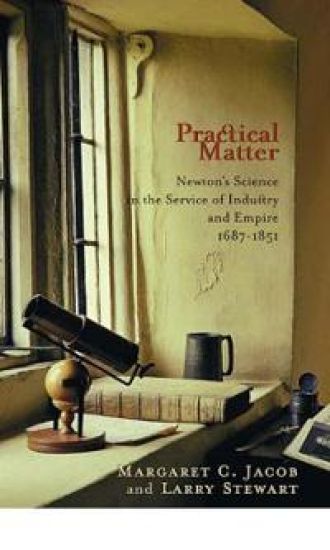
Practical Matter

Practical Matter

Margaret C. Jacob; Larry Stewart

Harvard University Press
2006
nidottu
Margaret Jacob and Larry Stewart examine the profound transformation that began in 1687. From the year when Newton published his Principia to the Crystal Palace Exhibition of 1851, science gradually became central to Western thought and economic development. The book aims at a general audience and examines how, despite powerful opposition on the Continent, a Newtonian understanding gained acceptance and practical application. By the mid-eighteenth century the new science had achieved ascendancy, and the race was on to apply Newtonian mechanics to industry and manufacturing. They end the story with the temple to scientific and technological progress that was the Crystal Palace exhibition. Choosing their examples carefully, Jacob and Stewart show that there was nothing preordained or inevitable about the centrality awarded to science. "It is easy to forget that science might have been stillborn, or remained the esoteric knowledge of court elites. Instead, for better and for worse, science became a centerpiece of Western culture."
Newton and the Culture of Newtonianism

Newton and the Culture of Newtonianism

Betty Jo Teeter Dobbs; Margaret C. Jacob

Humanity Books
1995
nidottu
This insightful work examines what happened to Newton's science as it was interpreted by his major followers. The authors also look at the scientific culture that Newton helped to create and the impact that his ideas had on the rapidly developing technology that led to the Industrial Revolution.
Dutch Republic in the Eighteenth Century: Decline, Enlightenment, and Revolution
Following its brilliant Golden Age, the Netherlands' history in the eighteenth century has seemed to many historians to be one of decline and a time when Dutch politics were dominated by foreign influences. Yet this was a period when the Netherlands served as a major publishing center for enlightened ideas and when the Dutch Revolution of 1787 anticipated that of the French. Bringing together sixteen essays by a distinguished group of Dutch and American historians, the present volume restores a neglected chapter in the history of the Netherlands and makes a major contribution to our understanding of the Enlightenment as a European-not merely a French or an English-phenomenon.Individual chapters offer nuanced answers to such questions as: Who were the Patriotten who led the Dutch Revolution? What social and cultural factors made them seek to overturn the institutions of the ancien r gime? Did their writings and actions mark a fundamental break with the cultural values of their nation and time? Finally, what can the Dutch story tell us about the complex relationships between the culture of the Enlightenment and the democratic revolutions that ushered in the political and social institutions of the modern nation-state?Contributors: W. van den Berg; Christine van Boheemen-Saaf; Wayne Ph. te Brake; Willem Th. M. Frijhoff; Frans Grijzenhout; Margaret C. Jacob; Jan A. F. de Jongste; E. H. Kossmann; Wijnand W. Mijnhardt; Eco O. G. Haitsma Mulier; ]. G. A. Pocock; Jeremy D. Popkin; Nicolaas C. F. van Sas; H. A. M. Snelders; Wyger R. E. Velema; I. J. H. Worst.