Kirjojen hintavertailu. Mukana 12 595 353 kirjaa ja 12 kauppaa.

Kirjailija

Margaret Doody

Kirjat ja teokset yhdessä paikassa: 10 kirjaa, julkaisuja vuosilta 2002-2025, suosituimpien joukossa Aristotle Detective. Vertaile teosten hintoja ja tarkista saatavuus suomalaisista kirjakaupoista.

10 kirjaa

Kirjojen julkaisuhaarukka 2002-2025.

Aristotle Detective

Aristotle Detective

Margaret Doody

Arrow Books Ltd
2002
pokkari
Athens, 332BC - the great philosopher Aristotle is called in to help a young boy defend his cousin in a murder trial. Their efforts culminate in a gripping trial scene where the boy uses all the powers of rhetoric and oratory instilled in him by Aristotle to clear his family's name.
Jane Austen's Names

Jane Austen's Names

Margaret Doody

University of Chicago Press
2016
nidottu
In Jane Austen's works, a name is never just a name. In fact, the names Austen gives her characters and places are as rich in subtle meaning as her prose itself. Wiltshire, for example, the home county of Catherine Morland in Northanger Abbey, is a clue that this heroine is not as stupid as she seems: according to legend, cunning Wiltshire residents caught hiding contraband in a pond capitalized on a reputation for ignorance by claiming they were digging up a big cheese the moon's reflection on the water's surface. It worked. In Jane Austen's Names, Margaret Doody offers a fascinating and comprehensive study of all the names of people and places real and imaginary in Austen's fiction. Austen's creative choice of names reveals not only her virtuosic talent for riddles and puns. Her names also pick up deep stories from English history, especially the various civil wars, and the blood-tinged differences that played out in the reign of Henry VIII, a period to which she often returns. Considering the major novels alongside unfinished works and juvenilia, Doody shows how Austen's names signal class tensions as well as regional, ethnic, and religious differences. We gain a new understanding of Austen's technique of creative anachronism, which plays with and against her skillfully deployed realism in her books, the conflicts of the past swirl into the tensions of the present, transporting readers beyond the Regency. Full of insight and surprises for even the most devoted Janeite, Jane Austen's Names will revolutionize how we read Austen's fiction.
Jane Austen's Names

Jane Austen's Names

Margaret Doody

University of Chicago Press
2015
sidottu
In Jane Austen's works, a name is never just a name. In fact, the names Austen gives her characters and places are as rich in subtle meaning as her prose itself. Wiltshire, for example, the home county of Catherine Morland in Northanger Abbey, is a clue that this heroine is not as stupid as she seems: according to legend, cunning Wiltshire residents caught hiding contraband in a pond capitalized on a reputation for ignorance by claiming they were digging up a "big cheese" - the moon's reflection on the water's surface. It worked. In Jane Austen's Names, Margaret Doody offers a fascinating and comprehensive study of all the names of people and places - real and imaginary - in Austen's fiction. Austen's creative choice of names reveals not only her virtuosic talent for riddles and puns. Her names also pick up deep stories from English history, especially the various civil wars, and the blood-tinged differences that played out in the reign of Henry VIII, a period to which she often returns. Considering the major novels alongside unfinished works and juvenilia, Doody shows how Austen's names signal class tensions as well as regional, ethnic, and religious differences. We gain a new understanding of Austen's technique of creative anachronism, which plays with and against her skillfully deployed realism - in her books, the conflicts of the past swirl into the tensions of the present, transporting readers beyond the Regency. Full of insight and surprises for even the most devoted Janeite, Jane Austen's Names will revolutionize how we read Austen's fiction.
Aristotle Detective

Aristotle Detective

Margaret Doody

University of Chicago Press
2014
nidottu
Murder and mayhem may seem like unreasonable company for Aristotle, one of the founding minds of Western philosophy. But in the skilled hands of Margaret Doody, the pairing could not be more logical. With her Aristotle Detective novels, Margaret Doody brings a Holmesian hero to the bloodied streets of ancient Greece, trading the pipe and deerstalker of Sherlock for the woolen chiton and sandals of Aristotle. Replete with suspense, historical detail, and humor, and complemented by an ever-growing cast of characters and vivid descriptions of the ancient world, Doody's mysteries are as much lively takes on the figures and forms of the classics as they are classic whodunits in their own right. In Aristotle Detective, we first meet Stephanos--naive Watson to Aristotle's learned Holmes--a young landed Athenian and student of Aristotle. With the aid of his cunning, olive-loving teacher, Stephanos must clear his exiled cousin of murder and save his family's honor in a tense public trial. Will Stephanos survive to cinch the case?
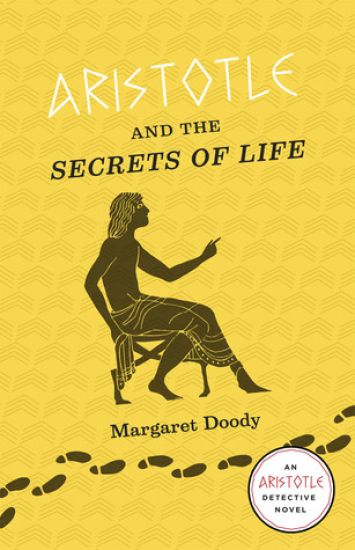
Aristotle and the Secrets of Life: An Aristotle Detective Novel
Murder and mayhem may seem like unreasonable company for Aristotle, one of the founding minds of Western philosophy. But in the skilled hands of Margaret Doody, the pairing could not be more logical. With her Aristotle Detective novels, Margaret Doody brings a Holmesian hero to the bloodied streets of ancient Greece, trading the pipe and deerstalker of Sherlock for the woolen chiton and sandals of Aristotle. Replete with suspense, historical detail, and humor, and complemented by an ever-growing cast of characters and vivid descriptions of the ancient world, Doody's mysteries are as much lively takes on the figures and forms of the classics as they are classic whodunits in their own right. With Aristotle and the Secrets of Life, tensions between the Athenians and the Makedonians--followers of another of Aristotle's former students, Alexander the Great--draw our heroes across the Aegean Sea. Even as Aristotle and Stephanos escape from pirates, uncover conspiracy, and face the horrors of war, Aristotle finds time to discuss his studies of the natural world in this gripping tale of their quest into darkness.
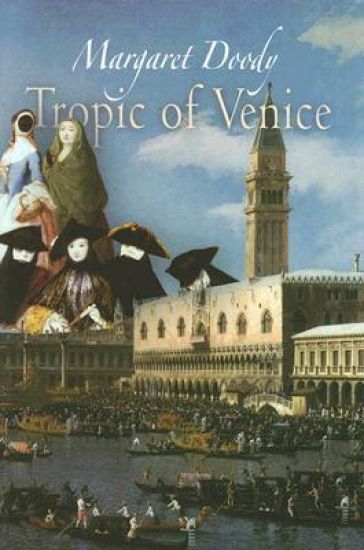
Tropic of Venice

Tropic of Venice

Margaret Doody

University of Pennsylvania Press
2007
sidottu
Named one of the "Big Ten Outstanding Books from University Presses for 2006" by ForeWord magazine For Margaret Doody, Venice, poised between East and West, earth and sea, sacred and profane, occupies a place only its own. Appearances confound. Renaissance ladies achieved their blond beauty by crimping and dyeing their hair in urine. The richly ornamented facades of its buildings mask lighter structures based on wood pilings ultimately floating on clay and water. Marble is intimate with mud. In Doody's Venice, the holy is never far from the sensual, the earthy and carnal. Though the city's patron is one of the four Evangelists, enshrined in the glorious basilica that bears his name, she reminds us that according to legend the body of Saint Mark was transported to Venice hidden in a mound of pork. With a novelist's eye for quirky anecdote and rich detail, with a connoisseur's eye for the secrets hidden in the cut of a sleeve or the corner of a painting, Doody summons the Venice of Carpaccio, Titian, and Canaletto, of Goldoni and Casanova. She draws on comments from the myriad travelers, contented or grumbling, from the Middle Ages to the present, men and women who have by turns been seduced and disturbed by the city. If she is hard-pressed to find a single golden age in Venetian history, she has no difficulty in locating the city's low point in the tragic nineteenth century. When the once proudly independent republic fell to a foreign power, its joy largely ceased, and it became the melancholy and somewhat sinister place evoked in the writings of Byron, George Sand, Gautier, Dickens, and others. Venice as death's city persists into the twentieth century in the works of Henry James and Thomas Mann. Only in the twenty-first century, she suggests, might we escape that dark nineteenth-century vision of a city once associated with glowing color and joyful music. Bride of the Adriatic, a city of golden light and shimmering reflection rising out of seaweed and slime, Venice has long held travelers and dreamers, rogues, painters, and writers in its sway. Why are we so drawn to the place? What would be lost were Venice to cease to exist? In Tropic of Venice Doody explores the multiple ways in which this is a perturbingly exciting and unique city-and a place that simultaneously unsettles and reveals many of our most deeply rooted cultural values.
Mysteries Of Eleusis

Mysteries Of Eleusis

Margaret Doody

Cornerstone
2006
pokkari
Stephanos, Philomela and Aristotle undertake mystic initiation in a complex ritual whose ultimate secrets cannot be spoken, on pain of death. This is the fifth novel featuring Aristotle as the first detective of the ancient world, following Aristotle Detective, Aristotle and Poetic Justice, The Secrets of Life and Poison In Athens.
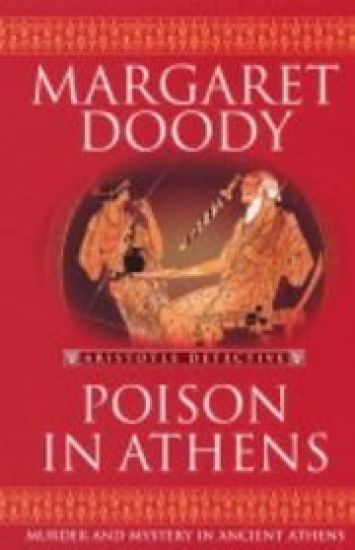
Poison In Athens

Poison In Athens

Margaret Doody

Cornerstone
2005
pokkari
It is the autumn of 330 BC, and three law cases are exciting Athens. Misogyny, political wrath, and lack of judgment bring affairs to a boiling point, stimulating Aristotle to intervene lest the trial of the stepmother break Athens into fragments.
Secrets Of Life

Secrets Of Life

Margaret Doody

Cornerstone
2004
pokkari
With a varied cast of travellers, Stephanos and Aristotle set sail across the Aegean to the sacred island of Delos, to Mykonos and on to Asia Minor. Soon they will be investigating murder and conspiracy, but first they have to survive life on the high seas where storms and piracy honour no man.