Kirjojen hintavertailu. Mukana 12 479 223 kirjaa ja 12 kauppaa.

Kirjailija

Margaret Franklin

Kirjat ja teokset yhdessä paikassa: 5 kirjaa, julkaisuja vuosilta 2006-2020, suosituimpien joukossa The Hunt for Unicorns. Vertaile teosten hintoja ja tarkista saatavuus suomalaisista kirjakaupoista.

5 kirjaa

Kirjojen julkaisuhaarukka 2006-2020.

The Hunt for Unicorns

The Hunt for Unicorns

Winston Ma; Paul Downs; Margaret Franklin; Russell Read; Ajay Royan

John Wiley Sons Inc
2020
nidottu
Who holds the power in financial markets? For many, the answer would probably be the large investment banks, big asset managers, and hedge funds that are often in the media's spotlight. But more and more a new group of sovereign investors, which includes some of the world's largest sovereign wealth funds, government pension funds, central bank reserve funds, state-owned enterprises, and other sovereign capital-enabled entities, have emerged to become the most influential capital markets players and investment firms, with $30 trillion in assets under management ("super asset owners"). Their ample resources, preference for lower profile, passive investing, their long-time horizon and adherence to sustainability as well as their need to diversify globally and by sector have helped to transform the investment world and, in particular, private markets for digital companies. They have helped create and sustain an environment that has fostered the rise of the likes of Uber, Alibaba, Spotify and other transformative players in the digital economy, while providing their founders and business models the benefit of long-term capital. Despite this increasingly important impact, sovereign investors remain mostly unknown, often maintaining a low profile in global markets. For the same reason, they’re also among the most widely misunderstood, as many view investments made by sovereign investors as purely driven by political aims. The general perception is that most sovereign investors lack transparency and have questionable governance controls, causing an investee nation to fear exposure to risks of unfair competition, data security, corruption, and non-financially or non-economically motivated investments. The current global tensions around the AI race and tech competition – and now the corona virus pandemic – have exacerbated such misperceptions, spawning controversies around sovereign investors and capital markets, governments, new technologies, cross-border investments, and related laws and regulations. As such, sovereign capital and the global digital economy are undergoing an unprecedented, contentious moment. In short, the emergence of sovereign funds symbolizes a major shift of the world’s economic power. For the first time, investment funds from developing countries are playing with OECD financial giants as equals. Furthermore, their investments into high tech enable them to participate at the cutting-edge of the fourth industrial revolution, challenging traditional innovation powerhouses like the US and Germany. For all stakeholders, from tech unicorns, VC funds, asset managers, financial firms, to policymakers, law firms, academics, and the general public, this is the must-have book to get to know these new venture capitalists and "super asset owners".
Boccaccio's Heroines

Boccaccio's Heroines

Margaret Franklin

Routledge
2019
nidottu
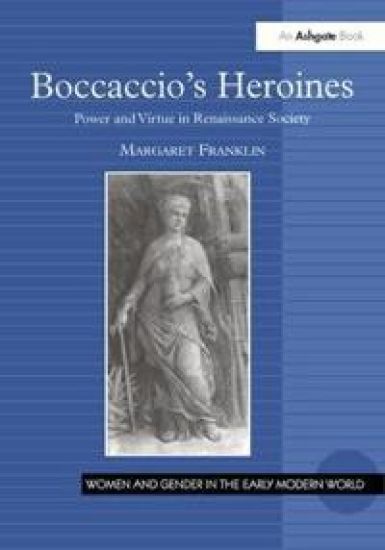
In contrast to earlier scholars who have seen Boccaccio's Famous Women as incoherent and fractured, Franklin argues that the text offers a remarkably consistent, coherent and comprehensible treatise concerning the appropriate functioning of women in society. In this cross disciplinary study of a seminal work of literature and its broader cultural impact on Renaissance society, Franklin shows that, through both literature and the visual arts, Famous Women was used to promote social ideologies in both Renaissance Tuscany and the dynastic courts of northern Italy. Speaking equally to scholars in medieval and early modern literature, history, and art history, Franklin brings needed clarification to the text by demonstrating that the moral criteria Boccaccio used to judge the lives of legendary women - heroines and miscreants alike - were employed consistently to tackle the challenge that politically powerful women represented for the prevailing social order. Further, the author brings to light the significant influence of Boccaccio's text on the representation of classical heroines in Renaissance art. By examining several paintings created in the republics and principalities of Renaissance Italy, Franklin demonstrates that Famous Women was employed as a conceptual guide by patrons and artists to draw the teeth from the challenge of unconventionally powerful women by co-opting their stories into the service of contemporary Italian standards and mores.
Weaving Bateman Blend

Weaving Bateman Blend

Margaret Franklin

FriesenPress
2018
sidottu
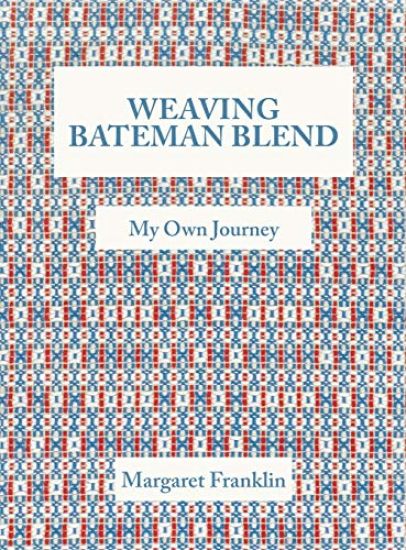
"Weaving Bateman Blend, The Companion Book" is a "workshop to go" The book is an Intermediate weaving resource emphasizing the role of ties and tie groups in weaving. It introduces Dr. William Bateman's weave systems, but zeroes in on one of them, Bateman Blend. The book is named The Companion Book as it compliments the original Monograph # 36, of Virginia Harvey's set of published works on Bateman weaves, striving to make "Blend" come alive for today's weavers. The Blend structure is explained and demonstrated in the many samples woven by the author. Colour photos of the 50 or more pieces will draw you in to weave Bateman today Some are examples of the weaves for today's purposes. Some are original variations and extensions of the 8 shaft weaves of Dr. Bateman to 12 and more shafts. The book concludes with the story of Dr. Bateman's work, a Bibliography, and Index. (Readers are encouraged to use other resources such as "Learning to Weave" by Deborah Chandler, or "The Complete Book of Weaving" by Mary E. Black for basic weaving instruction.)...
Weaving Bateman Blend

Weaving Bateman Blend

Margaret Franklin

FriesenPress
2018
pokkari
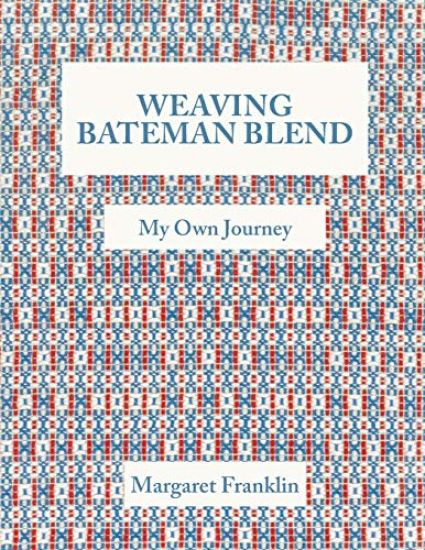
"Weaving Bateman Blend, The Companion Book" is a "workshop to go" The book is an Intermediate weaving resource emphasizing the role of ties and tie groups in weaving. It introduces Dr. William Bateman's weave systems, but zeroes in on one of them, Bateman Blend. The book is named The Companion Book as it compliments the original Monograph # 36, of Virginia Harvey's set of published works on Bateman weaves, striving to make "Blend" come alive for today's weavers. The Blend structure is explained and demonstrated in the many samples woven by the author. Colour photos of the 50 or more pieces will draw you in to weave Bateman today Some are examples of the weaves for today's purposes. Some are original variations and extensions of the 8 shaft weaves of Dr. Bateman to 12 and more shafts. The book concludes with the story of Dr. Bateman's work, a Bibliography, and Index. (Readers are encouraged to use other resources such as "Learning to Weave" by Deborah Chandler, or "The Complete Book of Weaving" by Mary E. Black for basic weaving instruction.)...
Boccaccio's Heroines

Boccaccio's Heroines

Margaret Franklin

Ashgate Publishing Limited
2006
sidottu
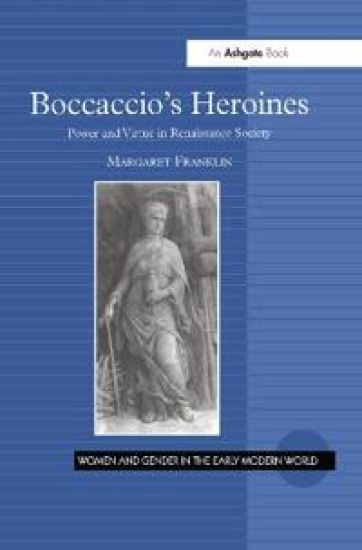
In contrast to earlier scholars who have seen Boccaccio's Famous Women as incoherent and fractured, Franklin argues that the text offers a remarkably consistent, coherent and comprehensible treatise concerning the appropriate functioning of women in society. In this cross disciplinary study of a seminal work of literature and its broader cultural impact on Renaissance society, Franklin shows that, through both literature and the visual arts, Famous Women was used to promote social ideologies in both Renaissance Tuscany and the dynastic courts of northern Italy. Speaking equally to scholars in medieval and early modern literature, history, and art history, Franklin brings needed clarification to the text by demonstrating that the moral criteria Boccaccio used to judge the lives of legendary women - heroines and miscreants alike - were employed consistently to tackle the challenge that politically powerful women represented for the prevailing social order. Further, the author brings to light the significant influence of Boccaccio's text on the representation of classical heroines in Renaissance art. By examining several paintings created in the republics and principalities of Renaissance Italy, Franklin demonstrates that Famous Women was employed as a conceptual guide by patrons and artists to draw the teeth from the challenge of unconventionally powerful women by co-opting their stories into the service of contemporary Italian standards and mores.