Kirjojen hintavertailu. Mukana 12 657 676 kirjaa ja 12 kauppaa.

Kirjailija

Margaret Mullett

Kirjat ja teokset yhdessä paikassa: 5 kirjaa, julkaisuja vuosilta 1996-2019, suosituimpien joukossa Theophylact of Ochrid. Vertaile teosten hintoja ja tarkista saatavuus suomalaisista kirjakaupoista.

5 kirjaa

Kirjojen julkaisuhaarukka 1996-2019.

Letters, Literacy and Literature in Byzantium
These studies look at general problems of reading Byzantine literature, at literacy practices and the literary process, but also at individual texts. The past thirty years have seen a revolution in the way Byzantine literature has been viewed: no longer is it considered a decadent form of classical literature or a turgid precursor of modern Greek literature. There are still prejudices to overcome: that there was no literary public, or that Byzantium had no drama or humour, but Byzantine texts are now read as literature in the social context of literacy and book culture. One genre is treated here more fully: the letter (Derrida said that letters represent all literature). In these studies epistolography is examined from the point of view of genre, of originality, of communication and as evidence for political history. Other genres touched on include the novel, historiography, parainesis, panegyric, and hagiography. The section on literary process includes essays on genre, patronage and rhetoric, and the section on literacy practices deals with both writing and reading. The collection includes one unpublished lecture which acts as introduction, and additional notes and comments.
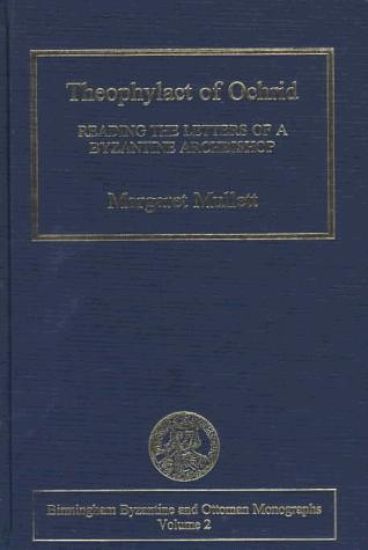
Theophylact of Ochrid

Theophylact of Ochrid

Margaret Mullett

Routledge
2016
nidottu
Few works exist on Byzantine literature as literature and still fewer studies of individual texts. This reading of the letter-collection (c.1090-c.1110) of Theophylact of Ochrid employs a variety of approaches to characterise a work which is both a literary artefact in a long Greek tradition and the only trace of a complex network of friends, colleagues, patrons and clients within Byzantine Bulgaria and also within the empire as a whole. These letters are of great importance from the point of view of local economic or ecclesiastical history, relations with the Slavs, the arrival of the First Crusade, but have not hitherto been studied as an example of Byzantine letter writing. This was a genre taken seriously by Byzantines, offering us unique insight into the mentality of the Byzantine elite, but also into what the Byzantines regarded as literature. This book is important as an attempt to raise the status of the study of Byzantine literature, and of letters within that literature. It is a first attempt to place an epistolary text in a succession of literary and historical contexts; its aim, too, is to probe the reliability of any rhetorical text for straightforward biography especially at the time of the revival fiction in Byzantium. At the heart of the book is an analysis of the personal network of Theophylact, as presented in the collection, with further methodological discussion of network analysis in medieval texts.
Letters, Literacy and Literature in Byzantium

Letters, Literacy and Literature in Byzantium

Margaret Mullett

Ashgate Publishing Limited
2007
sidottu
These studies look at general problems of reading Byzantine literature, at literacy practices and the literary process, but also at individual texts. The past thirty years have seen a revolution in the way Byzantine literature has been viewed: no longer is it considered a decadent form of classical literature or a turgid precursor of modern Greek literature. There are still prejudices to overcome: that there was no literary public, or that Byzantium had no drama or humour, but Byzantine texts are now read as literature in the social context of literacy and book culture. One genre is treated here more fully: the letter (Derrida said that letters represent all literature). In these studies epistolography is examined from the point of view of genre, of originality, of communication and as evidence for political history. Other genres touched on include the novel, historiography, parainesis, panegyric, and hagiography. The section on literary process includes essays on genre, patronage and rhetoric, and the section on literacy practices deals with both writing and reading. The collection includes one unpublished lecture which acts as introduction, and additional notes and comments.
Theophylact of Ochrid

Theophylact of Ochrid

Margaret Mullett

Ashgate Publishing Limited
1997
sidottu
Few works exist on Byzantine literature as literature and still fewer studies of individual texts. This reading of the letter-collection (c.1090-c.1110) of Theophylact of Ochrid employs a variety of approaches to characterise a work which is both a literary artefact in a long Greek tradition and the only trace of a complex network of friends, colleagues, patrons and clients within Byzantine Bulgaria and also within the empire as a whole. These letters are of great importance from the point of view of local economic or ecclesiastical history, relations with the Slavs, the arrival of the First Crusade, but have not hitherto been studied as an example of Byzantine letter writing. This was a genre taken seriously by Byzantines, offering us unique insight into the mentality of the Byzantine elite, but also into what the Byzantines regarded as literature. This book is important as an attempt to raise the status of the study of Byzantine literature, and of letters within that literature. It is a first attempt to place an epistolary text in a succession of literary and historical contexts; its aim, too, is to probe the reliability of any rhetorical text for straightforward biography especially at the time of the revival fiction in Byzantium. At the heart of the book is an analysis of the personal network of Theophylact, as presented in the collection, with further methodological discussion of network analysis in medieval texts.